


The Next Capsule-Toy Business Is a Tiny Local Retail Network
Turn three square feet inside a coffee shop, bookstore, brewery, or public market into a rotating storefront for collectibles nobody can buy online.
Japan's capsule-toy boom looks, at first glance, like an invitation to import machines and fill them with anime characters. That is the crowded play. Bandai and the other established manufacturers own the licenses, the manufacturing scale, and the distribution relationships, and they release hundreds of new products a month. A small operator importing the same merchandise becomes one more reseller fighting over inventory everyone else can buy.
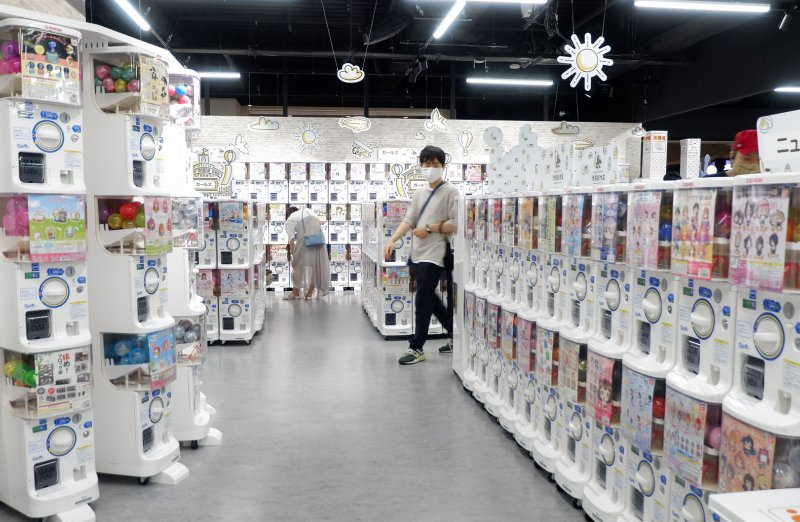
The better opportunity is to copy the retail behavior, not the products. Build a network of capsule machines stocked with collectibles that exist nowhere else: a coffee shop's unofficial mascot, a tattoo artist's flash designs, neighborhood landmarks, bookstore characters, regional food icons, a city's inside jokes. The machine is the smallest possible storefront. The business is everything around it: securing good locations, commissioning desirable collections, rotating inventory, managing artists, and learning which pockets of local fandom will repeatedly spend $5 to $8 on a small physical object.
Here is the opportunity:
The money: Ten productive machines at 200 sales/month and a $7 price throw off about $5,200 in monthly contribution before central costs. Good Things Vending already proves local art vending sells.
Inside:
• Unit economics for a $6 capsule
• Six-factor venue scoring system
• Three artist payment structures
• 90-day launch plan and outreach template
The Opportunity at a Glance
| Business model | Managed capsule-machine route with venue-exclusive collectibles |
| Best starting market | Dense neighborhood with strong independent retail, tourism, arts, or fandom |
| Pilot footprint | Three to five venues within a short driving radius |
| Recommended starting budget | Approximately $3,500–$6,500 |
| Time to launch | Six to ten weeks |
| Initial ambition | Owner-operated route business |
| Expansion path | Creative services, event drops, wholesale collections, and eventually operator software |
| Main risk | Weak collectibles and poor placement turn the machine into a forgotten novelty |
| Real moat | Location access, route density, artist relationships, hit data, and recurring collector demand |
Why This Format Is Moving Now
Japan already proved how big capsule retail gets once adults stop treating it as a children's novelty. When financial giant ORIX acquired capsule-toy store operator LULUARQ, the company behind the Gachagacha no Mori specialty chain, on April 24, 2025, it was ORIX's first amusement-sector investment in roughly two decades, a deal reportedly worth about ¥10 billion, near $70 million. ORIX cited a market worth roughly ¥141 billion at the manufacturer-shipment level in fiscal 2024, up 20% in a single year. Other industry trackers using retail-value methodology run higher still, and while the totals depend on what you count, the direction is unambiguous. Hundreds of dedicated capsule-toy stores now operate across competing Japanese chains — Bandai Namco alone runs more than 300 — manufacturers release around 700 new products every month, and the format thrives because it converts small, awkward retail space into productive inventory display with almost no labor.
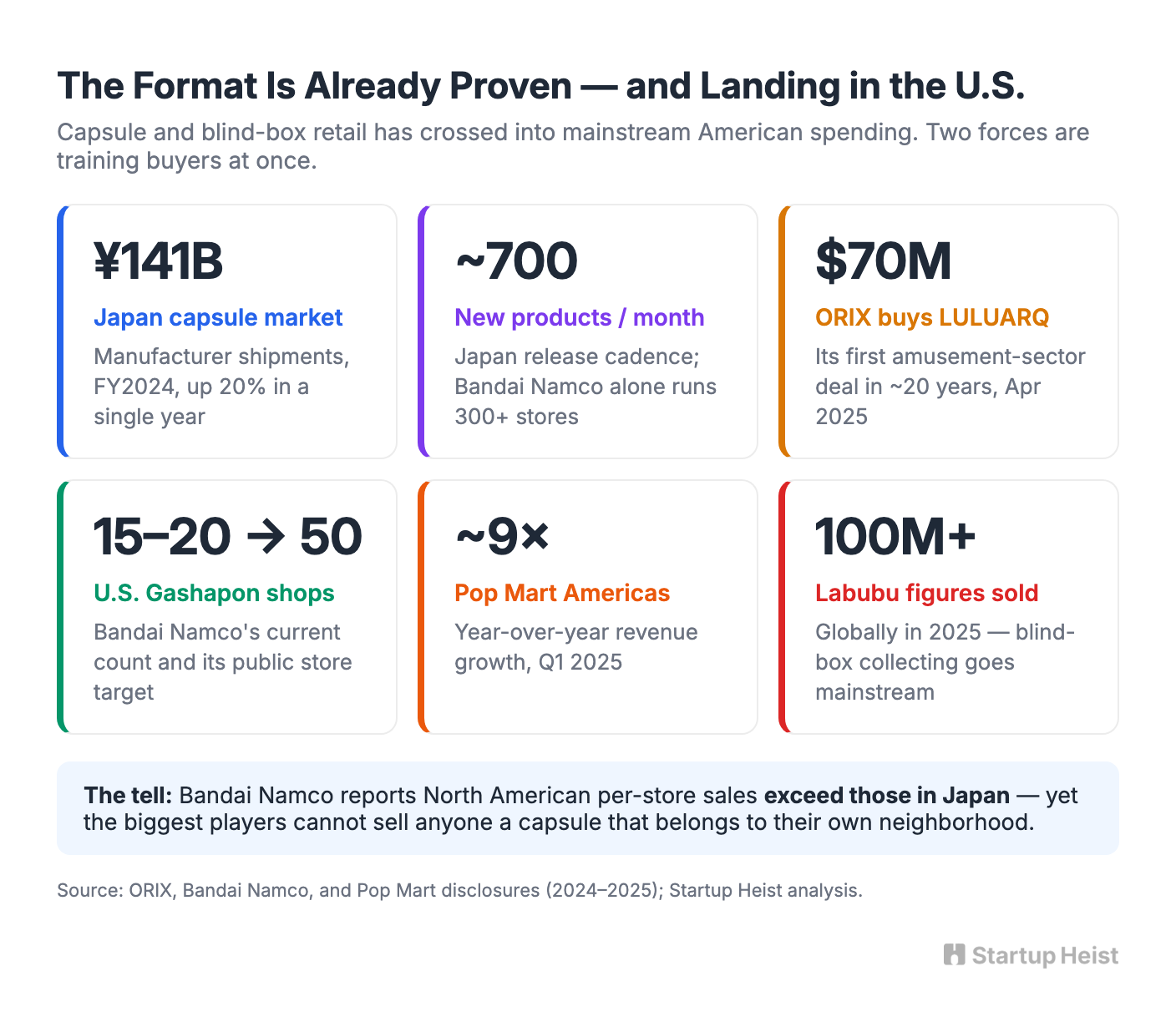
American consumers are being trained on the format from two directions at once. Bandai Namco operated roughly 15 to 20 U.S. Gashapon official shops as of mid-2026, tucked inside Japanese markets, malls, bookstores, and entertainment centers, and it has publicly set a target of 50. The demand signal underneath that push is the real tell: Bandai Namco reports that per-store sales in North America exceed those in Japan. Meanwhile Pop Mart made blind-box collecting a mainstream American habit. Its Americas revenue grew roughly ninefold year over year in the first quarter of 2025, and the company sold over 100 million Labubu figures globally in 2025. Millions of U.S. adults now understand paying $6 to $20 for a sealed capsule with a surprise inside.
The placement pattern deserves as much attention as the growth. Most U.S. Gashapon locations sit in environments with existing anime and collector traffic, so the expansion does not prove that any machine in any coffee shop will print money. What it proves is narrower and more useful: American shoppers understand the format, venue operators are increasingly comfortable giving it floor space, and the biggest players in the category cannot sell anyone a capsule that belongs to their own neighborhood.
The Proof Is Already on the Sidewalk
Local art vending is already working in the U.S. Art-o-Mat has been converting retired cigarette machines into $5 art dispensers since 1997 and now sits in more than 200 museums, hotels, bars, and campuses nationwide. Chicago's Good Things Vending stocks hand-painted machines with pins, zines, and curiosities from nearly 200 local artists, placing them everywhere from the Chicago Cultural Center to Revolution Brewing, with inventory matched to each location.
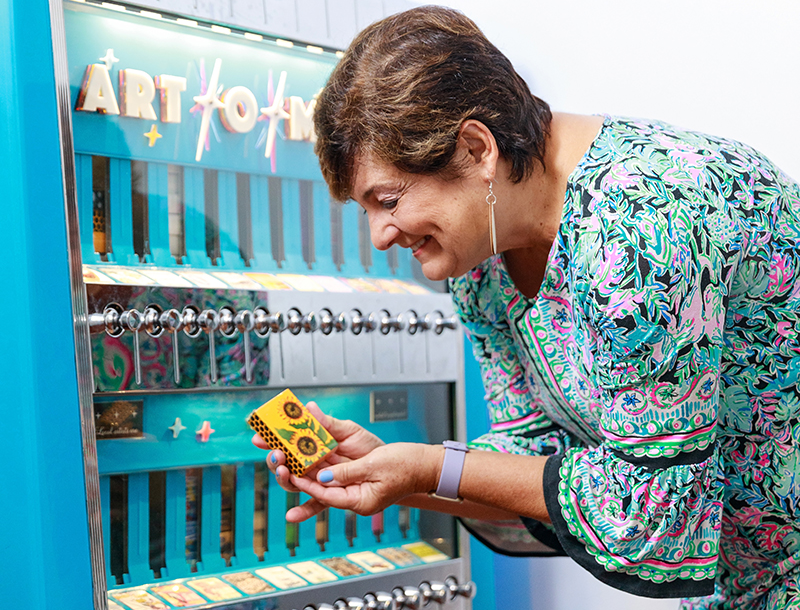
And Portland, Maine printmaker Anastasia Inciardi turned a single $1 mini-print machine, originally built to collect quarters for her basement laundry, into a network of more than 70 machines across the country after one Instagram reel drew roughly 18 million views. Duolingo, Cheez-It, Anthropologie, and the National Women's Soccer League have all commissioned themed prints from her.
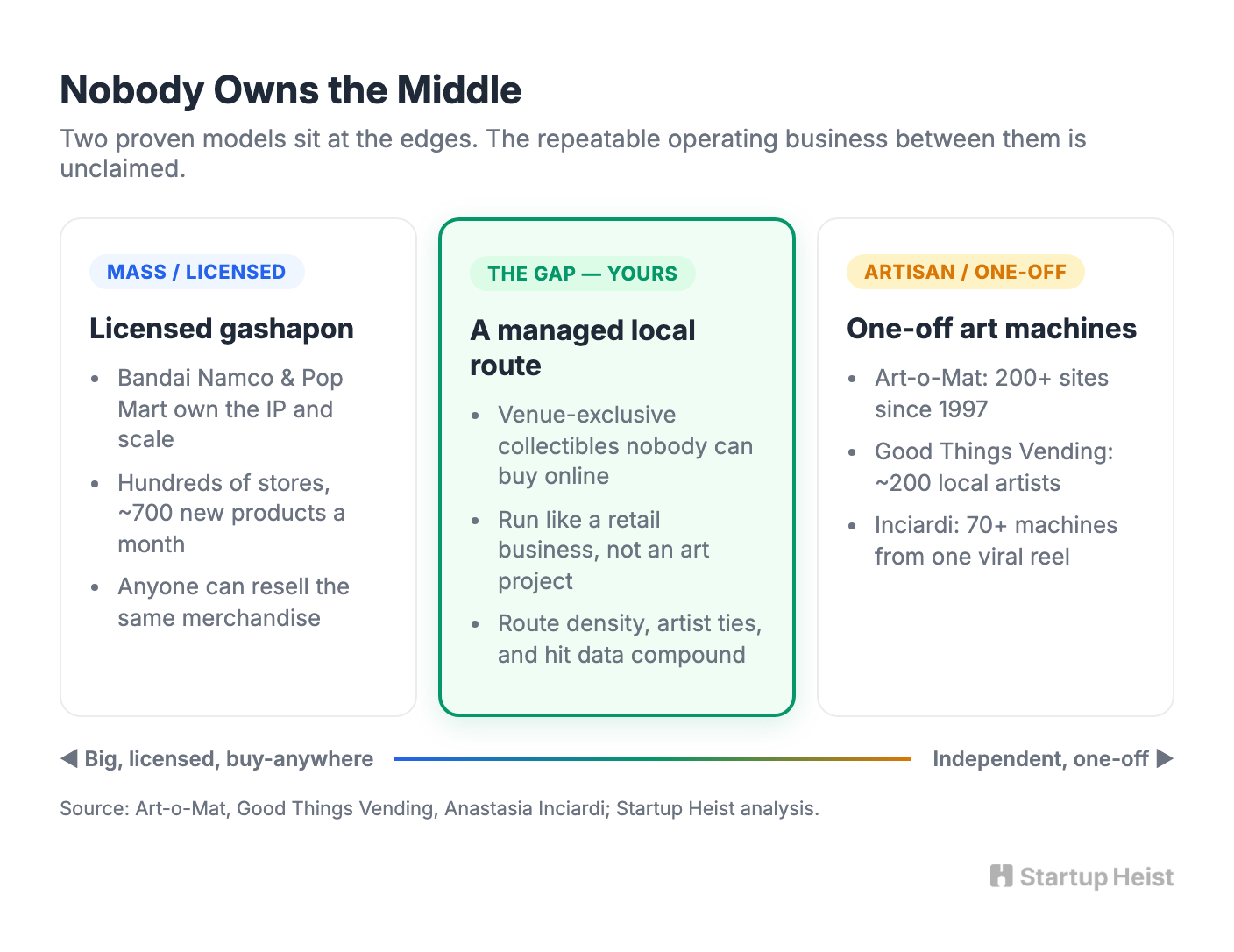
Each of these succeeds as an artist-led project, scaled by one person's output or one collective's taste. Nobody has built the repeatable operating model in the middle, between Bandai's licensed-IP machine network and the one-off art machine: a managed route of capsule machines stocked with venue-exclusive local collectibles, run like a retail business. That gap is yours to take.
What You Are Actually Building
Unlock the Vault.
Join founders who spot opportunities ahead of the crowd. Actionable insights. Zero fluff.
“Intelligent, bold, minus the pretense.”
“Like discovering the cheat codes of the startup world.”
“SH is off-Broadway for founders — weird, sharp, and ahead of the curve.”


