


The Crying Horse Is Not the Heist. The Pipeline Is.
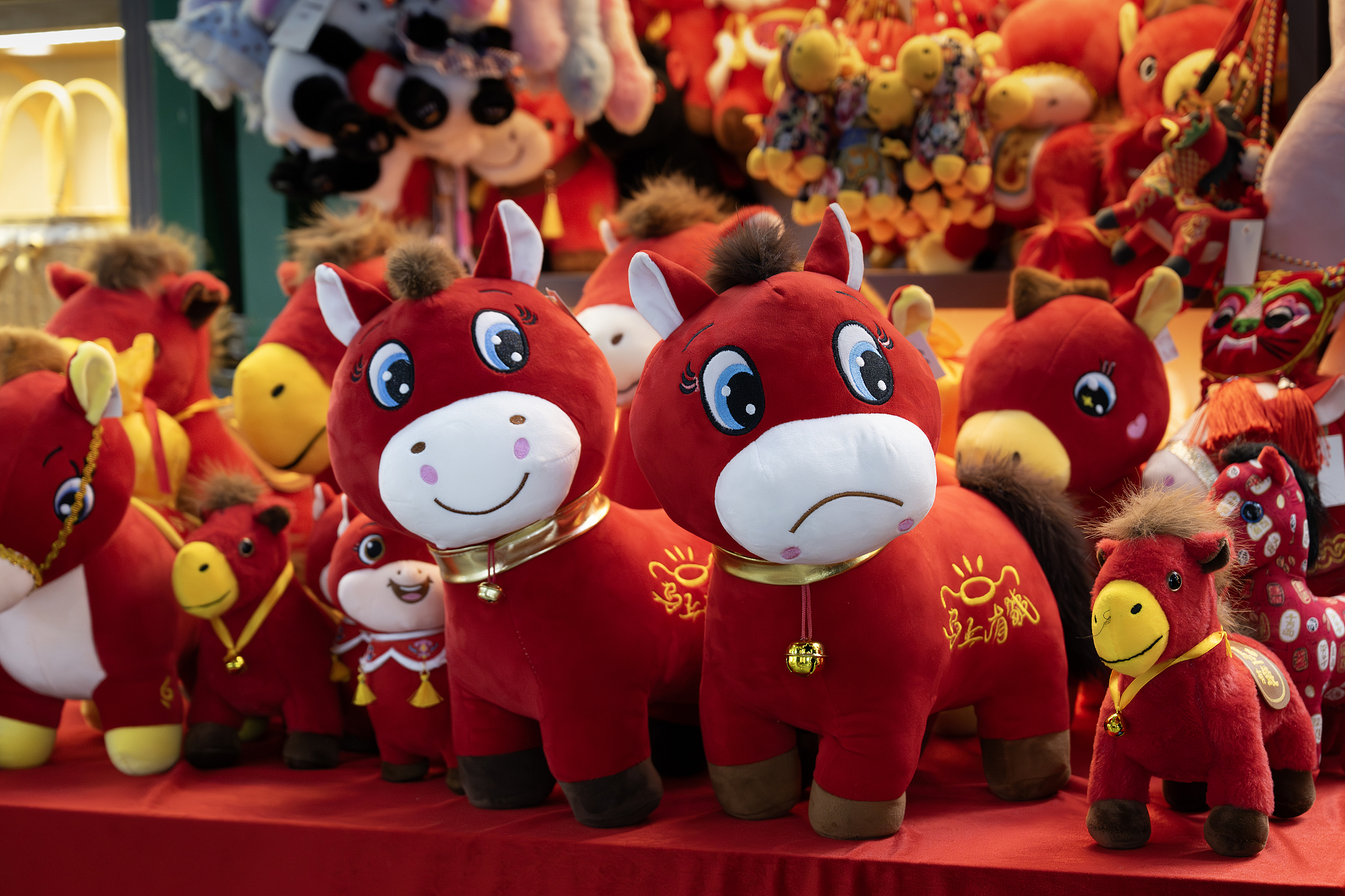
A factory in Yiwu, China set out to manufacture a cheerful mascot for the Year of the Horse, which begins February 17, 2026. Somewhere on the line, a worker sewed the plush horse's mouth on upside down. The smile became a frown, and the cheerful red horse came out looking like it had survived one too many meetings.
The factory offered refunds. Customers wanted more of the defective version instead.
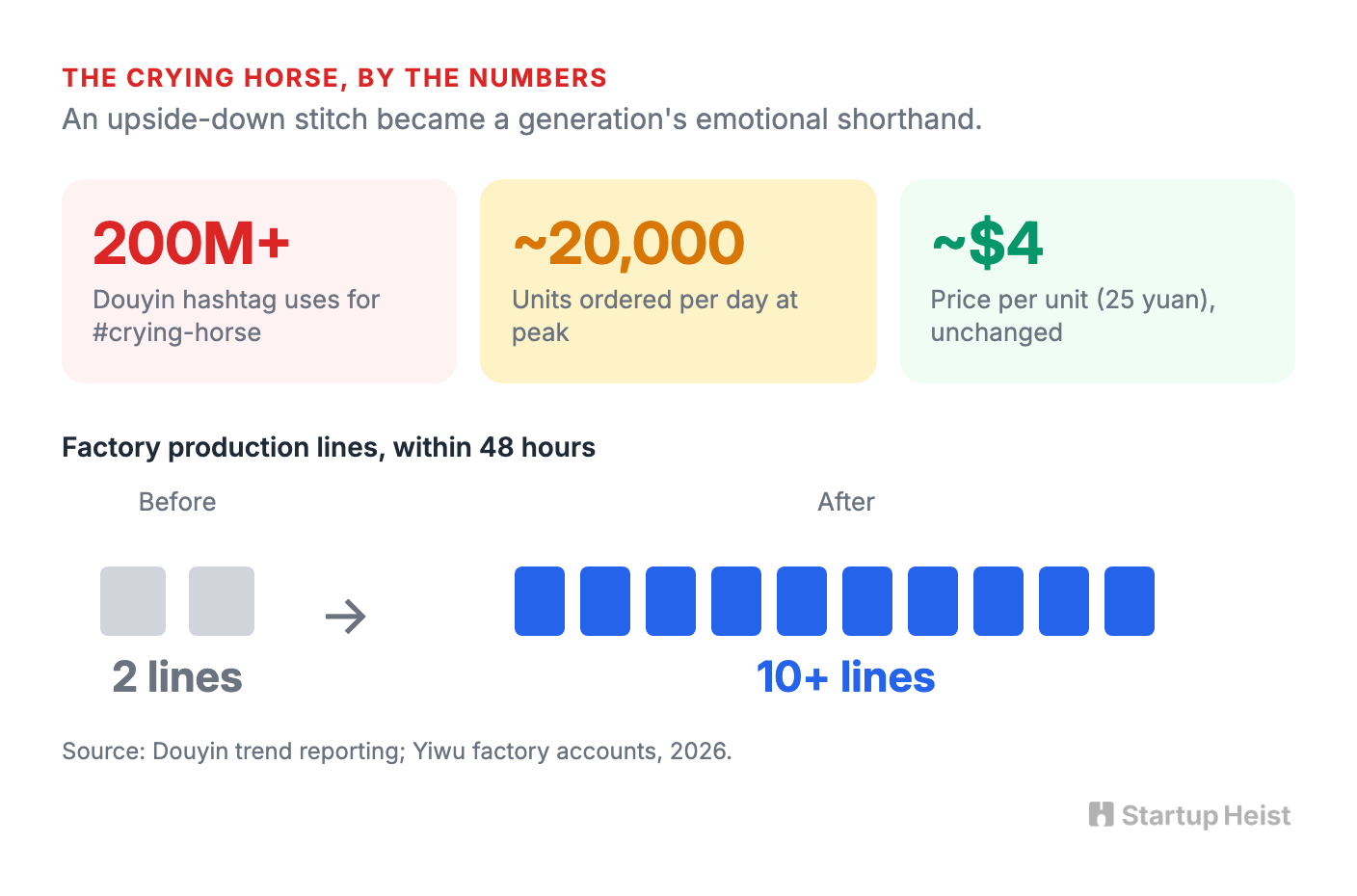
A buyer posted her sad horse online, and the "crying horse" hashtag racked up more than 200 million uses on Douyin. Daily orders climbed toward 20,000 units. The factory expanded from two production lines to more than ten within 48 hours. Overseas buyers started placing bulk orders. The price stayed around 25 yuan, roughly $4.

People didn't buy the horse despite its sad face. They bought it because of the sad face. Chinese office workers joked that the crying version was how they looked at work, while the original smiling horse was how they looked after clocking out. A stitching mistake became emotional shorthand for an entire generation.
The obvious move is to import the horse, mark it up, and sell it on TikTok Shop. That's also the move with the shortest shelf life. By the time a viral product reaches international news coverage, the easiest arbitrage is already closing. Factories are scaling output, search results are filling with lookalikes, and margins are compressing toward commodity. You may still make money, but you're racing operators who can copy a listing in an afternoon.
The durable opportunity sits upstream. Build a China-to-U.S. emotional-toy radar and sourcing concierge for small brands that need to spot the next crying horse before it reaches American TikTok. Monitor Chinese social-commerce platforms, interpret which trends can travel culturally, match promising concepts with compliant suppliers, and deliver launch-ready product briefs to U.S. merchants. Then run a small emotional-plush brand of your own on top of the system.
Here's the opportunity:
The money: 20 Radar subs at $149, 12 Concierge at $499, plus a couple of launch sprints clears roughly $13K MRR before any hiring.
Inside:
• Full Drop Brief spec merchants pay for
• Four-layer human-in-the-loop radar build
• Three-tier pricing from concierge to sprint
• House-brand proof engine and five moats
The B2B service creates recurring revenue. The house brand turns the intelligence into proprietary data, case studies, and occasional upside. The combination is more interesting than a dropshipping store and more realistic than trying to build the next Pop Mart on day one.
The Heist at a Glance
| Opportunity | China-to-U.S. toy and novelty radar with sourcing concierge |
| Initial wedge | Emotional plush, ugly-cute desk toys, bag charms, squishy novelties, and low-cost visual products |
| Ideal customer | TikTok Shop merchants, Shopify gift brands, plush sellers, merch-driven creators, and small novelty retailers |
| Starting budget | $1,000–$2,500 for the B2B service; $3,000–$6,000 if you launch a small house-brand drop |
| Time to first revenue | 30–45 days |
| Honest business size | A plausible $8,000–$20,000 MRR founder-led intelligence business before meaningful hiring |
| Longer-term upside | Exclusive supplier relationships, co-owned drops, wholesale curation, and original character IP |
| Stealth rating | 7.5/10 |
The Signal Is Bigger Than One Sad Horse
The crying horse revealed a repeatable product dynamic. A simple, visually legible object becomes valuable when it expresses a specific emotion more clearly than the customer can.
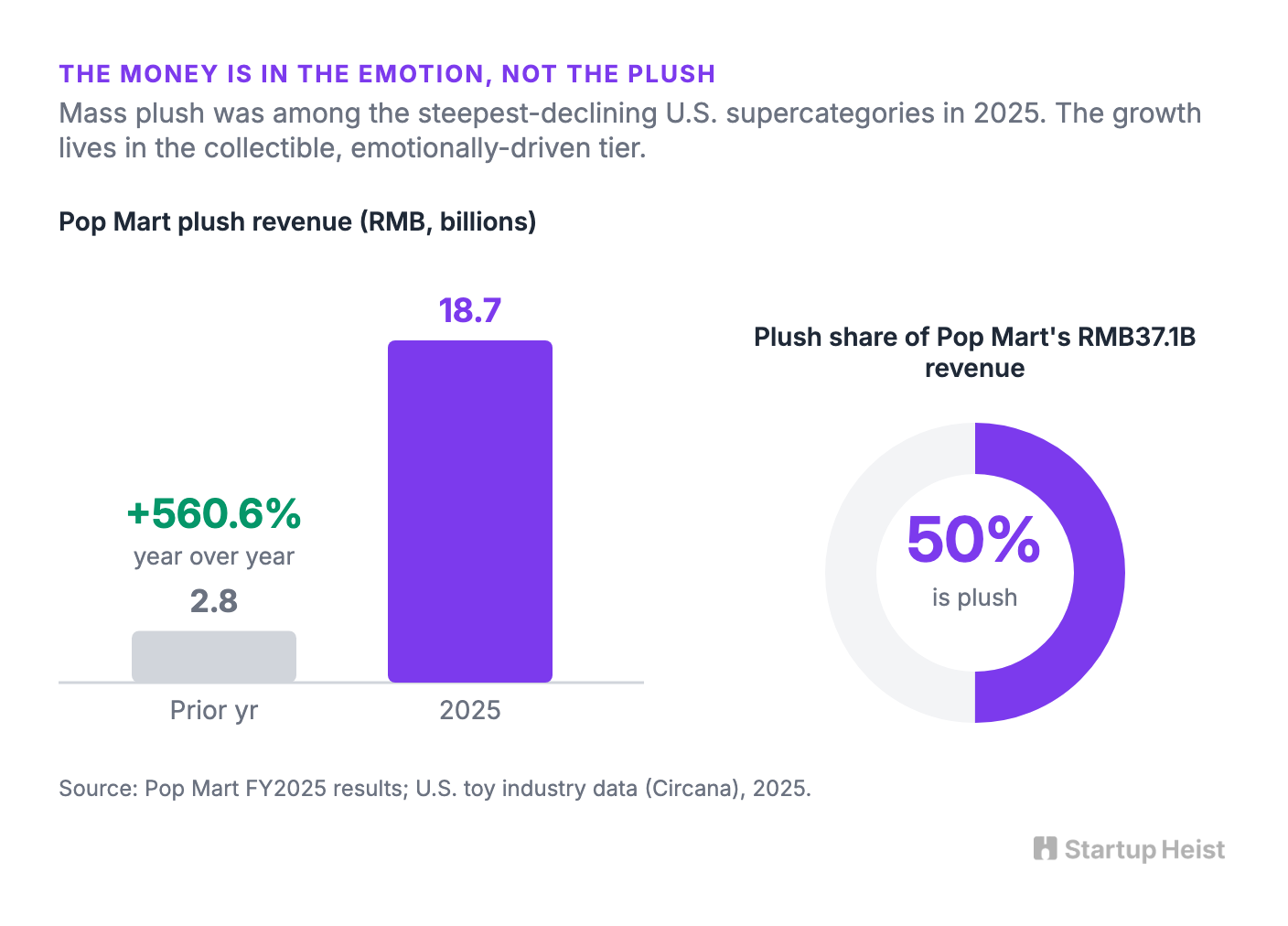
The market behind that dynamic is real, though you have to read it carefully. The U.S. toy industry returned to growth in 2025 after two flat years, with dollar sales up 6%, units up 3%, and average selling prices up 4%. Adults were the fastest-growing buyer group early in the year, spending $1.8 billion on toys in the first quarter alone. One caveat sharpens the thesis rather than weakening it: mass-market plush was actually among the steepest-declining U.S. supercategories in 2025, while the growth lives entirely in the emotionally-driven, collectible tier. Pop Mart, the Chinese collectible-toy company behind Labubu, generated RMB37.1 billion in 2025 revenue. Plush became its largest category, up 560.6% year over year to RMB18.7 billion, half the company's revenue. The lesson: sell the emotion the plush carries, not the plush itself.
Most coverage missed the detail that matters most. When Pop Mart reported those blockbuster numbers in March 2026, its stock fell more than 20%. Investors were spooked that a single character family drove 38% of revenue. Even the category king gets punished for depending on one face. The lesson cuts both ways. Don't bet your business on finding one magic character. Bet it on the machine that produces attempts.
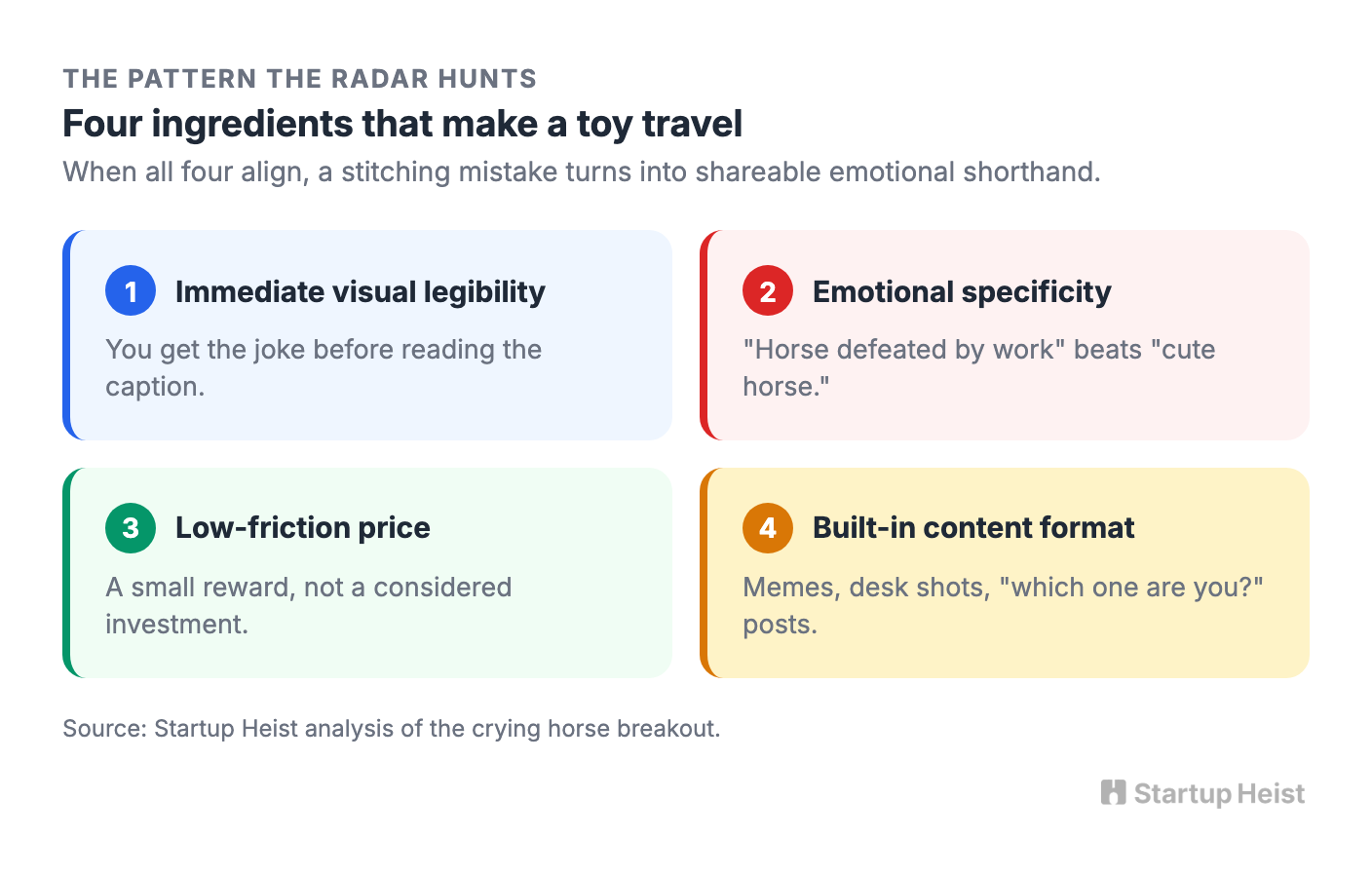
The crying horse shows what that machine should detect. The toy spread because four ingredients aligned.
| Ingredient | Why it matters |
|---|---|
| Immediate visual legibility | You understand the joke before reading the caption. |
| Emotional specificity | "Cute horse" is generic. "Horse that looks defeated by work" is shareable. |
| Low-friction price | The purchase feels like a small reward, not a considered investment. |
| Built-in content format | The toy naturally produces memes, reaction videos, desk shots, gifts, and "which one are you?" posts. |
That formula travels. Burnout, rent anxiety, office fatigue, and Sunday scaries are not uniquely Chinese feelings. The opportunity lies in detecting emotionally resonant product patterns early, translating them intelligently, and helping U.S. brands launch while the window is still open, rather than in cloning Chinese characters.
Why the Radar Starts With Toys
A broad "China trend intelligence platform" sounds bigger. It's also much harder to sell. The better wedge is narrow: a weekly China toy and novelty radar for TikTok-native U.S. brands, with optional supplier verification and launch support.
Toys suit this model unusually well. They're visual, so a merchant can assess a concept in seconds. They're content-native, demonstrable in a short video. They're giftable, requiring no customer education. And they're emotionally flexible: the same base object can be localized with a new expression, color, hang tag, or story.
They also bound the research problem. Instead of monitoring every consumer category, you track a focused keyword library: 毛绒玩偶 (plush dolls), 丑萌 (ugly-cute), 情绪价值 (emotional value), 解压玩具 (stress-relief toys), 治愈系 (healing aesthetic), 打工人 (office-drone humor), 挂件 (bag charms), 隐藏款 (secret editions), 义乌爆款 (Yiwu breakout products). Xiaohongshu has more than 300 million monthly active users with unusually strong search behavior. Douyin exposes fast-moving video trends. TikTok Shop already runs a discoverable "emotional support plush" category in the U.S. Community-built scrapers for Douyin and Weibo are readily available.
The plumbing is commoditized, which tells you where not to spend your time. Don't spend six months on a dashboard. Don't pretend the scraper is the moat. Your customer doesn't want more data. They want an answer: is this product early enough, sourceable enough, safe enough, and culturally portable enough to launch before everyone else sees it?
The Gap Is an Unbundled Workflow
There's no shortage of trend tools. Trend Hunter sells broad innovation intelligence, Alibaba-connected products like Accio help buyers discover suppliers, generic sourcing agents negotiate with factories, and DIY scrapers collect social posts. Each solves a piece. What's missing is the operating layer between the pieces.
A small TikTok Shop merchant doesn't need another database of trending products. They need a compact, English-language launch memo with the tedious work already done: what's moving, why, whether the emotional hook is legible in the U.S., whether the market is already saturated, which suppliers can deliver a sample quickly, the likely landed-cost range, which compliance documents to request, what the first three videos should look like, and how long the window stays open.
That's not traditional SaaS. It's productized intelligence with execution support. The customer isn't paying for information scarcity, since most signals eventually become public. They're paying to remove delay, translation friction, sourcing mistakes, and operational risk. Here's how to build it.
Sell the Drop Brief, Not the Dashboard
Unlock the Vault.
Join founders who spot opportunities ahead of the crowd. Actionable insights. Zero fluff.
“Intelligent, bold, minus the pretense.”
“Like discovering the cheat codes of the startup world.”
“SH is off-Broadway for founders — weird, sharp, and ahead of the curve.”


