


Build a low-cost reality-show studio for TikTok and YouTube Shorts. The prize is one fictional cast that viewers refuse to stop talking about.
The Steal
On March 13, 2026, an anonymous TikTok account launched a reality dating show starring anthropomorphic fruit. The contestants flirted, cheated, cried, and formed alliances inside a virtual villa. There was a muscular banana, a scheming cherry, and enough relationship drama to fill a season of cable television. The animation was rough. The premise was ridiculous. None of that mattered.
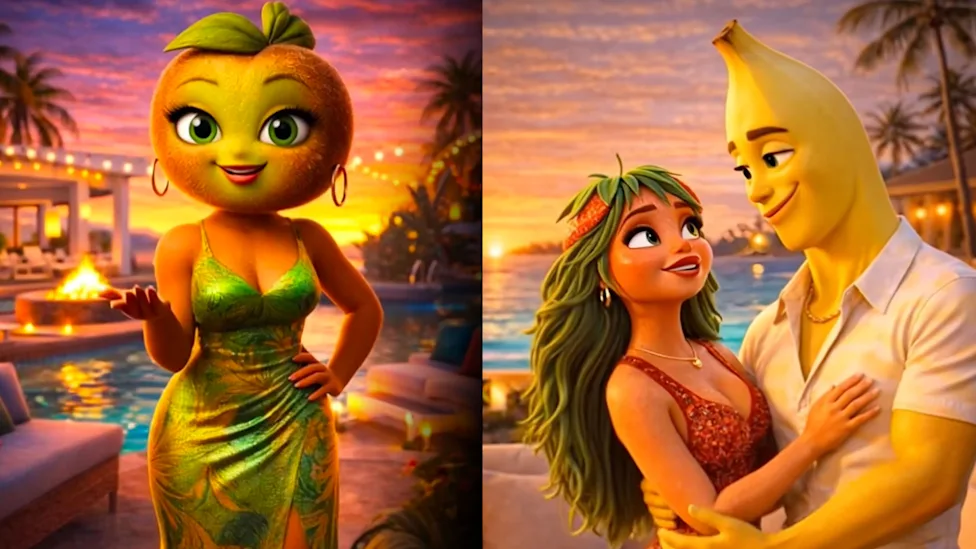
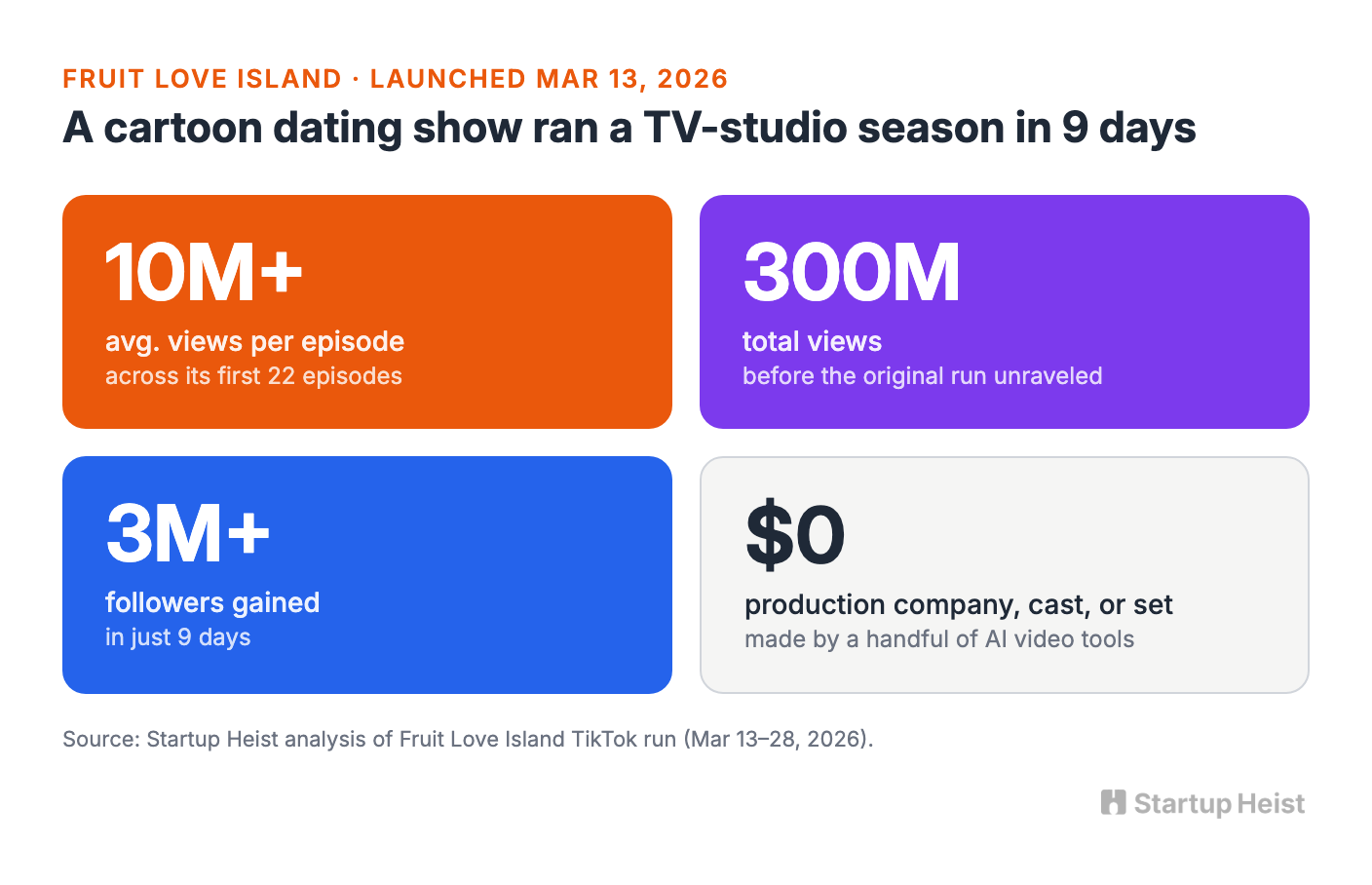
Fruit Love Island averaged more than 10 million views per episode across its first 22 episodes. The account gained more than 3 million followers in nine days and roughly 300 million total views before the original run unraveled on March 28 amid takedowns, criticism, and a swarm of copycats. A handful of generative AI video tools had produced compressed reality television that would once have required a production company, a cast, a location, and a real budget.
The obvious takeaway is that AI video crossed a threshold. The more useful takeaway is narrower: a solo operator can now use AI video as a rapid-testing engine for serialized entertainment IP. Skip the content farm. Build a format lab instead. Launch several tightly designed fictional reality shows, publish enough episodes to identify which characters generate attachment, and turn the winning cast into a small but defensible media property.
Here's the opportunity:
The money: A single sticky channel can plausibly reach $5K-$20K/month from sponsor pilots, affiliate commerce, and bonus arcs. One white-label "show in a box" sale pushes a month materially higher.
Inside:
• Three original concepts ready to pilot
• Lean MVP toolchain under $300/month
• 90-day test-grid playbook with kill criteria
• Five-rung monetization ladder
• Five compounding moats to build
This is not the next Netflix. The base case is a volatile, algorithm-dependent media business that might reach $5,000 to $20,000 per month if you find a sticky concept and monetize it intelligently. Most concepts will fail. A rare hit could become much larger. The startup cost is low, the testing loop is unusually fast, and the market is still weird enough that a resourceful operator can compete on taste and discipline rather than capital.
Why This Is Happening Now
While the AI startup world chases productivity software, consumers are doing something stranger. A 2026 analysis of how people actually use generative AI placed fan fiction and storytelling at number four, with fake reality TV entering at number 11. Reality TV, gossip columns, soap operas, and mobile games built some of the largest media businesses in the world from the same psychological territory: low-stakes entertainment with high emotional velocity. AI just collapsed the cost of producing it.
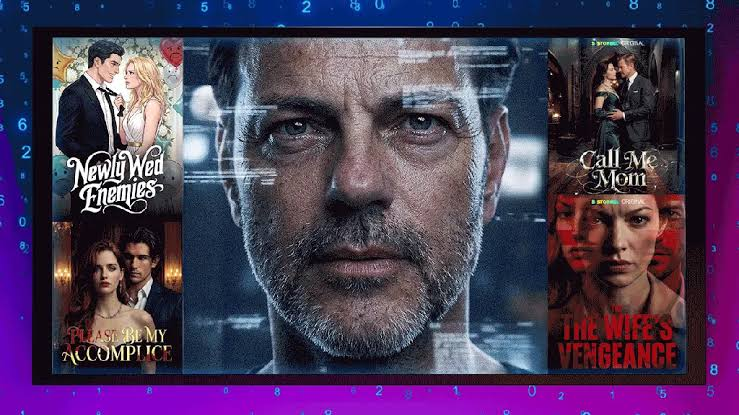
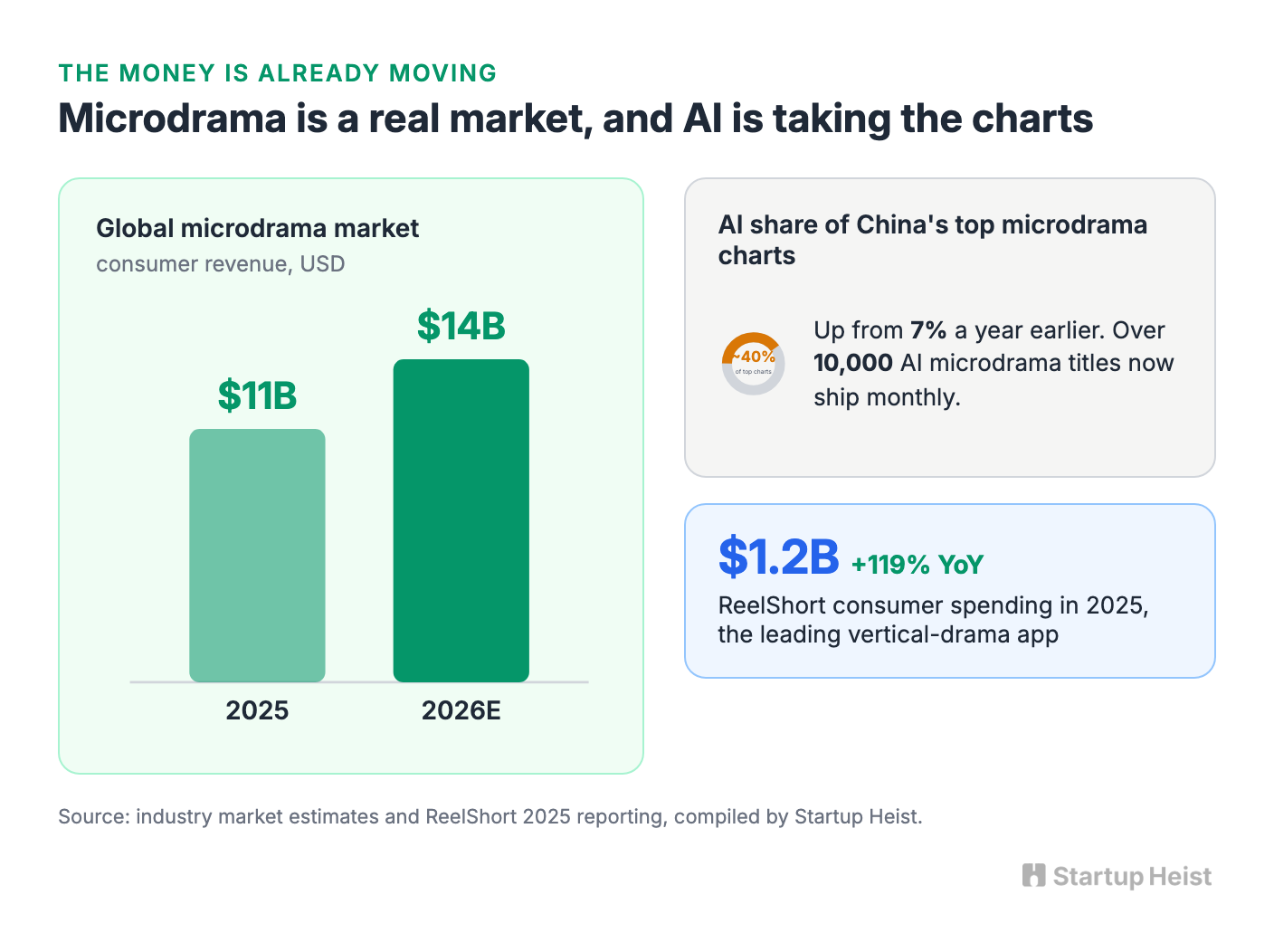
The money is already moving. The global microdrama market hit roughly $11 billion in 2025 and is projected to reach $14 billion by the end of 2026. ReelShort, the leading vertical-drama app, booked $1.2 billion in consumer spending in 2025, up 119% year over year, and its CEO has said publicly that if he were purely a businessman he would stop producing live-action today, because AI content performs better for the market. In China, more than 10,000 AI-generated microdrama titles were shipping monthly by early 2026, and AI content's share of the top charts jumped from 7% to nearly 40% in a year.
The distribution pipes are enormous and getting friendlier. YouTube says Shorts now averages more than 200 billion daily views. TikTok is testing a dedicated short-drama feed in the U.S. featuring one-to-five-minute episodic stories, where several of the top shows are AI-generated, and it launched a standalone microdrama app called PineDrama in early 2026. The platforms want serialized content because serialized content creates habit. Audiences have shown they will follow synthetic characters when the drama works. The technology is not the moat. The audience relationship is.
Recurring Characters Beat Perfect Video
Fruit Love Island was not an isolated proof point, and the supporting cases reveal where the real leverage sits.
An AI-generated character called Granny Spills, an outspoken grandmother in pink designer suits, attracted roughly 400,000 TikTok followers and more than a million Instagram followers within weeks. Her two creators trained an AI model on their past videos to generate new scripts, fed the results into prompt templates for AI video tools, and cut production time to five or ten minutes per video. At the industrial end, a studio shot a fully AI-generated survival series called Non Player Combat, six synthetic contestants, for about $28,000 in under two months, roughly 90% less than comparable live-action production. The Traitors, a similar format with humans, reportedly costs $1 million or more per episode.
Generating moving images is no longer the hard part. The hard part is creating a cast viewers remember and an episode structure they want to repeat. Granny Spills works because viewers come back for her, a consistent personality with a recognizable voice, and that distinction now has teeth. TikTok later flagged her videos as unoriginal and pulled them from its Creator Rewards monetization program. The character survived because the audience relationship, and the brand-deal pipeline it feeds, never depended on platform payouts. The winning operator behaves less like a prompt engineer and more like a showrunner with a ruthless analytics dashboard.
The Format Lab Model
The wrong approach is to generate random characters, prompt an LLM for generic drama, publish ten interchangeable clips a day, and pray for virality on creator payouts. That strategy is trivially clonable, hard to monetize, and squarely in the crosshairs of platform policies against mass-produced content.
The stronger approach borrows from television development. A studio develops many concepts, pilots a few, and scales the formats that produce an audience. Your advantage is that AI collapses the cost of running those experiments: you can test three fictional shows in 30 days, each with its own visual language, cast, and recurring tension. The objective is evidence of character attachment. A viewer who comments "drop the next episode" is useful. A viewer who comments "Bananito would never do that to Cherrita" is far more valuable, because that viewer has crossed from passive consumption into fandom. They remember the cast. They care about the next plot twist. That is the seed of an IP business.
A strong concept needs five ingredients:
| Ingredient | Why it matters |
|---|---|
| A one-sentence premise | The format should be instantly legible without explanation |
| A reusable location | A fixed world reduces production complexity and creates continuity |
| Five to eight characters | Enough personalities for conflict, few enough for viewers to remember |
| A repeatable drama engine | Every episode needs a natural source of confrontation, confession, or betrayal |
| A participation loop | Polls, comments, and viewer-submitted twists convert passive views into return visits |
Reality television is a machine for manufacturing unresolved tension. The AI-native version should be tighter, with a cliffhanger every 30 to 90 seconds instead of every 45 minutes.
Three original concepts worth testing, each with a different commercial profile:
Glow-Up House. Six fictional beauty entrepreneurs compete inside a hyper-stylized mansion to launch the next cult product. Alliances form around product drops, sabotage accusations, and influencer drama. Natural fit for beauty, skincare, and fashion sponsors.
Ranked Roommates. A house of gamer avatars competes for the last spot on an elite esports squad. Every episode produces a betrayal, a challenge, or a confessional. Maps to gaming accessories, energy drinks, and creator partnerships.
The HOA. A suburban cul-de-sac populated by absurdly serious anthropomorphic pets, appliances, and garden gnomes, feuding over lawn violations, parking, and secret renovations. Less commerce-adjacent, more broadly shareable.
The sweet spot is recognizable enough to understand in two seconds, strange enough to feel native to the internet. Do not copy an existing franchise's name, logo, or signature set pieces.
The MVP
Forget the custom app, the proprietary models, and the automation layer. One reliable publishing machine does the job:
| Function | Lean tool choice | Purpose |
|---|---|---|
| Story development | Claude or ChatGPT | Character bibles, episode outlines, dialogue, cliffhangers |
| Character design | Midjourney or equivalent | Consistent character sheets, costumes, locations, props |
| Video generation | One of: Veo 3, Runway, Kling | Image-to-video scenes, reaction shots, transitions |
| Voices | ElevenLabs or native model audio | Repeatable voices for narration and characters |
| Editing | CapCut or DaVinci Resolve | Captions, pacing, sound effects, vertical formatting |
| Analytics | Spreadsheet | Episode performance, retention, cost, audience signals |
| Owned audience | Landing page + email capture | Cast profiles, voting, bonus scenes, platform independence |
Unlock the Vault.
Join founders who spot opportunities ahead of the crowd. Actionable insights. Zero fluff.
“Intelligent, bold, minus the pretense.”
“Like discovering the cheat codes of the startup world.”
“SH is off-Broadway for founders — weird, sharp, and ahead of the curve.”


