


The Factory Is Online. The Front Door Still Requires CAD.
Build the preflight layer that turns rough maker files into production-ready metal parts.
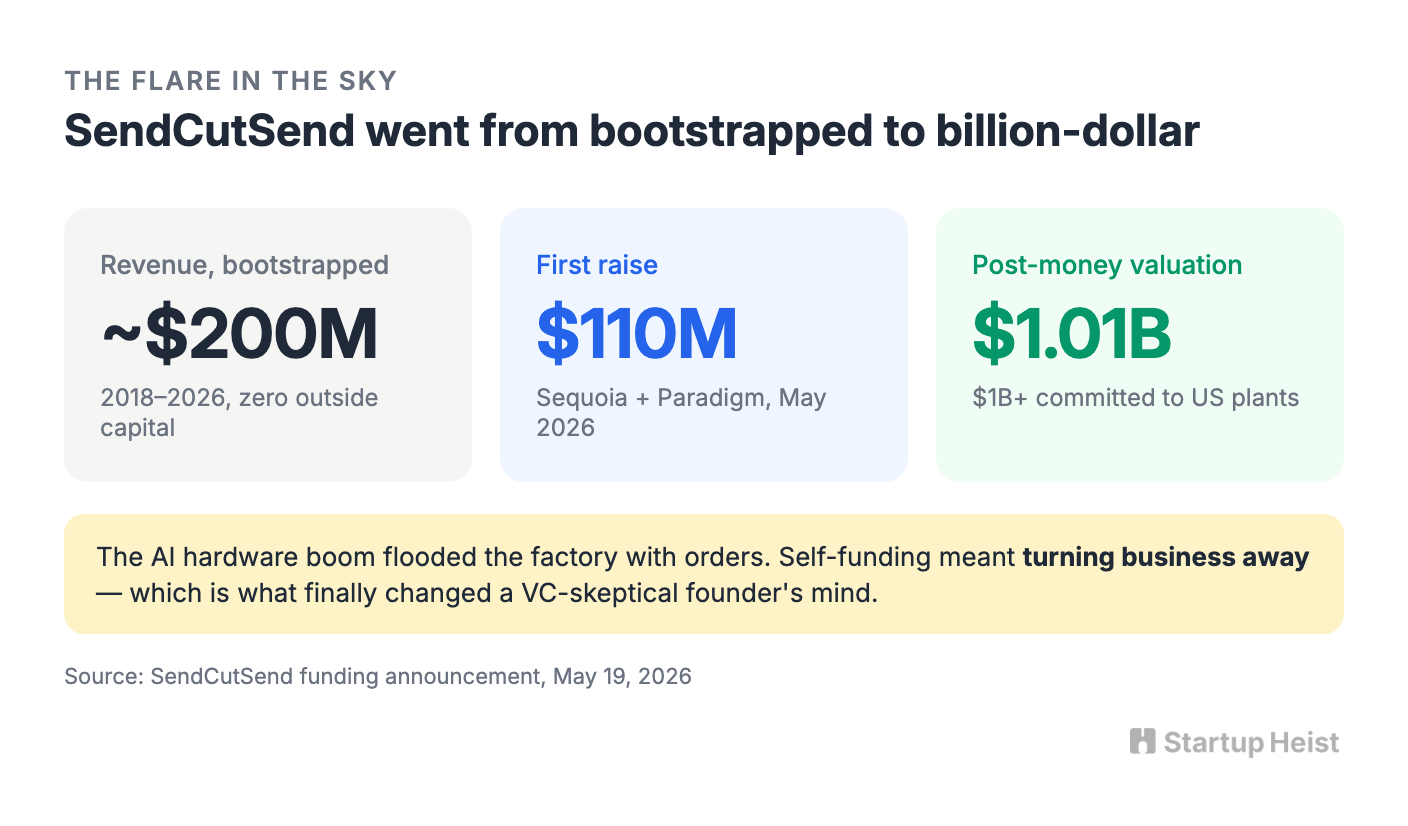
On May 19, 2026, SendCutSend announced its first institutional financing: $110 million co-led by Sequoia Capital and Paradigm, with participation from Stripe co-founders Patrick and John Collison. The Reno-based on-demand manufacturer crossed a $1.01 billion post-money valuation and committed to investing more than $1 billion in American manufacturing infrastructure over the next five years.
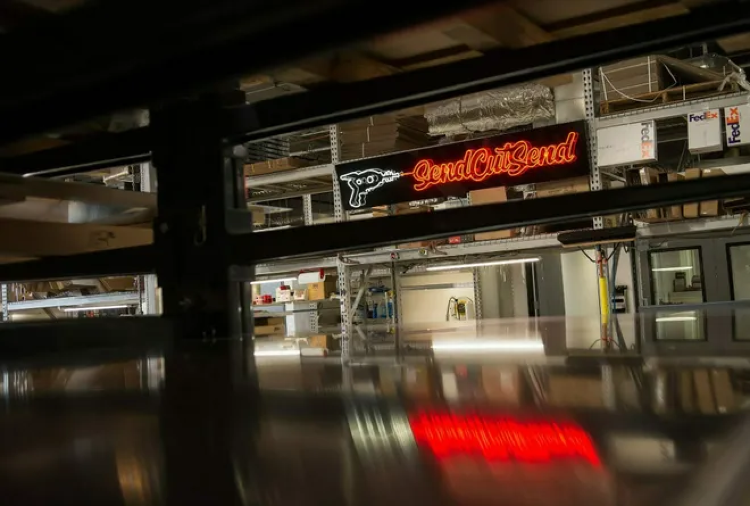
What stands out is not that venture capitalists invested in manufacturing. It is how hard they had to work to invest. CEO Jim Belosic bootstrapped the company from 2018 to roughly $200 million in revenue, and once publicly called VCs "grifters." It took Sequoia partner Andrew Reed flying to Reno in March 2026 to walk Belosic's factory floor before the deal came together. Demand is what changed Belosic's mind: the AI boom flooded him with hardware customers in robotics, data centers, and aerospace, and self-funding meant turning business away.
That is a useful flare in the sky. Software-driven fabrication has quietly become infrastructure. A customer can upload a design, choose a material, request bending or powder coating, preview the part, receive an instant quote, and have physical components shipped within days. There is only one problem. Before you can use the anything factory, you need to speak CAD.
Here's the opportunity:
The money: 250 makers at $19 and 50 workshops at $49 puts you near $9K MRR solo, with a path to $20-40K as you add bending rules and shop tiers.
Inside:
• 90-day MVP scope: deterministic checks first
• Repair-before-create build sequence
• Fabricator-specific rule-pack moat
• Free-tool and makerspace GTM playbook
That requirement creates a clean startup opportunity: an AI-assisted preflight and file-building tool for people who need custom laser-cut parts but cannot reliably produce manufacturing-ready files.
Skip the sci-fi pitch: "describe any physical object and receive perfect factory-ready CAD." That is still too broad, too risky, and too technically messy for a small team. Start with the boring, painful step immediately before the order:
Upload a rough DXF, SVG, Illustrator file, or simple sketch. Detect the problems. Repair the geometry. Enforce the relevant fabrication rules. Export a clean production-ready file.
This is not a venture-scale business on day one. It is a credible micro-SaaS with a path to $5,000–$20,000 in monthly recurring revenue if executed narrowly. But the wedge sits in an unusually strategic location: between millions of people who want physical parts and the increasingly sophisticated factories waiting to accept their orders.
The hidden tax before the purchase button
SendCutSend accepts common 2D vector formats — DXF, DWG, AI, EPS — drawn at 1:1 scale, plus STEP files for complex work. That sounds simple until you look at the actual checklist. Laser-cut holes must be at least 50% of material thickness. Waterjet holes need 0.070 inches; CNC-routed parts need 0.125. Everything on one layer. No stray points, duplicate lines, empty objects, or text areas. Correct units. Interior elements bridged so pieces don't drop out during cutting. Bent parts add bend radii, allowances, flange lengths, and deformation zones on top.
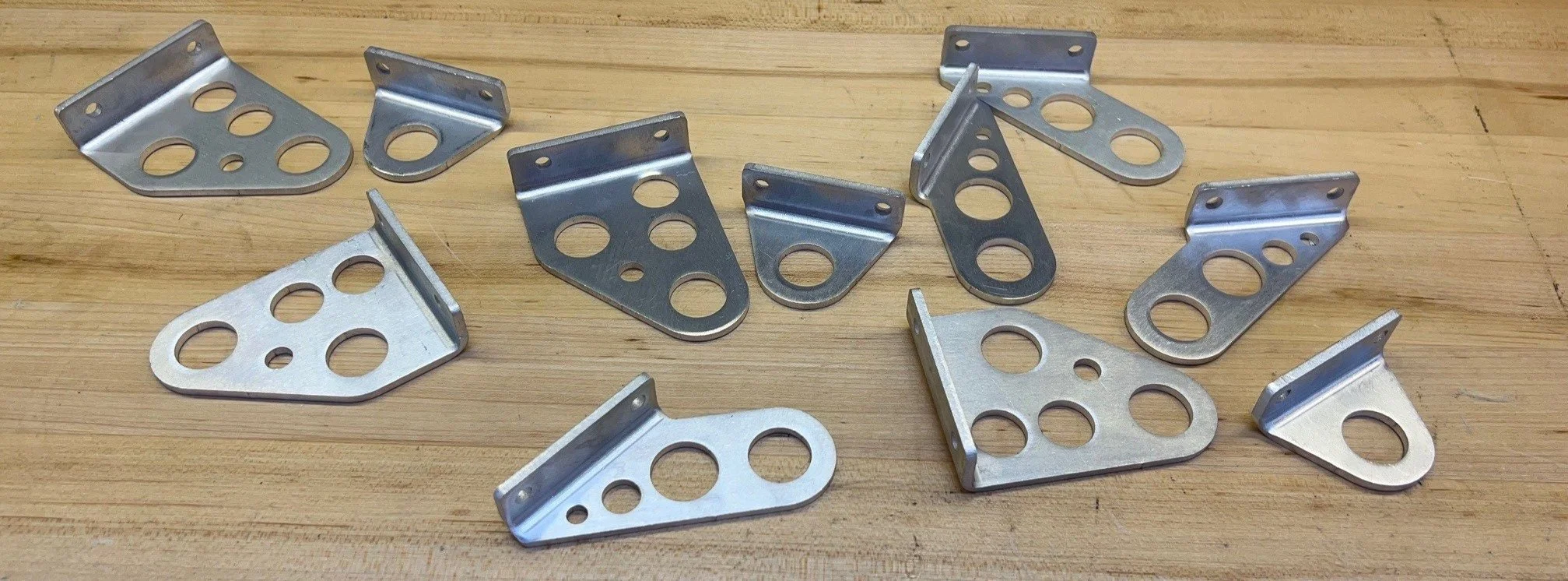
The mistakes are not exotic. They are the digital-manufacturing equivalent of typos:
- A bracket is drawn in millimeters but interpreted as inches.
- A contour is almost closed, but not quite.
- A decorative cutout is too small for the selected material.
- A customer submits multiple nested parts as one file.
SendCutSend maintains an entire troubleshooting page for customers who cannot receive instant pricing, publishes a list of ten common preflight failures, and even wrote a tutorial teaching customers to preflight their own designs in QCAD, a free desktop CAD program. When a fast-growing manufacturer has to build tutorials, checklists, support pages, and design-partner directories just to help customers reach the checkout page, there is room for a focused software layer.
The opportunity: Grammarly for fabrication files
The product should feel less like a CAD suite and more like Grammarly or an airport preflight check. A customer uploads a file, selects the intended process, material, and thickness, and the system returns a prioritized report:
Your file is almost ready. We found four issues that may prevent quoting or create a weak part.
1. Two open contours near the mounting slot
2. Three duplicate cut lines
3. Hole diameter below the recommended minimum for 0.125-inch mild steel
4. Part units appear to be millimeters, but the dimensions look like inches
Then it offers one-click fixes where the correction is deterministic: close nearly connected contours, delete duplicate paths, remove isolated points, convert text to outlines, normalize layers, correct units after confirmation, flag minimum-feature violations and risky edge distances, and export a clean DXF. For ambiguous cases, it explains the issue in plain English and lets the user decide. It never silently redesigns a mechanical part.
That distinction matters. You are not promising the bracket will hold a rooftop tent at highway speed. You are promising the geometry is properly formed, the units are correct, and the file follows the selected fabricator's published rules. Call it fabrication preflight, not engineering approval.
Why this beats a generic AI CAD tool
"AI for CAD" is becoming a crowded category, and the frontier is moving fast. DraftAid, a Y Combinator company, generates 2D manufacturing drawings from 3D models, built on the insight that engineers spend roughly 40% of their time on that conversion. It landed $150,000 in contracts within months of launch and has since grown to more than $1 million in annual recurring revenue, bootstrapped, serving automotive, aerospace, and industrial clients. MIT reported in November 2025 that its VideoCAD system learned CAD workflows from 41,000 demonstration videos and can build 3D objects from sketches. The research direction is clearly prompt-to-part.

A two-person startup should not begin there. The better wedge avoids competing with Autodesk, Siemens, and research labs on generalized CAD intelligence. Sit one layer downstream and answer a narrower question: can this particular flat metal part be accepted by this particular fabrication service in this particular material and thickness? That is a much smaller technical problem, and much closer to a purchase.
Scrappy free tools have already started here. Generic online DXF repair utilities and open-source geometry cleanup scripts fix files in a vacuum. A free, browser-based checker called SCS Preflight goes further: it runs client-side and validates files specifically against SendCutSend's rules — open contours, duplicate paths, wrong units, narrow bridges. It is a single-fabricator tool with no templates, no AI layer, and no repair automation, but it proves the demand is real and a solo builder can ship into it. The opening is to professionalize and expand what those tools have started: a paid, multi-fabricator, repair-and-create product that translates rough geometry into a reliable order.
The first customer is not an engineer
Professional mechanical engineers already have workflows in Fusion, SOLIDWORKS, or Onshape. The best early customers are competent builders who are not CAD specialists: van builders fabricating brackets and mounting plates, robotics teams producing chassis plates, Etsy sellers creating metal signs and fixtures, woodworkers adding custom hardware, motorcycle hobbyists recreating simple parts, cosplay builders, makerspaces, and small hardware brands prototyping enclosures. The ecosystem is not hypothetical. Thousands of makerspaces now serve non-engineer builders in nearly every major U.S. metro.
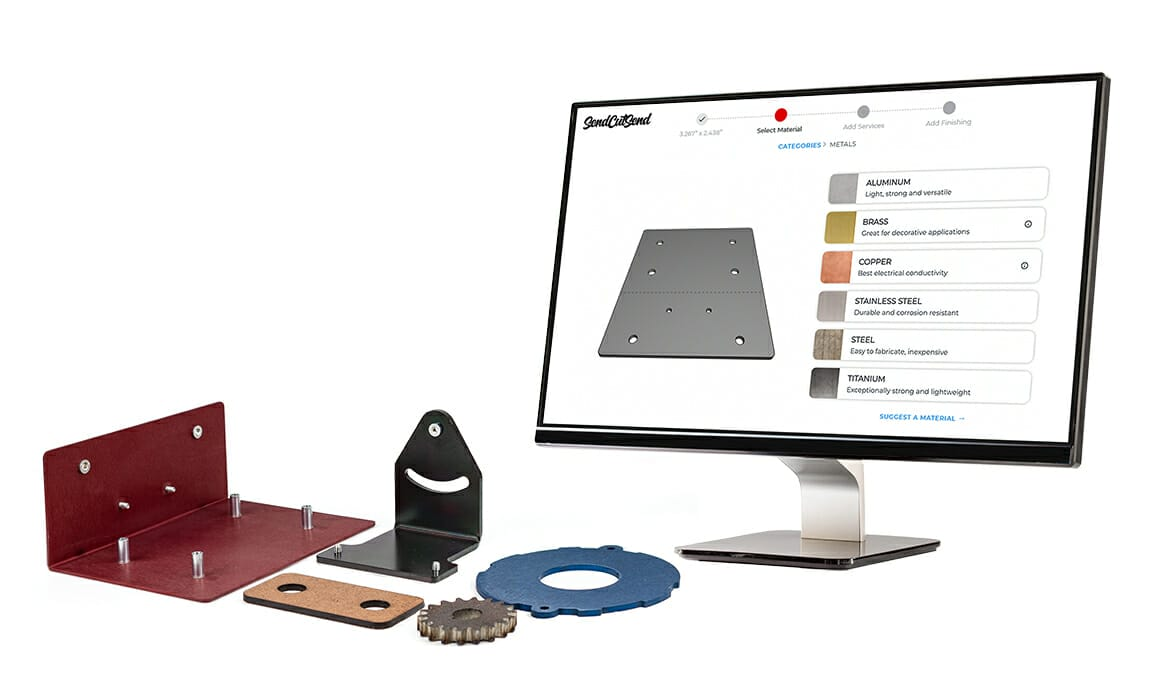
These customers do not need infinite CAD capabilities. They need a few recurring shapes without a semester-long detour through mechanical design software. SendCutSend already acknowledges the demand: its Parts Builder offers more than 60 free templates for brackets and basic shapes, and when templates fall short, it refers customers to human design partners.
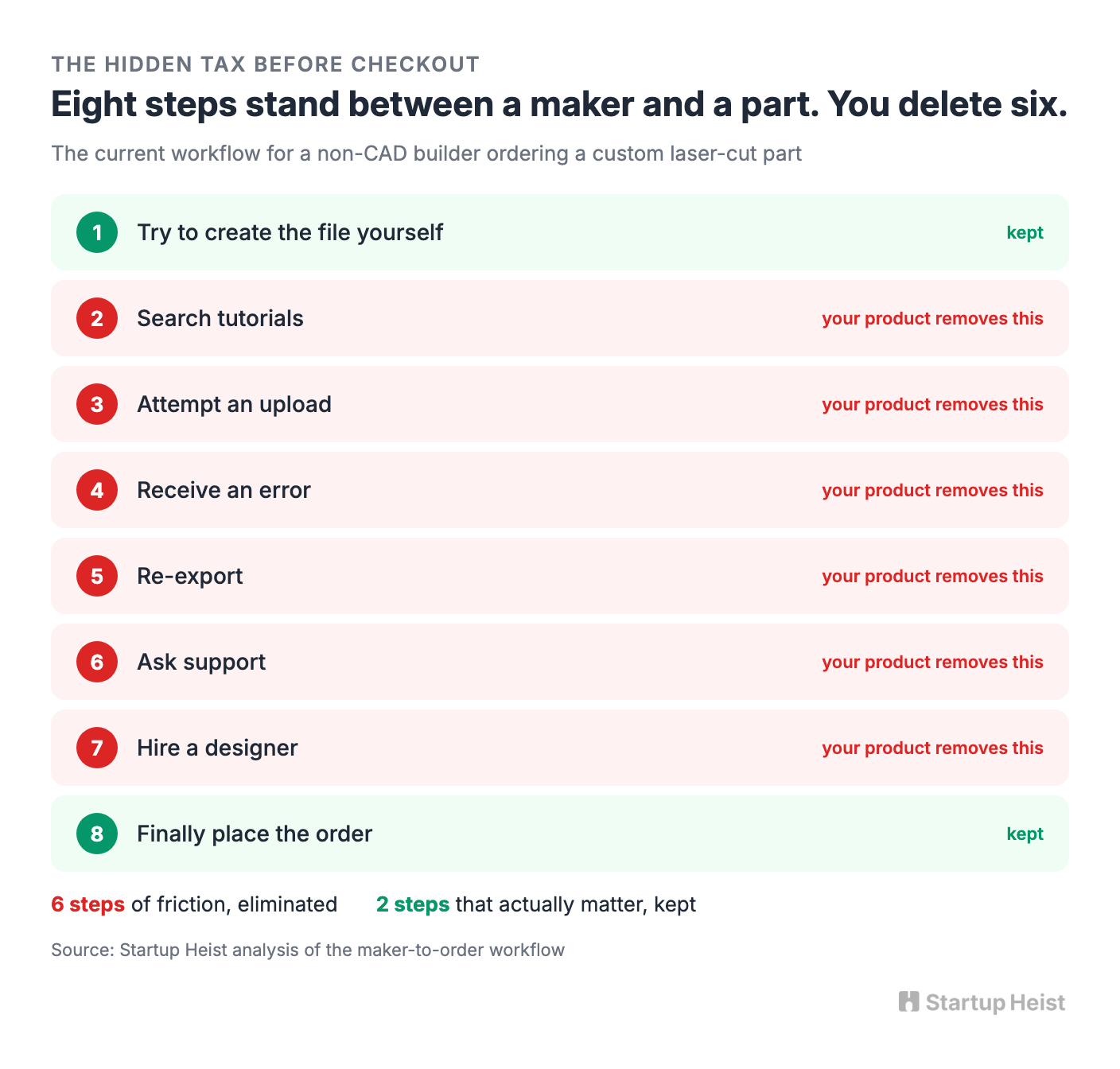
The existing workflow runs eight steps: try to create the file yourself, search tutorials, attempt an upload, receive an error, re-export, ask support, hire a designer if necessary, finally place the order. Your product compresses the middle six.
Start with repair. Add creation second.
There are two tempting MVPs: generate parts from text and sliders, or repair the half-broken files customers already have. Build the repair product first.
File repair has three advantages. The user already possesses an artifact, so you only need to diagnose and improve existing geometry, not infer intent from "make me a bracket for my solar panel." Most early checks are deterministic — you can calculate whether a contour is open, whether segments overlap, whether a hole violates a published minimum-size rule. The AI layer improves explanations and guides ambiguous decisions, but it does not need to invent geometry. And the value is measurable. Did the corrected file upload successfully? Did it receive an instant quote? Did the customer place an order? That feedback loop is far cleaner than asking whether an AI-generated model "looks right."
Once repair works, add the creation layer through a constrained template library. Do not offer a blank prompt box that claims to generate anything. Offer a catalog of high-frequency parts: flat mounting plates, L-brackets, gussets, tabs, flanges, rack panels, sign blanks, switch plates, enclosure faces, shelf supports, corner braces, adapter plates.
Each template exposes a small number of dimensions and constraints. The customer uses sliders and input fields, or describes the variation in natural language:
"Create a 6-inch-wide mounting plate with four quarter-inch holes, one inch from each corner, using 0.125-inch mild steel."
The AI converts the request into structured parameters. The geometry engine generates the part. The preflight rules verify it. The customer sees a preview and exports a clean DXF.
This is the real "Canva for fabrication" wedge. Canva did not begin by generating arbitrary design from a paragraph. It began by making common design jobs easier through templates, guardrails, and a friendly interface.
What to build in the first 90 days
The first version should be intentionally limited.
Unlock the Vault.
Join founders who spot opportunities ahead of the crowd. Actionable insights. Zero fluff.
“Intelligent, bold, minus the pretense.”
“Like discovering the cheat codes of the startup world.”
“SH is off-Broadway for founders — weird, sharp, and ahead of the curve.”


