


The Sticker Drop Desk
A sticker won't turn a YouTuber into MrBeast. It's the cheapest, most trivial-looking product in the creator merch catalog, which is exactly why almost nobody is building a business around it.
A well-designed sticker converts a creator's recurring joke, niche vocabulary, or community ritual into a low-cost badge of membership. It's the physical equivalent of quoting the comment section back to itself. And fans buy stickers at rates that embarrass every other merch category on TikTok Shop.
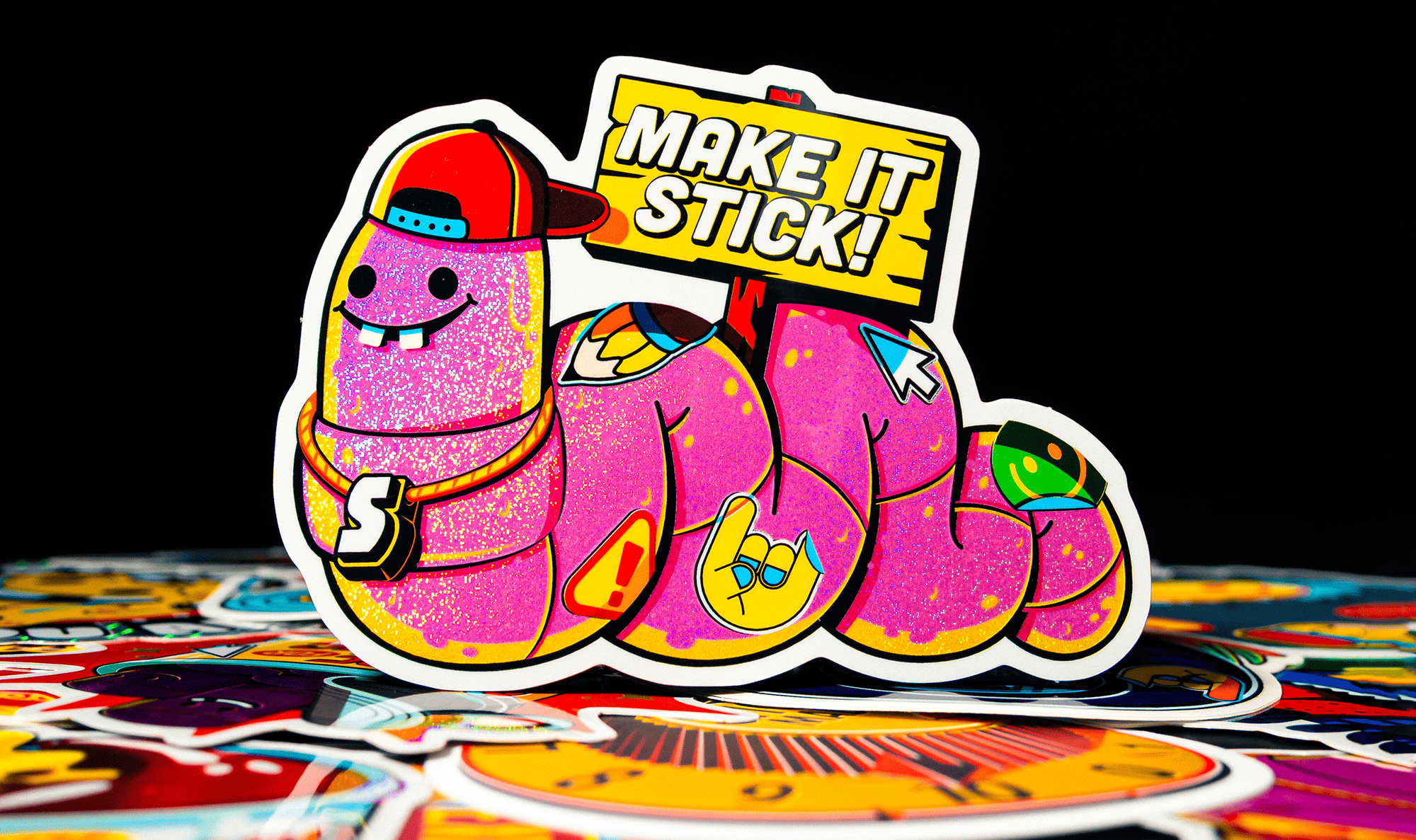
The opportunity is a done-for-you sticker-drop operation for mid-tier TikTok and YouTube creators. You mine their content for the jokes their audience already repeats, turn those jokes into themed sticker packs using AI-assisted design with human art direction, launch through Printify and TikTok Shop, and run the storefront and campaign operations. The creator approves the art, posts a few launch clips, and collects most of the profit. You keep roughly 30% for removing nearly all of the work.
Here's the opportunity:
The money: Ten creators selling 100 packs a month puts a solo operator near $4,300/mo; 25 creators at 150 packs reaches roughly $16,000/mo. Kiss-cut stickers convert at 68.91% in Printify's data.
Inside:
• Economics of a themed pack, fees to margin
• Three-tier pricing on contribution margin
• 30-day plan to close three pilot creators
• The joke graph and performance database moat
This is a productized service with a credible path to $5,000 to $20,000 per month with a small team. The deeper play is what you accumulate while running it: a proprietary dataset of which jokes, pack sizes, price points, and launch formats reliably convert. The first business is an agency. The second may be an operating system for creator commerce.
The signal: a 69% conversion rate hiding in a product report
Printify's 2026 report on trending TikTok products contains a number that looks like a typo. Its TikTok ad keyword data shows kiss-cut stickers converting at 68.91% across 20 million impressions. Every comparable category sits an order of magnitude lower: tote bags at 6.30%, posters and wall art at 6.28%, coffee mugs at 6.23%, tumblers and water bottles at 4.63%.
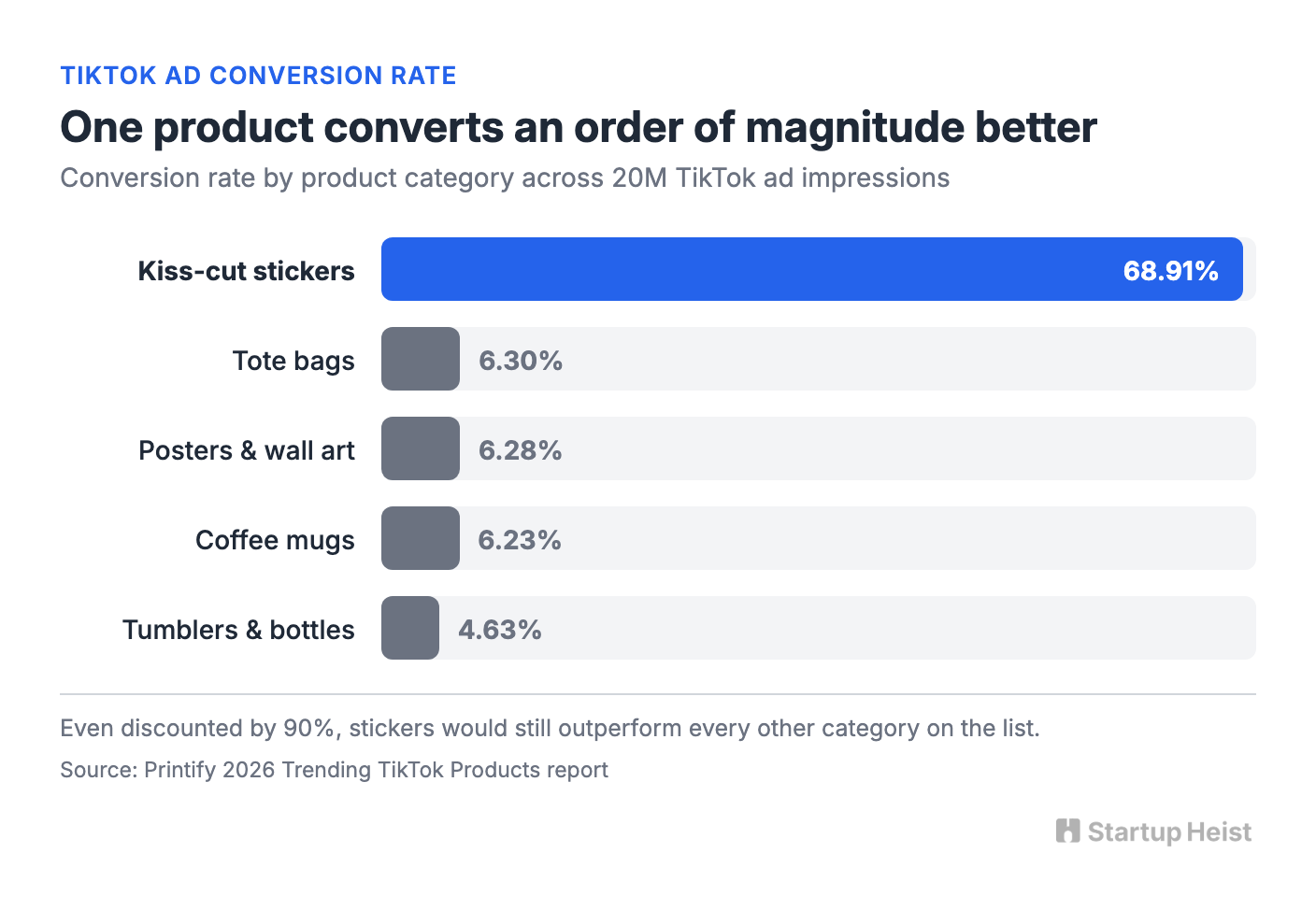
Treat the 68.91% carefully. It's a platform-reported advertising signal, shaped by whatever mix of keywords, creative, audiences, and prices fed it. It doesn't mean any random sticker pack will convert two-thirds of visitors. But even discounted by 90%, stickers would still outperform every other product on the list, and the structural logic holds up. A sticker is visually understandable in under one second, cheap enough to be an impulse buy, and naturally at home in the laptop shots, water bottles, and desk-tour videos creators already film. Fourthwall, the creator-commerce platform with over 500,000 creator shops, reports that roughly 70% of its sticker sales come from its smallest shops, usually solo creators, and that its sticker sales grew 66% year over year. Stickers are the one merch product where small audiences punch above their weight, and demand is still climbing.
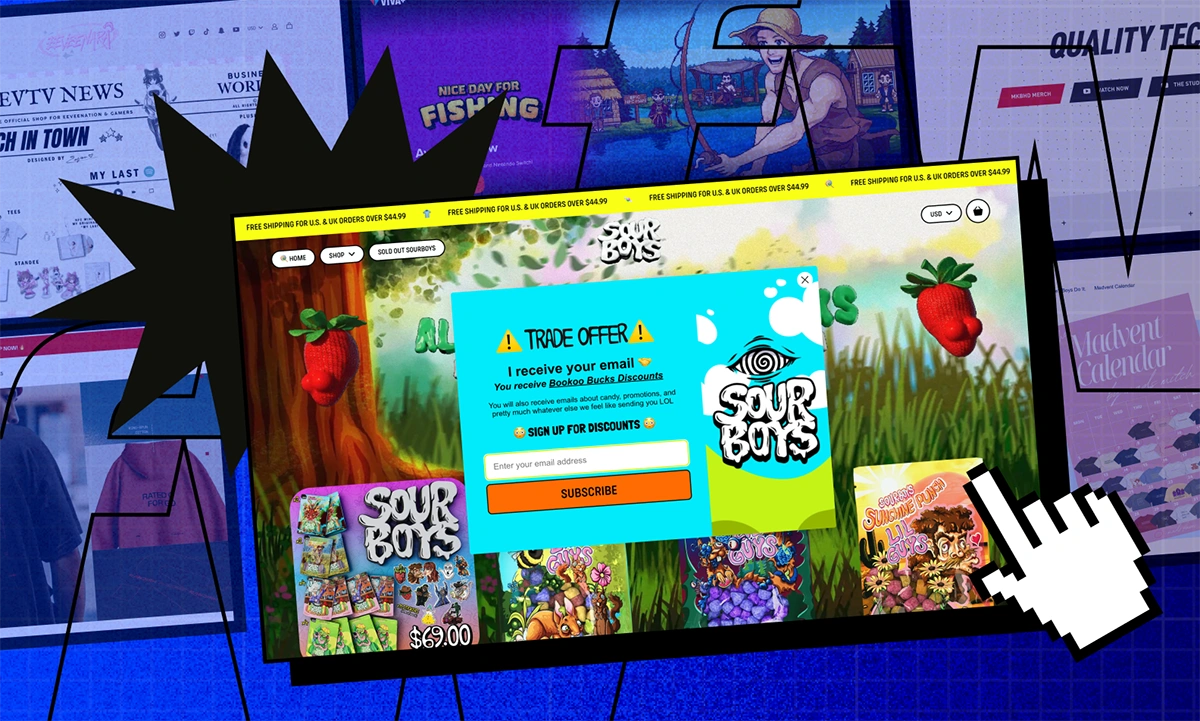
The distribution rail is compounding too. TikTok Shop's U.S. gross merchandise value reached $15.1 billion in 2025, up 68% year over year, according to Momentum Works. Printify now describes kiss-cut stickers as low-cost impulse buys for niche communities and recommends selling them in packs of five to ten units so shipping stays reasonable relative to product value.
That last detail matters more than it looks. The winning product is a themed sticker pack built around one tight audience, and almost nobody is building those well.
Why a service beats another merch platform
The reflexive response to this signal is to build software. The infrastructure already exists, and it's good. Printify offers more than 1,300 customizable products, a direct TikTok Shop integration, a REST API, and a free hosted Pop-Up Store with no setup, listing, or subscription fees that handles checkout, fulfillment, and customer support. Fourthwall gives creators a full storefront with no monthly fees, integrated design tools, and professional mockups.
Creators don't need another website where they can upload a PNG. They already have several. What they don't have is anyone willing to review 300 old clips, identify the five jokes their audience actually cares about, art-direct a coherent pack, configure the products, order samples, write the launch post, troubleshoot TikTok Shop settings, and report on whether the drop worked.
Every platform in this market sells tools. The gap is labor and taste. Your job is to become the creator's merchandising desk.
The customer: too big to ignore merch, too small to hire a team
The target is creators with roughly 50,000 to 500,000 followers across TikTok, YouTube, or both. Celebrity creators already have managers and merch operations. Hobbyists with 4,000 followers can't generate enough volume regardless of design quality. The middle band is where the economics work: the audience is large enough to support a few hundred purchases per drop (the industry rule of thumb is that 0.5% to 2% of an engaged audience buys on a given drop), the creator has developed real comment-section culture worth merchandising, and they are too busy for "easy to use" software to mean "done."
The macro backdrop favors them being hungry. IAB projected U.S. creator-economy ad spending to reach $37 billion in 2025, up 26% year over year. But the money pools at the top. CreatorIQ's 2025 compensation report found the top 10% of creators captured 62% of total payments, up from 53% in 2023, and while the average campaign paid $11,400, the median paid $3,000. The same report found 62% of creators already operate with some form of team or outsourced support. Mid-tier creators run like businesses with episodic, unpredictable revenue, and they know it.
They don't need another sponsorship marketplace. They need a repeatable way to monetize the audience they already earned without becoming part-time ecommerce managers. That's the service you're about to build.
What you actually sell
Don't sell "custom stickers." Sell a monthly drop engine. The creator should feel like they hired a tiny internal merch team without paying a salary.
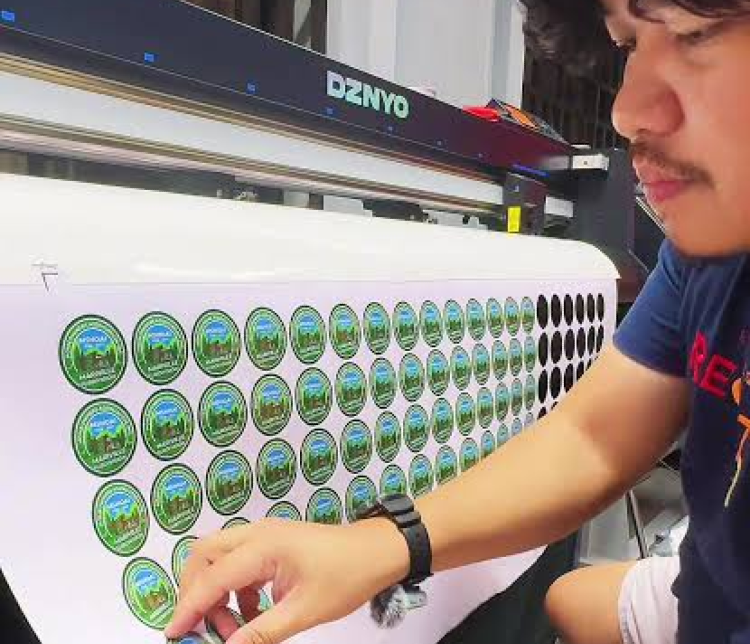
Each monthly Sticker Drop includes:
Unlock the Vault.
Join founders who spot opportunities ahead of the crowd. Actionable insights. Zero fluff.
“Intelligent, bold, minus the pretense.”
“Like discovering the cheat codes of the startup world.”
“SH is off-Broadway for founders — weird, sharp, and ahead of the curve.”


