


The Memory Mine: The Office Hardware Arbitrage Hiding in Plain Sight
Every few years, a commodity market does something strange enough to create a temporary business. In 2026, that commodity is computer memory.
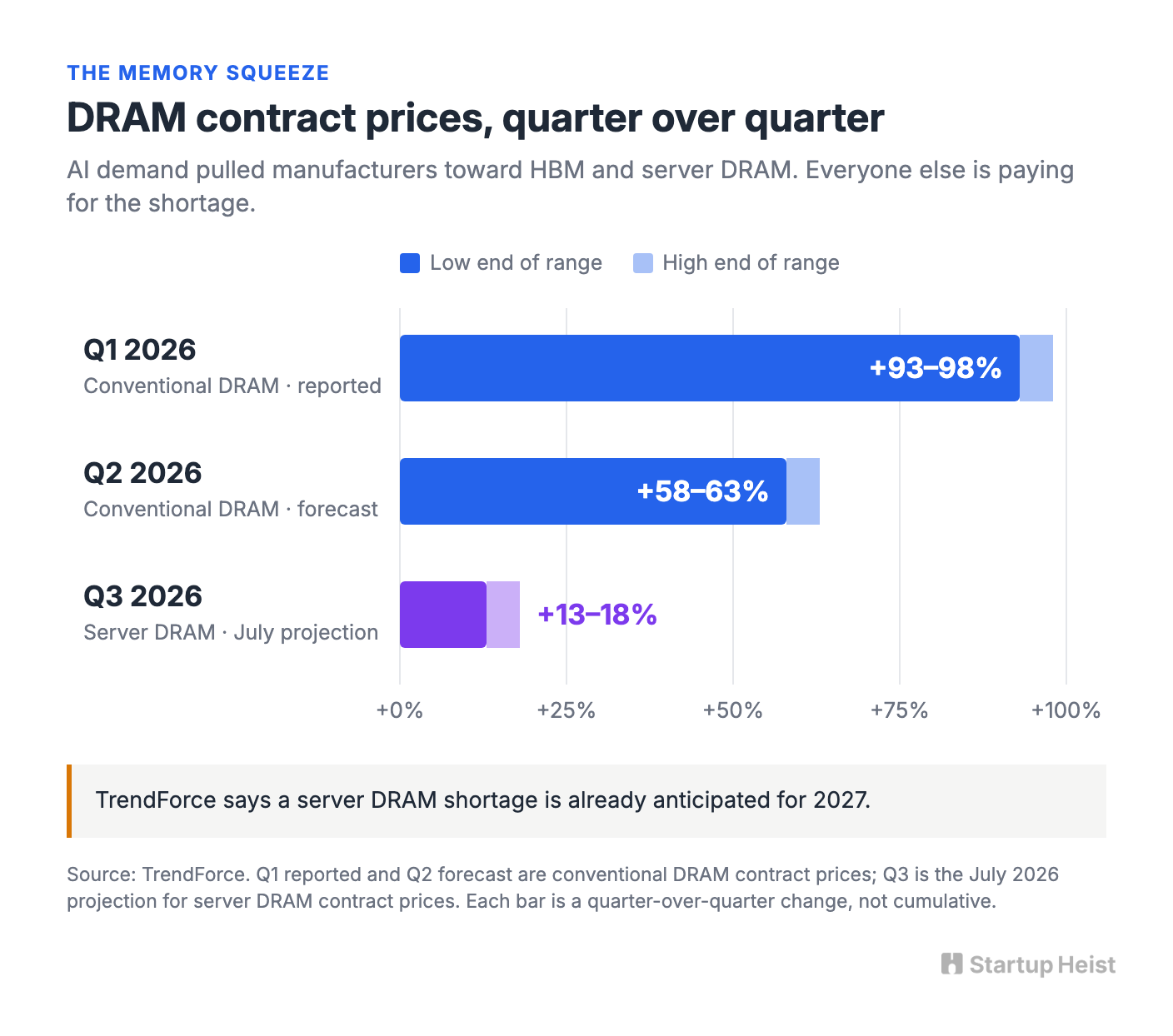
AI infrastructure spending has pulled memory manufacturers toward high-bandwidth memory (HBM) and server DRAM, and every other buyer is paying for the resulting DRAM shortage. TrendForce reported that conventional DRAM contract prices rose roughly 93–98% quarter over quarter in Q1 2026, then forecast another 58–63% rise in Q2. In July 2026, it projected server DRAM contract prices would climb another 13–18% in Q3 and said a server DRAM shortage is already anticipated for 2027.
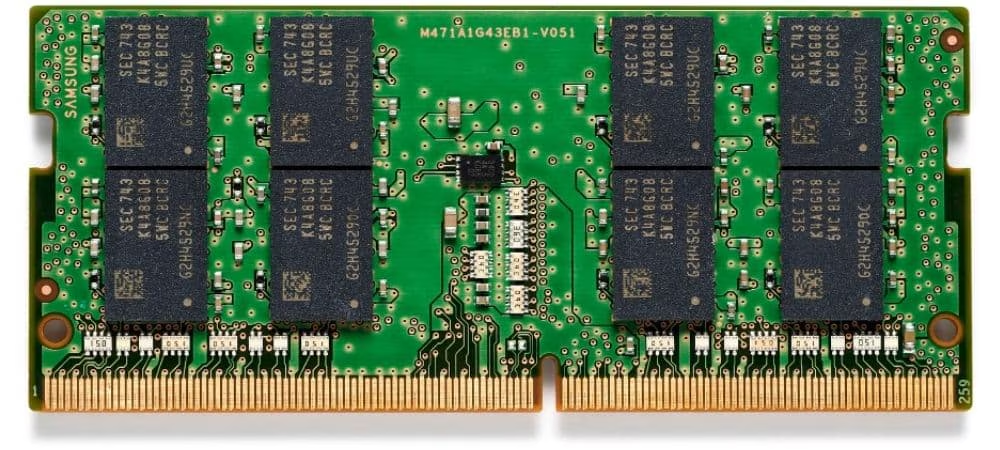
Meanwhile, thousands of small companies still retire PCs, servers, and networking gear the way they always have. A closet fills up, somebody calls an e-waste recycler, and everyone is relieved to watch the pile leave. Inside that pile sit used server RAM modules that list online for hundreds of dollars apiece.
Somebody should pull those modules out before the truck arrives, and the timing favors a small operator who starts now.
The money: Ten to 20 MSP partners feeding two to ten $5,000 lots a month adds up to $10K–$50K in monthly sales. One common 32GB server DIMM lists used for $279 to $425.
Inside:
• Part-number pricing and BUY/RECYCLE rules
• Unit economics of a $5,000 refresh lot
• Cash-now vs. recovery-share supplier terms
• MSP pitch email and 90-day launch plan
The model is a local residual-value recovery service for IT refreshes. You partner with managed service providers (MSPs), repair shops, and small IT departments. You pull the valuable non-data-bearing components, server RAM first, before the hardware enters the recycling stream. You test and resell them. Drives and anything else that holds data go to an R2v3-certified IT asset disposition (ITAD) partner, which carries the liability while you keep the treasure hunt.
Built well, this is a $10,000-to-$50,000-a-month local operation with a credible path to something larger: a specialized recovery company for the small customers the enterprise ITAD industry serves poorly. The memory market has opened that window for a limited time.
The strange economics of old RAM
A recycler and a secondary-market buyer look at the same box and see different objects. The recycler sees pounds of circuit board, copper, and gold. The buyer sees exact manufacturer part numbers, capacity, generation, ECC support, rank, speed, and test status. A bin of fifty random memory sticks can look worthless to the company discarding it while holding a dozen SKUs someone is searching for on eBay tonight.
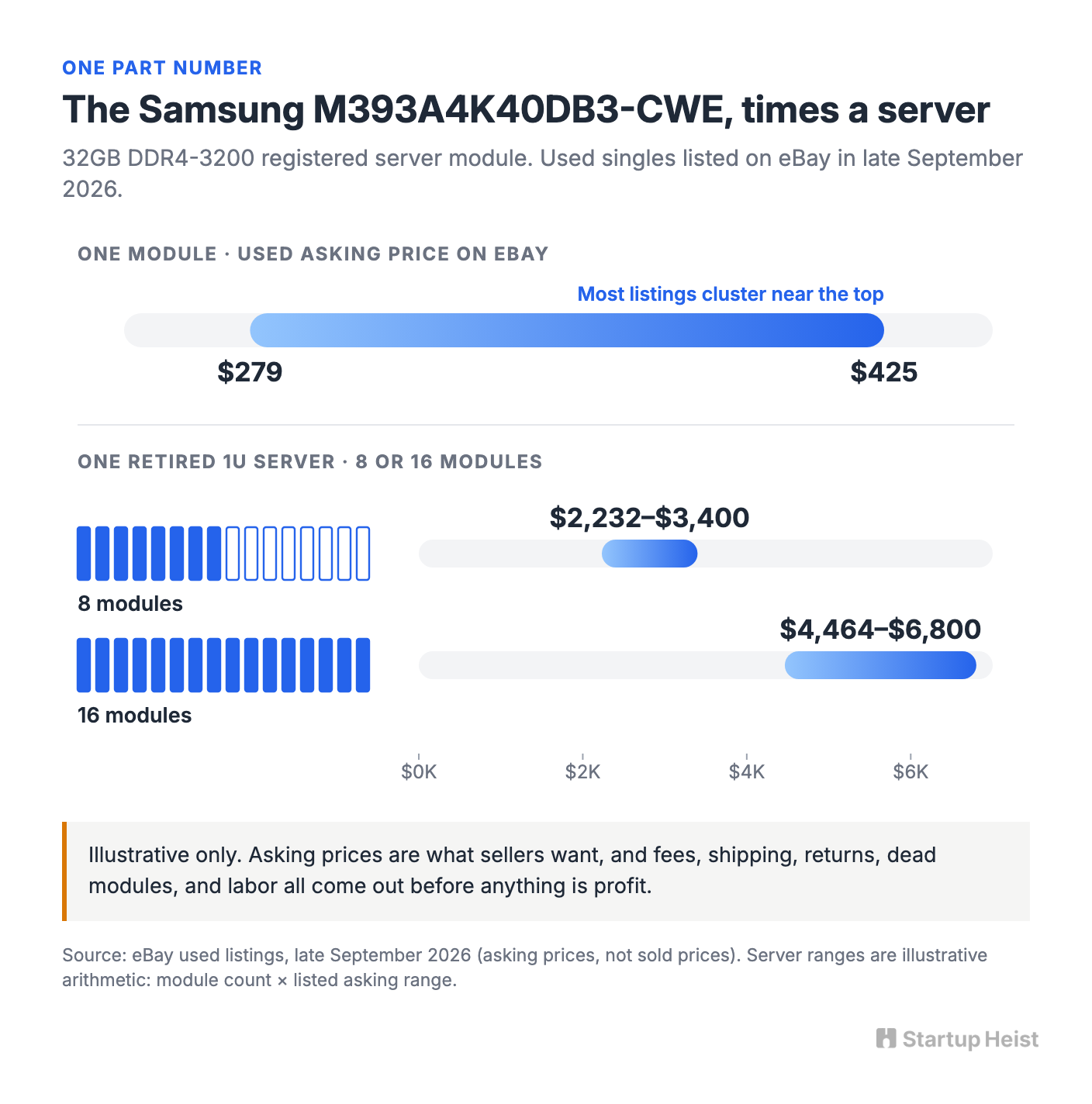
The 2026 shortage widened that gap. TrendForce reports that the major DRAM makers have cut wafer allocations for DDR4 and other mature-node products to feed HBM and server lines, and the shortage has cascaded down to DDR3 and even DDR2. The installed base doesn't turn over at the speed of a fab. Xeon and EPYC servers, workstations, NAS boxes, industrial controllers, and homelab rigs still run DDR4 and still need replacement modules. Take one real part, the Samsung M393A4K40DB3-CWE, a 32GB DDR4-3200 registered server module. In late September 2026, used singles were listed on eBay with asking prices from roughly $279 to $425, and most clustered near the top of that range. A retired 1U server can hold eight or sixteen of them.
The raw pool is enormous. The UN-backed Global E-waste Monitor counted 62 billion kilograms of e-waste generated worldwide in 2022, with only 22.3% documented as formally collected and recycled, and an estimated $91 billion in raw materials inside. Most of it is junk, and the business works because you learn to reject most of what you see and move fast on the rest.
Don't build an e-waste company
The tempting pitch writes itself: "We'll pick up your old computers for free, wipe everything, sell the good parts, and recycle the rest." It sounds simple. It also turns a light arbitrage into a compliance, logistics, environmental, and cybersecurity company the moment you take custody of an intact laptop or storage array holding a customer's data.
Data sanitization is a serious discipline, and its rules keep getting stricter. SERI's R2v3 standard requires any facility that sanitizes data to certify to Appendix B, which layers on serial-number tracking, verified methods, documentation, and independent verification that at least 5% of logically wiped media is unrecoverable. Certification attaches to a specific facility and its defined scope, so using an R2 partner doesn't make you R2. NIST's SP 800-88 Revision 2, published September 26, 2025, moved federal guidance away from picking a wiping technique and toward running an actual media-sanitization program with controls.
So at launch, you refuse that piece of the value chain on purpose. You don't sanitize customer drives. You separate data-bearing equipment at intake, log custody, and transfer it to a certified partner under a written agreement, and the partner issues the certificates. Splitting the work this way lets your recovery business start on a workbench while the compliance burden stays inside a facility built to carry it.
The product is recovery, and MSPs are the supply
RAM gets you in the door, and residual-value recovery is what you actually sell. Consider a 15-person MSP supporting 80 small-business clients. Every month, machines come out, and the MSP has four bad options: warehouse them, have technicians burn billable hours sorting them, hand everything to a recycler, or attempt resale themselves. You bring a fifth: "Give us the retirement inventory. We identify what has resale value, test and sell it, send you a transparent settlement report, and coordinate certified disposition of anything data-bearing." Nobody has to believe every old computer is worth money. You're offering to find the ones that are.
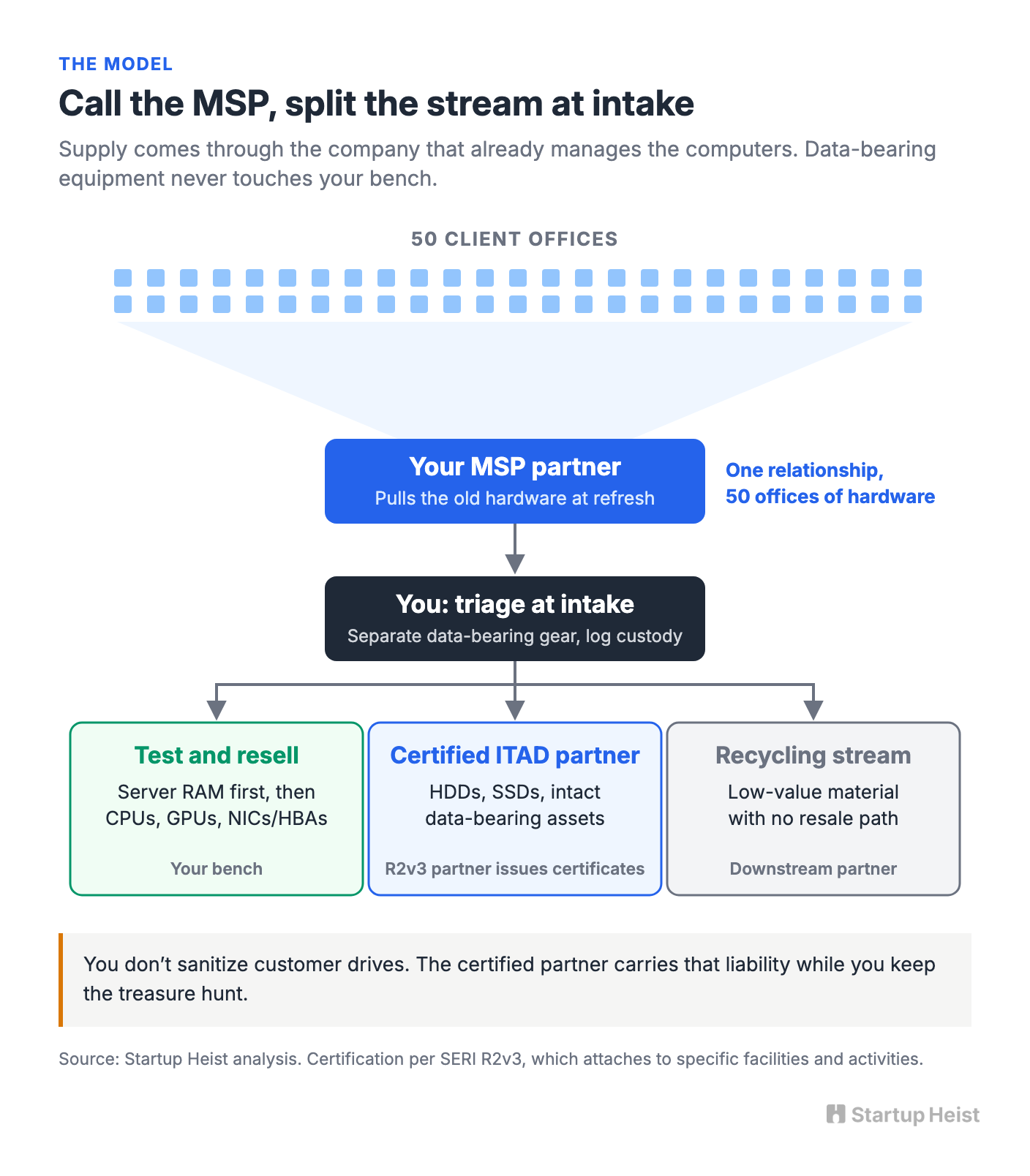
The MSP is the leverage point. You could cold-call 500 dental offices, or you could call the one company managing computers for 50 of them. MSPs sit inside the refresh cycle. They know which clients are replacing servers, they physically pull the old hardware, and the client already trusts them. Windows 10 reached end of support on October 14, 2025, and the small-business tail of that migration is still pushing machines out of offices. One productive MSP can out-produce months of chasing individual businesses.
Mail-in buyers already exist. BuySellRam and firms like it will quote a lot, send a prepaid shipping label, and pay within one business day of inspection. They still need the MSP to identify, count, and pack the parts, which is precisely the labor the MSP wants gone. Your edge is on-site triage and a recurring relationship. Ten excellent supply partners are worth far more than a hundred one-off customers, so make them your first objective. Once MSPs, repair shops, network installers, systems integrators, and office movers call you automatically whenever hardware is decommissioned, supply becomes your moat and the test benches become the easy part.
What to recover
Start with RAM because the market makes memory unusually attractive right now, then run the same workflow on every high-value, non-data-bearing part.
Unlock the Vault.
Join founders who spot opportunities ahead of the crowd. Actionable insights. Zero fluff.
“Intelligent, bold, minus the pretense.”
“Like discovering the cheat codes of the startup world.”
“SH is off-Broadway for founders — weird, sharp, and ahead of the curve.”


