


Brand Necromancer: The Underwriting Desk for Dead E-Commerce Brands
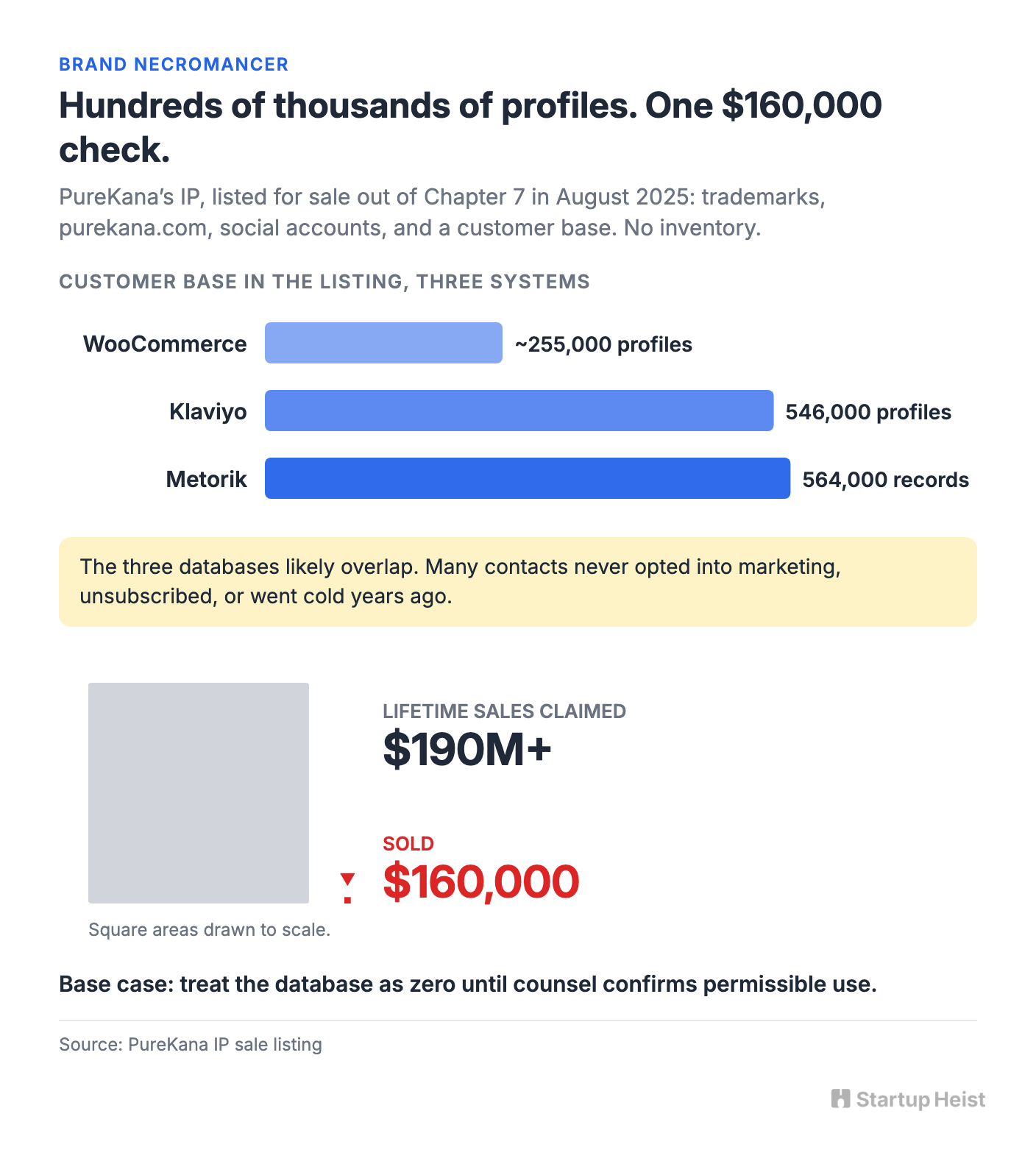
In April 2024, Simply Better Brands suspended operations at PureKana, its CBD subsidiary, because the brand's high-cost customer acquisition no longer fit a profitable growth plan. PureKana filed for Chapter 7 the next day. In August 2025, its intellectual property went up for sale out of that bankruptcy. The sale listing claimed more than $190 million in lifetime sales and offered trademarks, purekana.com, social accounts, and a customer base spread across three systems: roughly 255,000 WooCommerce profiles, 546,000 Klaviyo profiles, and 564,000 Metorik records. No inventory was included.
The listing now reads: SOLD, $160,000.
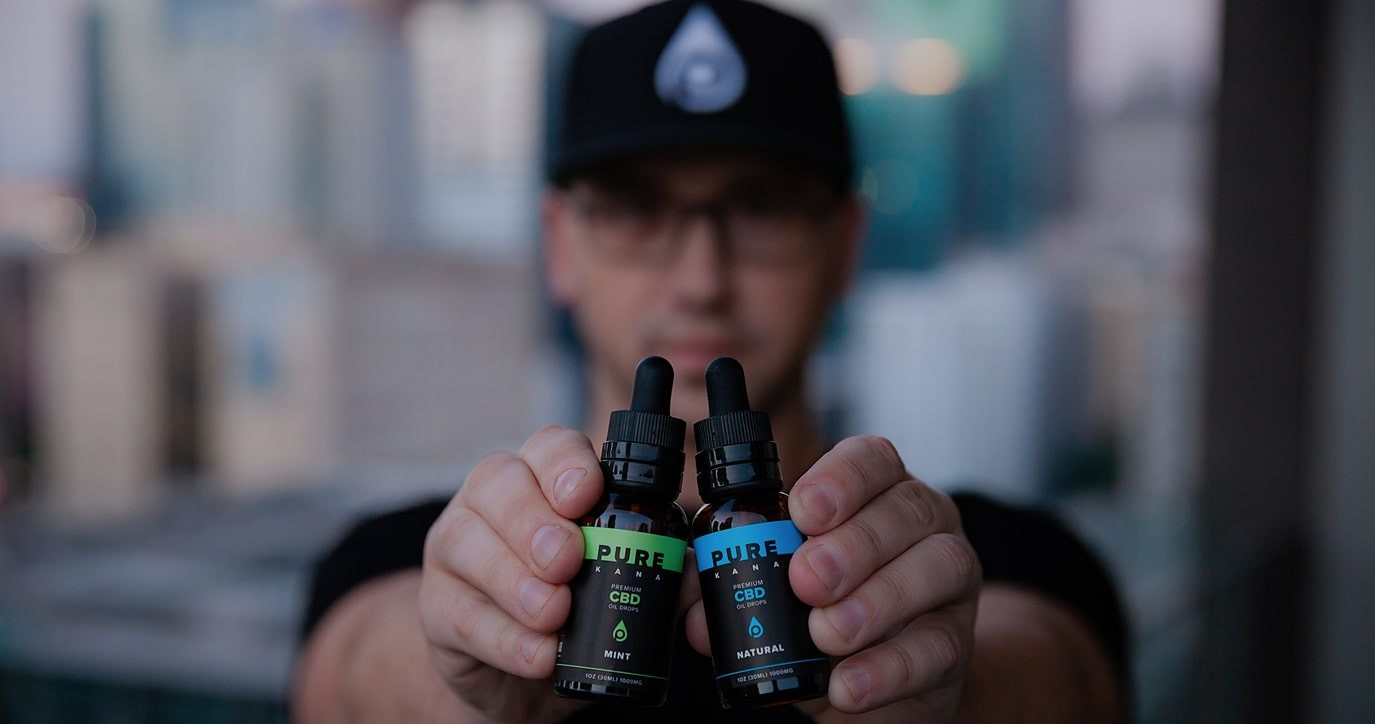
A brand listed with nine figures of lifetime sales and hundreds of thousands of customer profiles went for $160,000. A dead e-commerce company can still own things of real value: a trademark, a domain with years of search history, thousands of indexed product pages, marketplace listings with reviews, product photography, supplier relationships, packaging files. The company fails and many of its assets keep working, yet almost nobody is equipped to tell which ones.
The opportunity is the intelligence layer for distressed e-commerce acquisitions. Call it Brand Necromancer.
The money: 300 buyers averaging $300/month = $90K MRR, plus $1,500-$5,000 diligence packages on live deals. Bids run six figures: PureKana's IP sold for $160,000.
Inside:
• 100-point scorecard for distressed brands
• Two-page Auction Autopsy memo template
• Ten-week build plan and solo-founder stack
• Four-tier pricing from $149/mo to $30K/yr
A Market With No Storefront
On September 1, 2026, Auction Advisors announced a Chapter 7 auction for three consumer brands owned by SHR Capital Partners and GOGO Tech II: skincare line Body Merry, supplement brand BRI Nutrition, and replacement-filter seller Refresh Filters. The lot includes digital assets, social content, marketing materials, customer lists and customer management systems, trade names, design marks, copyrights, and goodwill. Bidders register and post a $10,000 deposit. The auction was set for September 24 and later moved to October 5, with the deposit due October 2. The underlying case was filed in the District of Delaware in April 2024, so the brands spent about two and a half years reaching the block, and even the final stretch slipped by eleven days.
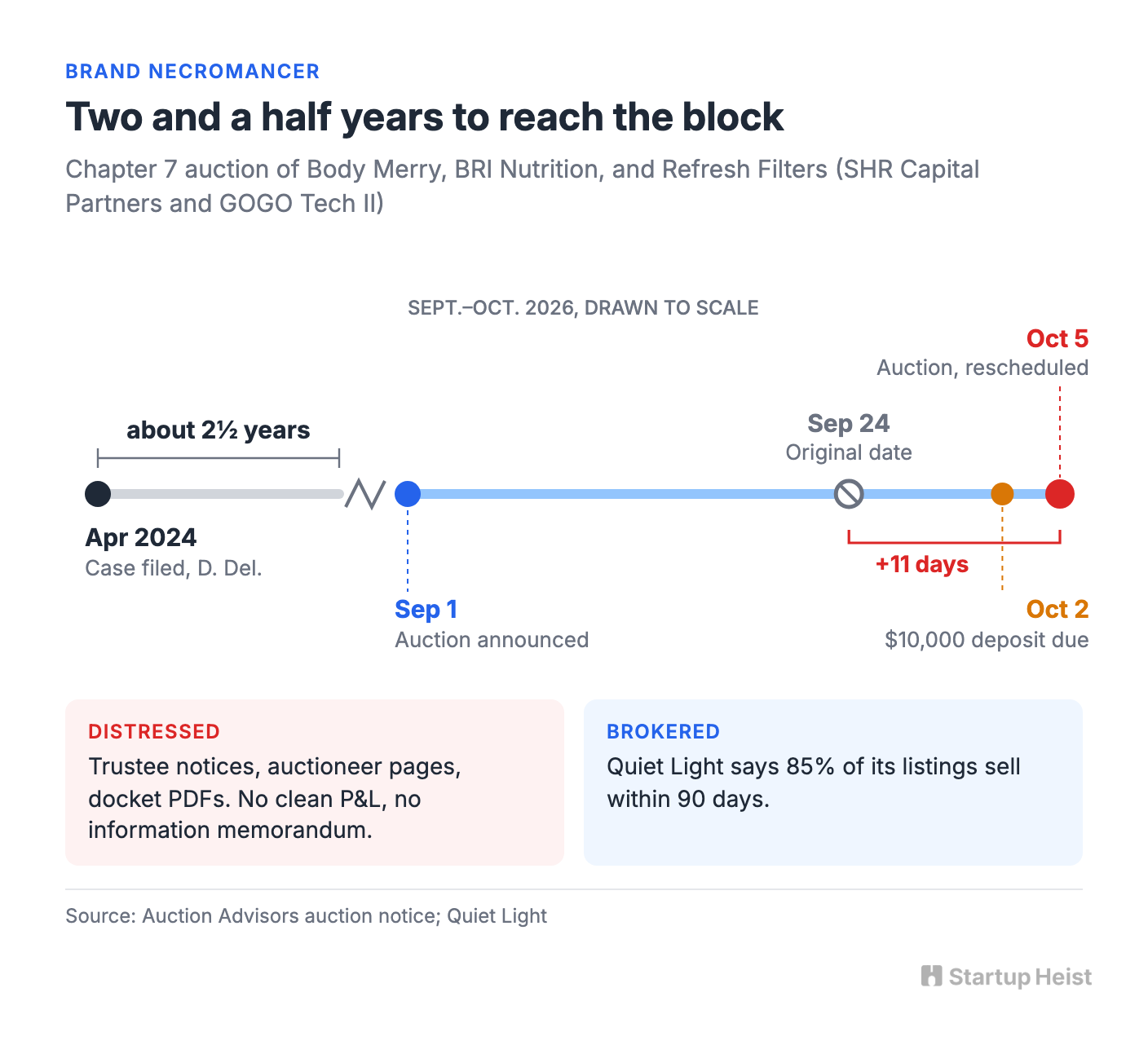
Compare that with the brokered market for buying an e-commerce business. Flippa advertises more than 1.9 million buyers for businesses their sellers have groomed for sale, and Quiet Light says 85% of its listings sell within 90 days. Distressed assets arrive without any of that grooming. Nobody hands you a clean P&L, walks you through cohort retention, or prepares a confidential information memorandum. The information lives in trustee notices, auctioneer pages, docket PDFs, and amended schedules, where a phrase like "customer database" can describe a consented audience or a legally radioactive spreadsheet.
Supply is growing. FE International counts 57 active Amazon aggregators as of January 2026, down from more than 100 at the 2020-2021 peak, and every failed roll-up of Amazon FBA brands leaves a portfolio someone has to liquidate. Buyers already pay for raw access: Inforuptcy indexes bankruptcy sale motions and keeps seller contact details behind a subscription. What nobody sells is a verdict on which of these assets deserves a bid before the deposit deadline.
The Customer List Is the Trap
The obvious version of this idea sounds fantastic for about ten minutes: buy bankrupt DTC brands for pennies, inherit huge email lists, and sell to the old customers. PureKana shows why the market already discounts that thesis. Its three databases likely overlap, many contacts never opted into marketing, unsubscribed, or went cold years ago, and even a clean list comes with legal strings.
Section 363(b)(1) of the Bankruptcy Code restricts the sale of personally identifiable information when the debtor's privacy policy promised customers their data would stay put. The sale has to fit that policy or clear court review, typically with a consumer privacy ombudsman appointed to weigh in. In 2025, FTC Chairman Andrew Ferguson wrote to the U.S. Trustee in the 23andMe case that those promises must be kept, and the court approved the $305 million sale to TTAM Research Institute after the buyer committed to honor the existing privacy policies. Genetic data is far more sensitive than a Shopify order history, but the principle carries over. What a buyer is really bidding on is the right to use the customer relationship, and a record count says nothing about that.
So Brand Necromancer should never report "This company has 500,000 emails." It should report: "The company claims 500,000 records across three systems, with probable duplication. The privacy policy in effect near the petition date contains acquisition-transfer language, but marketing consent is unverified. Treat the database as zero in the base-case valuation until counsel confirms permissible use." A bidder will pay for that sentence.
What Survives the Company
Ask a harsher question: if you valued the customer database at zero, would you still want the company? When the answer is yes, the value usually sits in five places.
Existing demand. Customers keep searching for replacement parts, compatible SKUs, and category products long after the seller disappears.
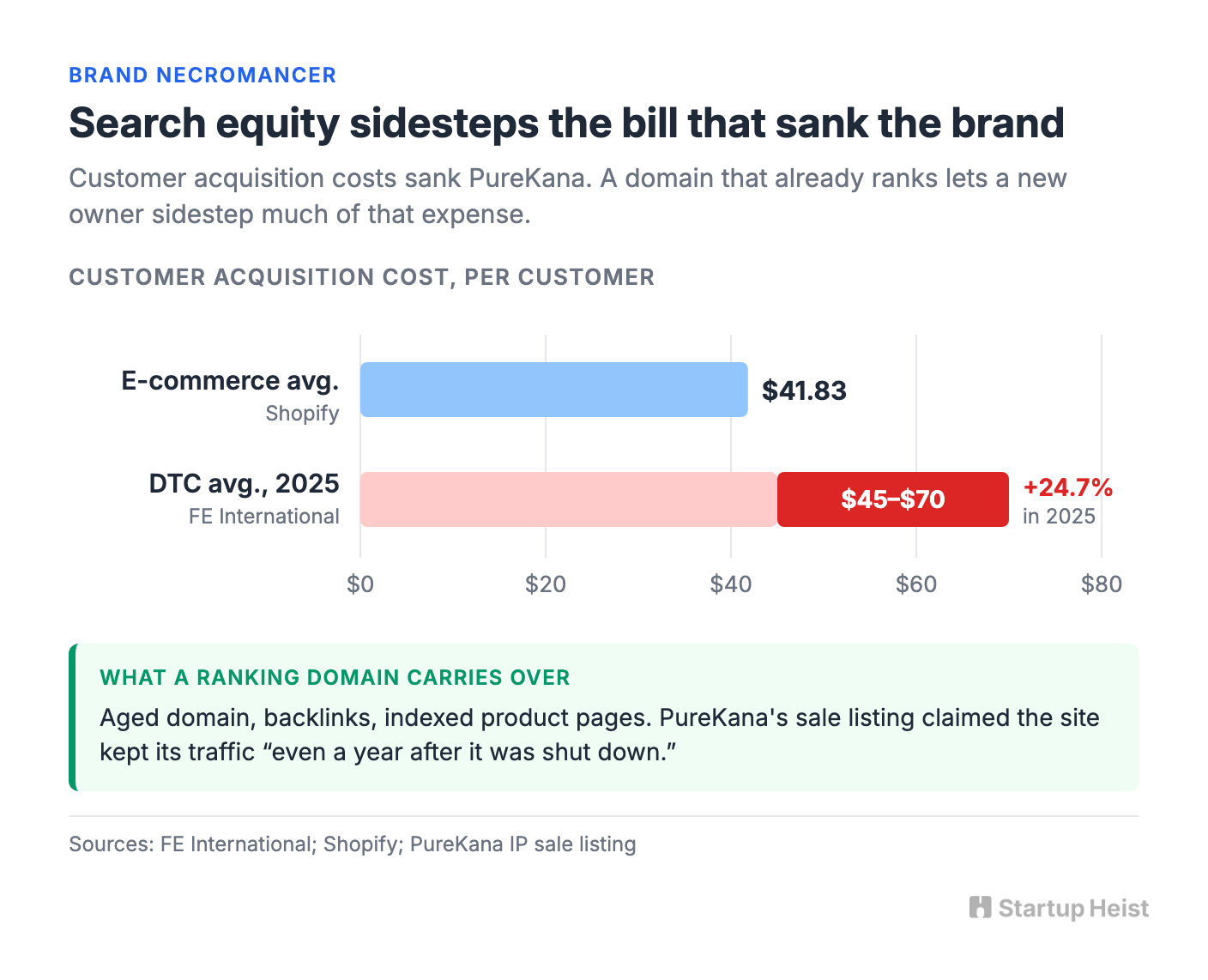
Search equity. An aged domain with backlinks and indexed product pages shortcuts paid acquisition. FE International reports DTC acquisition costs rose 24.7% in 2025, to an average of $45-$70 per customer, and Shopify puts average e-commerce CAC at $41.83. Those costs sank PureKana, yet its sale listing claimed the site kept its traffic "even a year after it was shut down," which the broker credited to the brand's investment in content and SEO. A domain that already ranks lets a new owner sidestep much of the expense that killed the old one.
Brand and trademark equity. Marks can be assigned and the transfer recorded with the USPTO, provided the registration is live, the classes cover what you plan to sell, and the selling estate actually owns it.
Reputation stored elsewhere. Reviews, press, Reddit threads, YouTube demos, and branded search all outlive the operator. They count as evidence of reputation and rarely as property you can take. Amazon generally doesn't let a seller account move to a new owner, so an asset buyer usually starts with its own account.
Operational shortcuts. Packaging dielines, photography, compatibility databases, supplier contacts, formulations, and quality-control records can carry a relaunch. A mediocre brand with excellent operating artifacts can beat a famous name with nothing behind it.
The Wedge: Boring Replenishment
Unlock the Vault.
Join founders who spot opportunities ahead of the crowd. Actionable insights. Zero fluff.
“Intelligent, bold, minus the pretense.”
“Like discovering the cheat codes of the startup world.”
“SH is off-Broadway for founders — weird, sharp, and ahead of the curve.”


