


The LTO Lab: Give Small Food Shops an R&D Department
The opportunity is a lightweight product-development system that helps boba shops, coffee shops, dessert counters, and bakeries invent, launch, measure, and kill limited-time offers (LTOs) before bad ideas become expensive mistakes. The AI is the least interesting part of it.
On September 29, 2026, Lawson, the Japanese convenience-store chain, put three odd products on shelves across the Kanto and Koshinetsu regions: a pickle-flavored lemon tart (270 yen), a sakadane bread roll filled with red bean paste, fermented-butter margarine, and yogurt cream, and a "parfait salad" built in layers with rice vermicelli and dashi jelly. The tart and the bread went into roughly 4,700 stores. The salad went into roughly 3,800.
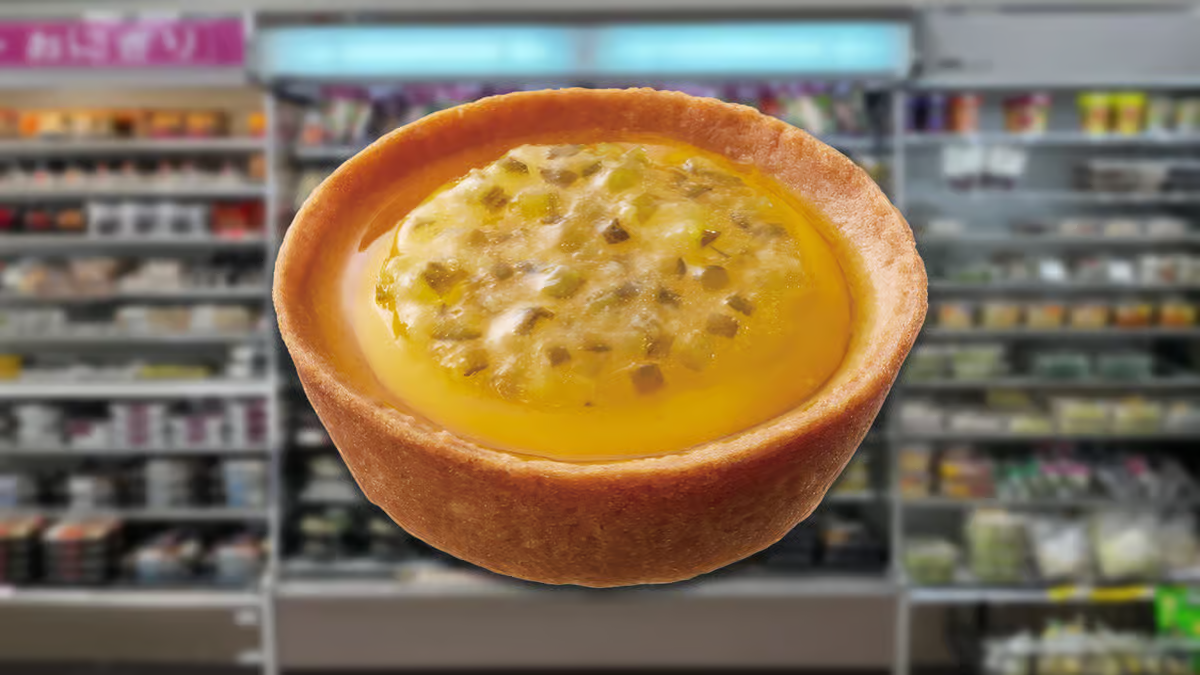
The strange flavors made the headlines, but the process behind them deserves your attention. During ideation, Lawson deliberately kept past sales performance and market data away from the generative AI. It wanted ideas unbound by existing concepts and trends, and it worked from a brief worthy of a design school: "What on earth is this? But it's delicious." Then Lawson's product developers took over. They prototyped, tested, and adjusted flavor and appearance until each concept worked as a product. Lawson says it will read the sales trends and customer response to decide how far to widen AI's role in development. The sequence is simple: diverge wildly first, then let people with a test kitchen decide what deserves to exist.
Lawson has a team of product developers to run that sequence. The independent boba shop down the street has an owner working after close with a calculator and a stack of supplier invoices. Your opportunity is to package Lawson's operating doctrine for that owner.
Call it an LTO Sprint: a tool and service that turns a shop's existing menu, inventory, costs, equipment, and operating constraints into four testable limited-time offers, complete with costing, prep plans, POS-ready item files, launch assets, and a disciplined two-week postmortem. Here's the opportunity at a glance:
The money: 25 sprints a month at $399 is roughly $10,000 a month as a founder-run service. Converted to $99/month software, 500 locations is $594,000 in ARR.
Inside:
• Crazy Mode, Kill Mode, and the rules engine
• The eight-part launch packet for each finalist
• A $399 sprint offer and cold-email pitch
• Six-month playbook and experiment-graph moat
Ideas Are Free. Launches Are Expensive.
A café owner can ask ChatGPT for 30 fall latte ideas and get pumpkin tiramisu lattes, toasted-marshmallow matcha, maple miso cold foam, and 27 more in half a minute. That list has close to zero economic value.
The expensive questions start afterward. Can we make it with the equipment we have? How many new ingredients does it need, and what happens to the leftover mascarpone? Can a part-time employee build it during the 8:15 a.m. rush? Does it hit our food-cost target, and what should we charge? Does it introduce an allergen we don't normally handle? How should it appear in Toast? What are we measuring, and when the two weeks are over, how do we know if it worked? Answering those questions is the product: an outsourced menu-development department for businesses too small to employ one.
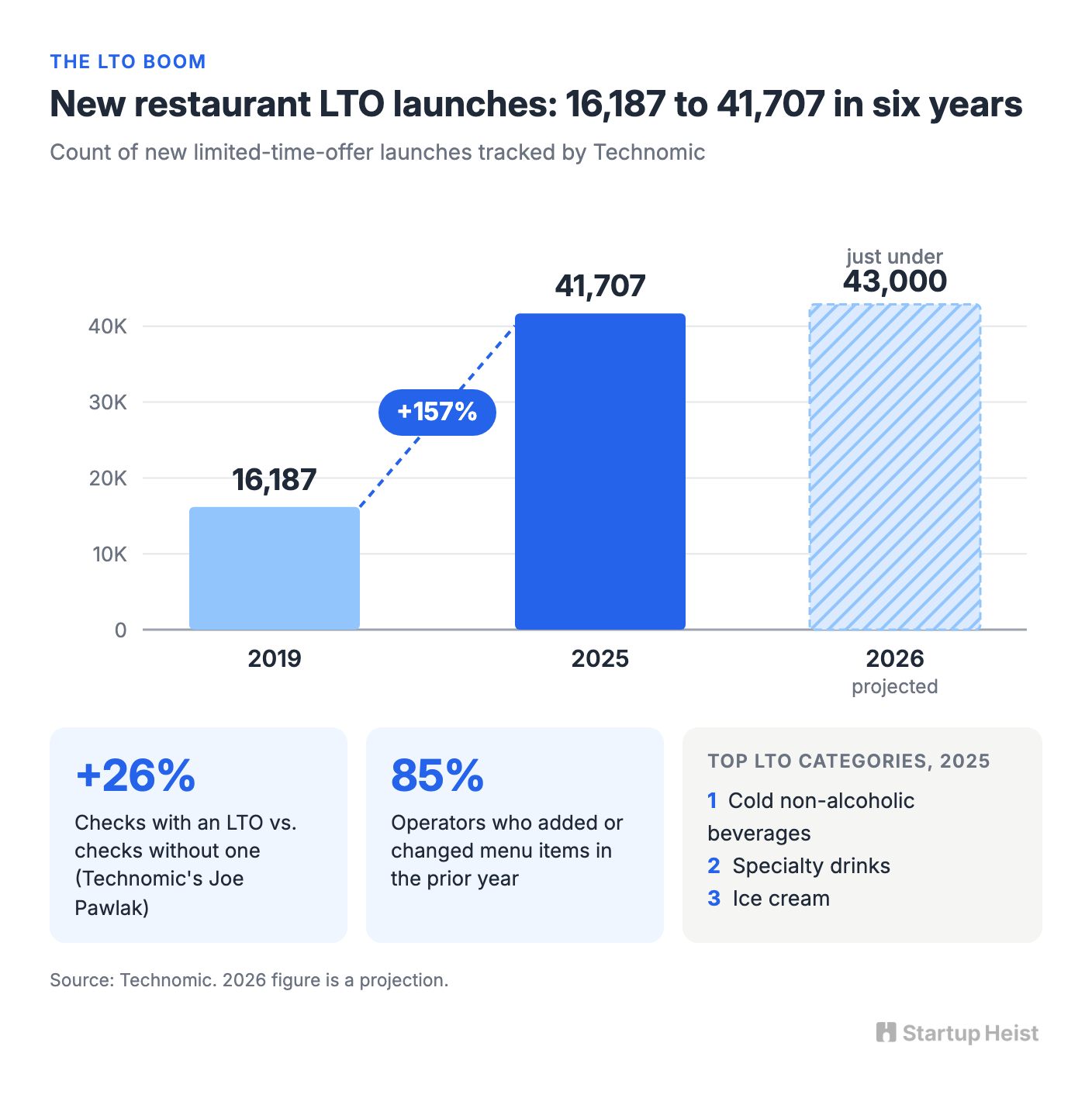
Demand for that department is growing fast. Technomic counted 16,187 new restaurant LTO launches in 2019. In 2025, the count hit 41,707, a 157% increase, with just under 43,000 projected for 2026. Eighty-five percent of operators added or changed menu items in the prior year. Technomic's Joe Pawlak says checks with an LTO run 26% higher than checks without one. The top LTO category in 2025 was cold non-alcoholic beverages, followed by specialty drinks and ice cream, a direct hint about where to begin.
Start With Boba
Version 1 should be embarrassingly narrow: LTO Sprint for boba and specialty-drink shops. Coffee comes next, then ice cream and dessert, then bakeries. Broader foodservice comes much later, if ever.
A drink is unusually software-friendly. A boba shop already stocks teas, milks, fruit bases, powders, syrups, pearls, jellies, cheese foams, ice machines, blenders, and standardized recipes. Most new drinks are recombinations of existing components plus one or two new ingredients. That gives you:
- few new SKUs per launch;
- simple costing and portion control;
- fast prototyping, often the same afternoon;
- clean item-level sales measurement.
Ask the same software to invent a dinner entrée and you're suddenly dealing with proteins, cooking temperatures, line-station capacity, plating, hold times, cross-contact, and real food-safety exposure. That's the wrong first market. The product should master a bounded assembly system before it pretends to understand every kitchen in America.
The segment is big and growing. IBISWorld counts 7,845 bubble tea shops in the U.S. in 2025, up 18.2% from 2024 and growing 21.5% a year on average since 2020. Every new shop that opens in a crowded strip mall needs a reason for regulars to come back, and a rotating seasonal drink is the cheapest one available.
Why Operators Will Pay
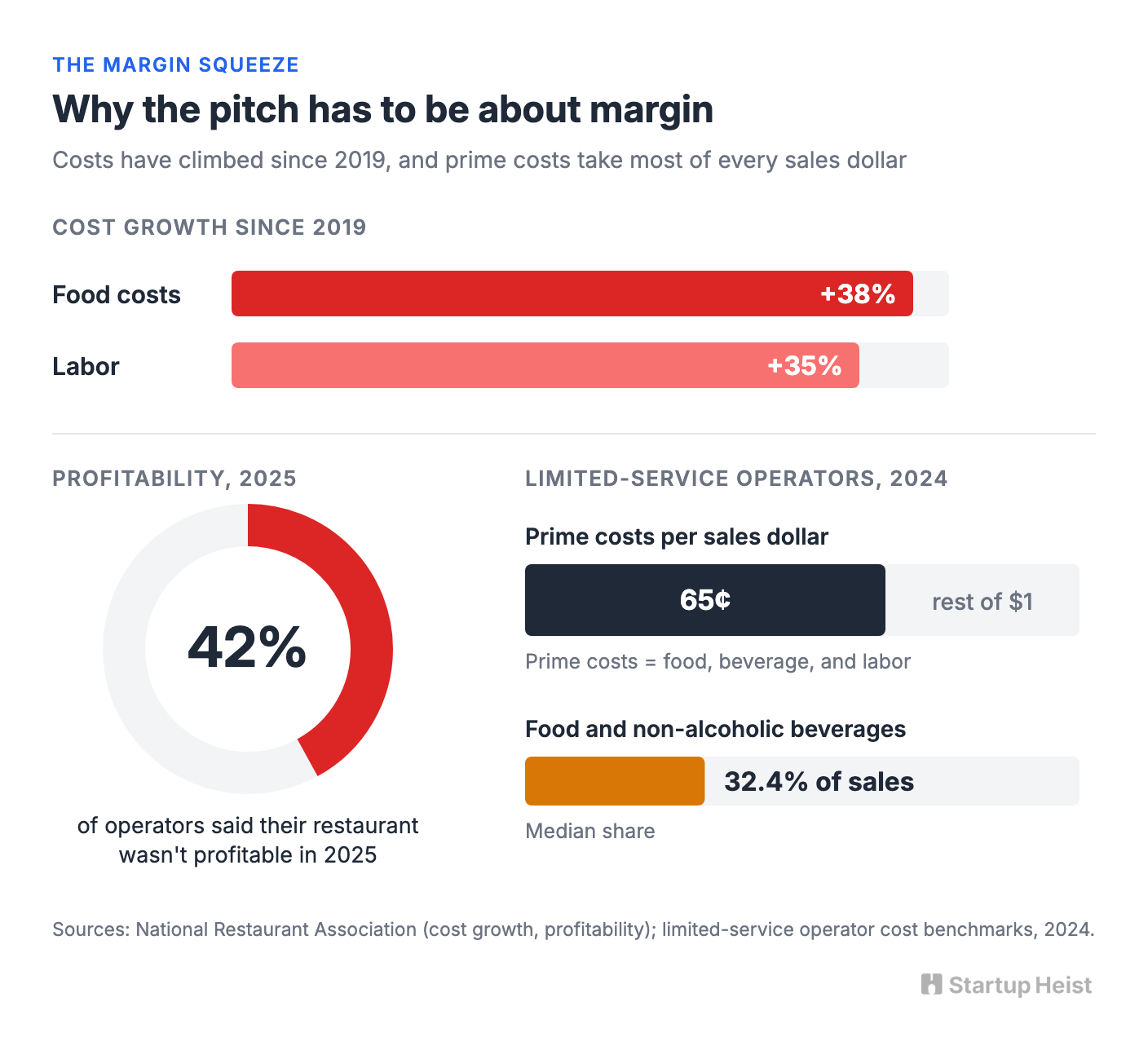
Nice-to-have restaurant software gets cancelled first, so the pitch has to hit the owner's biggest pain: margin.
The U.S. ended 2025 with 412,498 independent restaurant locations, down 2.3% year over year, a net loss of about 9,500 locations. The National Restaurant Association reports food costs up 38% since 2019 and labor up 35%, and 42% of operators said their restaurant wasn't profitable in 2025. Among limited-service operators, food and non-alcoholic beverages consumed a median 32.4% of sales in 2024, and prime costs (food, beverage, and labor) took 65 cents of every sales dollar.
So don't sell "Generate exciting menu ideas with AI." Sell "Ship one profitable seasonal drink in 10 days using mostly ingredients you already stock." The promise saves managerial hours, prevents dead inventory, forces the economics before launch, and guarantees someone reviews the results.
Don't lead with AI either. Popmenu's 2026 operator survey found 44% of restaurants already use AI and another 25% plan to adopt it in 2026, with 55% using it to write marketing content. AI is plumbing now. An owner will pay for the discipline built around it.
Crazy Mode, Then Kill Mode
Unlock the Vault.
Join founders who spot opportunities ahead of the crowd. Actionable insights. Zero fluff.
“Intelligent, bold, minus the pretense.”
“Like discovering the cheat codes of the startup world.”
“SH is off-Broadway for founders — weird, sharp, and ahead of the curve.”


