


Apple Just Created a New Job: Bundle Operator
Apple shipped iOS 27 on September 14, 2026. Two days later it told developers to get their subscriptions ready for a feature most coverage treated as a line item: separate developers can now sell their subscriptions together. A fitness tracker and a nutrition planner from two companies that have never met can become one App Store purchase. So can a teleprompter and a caption editor, or a language app and a travel planner.
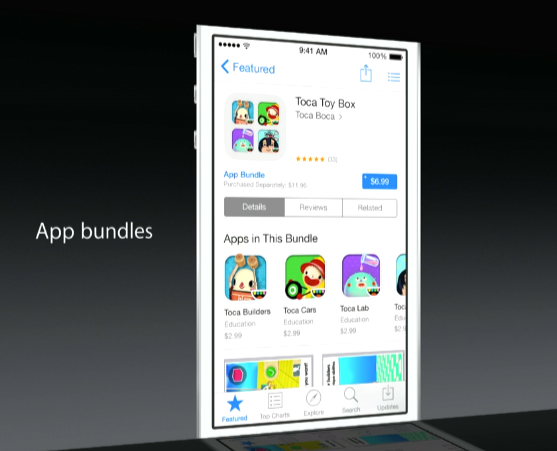
Apple calls them multi-developer App Store Bundles, and up to five developers can join one. The App Store runs the checkout, shows every included app at purchase, and handles the awkward cases. If someone already subscribes to one of the apps, Apple upgrades them into the Bundle and refunds the unused portion of their standalone plan. Customers can later drop the whole Bundle or keep individual subscriptions, with changes taking effect at renewal. Apple is taking requests now and configuring the first Bundles in batches for launch later in 2026.
Apple built the rails, but nobody has built a business that runs trains on them yet. Somebody has to decide which apps belong together, model whether the discount creates revenue or destroys it, get two founders to agree, push both companies through Apple's intake, launch the thing, and prove afterward that it worked. Call that company BundleMatch. Start it as a service run like a deal desk, and let the software come later.
Here's the opportunity:
The money: Three bundle projects a month at $5,000 plus 10 performance retainers at $1,000 = $25,000/month solo. Over 14,700 new subscription apps launch every month.
Inside:
• $1,000 readiness audit and $3,000+ deal desk
• Six-factor partner scoring rubric
• 90-day MVP built on Tally, Airtable, Notion
• Cold email that opens with a bundle hypothesis
Federation Without Acquisition
Indie app companies have always had a portfolio problem. Say you run a successful journaling app. Your best customers also care about meditation, mood tracking, and sleep. Until now you had three ways to serve them: build those features yourself over the next three years, buy another app, or cobble together a cross-promotion with affiliate links and promo codes. None of those suits a five-person company.
Bundles add a fourth path, where you assemble the portfolio commercially while the companies stay separate. The journaling app keeps its team, roadmap, and brand, and so does the meditation app, yet to the customer the pair behaves like a small subscription suite with one price, one checkout, and one renewal date. Software companies have historically expanded by building, buying, or integrating. Bundles let them federate instead.
Apple has already done the hard consumer-facing part. The customer no longer buys Subscription A, hunts for a promo code for Subscription B, and tracks two renewal dates. Once subscription bundling becomes real product packaging instead of a marketing trick, it needs someone to operate it.
The Friction Is the Product
The tempting version of this business is a marketplace: enter your category, price, and subscriber count, get matched with complementary apps. Call it Tinder for apps. It's the wrong first product, because the valuable work starts after two developers find each other.
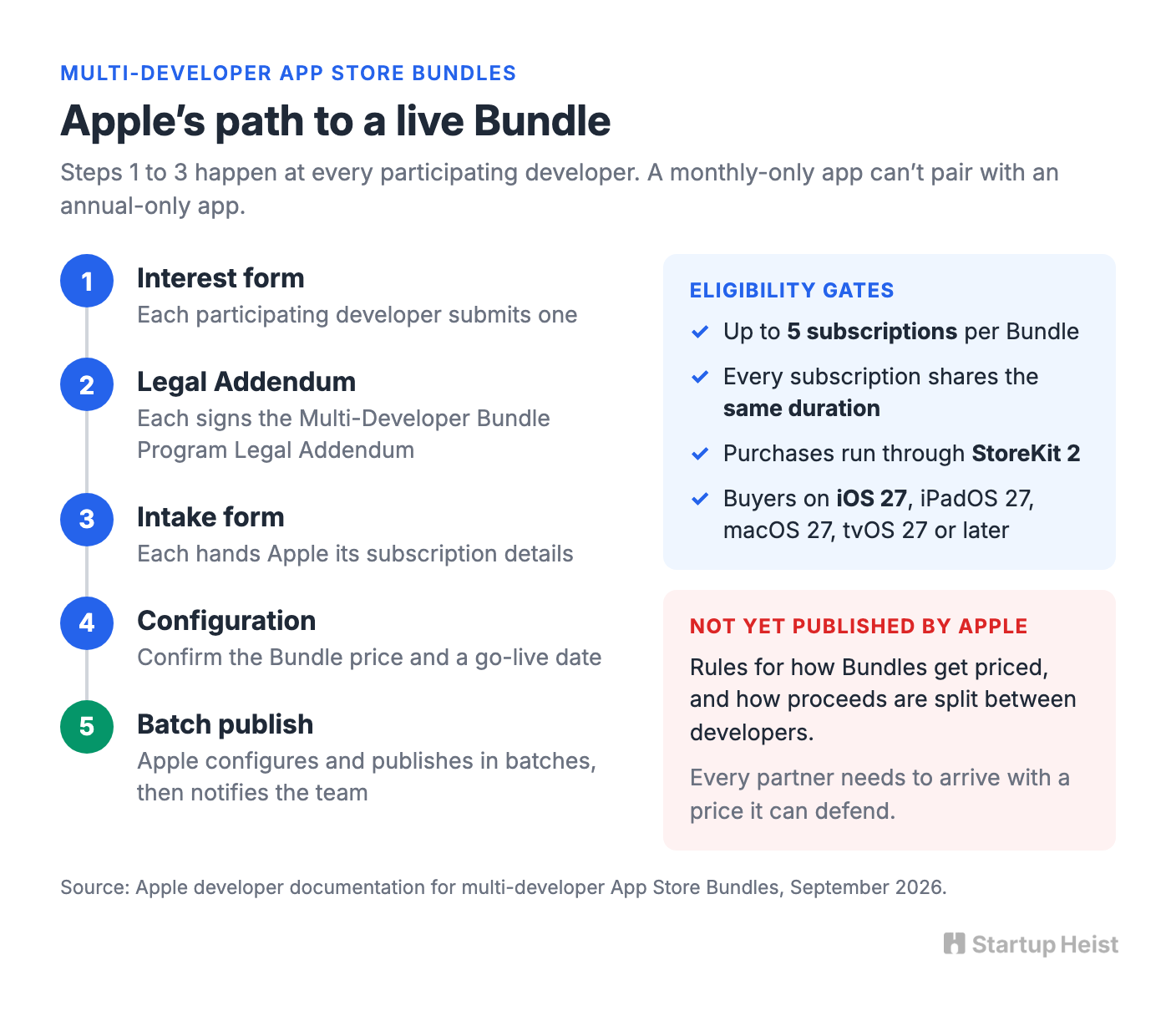
Look at what Apple actually requires. Each participating developer submits an interest form, signs the Multi-Developer Bundle Program Legal Addendum, and hands Apple subscription details through an intake form before configuration can begin. Configuration includes confirming pricing and a go-live date, and Apple hasn't published rules for how Bundles get priced or how proceeds are split between developers, so every partner needs to arrive with a price it can defend. Apple configures and publishes Bundles in batches and notifies the team when theirs is ready. A Bundle holds up to five subscriptions, and every one must share the same duration, so a monthly-only app can't pair with an annual-only app. Each app must process purchases through StoreKit 2, and buyers need iOS 27, iPadOS 27, macOS 27, tvOS 27, or later.
The service looks more like a boutique investment bank than a dating app. The deliverable reads: these two apps should work together, here's why, here are the economics, here's how existing subscribers change the model, here are the technical gaps, here's the launch plan, and we'll project-manage both companies until the Bundle ships. The process is messy, and founders will pay to have the mess handled for them.
Fewer Installs, More Money
The market is shifting in your favor. Appfigures estimates global downloads across the App Store and Google Play fell 2.7% in 2025 to 106.9 billion, the fifth straight annual decline. Consumer spending rose 21.6% to $155.8 billion over the same period, and non-game spending grew 33.9% to $82.6 billion. U.S. consumers spent $55.5 billion, $33.6 billion of it on non-game apps. The app economy now rewards monetizing the users you already have far more than chasing new installs.
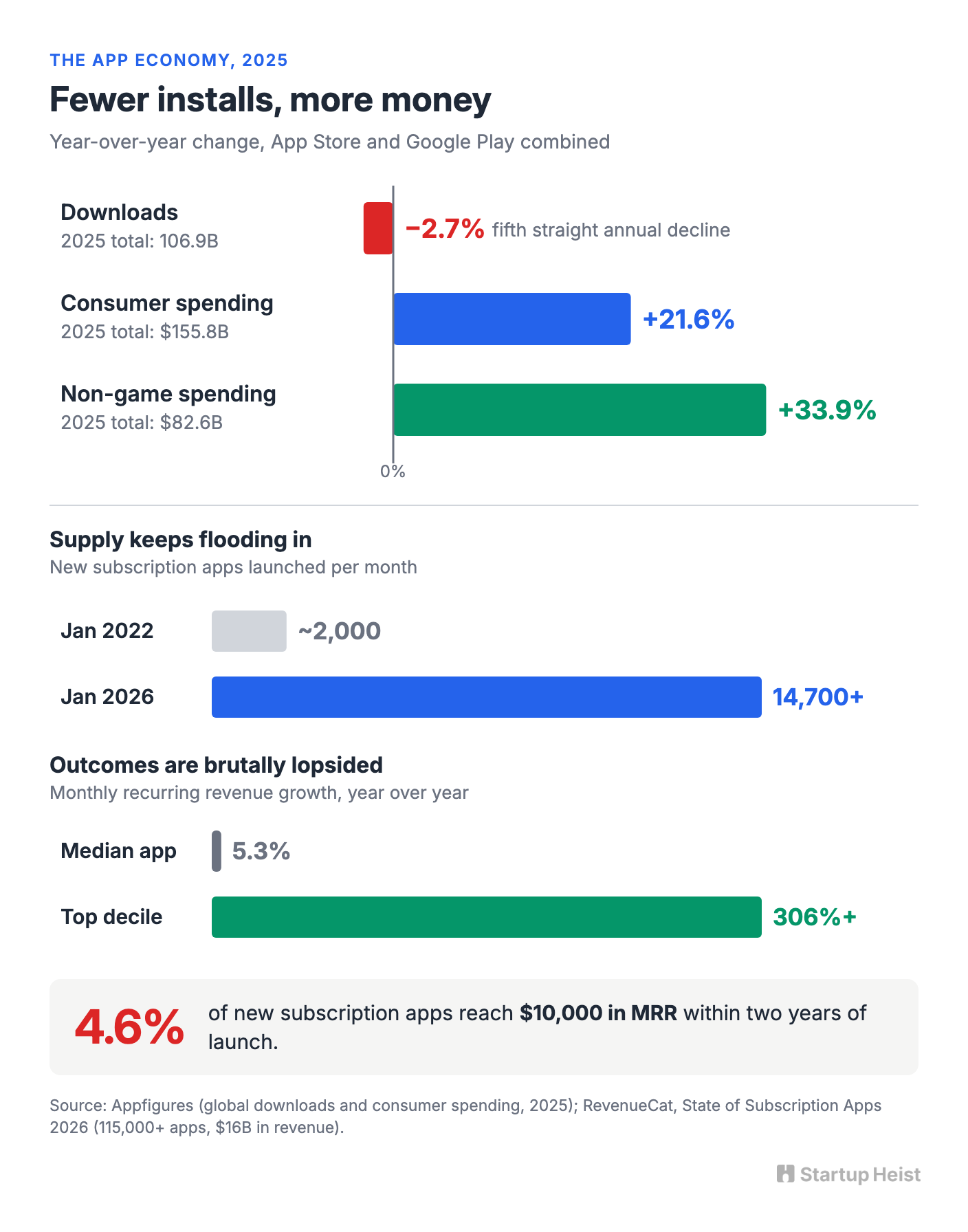
Supply keeps flooding in anyway. RevenueCat's State of Subscription Apps 2026, drawn from more than 115,000 apps and $16 billion in revenue, counts over 14,700 new subscription apps launching per month in January 2026, up from roughly 2,000 in January 2022, with iOS taking about 77% of new launches. Outcomes are brutally lopsided. The median app grew monthly recurring revenue (MRR) 5.3% year over year while the top decile grew more than 306%, and only 4.6% of new apps reach $10,000 in MRR within two years of launch.
That leaves thousands of real subscription businesses stuck in the middle: a good product, paying users, a clear niche, decent retention, maybe $10,000 to $200,000 in monthly revenue, and no partnerships department. They can't buy ads forever or keep stuffing adjacent features into one app, so a distribution channel someone else manufactures for them is worth paying for.
The Overlap Trap
Unlock the Vault.
Join founders who spot opportunities ahead of the crowd. Actionable insights. Zero fluff.
“Intelligent, bold, minus the pretense.”
“Like discovering the cheat codes of the startup world.”
“SH is off-Broadway for founders — weird, sharp, and ahead of the curve.”


