


GLP-1 drugs are changing what Americans buy to eat. South Korea already shows what specialized, unattended retail looks like. The play is to put the right 15 products in the right building, then build a profitable local vending route one site at a time.
The Opportunity
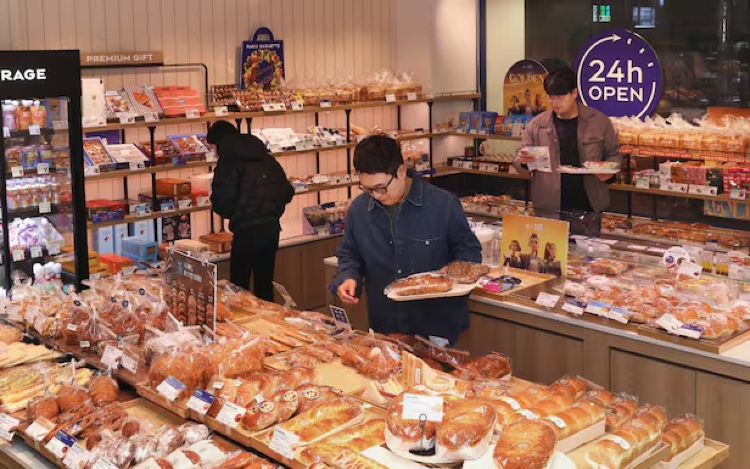
South Korea is full of shops with nobody working in them: ice cream rooms lined with chest freezers, ramyeon cafés, pet shops with self-service dog baths. Samsung Card data reported by Korea JoongAng Daily in March 2026 shows the number of unmanned stores in the country grew 314% between 2020 and 2025.
Zero Store is the format worth studying. The franchise sells zero-calorie food across more than 170 branches stocked with Coke Zero, sugar-free chocolate and sweetener-based sorbets. Shoppers walk in, pick what they want and pay at a kiosk. Where a general convenience store tries to serve everyone, Zero Store has already done the filtering for one kind of shopper, and that specialization is the lesson.
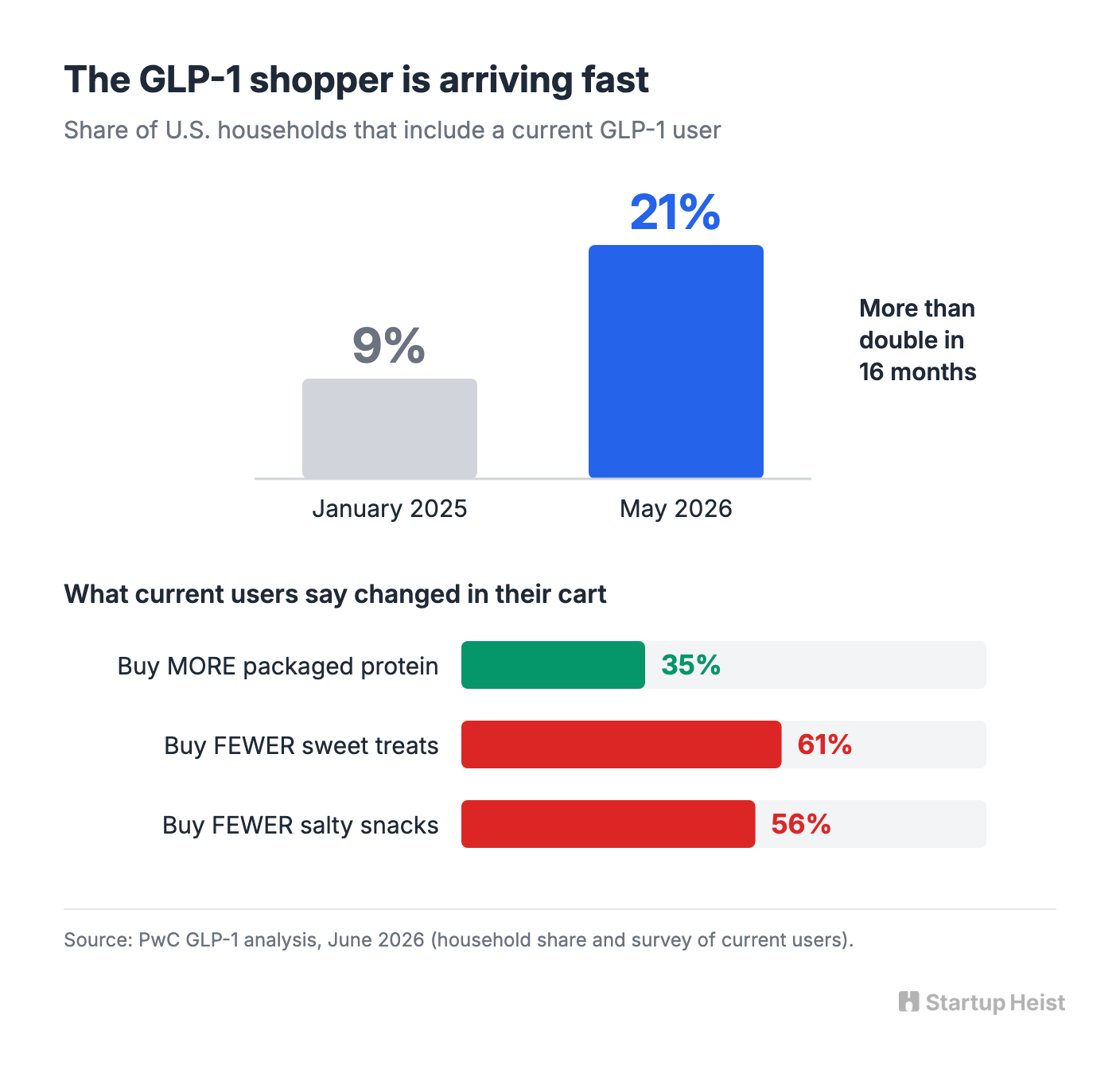
The American version of that shopper is arriving fast. In a June 2026 analysis, PwC reported that 21% of U.S. households included a current GLP-1 user as of May, up from 9% in January 2025. In PwC's survey of current users, 35% said they buy more packaged protein, 61% buy fewer sweet treats and 56% buy fewer salty snacks. McKinsey's analysis of shopper panel data found spending rising on yogurt, meat snacks and nutrition bars even as spending on chips and savory snacks fell 11.5%. PwC also found grocery spending per GLP-1 household down 5.5%. These households are buying different food, and less of it.
The shift opens a specific retail gap. Take a 300-unit apartment building with a small gym, no grocery store nearby and a vending machine full of candy, soda and chips. Swap that assortment for Greek yogurt, protein shakes, cheese portions, jerky, bars and low-sugar drinks, sold around the clock from a self-checkout smart cooler. Residents only have to walk downstairs, and the property manager gets an apartment amenity without staff or inventory. You collect the retail margin and handle restocking.
The goal is modest and concrete: find one building where 20 purchases a day become a repeatable business. Then find five more within a short drive.
The money: One cooler at 20 sales a day clears about $366 a month in site surplus. Ten coolers at 20 to 30 a day yield $3,660 to $9,000 a month.
Inside:
• Five-point site scorecard for first placements
• Two outreach emails: managers and operators
• Low-cash launch budget and its contract catch
• One-cooler P&L and the commission trap
Why Now
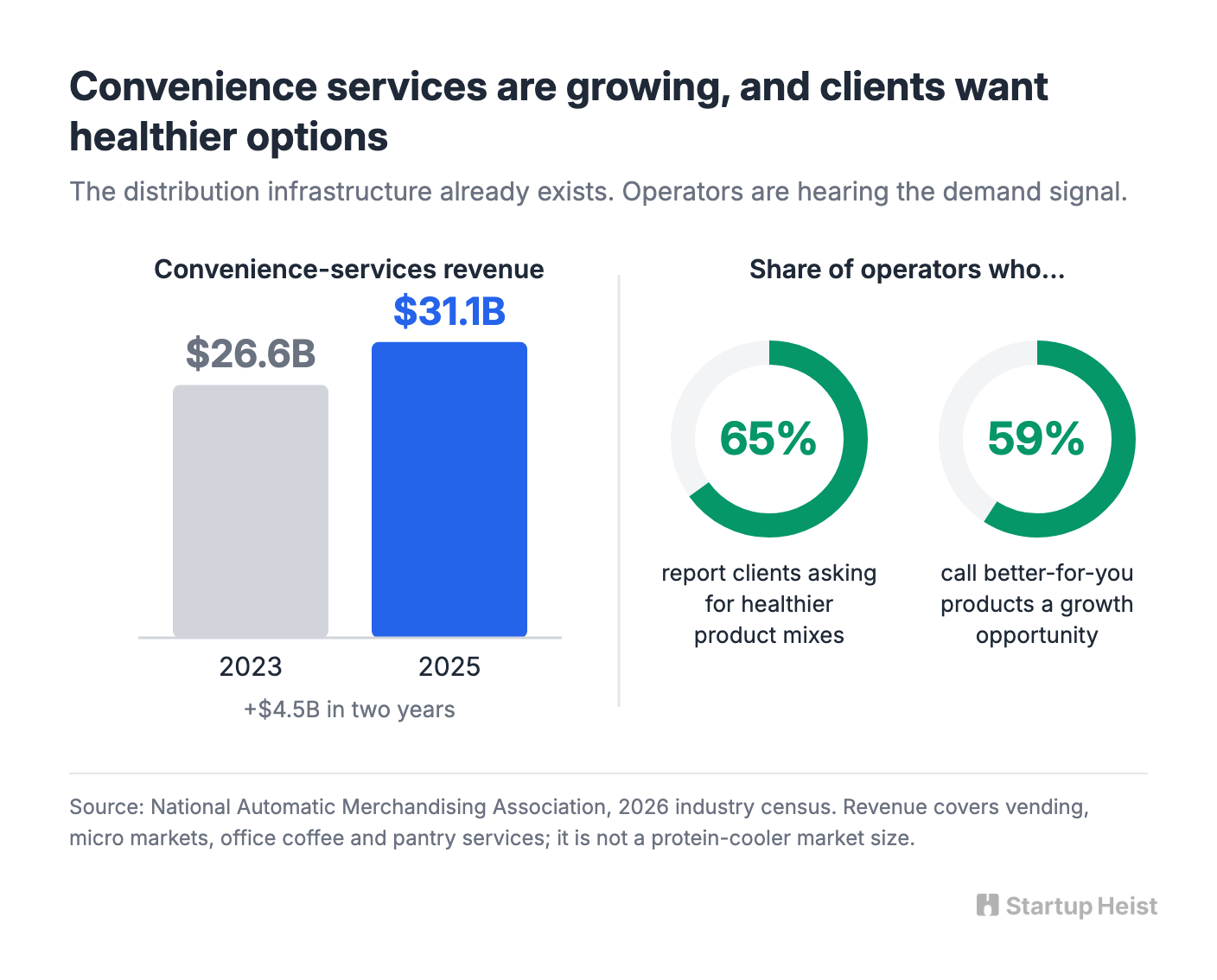
The distribution infrastructure already exists. The National Automatic Merchandising Association's 2026 industry census estimates convenience-services revenue at $31.1 billion in 2025, up from $26.6 billion in 2023. That figure covers vending, micro markets, office coffee and pantry services, so it isn't a protein-cooler market size. The same census shows operators hearing the demand signal: 65% reported clients asking for healthier product mixes, and 59% called better-for-you products a growth opportunity.
Demand is moving toward smaller, purposeful purchases. Traditional vending lives on impulse buys like big sodas, chips and candy, the exact behavior GLP-1 drugs suppress. Those same customers still want convenient protein, hydration and small portions. Someone who can't face a sandwich will still take a yogurt, and a person leaving the gym will usually pick a protein shake over an energy drink. Millions of people on no medication want the same products, so the assortment should be protein-forward and portion-conscious instead of branded as GLP-1 snacks.
Meanwhile, the technology has moved off the shelf. Commercial smart coolers identify purchases, take payments, track inventory and report sales remotely. A founder whose skills are sales, merchandising and operations can run this kind of unattended retail without writing software. What's left to figure out is where to put the cooler and what goes inside it.
The Players, and the Opening They Leave
There's no first-mover advantage in unattended healthy food. Farmer's Fridge runs more than 2,000 locations in airports, hospitals, offices and universities, selling salads and bowls from refrigerated machines. Byte Bar offers fully managed smart coolers for apartments, offices and short-term rentals, with no upfront cost and no long-term commitment for qualifying hosts. Equipment vendors like Byte Technology and Cantaloupe let independents run the same systems, and that supplier layer is consolidating: 365 Retail Markets closed its acquisition of Cantaloupe in May 2026.
National players optimize for their networks, which leaves a local operator room in three places. Underserved buildings are the obvious one, since a 250-unit complex or an independent workplace may be too small for a national rollout but profitable for someone ten minutes away. Sharper merchandising is another: a big operator runs one planogram across hundreds of machines, while you can learn that one building buys yogurt, another buys jerky and a third just wants ordinary snacks, and adjust within a week. Route density matters most over time. A profitable machine 45 minutes away can be worth less than a weaker one down the street, because restocking, cleaning and troubleshooting all get cheaper when sites share a route.
The defensible asset, then, is access to good locations plus the ability to service them cheaply. Everything below is about winning those two.
What to Actually Sell
Unlock the Vault.
Join founders who spot opportunities ahead of the crowd. Actionable insights. Zero fluff.
“Intelligent, bold, minus the pretense.”
“Like discovering the cheat codes of the startup world.”
“SH is off-Broadway for founders — weird, sharp, and ahead of the curve.”


