


The Resident-Story Premiere: A Done-for-You Film Night for Senior-Living Communities
Libraries are buying equipment to rescue old photos and home movies. The better business turns those memories into a Friday-afternoon premiere that a senior-living community pays for, hosts, and books again next quarter.
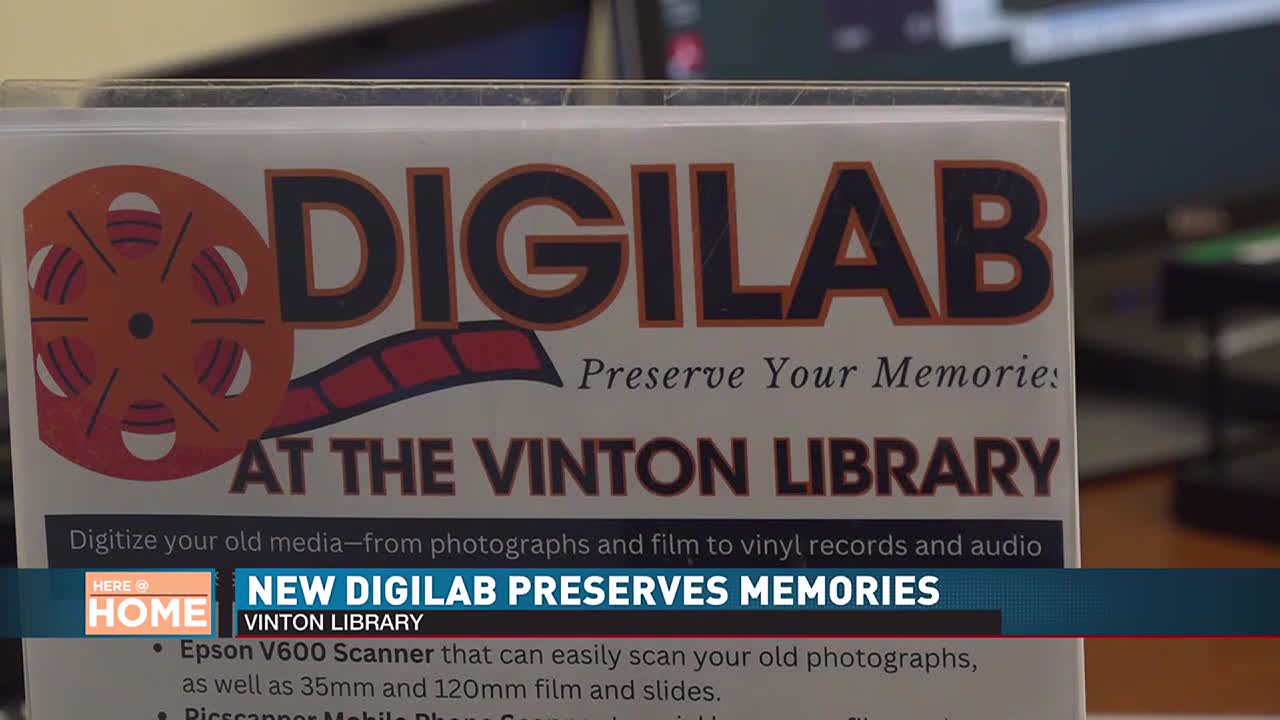
In 2026, Ohio's Shaker Heights Public Library reopened its Creative Spaces after a $50,000 renovation. Alongside sewing machines and music-production gear, cardholders can now convert old photographs, videotapes, and records into digital files.
The library is solving half of a problem millions of families share. Decades of personal history sit in shoeboxes, albums, and dead media formats, and even when a family pays for photo and VHS digitization, the result usually lands in a cloud folder nobody opens. Hours of rescued home movies get preserved and never watched.
Picture a better ending. A senior-living community hosts a Friday premiere featuring four residents. Each family sent a dozen photos, a couple of short clips, and a few stories, and a tight 15-minute film introduces the residents as they were before retirement: the teacher who backpacked across Europe, the mechanic who built a house by hand, the couple who met at a dance in 1962. Children and grandchildren fill the seats. Neighbors learn something new about people they eat dinner with every night. Staff pour coffee and press play, and afterward each family gets a private copy. Nobody at the community chased a single file or hired an editor.
Here's the business behind that afternoon:
The money: Twenty communities booking four $795 premieres a year is $63,600 in revenue, about $5,300 a month, with no software to build and almost nothing to buy up front.
Inside:
• A fixed $795 package that protects margin
• Unit economics at 8, 12, and 16 hours
• An eight-stage workflow and starter stack
• Outreach email, discovery script, 45-day plan
This is a low-capital local service business with a route to repeat institutional customers, and it won't become a venture-scale software company. Its economics hinge on one deceptively hard skill: delivering a personal, emotional event without letting family coordination eat the margin.
Why Senior Living, and Why Now
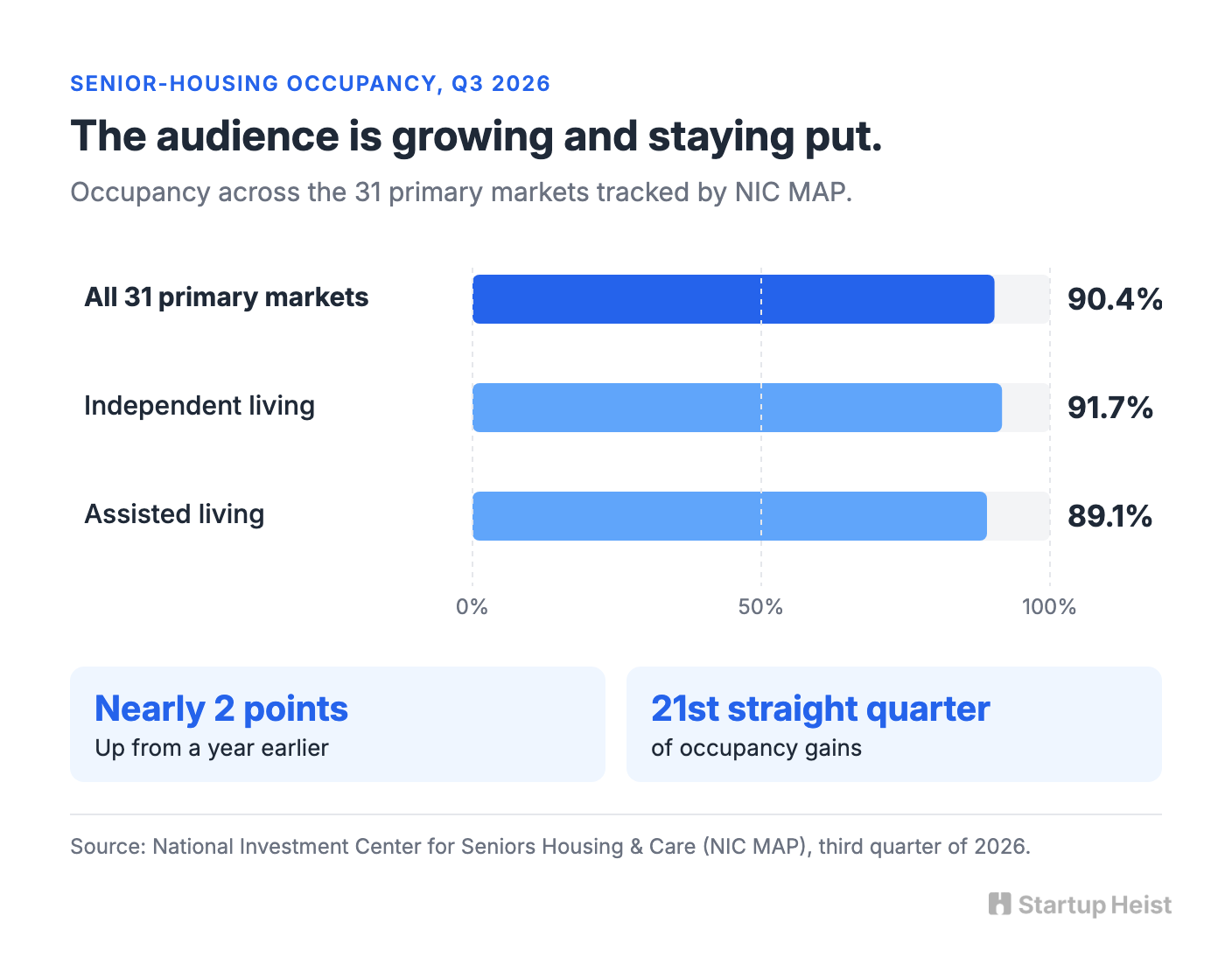
The audience is growing and staying put. According to the National Investment Center for Seniors Housing & Care, occupancy across the 31 primary markets tracked by NIC MAP reached 90.4% in the third quarter of 2026, up nearly two points from a year earlier and the 21st straight quarter of gains. Independent living hit 91.7%; assisted living reached 89.1%. These communities run activity calendars, family days, holiday events, and resident-recognition programs, and their life-enrichment teams need fresh material to fill every slot.
Full buildings cut both ways. Communities have more residents to engage and more families visiting, but they feel less pressure to spend on anything that looks like marketing, because the waiting list does the selling. Meanwhile, the tools to make a memory film have gotten cheap, and any founder entering this market has to price against them.
The Commodity Problem
Video assembly is already a $99 product. Tribute's concierge tier has a professional editor trim, balance, and polish a group video for $99. Remento charges $99 for a year of recorded storytelling plus a hardcover book. Legacybox lists two tapes or albums digitized for about $70 and ten for about $320. Inside senior living, OneDay reported in 2021 that nearly 5,000 communities used its app, where staff record resident interviews on a phone and the platform auto-produces a shareable video. LifeBio, by its own count, sells life-story capture to hundreds of senior-living and care organizations, and LifeLoop's iN2L resident-engagement system ships with more than 7,000 activity items on big-screen hardware.
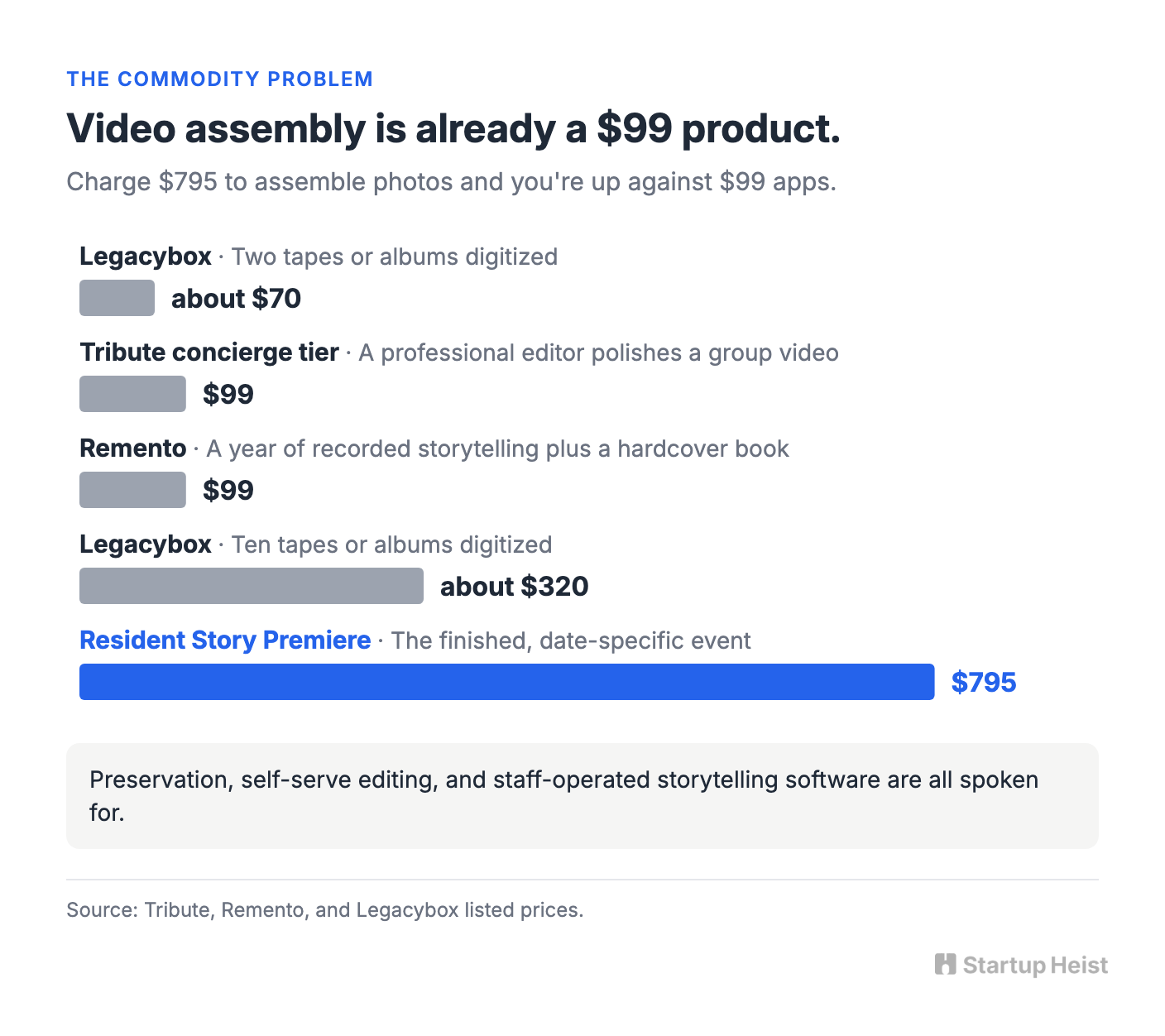
Preservation, self-serve editing, and staff-operated storytelling software are all spoken for. Yet every one of those products still leaves someone at the community doing the work: recruiting residents, chasing families for photos, checking permissions, picking a date, testing the TV. Almost no one sells the finished, date-specific event to a community that lifts no finger beyond booking the room.
The gap resembles the one between buying groceries and hiring a caterer. Groceries are cheap; the caterer gets paid because dinner happens on time and the host never enters the kitchen. Charge $795 to assemble photos and you're up against $99 apps. Charge $795 for the dinner and your competition shrinks to the occasional local videographer.
Follow the Money: Who Actually Buys
Start with the activity budget, because it will reshape your pitch. An older Play it for Seniors survey of assisted-living activity directors, reported by McKnight's Senior Living, found an average monthly entertainment budget of $350, roughly $70 per event, and later reporting suggests some budgets have shrunk since. A $595 premiere would eat nearly two months of that entire line. Pitch the life-enrichment director alone and you'll hear "we love it" followed by silence.
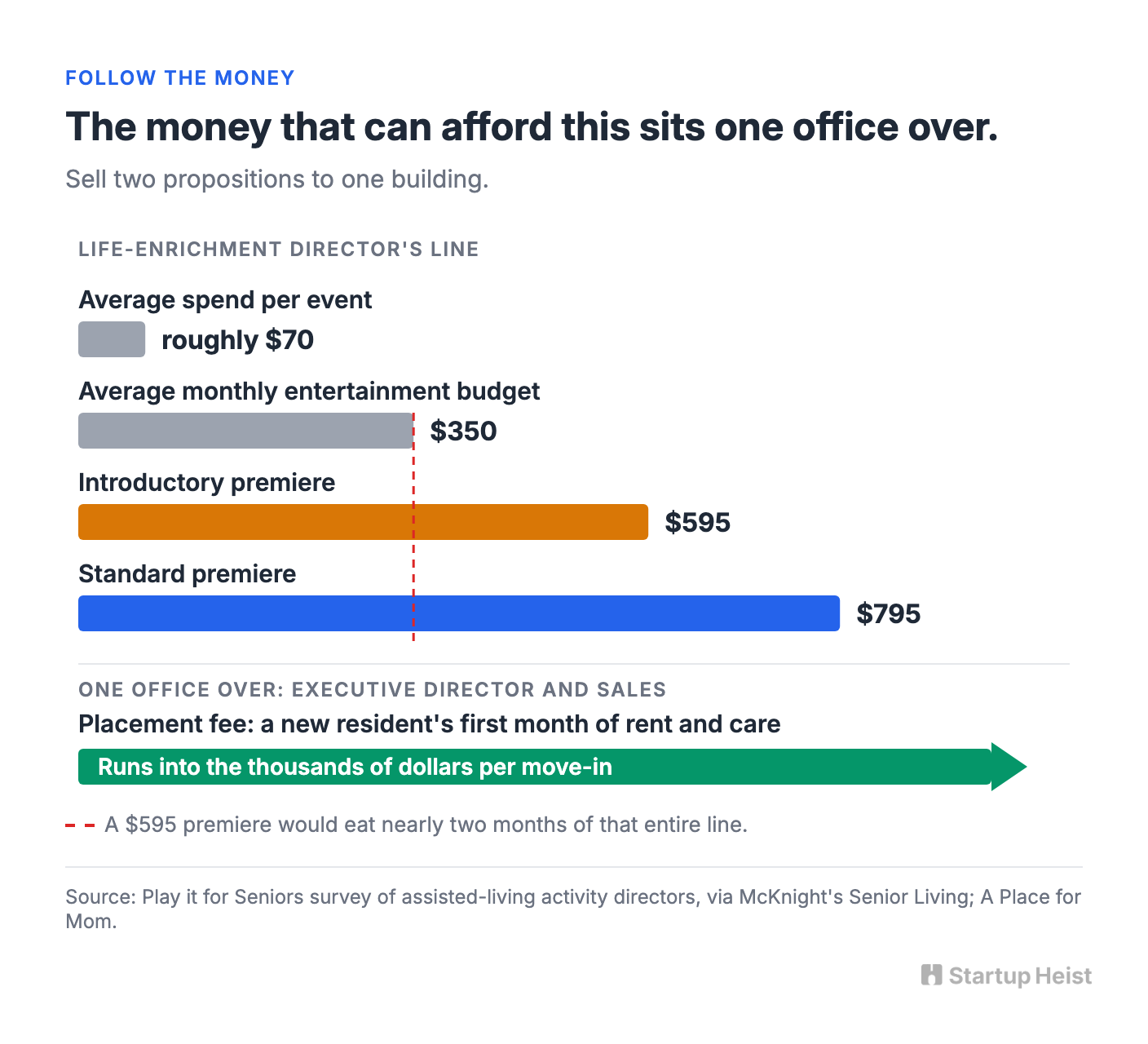
The money that can afford this sits one office over. The executive director and the sales or marketing lead think about occupancy, family satisfaction, and referrals. Placement agencies like A Place for Mom charge communities a fee that, by the company's own description, equals a new resident's first month of rent and care, which runs into the thousands of dollars per move-in. Against that math, a $795 afternoon that packs the room with residents' adult children looks cheap, and those adult children are the people whose friends will soon be touring communities for their own parents.
So sell two propositions to one building. The activity director gets a signature program that costs staff zero prep hours. The executive director gets a family-attendance event that showcases the community's culture, with an option to open the screening to tour prospects. The community pays, families supply material, residents approve their own stories, and staff host. Keeping those roles separate removes the payment friction that kills consumer memory products, where you'd otherwise be asking five families to chip in $100 each.
Landing the sale is the easier half. The real work is building a product you can deliver forty times a year without drowning.
The Product: Resident Story Premiere
The biggest product decision is what to leave out. An open-ended family-movie service sounds generous until one daughter uploads 400 photos and a son wants Dad's Army years in chronological order. At a few hundred dollars per event, every extra request is unpaid labor, so build around a fixed format.
Unlock the Vault.
Join founders who spot opportunities ahead of the crowd. Actionable insights. Zero fluff.
“Intelligent, bold, minus the pretense.”
“Like discovering the cheat codes of the startup world.”
“SH is off-Broadway for founders — weird, sharp, and ahead of the curve.”


