


The Price Tag Audit
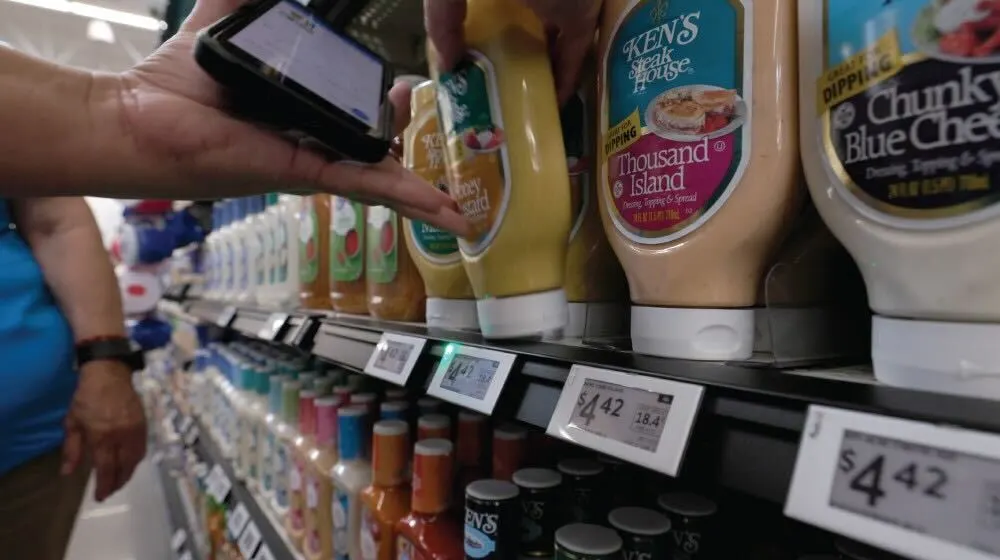
Walmart is putting digital price tags on every shelf in America.
The public argument about this is entirely about consumers. Prices changing hourly. Grocers testing surge pricing. A shelf label eventually showing you a different number than the person standing next to you. Maryland, Connecticut, and New Jersey have all passed laws restricting surveillance-based grocery pricing. Another twenty-eight shelf-label pricing bills are pending across sixteen states, and a federal bill landed in Congress in February 2026.
The worry is legitimate. It also sits directly on top of a quieter, more lucrative problem.
Consumer packaged goods brands pay retailers enormous sums to run promotions. A beverage company funds a temporary $3.49 price across 400 stores for two weeks. A snack brand pays for a refrigerated endcap. A personal care company buys a loyalty discount and extra facings. Then comes the uncomfortable part: nobody can reliably prove what happened on the shelf. Brands have chased that answer for decades with field reps, spreadsheets, retailer reports, and phone photos, and it arrives late, incomplete, and rarely in a form anyone can act on.
Now the shelf itself is turning into software. Every price change becomes a timestamped event in a system rather than a person with a box of paper tags. That opens room for a specific kind of company. Call it a promotion-exception system: a layer that compares what a brand paid for against evidence of what actually happened, then surfaces only the stores where the two disagree.
Here's the opportunity:
The money: Thirty mid-market brands at $4,000 a month is $120,000 MRR. A $100M brand routes $15 million a year through trade promotions.
Inside:
• Two-week interview script that finds the contract
• The 30-store manual pilot that proves demand
• Full MVP scope, eight components, two builders
• Sampling math that keeps capture costs sane
Start narrow enough to be boring. One retailer, one category, one metro, twenty stores. Build the reconciliation layer between the promotion contract and the shelf. That's the heist.
The shelf edge became programmable
Walmart began deploying digital shelf labels in 2024 and had roughly 2,300 stores converted by March 2026. On March 21, 2026, the company confirmed the rest: all of its roughly 4,600 U.S. locations would have them by the end of the year. Price changes that used to take up to two days of associate labor now propagate in minutes.
Walmart has been explicit that this isn't a dynamic pricing play. The company says it intends to hold the same price for every shopper throughout the business day and to push planned changes outside peak hours. Take that at face value, because the opportunity doesn't depend on retailers behaving badly.
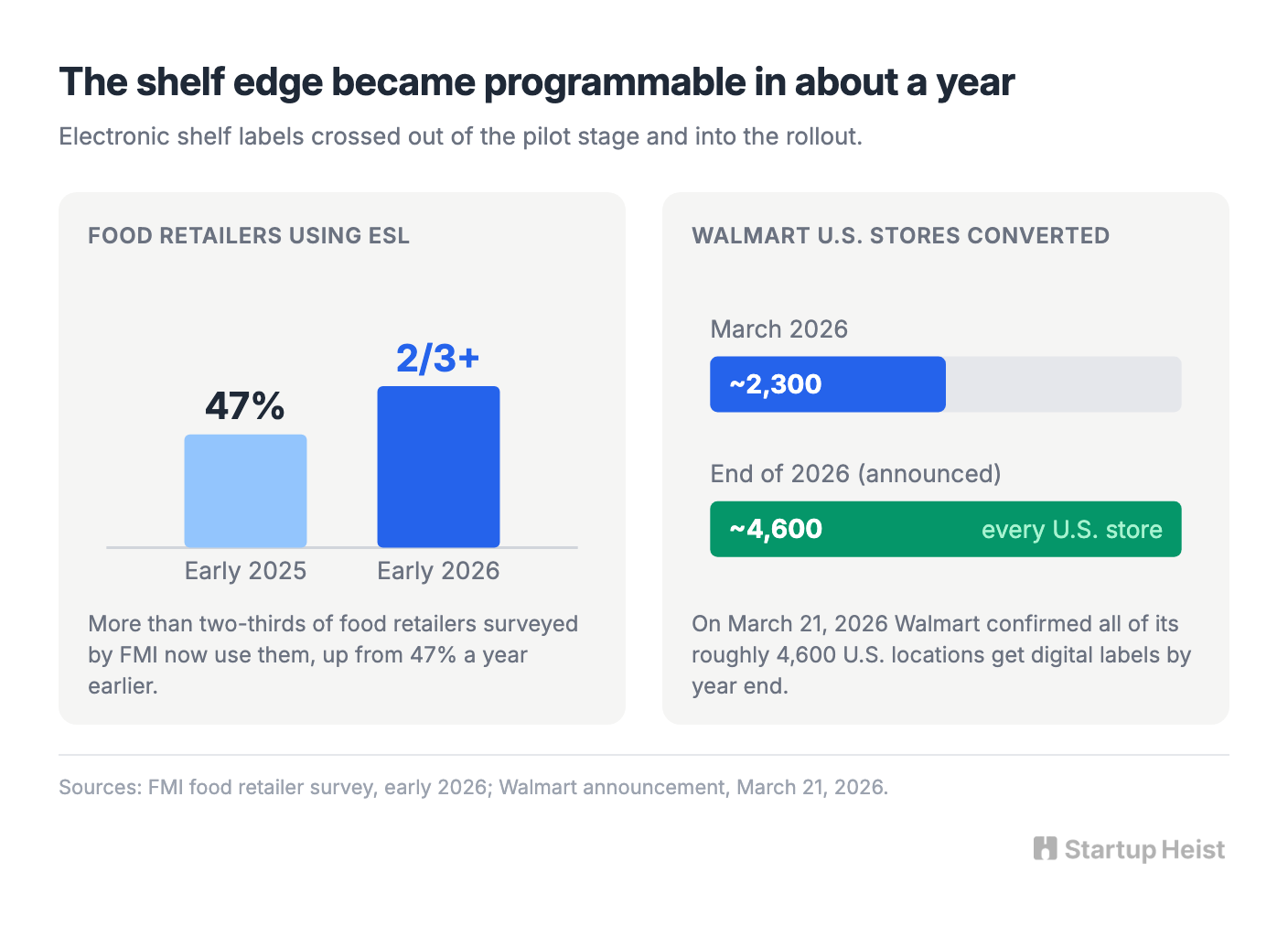
The broader adoption curve matters more than Walmart alone. In early 2026, more than two-thirds of food retailers surveyed by FMI said they use electronic shelf labels, up from 47% a year earlier. Kroger, Whole Foods, Amazon Fresh, Schnucks, Hy-Vee, Lidl, and Good Food Holdings are all in various stages of deployment. Across the industry, this has crossed out of the pilot stage and into the rollout.
For a brand, that changes the nature of the evidence. A promotional price at store level used to be a physical artifact created by a human being who may or may not have walked the aisle that morning. Now it's a record in a pricing system, executed centrally, with a timestamp. The shelf is becoming auditable for the first time.
The trade promotion management systems brands use to plan, fund, and verify retail execution haven't caught up.
The second-largest line on the P&L
Trade promotion is the biggest expense in consumer goods that almost never gets discussed outside the industry.
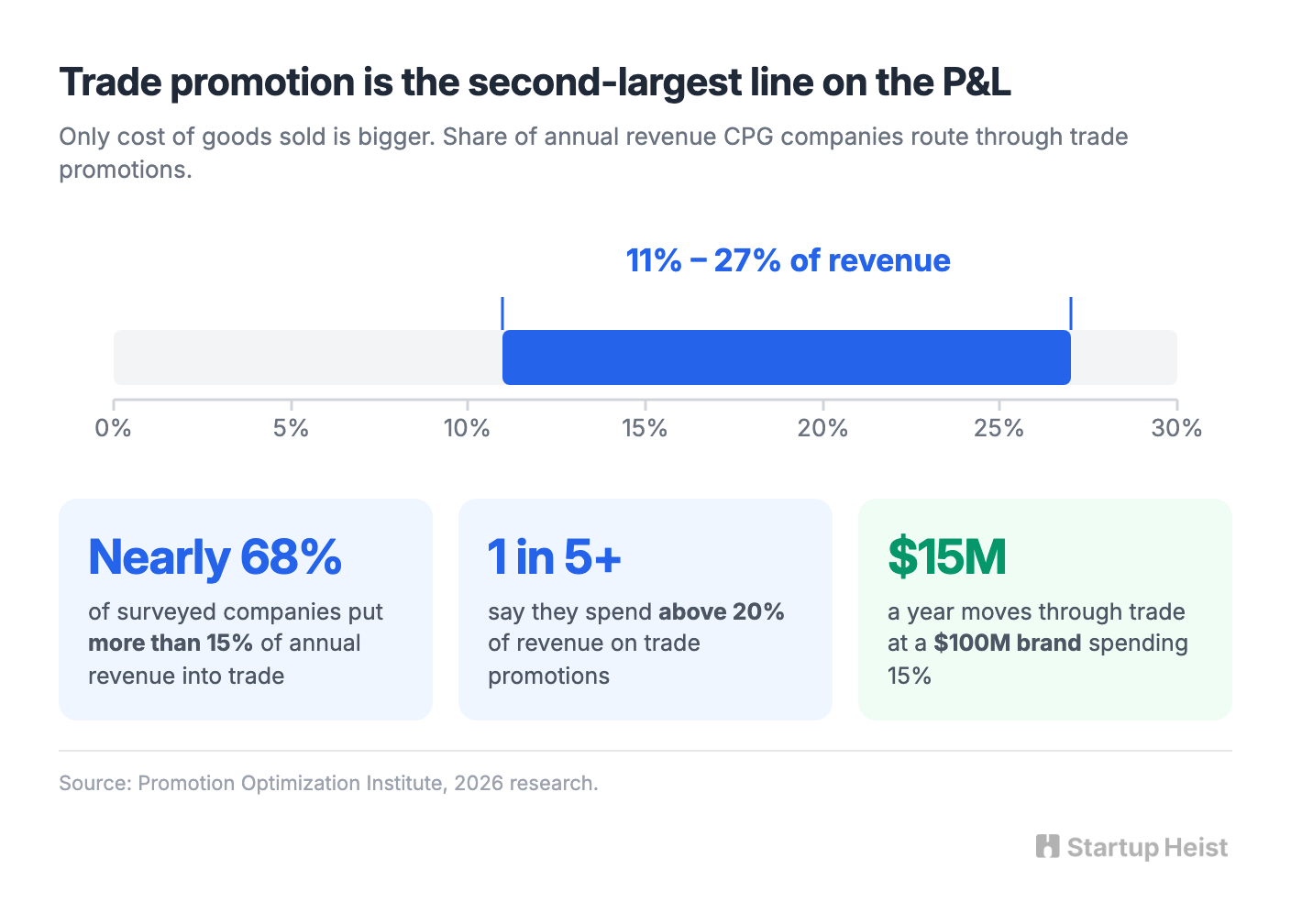
The Promotion Optimization Institute finds that CPG companies commonly spend between 11% and 27% of revenue on trade promotions, which regularly makes it the second-largest item on the P&L after cost of goods sold. In POI's 2026 research, nearly 68% of surveyed companies reported putting more than 15% of annual revenue into trade, and more than one in five said they spend above 20%.
Run that against a modest brand. A $100 million company at 15% is moving $15 million a year through discounts, allowances, displays, scan-downs, and retailer programs. That money leaves the building on the assumption that a specific thing will happen in specific stores on specific dates.
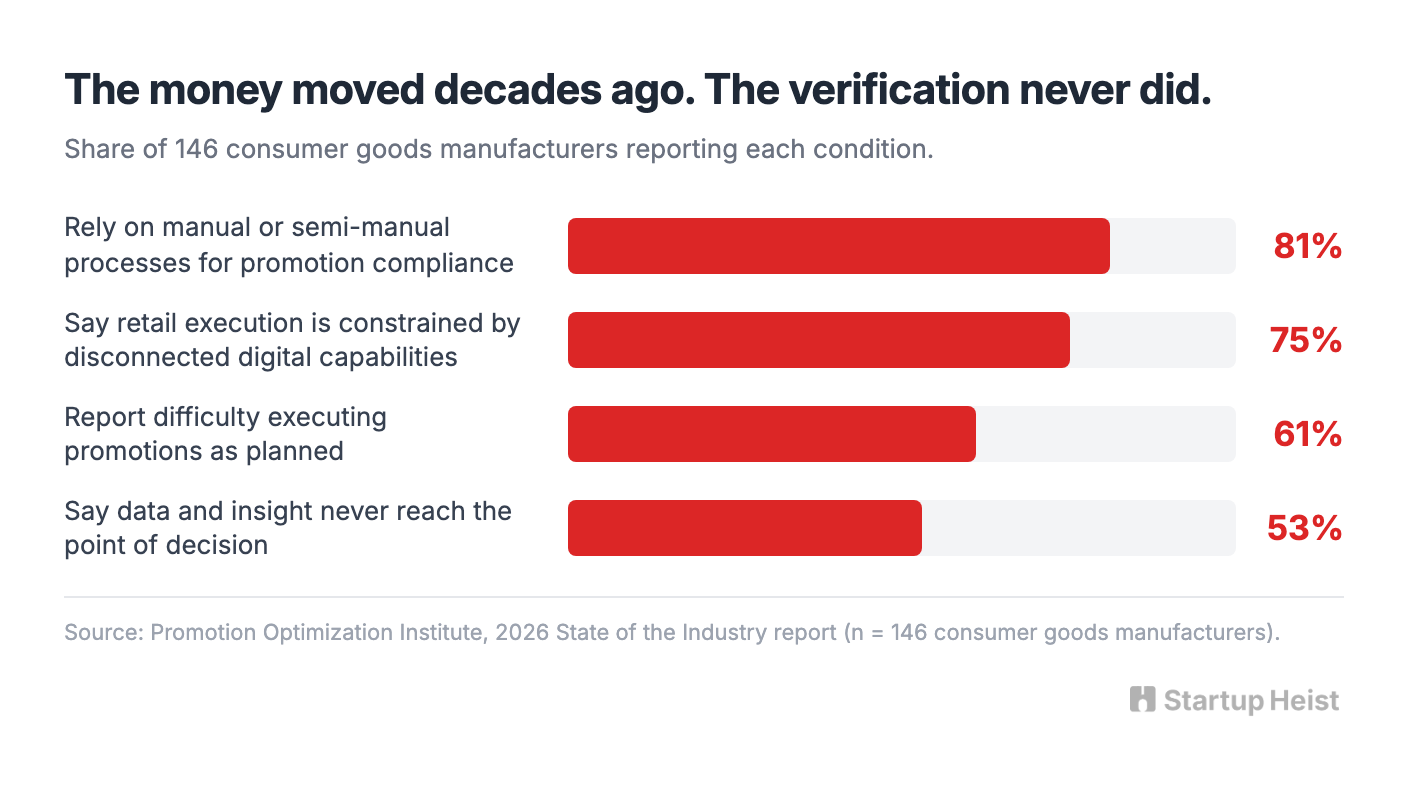
The verification layer is startlingly primitive. POI's 2026 State of the Industry report, based on 146 consumer goods manufacturers, found that 81% still rely on manual or semi-manual processes for promotion compliance, 61% report difficulty executing promotions as planned, 75% say their retail execution is constrained by disconnected digital capabilities, and 53% say execution suffers because data and insight never reach the point of decision.
Downstream, the leakage shows up in deductions. Industry estimates put invalid deductions at 5% to 10% of total claims, with a further slice written off because nobody documented the case before the retailer's dispute window closed. A $200 deduction can consume $300 to $500 of staff time to contest, which is exactly why so many go unchallenged.
You don't need to recover a meaningful fraction of that money to build a company. Identify or prevent leakage worth half a percent of a $15 million trade budget and you've produced $75,000 of value. A $4,000 monthly product suddenly looks cheap.
Why "AI reads the price tag" is not a business
The tempting version of this idea is a nationwide historical database of every shelf price in America. Resist it.
Physical data collection gets brutally expensive at scale, and the data fights back at every step. Online prices aren't shelf prices. Loyalty offers add a second layer. Stores go out of stock, tags get obscured by a cardboard display, and a shopper photographs the wrong SKU. Some retailers restrict systematic aisle photography, and automated web collection creates terms-of-service exposure you don't want on your cap table.
Capture is also a solved and commoditized problem already. Field Agent runs crowdsourced price checks through an app installed by more than two million U.S. shoppers, returning GPS-verified timestamped photos. FORM's GoSpotCheck reads SKUs, prices, planogram compliance, and promotional signage out of shelf images and claims a 75% reduction in audit time. Acosta Group fields more than 60,000 associates across 3,000 retail clients, and Advantage Solutions turned $3.54 billion in 2025 with roughly 70,000 people walking stores.
Enormous capital and labor already point at capture, and almost none of it points at the question the brand is actually asking. A photo tells you a price. It says nothing about whether that price violated a contract, whether the discrepancy costs money, or what anyone should do about it by Friday. The opportunity sits one level above the camera.
The product is an exception queue
Call the company ProofTrade.
A customer uploads a promotion: retailer, UPC, SKU description, 184 participating stores, temporary price reduction from $4.49 to $3.49, September 6 through September 19, no loyalty requirement, refrigerated endcap required, twelve stores excluded.
Unlock the Vault.
Join founders who spot opportunities ahead of the crowd. Actionable insights. Zero fluff.
“Intelligent, bold, minus the pretense.”
“Like discovering the cheat codes of the startup world.”
“SH is off-Broadway for founders — weird, sharp, and ahead of the curve.”


