


The Next AI Data Company Looks More Like a Casting Agency Than a Software Startup
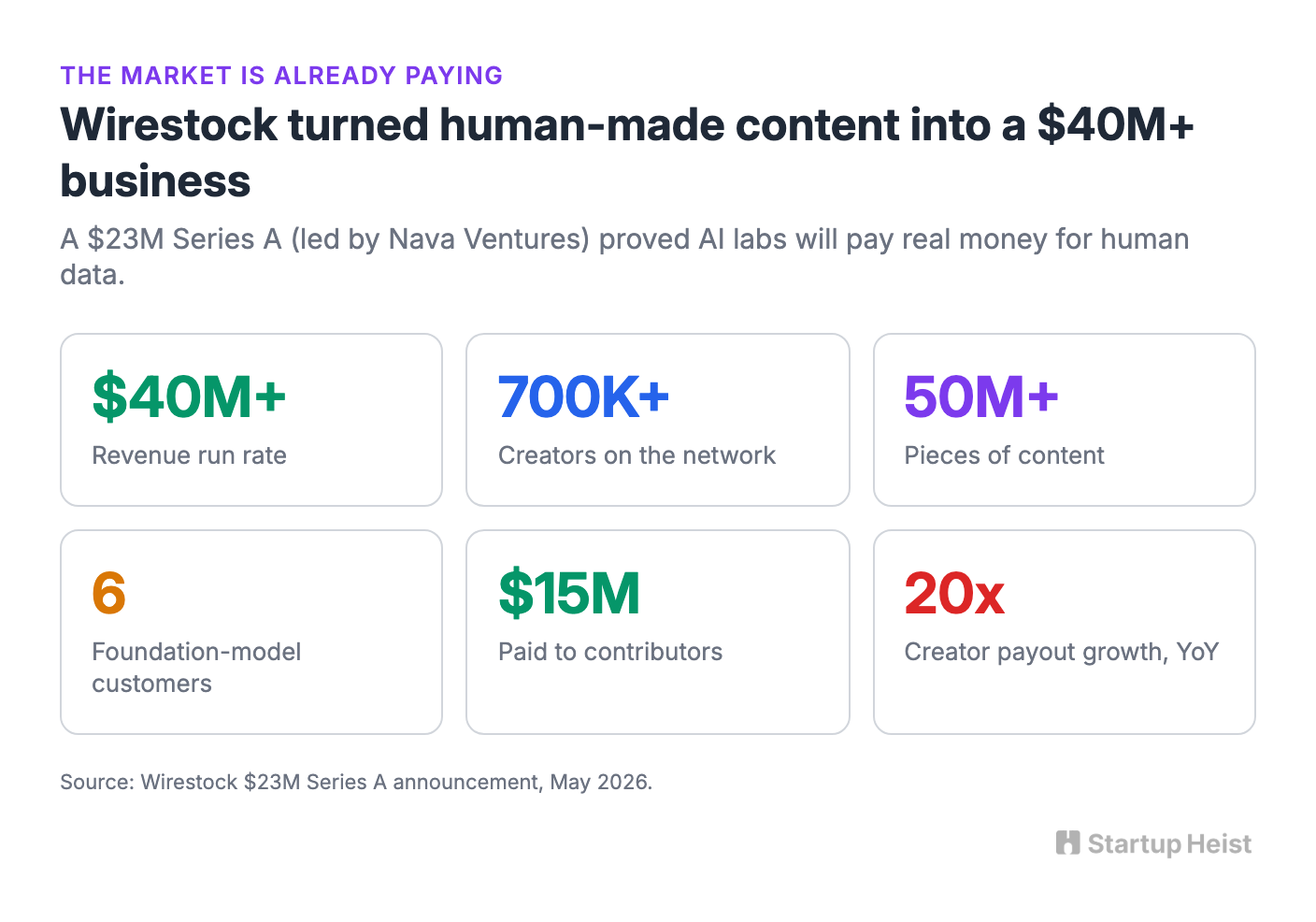
In May 2026, a company called Wirestock raised a $23 million Series A to do something that sounds almost quaint: pay people to make images, video, audio, and music, then sell that content to AI labs as training data. The round was led by Nava Ventures, with Sheryl Sandberg's venture firm among the backers.

The numbers are anything but quaint. Wirestock now claims more than 700,000 creators, over 50 million pieces of content, and six major foundation-model companies as customers. Its revenue run rate has passed $40 million, and it has paid roughly $15 million to contributors. Moving from a stock-media model to AI licensing grew creator payouts 20x year over year.
The obvious lesson is that AI labs will pay real money for human-made data. The more useful lesson is that you don't have to build another giant marketplace to get a cut of it. There's room for a smaller, stranger, more defensible company: the specialist producer that physical-AI teams call when they need footage that doesn't exist yet. Not stock photography, not scraped YouTube, and not another room of anonymous annotators drawing boxes around traffic lights.
Call it Dataset Scouts. A high-touch bureau that recruits the right people, stages the right real-world scenarios, and delivers rights-clean video and audio to robotics companies, speech-model teams, and vertical AI labs. The first assignment might sound absurdly specific: capture 250 first-person videos of North American tradespeople repairing sinks, replacing light switches, and troubleshooting appliances inside real homes. The specificity is the whole point.
Here's the opportunity:
The money: Bespoke pilots run $7,500 to $25,000 each. A working bench scales to dataset licenses at $25K to $100K and ongoing programs at $5K to $20K per month.
Inside:
• Four-stage model: pilots to licensed datasets
• Five-part moat that compounds over time
• MVP tool stack plus the QA scoring rubric
• 50-prospect GTM and a 60-day playbook
The signal
For years, AI progress ran on the public internet. That worked for language models because the internet is mostly language. Physical intelligence doesn't get the same gift.
A robot has to do more than recognize a wrench. It has to learn how a hand reaches for one, grips it, turns it in a cramped cabinet, applies pressure, hesitates when something feels wrong, and recovers when the job refuses to cooperate. A speech model for an insurance call center needs consented audio of real accents over real background noise, not clean studio takes. The most valuable robotics training data increasingly lives in the messy, unsearchable corners of the physical world.
NVIDIA's EgoScale research made the case hard to argue with. The team trained a vision-language-action model on more than 20,000 hours of action-labeled, first-person human video spanning thousands of scenes and tasks, including kitchens and repair shops. They found a clean log-linear relationship: more human data, predictably better robot performance. The model improved task success by 54% over a baseline with no human pretraining.
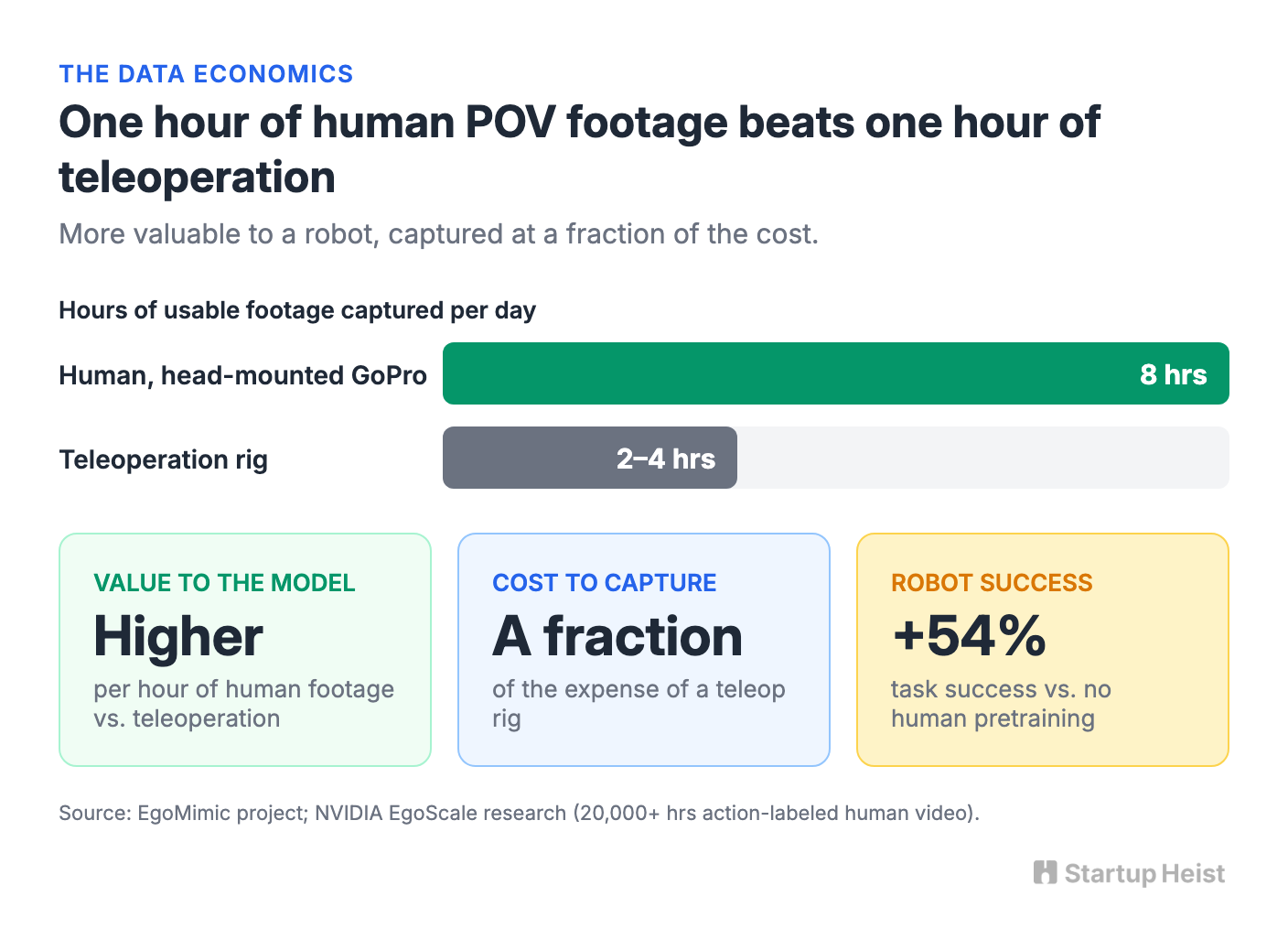
The economics push the same way. Researchers behind the EgoMimic project found that one hour of human first-person footage is worth more than one hour of robot teleoperation data, at a fraction of the cost. A person with a head-mounted GoPro can capture eight hours of varied egocentric video a day. A teleoperation rig yields two to four, at far higher expense. The market already knows this. Toloka recruits people to film household chores on their phones. Appen delivered more than 50,000 physical-AI data units to a frontier lab working on domestic robots. iMerit runs enterprise-grade first-person video collection with standardized protocols.
The whole industry is turning toward the physical world, and the physical world is inconvenient to capture. That inconvenience is where the opening lives.
Why a specialist, not a marketplace
The horizontal lanes are already taken. Wirestock owns the broad creator network. Appen claims more than a million vetted contributors across 500-plus locales. A wave of offshore operators is racing on cheap volume; one outfit advertises 270 collectors across Latin America and the Philippines. Competing on breadth would be expensive and pointless.
The opening is vertical. Pick one category where the footage is operationally awkward, commercially valuable, and hard to source through generic contributors. Then run it like a casting agency fused with a field-production company: find the right participants, design the assignment, secure the rights, standardize the recording, verify the metadata, reject the bad takes, and deliver model-ready data. The buyer doesn't want "video." The buyer wants 300 usable sequences, shot from the correct angle, showing the right tasks, in the right rooms, with clean releases, consistent labels, and almost no rework. That's a different product, and almost nobody is selling it well.
The wedge: tradesperson POV
The strongest place to start is first-person home-repair footage shot by independent tradespeople. Picture plumbers, electricians, HVAC techs, appliance specialists, and seasoned handymen wearing a chest or head camera while they complete tightly defined jobs. This wedge wins on five fronts at once.
The footage is dense with the exact manipulations robots fail at: opening unfamiliar cabinets, working around clutter, handling flexible hoses, applying torque, choosing tools, diagnosing a visible problem, recovering from a mistake. These aren't lab demos. They're messy, embodied workflows.
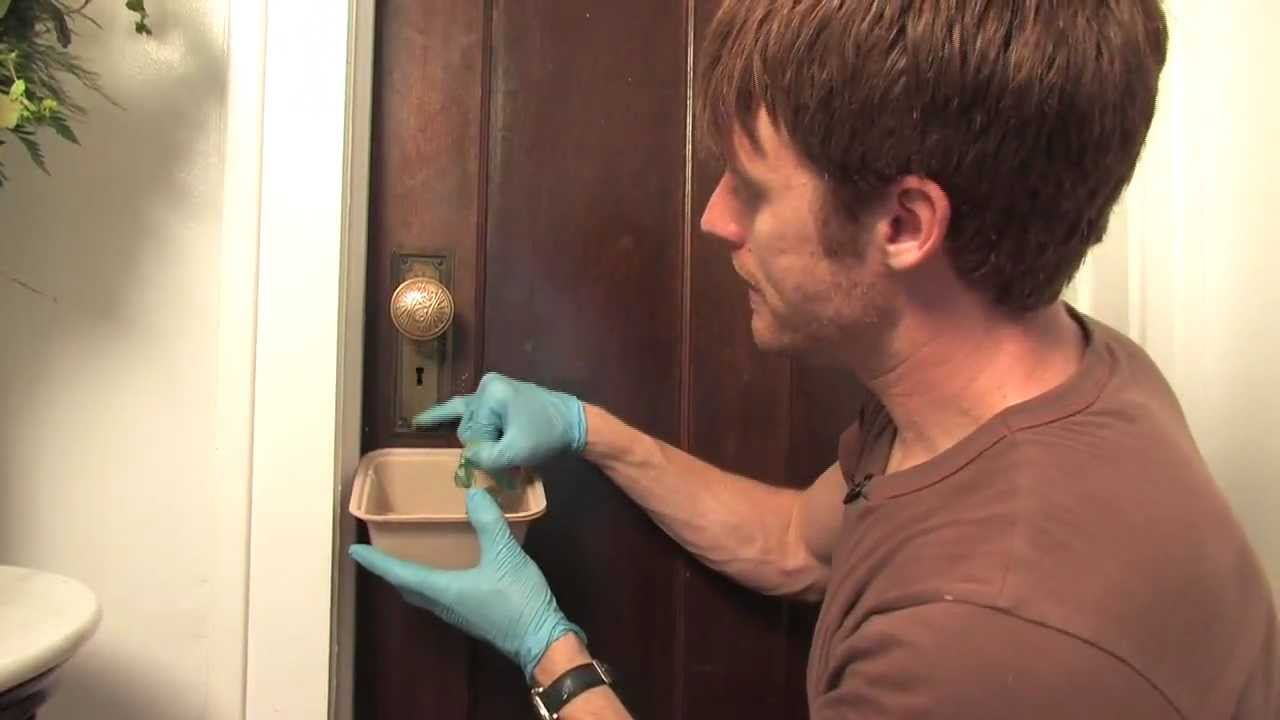
The contributors are findable. A generic marketplace with millions of users still struggles to surface 30 experienced technicians willing to film the same repair under consistent conditions. A specialist recruits from trade schools, contractor groups, vocational instructors, and repair subreddits. You don't need 700,000 creators. You need the right 40.
The environments come pre-diversified. Every house brings different layouts, light, fixture brands, and constraints. That variation makes the dataset much harder for a competitor to reproduce in a studio.
The assignment standardizes cleanly. The footage is unusual, but the process isn't mysterious: a checklist for camera position, resolution, lighting, task sequence, before-and-after shots, the metadata form, the release, and the reshoot rules. A small team can run the first pilot by hand. And the network compounds. Once you have reliable plumbers on the bench, the same people can capture toilet repairs, disposal swaps, and dishwasher hookups. One relationship becomes a library.
Why now
Three trends are colliding to make this the moment.
Rights-clean data has become a product rather than a nice-to-have. The old plan was to scrape whatever was reachable, and that plan is now under legal pressure. The U.S. Copyright Office has called the legal status of AI training data unsettled, tangled in consent, compensation, licensing, and a stack of pending lawsuits. For a small producer, that's not a threat; it's the pitch. You aren't selling footage. You're selling footage wrapped in a clean chain of rights: contributor agreement, AI-training authorization, commercial-use grant, location release, third-party restrictions, ownership declaration, consent records, and version history. The paperwork is the product.
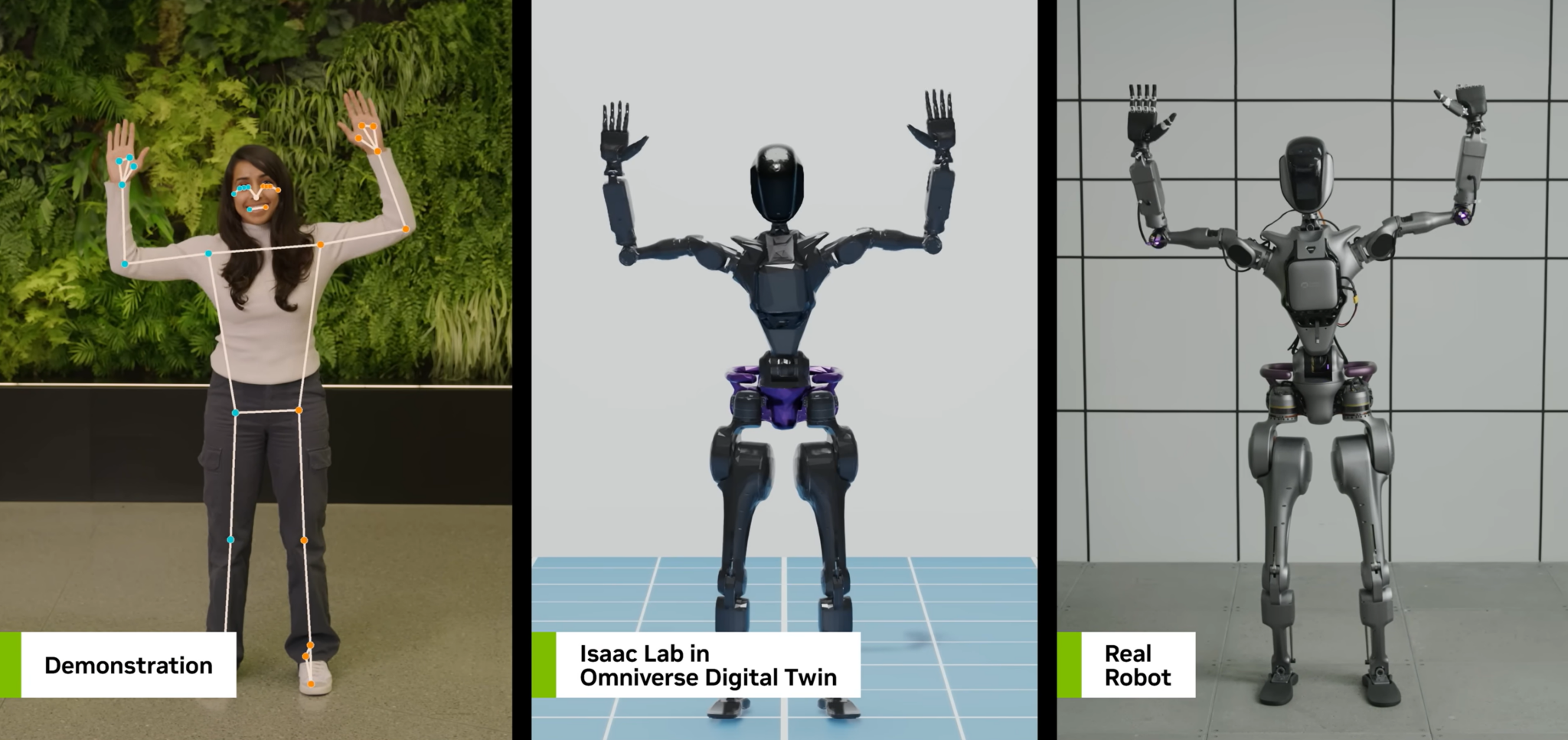
Robotics teams need real-world grounding even as synthetic data explodes. NVIDIA is pouring money into simulation and synthetic "data factories," but synthetic data doesn't erase the need for reality. The smart framing is seed data plus multiplication: a team grounds its model on a tight set of authentic repair videos, then augments with simulation. Your small dataset becomes the raw material for a much larger pipeline.
The generalists have already proven the market without exhausting it. You no longer have to convince buyers that outsourced data production is legitimate. Appen says outright that many teams need custom datasets beyond off-the-shelf collections. The only open question is whether you can own one underserved category more deeply than a generalist built for breadth. Small companies win that way all the time.
What you are actually selling
The first version of Dataset Scouts is a managed dataset-production service, not a platform. The customer hands you a brief. You turn it into a contributor assignment, recruit the people, run production, do QA, and deliver the files with documentation.
The opening offer is simple:
Dataset Scouts Pilot — $7,500 to $20,000, delivered in four to six weeks. One tightly defined workflow category. Output: 100 to 300 accepted sequences with metadata, rights documentation, and a QA report.
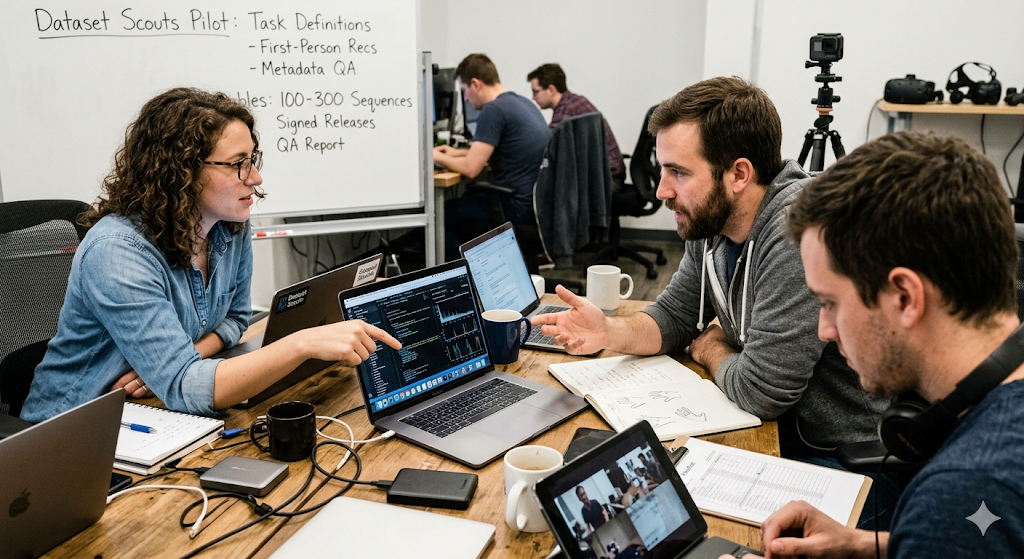
A representative pilot: 25 screened contributors, 200 accepted first-person recordings, five to ten predefined tasks, three to eight minutes per clip, plus standardized metadata, signed releases, basic action segmentation, QA notes, a delivery manifest, and one revision round.
The pilot isn't really about revenue. It's about learning what buyers care about. One robotics team will tell you chest-mounted footage fails because they need visible hand pose. The next needs paired before-and-after frames. The third wants tool labels, timestamps, and object-state transitions. Each assignment sharpens your operating system, and that system is the actual asset.
A sample dataset
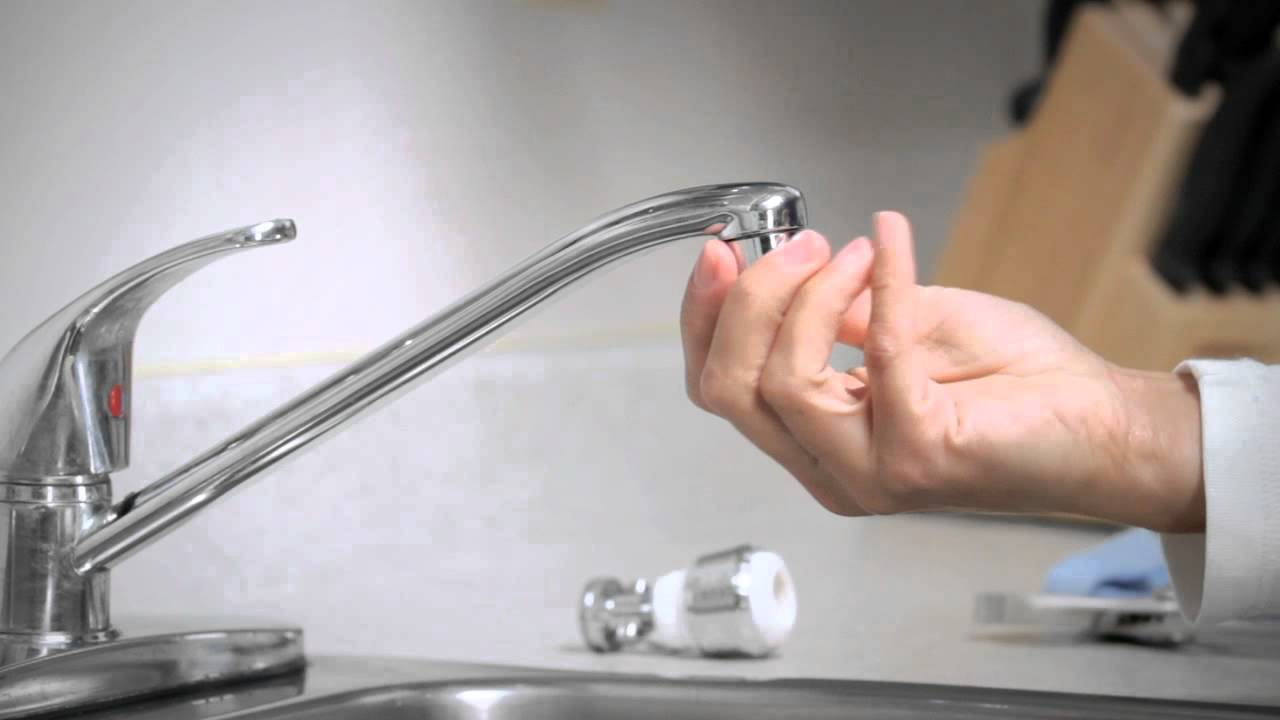
Say you sell a Household Plumbing Manipulation Pilot for $12,500. You recruit 30 contributors and accept 200 recordings across five tasks:
Unlock the Vault.
Join founders who spot opportunities ahead of the crowd. Actionable insights. Zero fluff.
“Intelligent, bold, minus the pretense.”
“Like discovering the cheat codes of the startup world.”
“SH is off-Broadway for founders — weird, sharp, and ahead of the curve.”


