


The Clipboard-to-Compliance Heist
The federal government is trying to drag hazardous-waste paperwork into the digital age, and it is not going smoothly.
The EPA launched its national e-Manifest system in 2018 to track hazardous-waste shipments electronically, from the moment waste leaves a generator until it reaches a treatment, storage, or disposal facility. This is the digital backbone for cradle-to-grave tracking of every hazardous-waste manifest in the country. Yet eight years later, the field still runs on pen and paper. Electronic manifests account for less than 1% of all manifests submitted since the system launched.
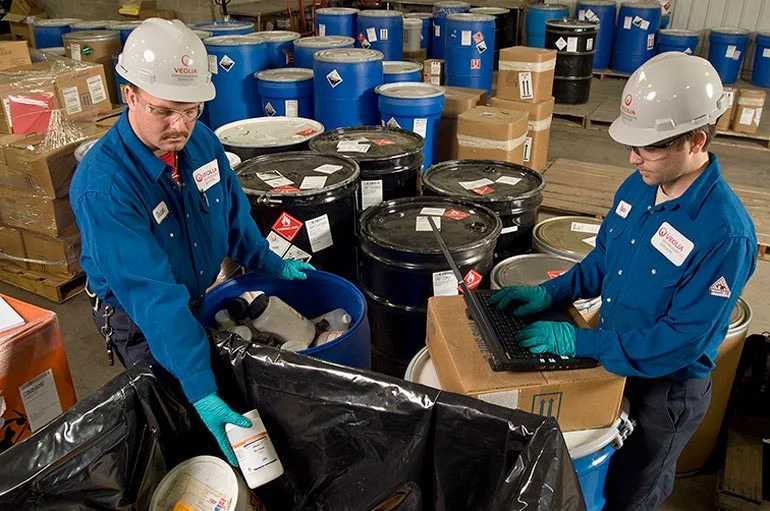
That gap is where the opportunity lives. Drivers show up at industrial sites. Operators stand near loading bays. Environmental consultants walk construction projects with clipboards. People write notes by hand, take photos, chase signatures, upload scans, reconcile missing fields, and re-key everything into EPA portals after the fact. The opening is not another generic AI document parser, and not a vision model that promises to read every smudged clipboard and file legally binding documents while everyone goes home early. It is a narrow compliance-capture tool for one regulated workflow, built on a single promise: nothing leaves the building with a missing field, an unresolved discrepancy, or a forgotten follow-up.
Here's the opportunity:
The money: 50 operators at $2,000/month is $100,000 MRR. 10 broker accounts at $5,000/month is $50,000 MRR. A clean bootstrapped path before any platform expansion.
Inside:
• 8-week MVP scope for EPA Form 8700-22
• Four-tier pricing from pilot to enterprise
• Broker-first GTM with outreach template
• Five compounding moats around the parser
The regulatory clock has started
On March 5, 2026, the EPA published a proposed rule to phase out paper hazardous-waste manifests. If finalized, it sets a paper sunset date 24 months after the final rule publishes. After that, waste handlers generally must use electronic manifests, with narrow exceptions for system outages. The public comment period closed on May 4, 2026, which means the agency is now writing the version that sticks.
This is a forced software-adoption story dressed up as environmental policy. The EPA estimates the phase-out would save manifest users between $26.4 million and $28.5 million a year in printing, reporting, and recordkeeping burden.
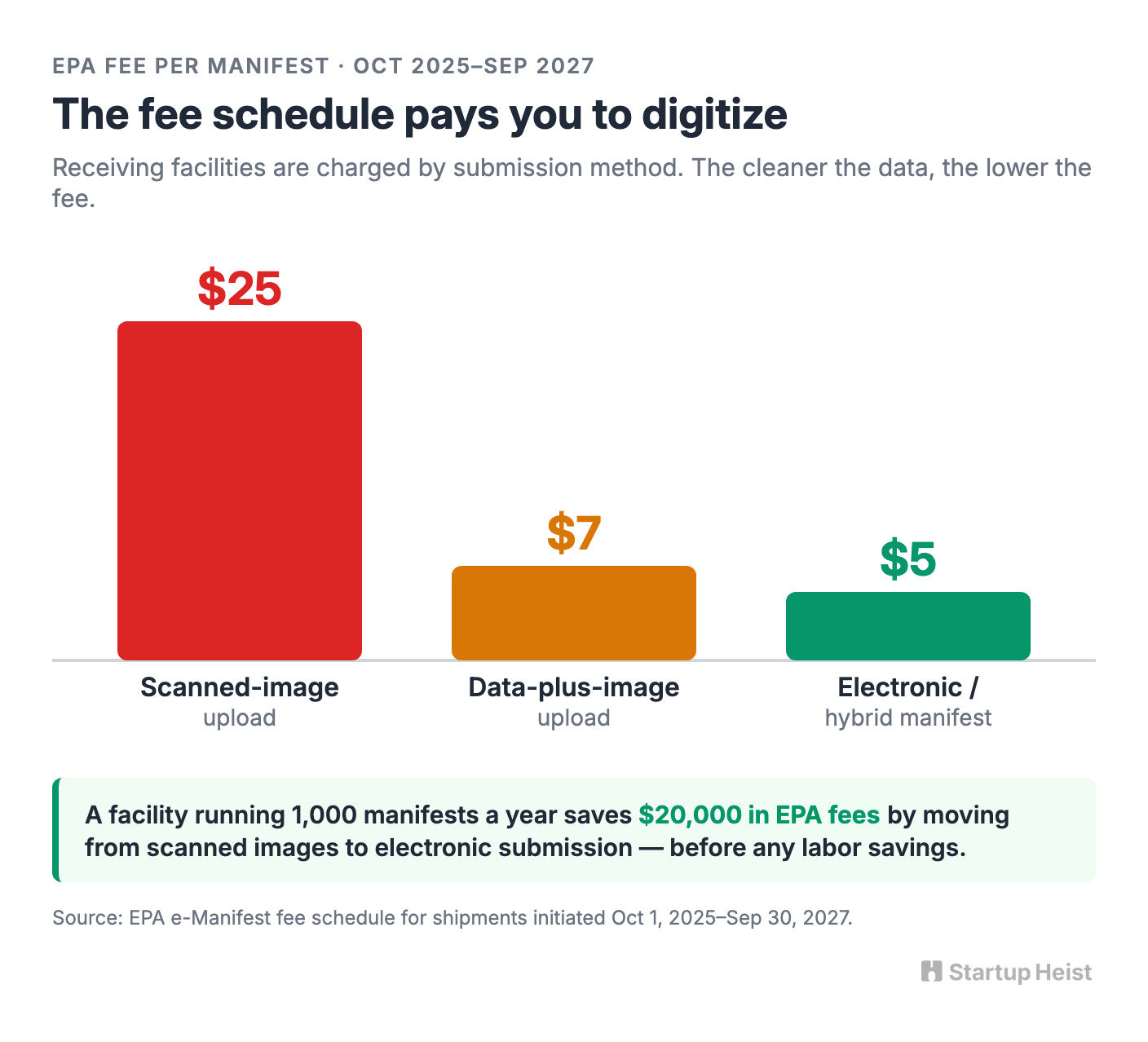
The fee schedule already pushes the market the same way. For shipments initiated between October 1, 2025 and September 30, 2027, the EPA charges receiving facilities by submission method:
| Submission method | EPA fee per manifest |
|---|---|
| Scanned-image upload | $25 |
| Data-plus-image upload | $7 |
| Fully electronic or hybrid manifest | $5 |
A facility running 1,000 manifests a year cuts $20,000 in EPA fees just by moving from scanned images to electronic or hybrid submissions. The labor savings run even higher. And the EPA stopped accepting mailed paper manifests back in mid-2021, so even shops still using paper in the field already have to submit the results digitally as scanned images or structured data files.
The industry is already halfway through the tunnel and hasn't reached the other side. That unfinished transition is the market: software that moves operators from informal field capture to structured, reviewable, submission-ready data without forcing them to rebuild their entire operation overnight.
The obvious product is the wrong product
At first glance this looks like an OCR play. Photograph a manifest, run it through a vision model, extract the fields, populate the government form, charge $49 a month. That version demos beautifully and sells terribly.
The problem was never whether AI can read handwriting. Modern vision models pull a surprising amount of signal from a bad photo. The problem is that "pretty good" is not the standard when the output becomes part of a regulated shipment record. A wrong quantity, a bad EPA identification number, a missing signature, a misclassified waste stream: none of these are cute hallucinations. They are compliance failures with legal weight.
The EPA's proposed rule names the friction directly. Custody transfer between generator and transporter is a major barrier to electronic adoption, because the driver standing at pickup often lacks a device, system access, reliable coverage, or real-time coordination with the office. The paperwork stays analog because the loading bay is analog.
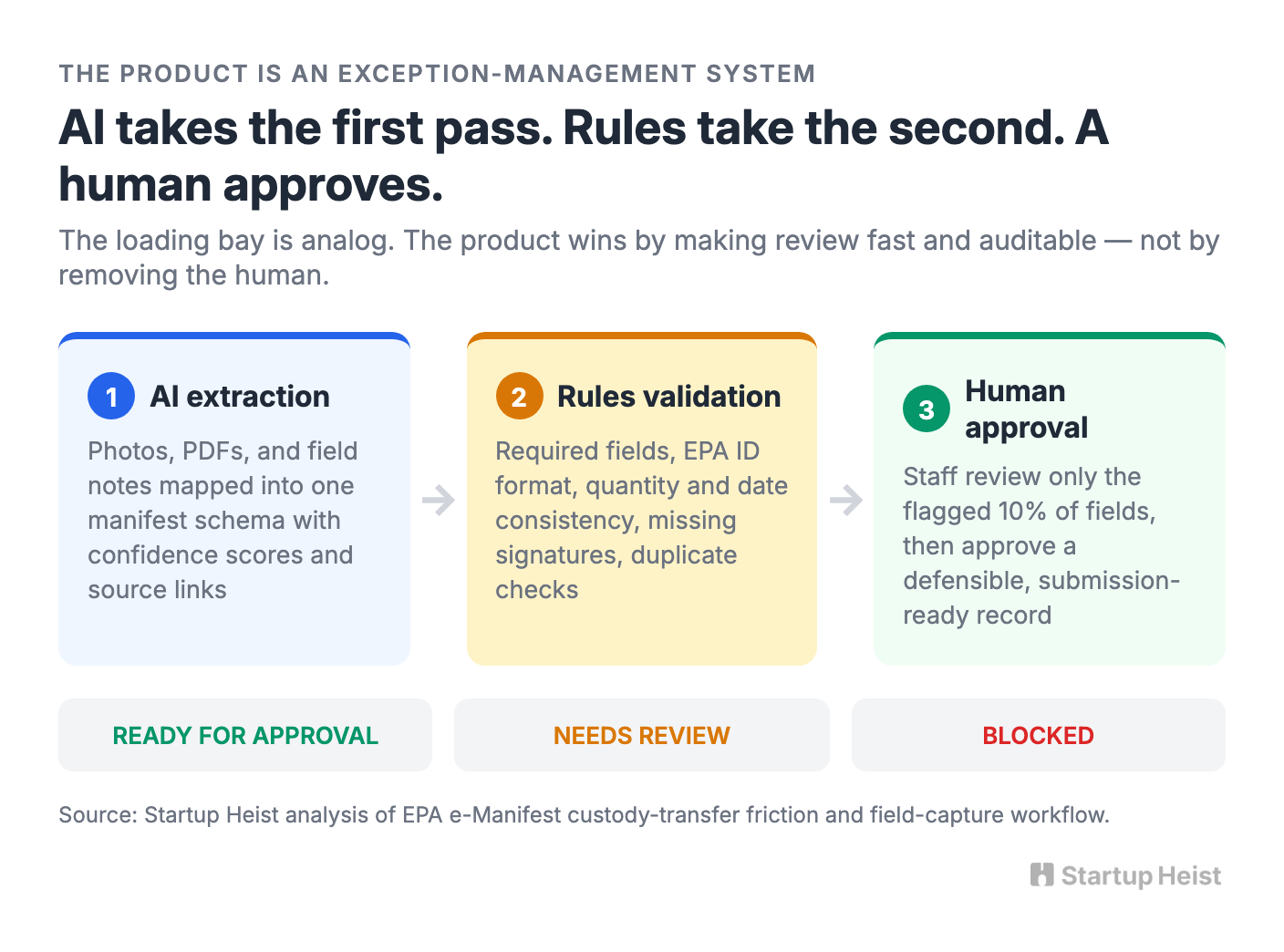
So the real product is a field-to-office exception-management system, not autonomous form completion. AI takes the first pass. Rules take the second. A human takes the final approval. The product wins by making that review fast, obvious, and auditable, not by pretending the human can leave the room.
The best customer is not the smallest customer
A local machine shop generating occasional hazardous waste feels the paperwork pain, but it is the wrong first buyer. The right one manages the same pain repeatedly, across many transactions: waste brokers and environmental consultants coordinating shipments for multiple generator clients; treatment, storage, and disposal facilities receiving enough manifests to care about fees and error rates; regional haulers and contractors that prepare documentation as part of a broader service; and multi-site industrial operators with recurring waste streams and a central compliance team.

The fee economics sharpen the target. The EPA charges receiving facilities for submissions, not generators, transporters, or brokers. But the operational burden is smeared across the whole chain. Brokers coordinate, generators supply waste data, drivers collect signatures, facilities reconcile what arrives, and office staff clean up the errors. The product should sit where one buyer has enough volume to justify standardizing the mess.
The proposed rule makes one buyer especially interesting. The EPA is proposing standardized broker information in Item 14 of the manifest, so brokers can access records, correct data, and prepare electronic manifests on behalf of their generator customers. The agency openly notes that brokers often sit at the center of coordination. A broker is already the human middleware between small generators, transporters, and receiving facilities. Your software becomes the broker's operating layer, and a broker brings dozens of underlying clients with him.
What the product actually does
Call it Manifest Desk for now. It is a structured workspace, not a chatbot, with one narrow promise: forward the messy inputs, receive a validated draft, resolve the exceptions, approve the record.

Unlock the Vault.
Join founders who spot opportunities ahead of the crowd. Actionable insights. Zero fluff.
“Intelligent, bold, minus the pretense.”
“Like discovering the cheat codes of the startup world.”
“SH is off-Broadway for founders — weird, sharp, and ahead of the curve.”


