


The Groomer Is the Missing Sensor in Pet Health
Pandemic-era pets are entering middle age. Build the lightweight observation layer that helps groomers notice what owners gradually stop seeing.
A dog owner sees the same animal every day, and that is precisely the problem.
A new lump appears slowly. A gait stiffens. A patch of irritated skin spreads over weeks. The dog hesitates before climbing onto the couch. Its coat loses some shine. The owner notices each change in isolation, if at all, and quietly recalibrates the definition of "normal." Decline is invisible to the person standing closest to it.
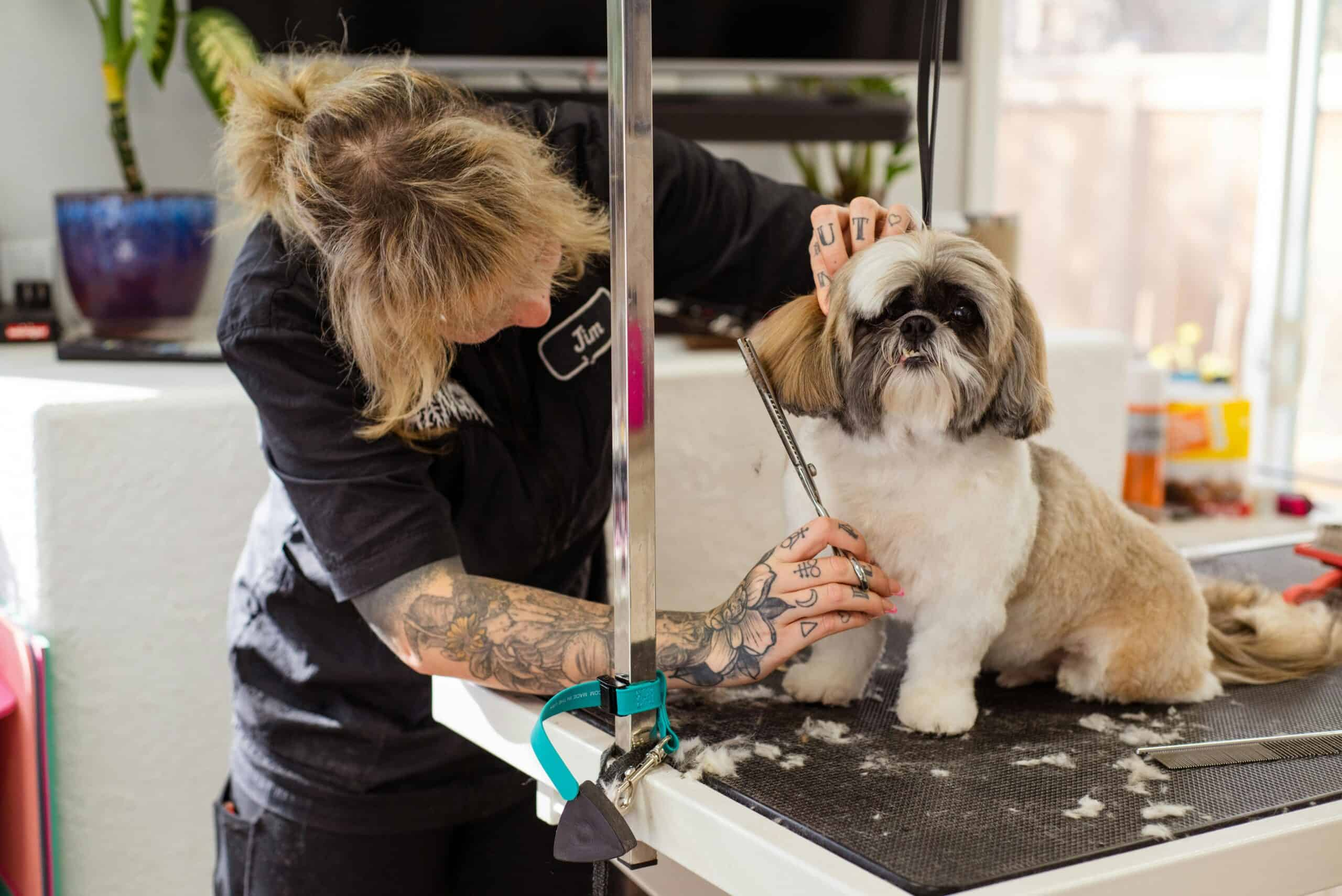
A groomer works from a different vantage point. Every four to eight weeks, the groomer sees the animal under bright lights, from every angle, with hands running across its entire body. The groomer lifts its paws, watches it step into the tub, feels the coat, and registers whether a familiar dog has turned anxious or sensitive. Then the groomer compares the animal, usually without meaning to, against the dog that came in two months ago.
That makes the grooming salon one of the most underused observation points in the entire pet-care system. The opportunity isn't to turn groomers into amateur veterinarians. It's to give them a professional memory.
Here's the opportunity:
The money: 100 salons at $79/mo is $7,900 MRR; 1,000 is $79,000. A disciplined solo founder can reach $10K to $30K MRR, with PETSAppeal already proving operators want it.
Inside:
• Sub-90-second tablet workflow + MVP scope
• Three-tier pricing built around a senior add-on
• First-30-customers pilot playbook + outreach
• Four moats and the white-label exit path
Build a lightweight "Before the Vet" workflow layer for groomers, boarding facilities, and pet resorts. A tablet-friendly tool captures standardized observations and photos during recurring visits, builds a visual timeline, and generates calm, non-diagnostic notes for owners when something appears to have changed.
The product never says: "Your dog may have arthritis." It says: "We noticed that Charlie seemed less comfortable putting weight on his left rear leg than at his last visit. This is not a diagnosis, but it may be worth mentioning at your next vet appointment."
That distinction is the entire business.
The Timing Window: Millions of Pandemic Pets Are Reaching Midlife
The pet boom didn't end when lockdowns ended. It matured.
Millions of dogs and cats adopted during the pandemic are entering middle age, the stage where early conversations about long-term health start to matter. In May 2026, Royal Canin published global research, a Censuswide survey of more than 19,000 owners, showing a sharp gap between how much people love their animals and how late they start thinking about aging. Forty-four percent said they only think about aging once health problems appear. Thirty-eight percent believed nothing can be done about it. Fifty-five percent avoided the subject entirely because it felt too sad. Yet three in four buy birthday gifts, and nearly a third spend more on the pet's gifts than their own children's.
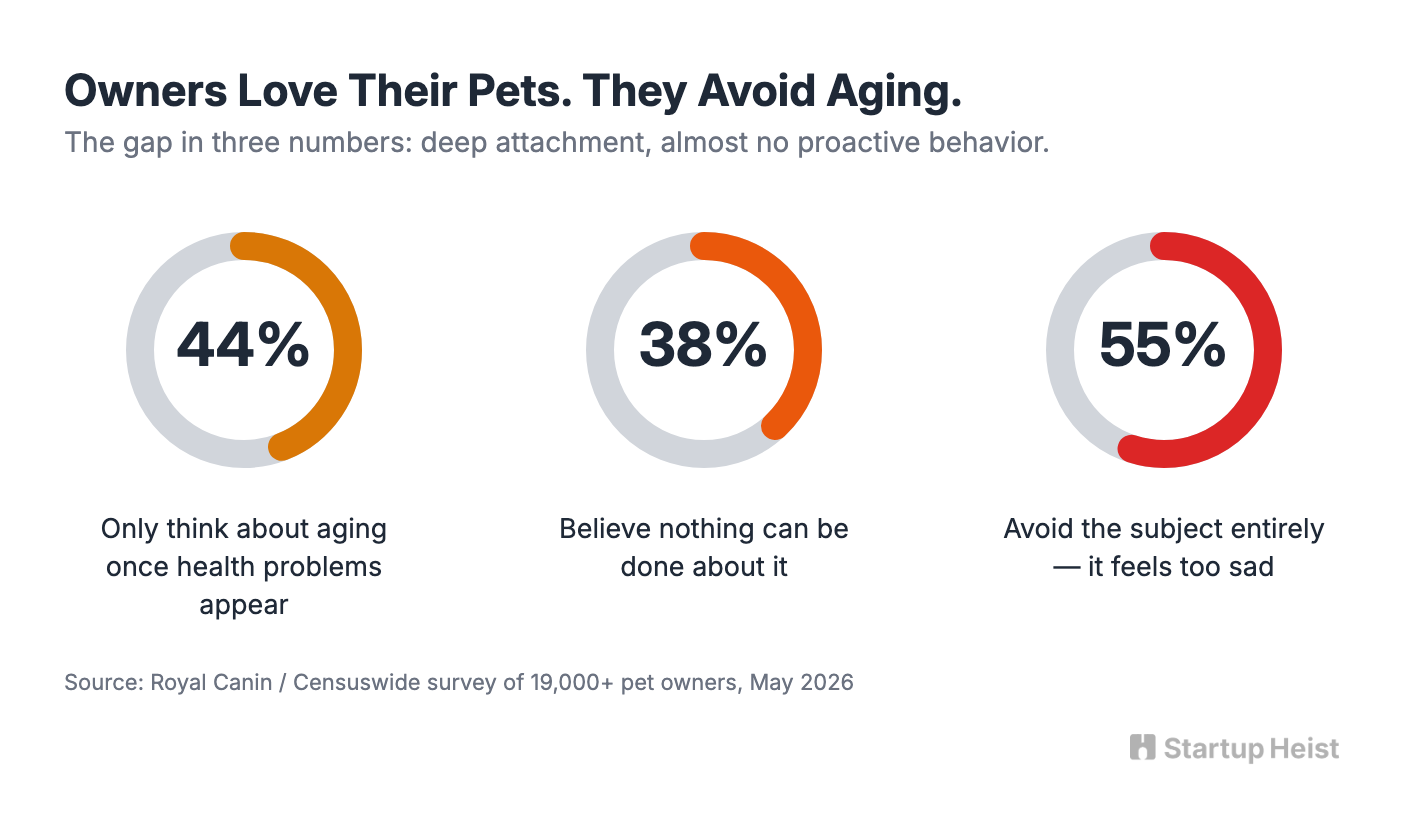
There's the gap in one sentence: enormous emotional attachment, rising spend, almost no proactive behavior. That gap is the wedge for pet health monitoring built into a service people already pay for.
The surrounding economics back it up. The American Pet Products Association reported U.S. pet spending of $158 billion in 2025, with $165 billion projected for 2026. Ninety-five million households owned at least one pet. The bundled services line, which folds in grooming, boarding, training, sitting, and walking, ran roughly $14 billion and grew about 8 percent year over year, the fastest-moving segment in the industry. None of this is a bet on convincing people to love their dogs more. They already do. The play is to convert that attachment into a simple, repeatable workflow at the exact point where subtle changes are easiest to catch.
The Groomer Has the Better Dataset
Veterinarians have medical expertise. Groomers have frequency and visibility.
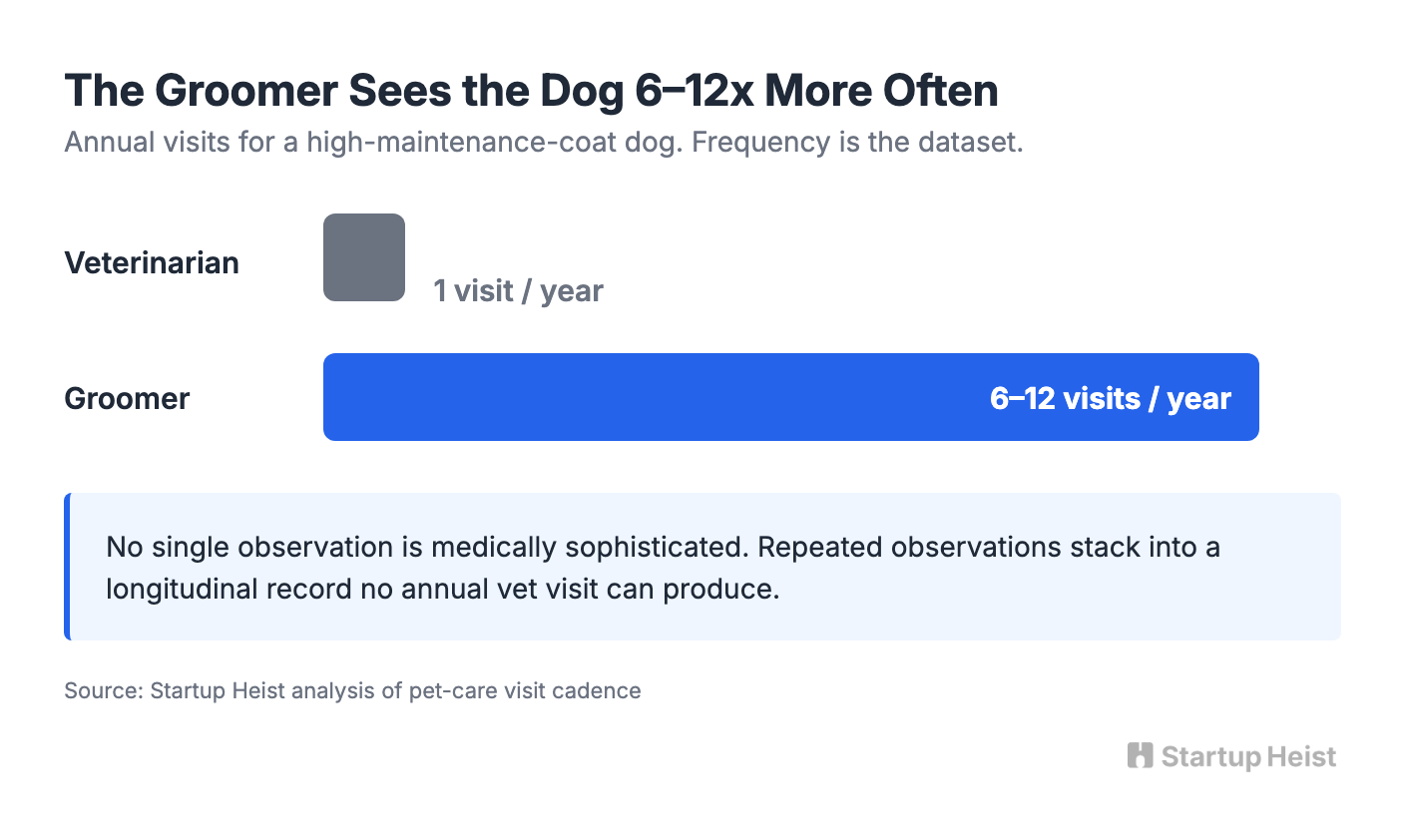
A healthy adult dog might see a vet once a year. A dog with a high-maintenance coat sees a groomer six to twelve times in that same year. Boarding and daycare operators see some pets even more. No single grooming observation is medically sophisticated, and most aren't trying to be. The value is that repeated observations stack into a longitudinal record, and that record is something no annual vet visit can produce.
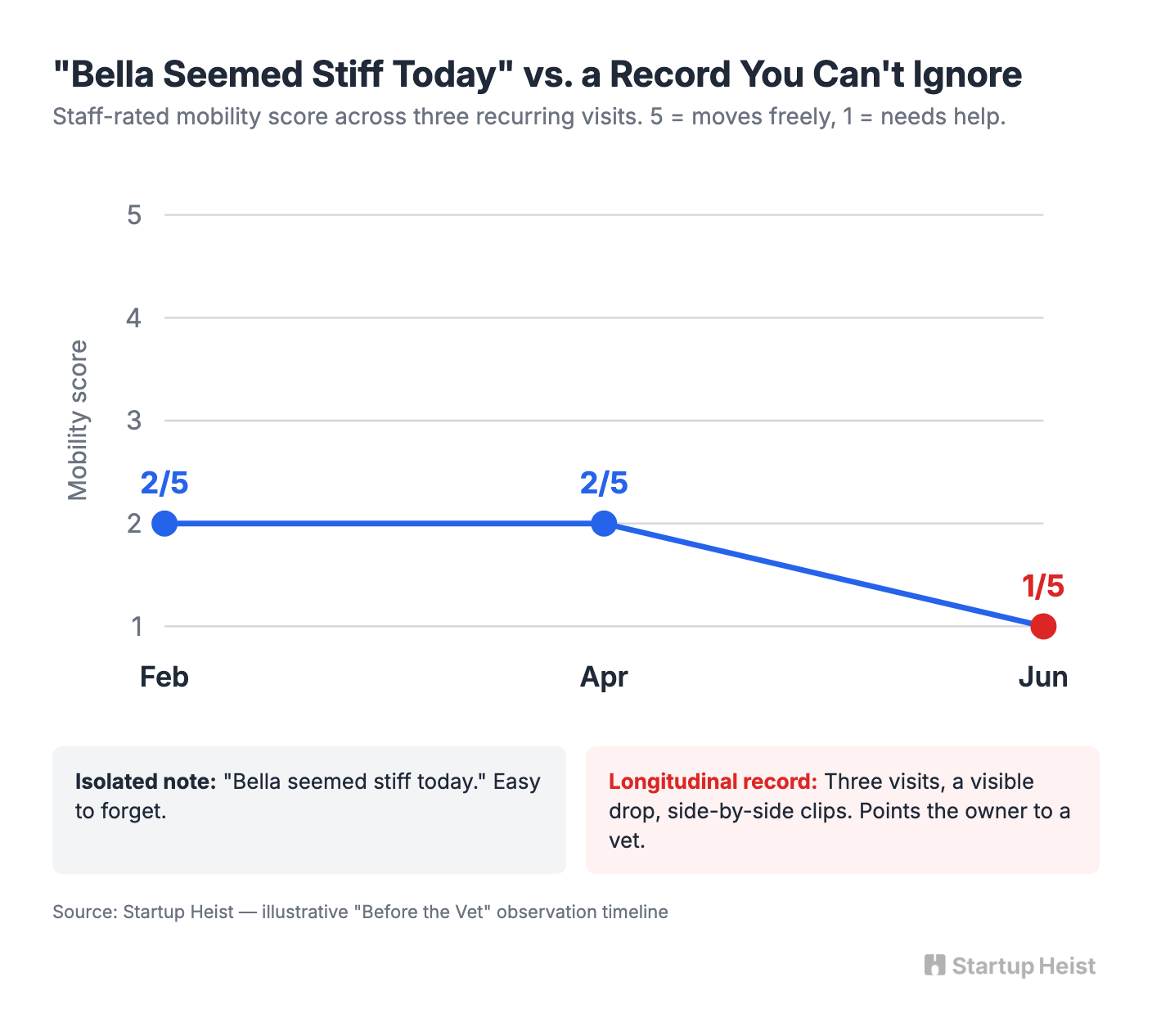
Compare two salon notes. The first: "Bella seemed stiff today." The second: "Bella has needed help into the tub for three straight visits. Staff rated her mobility 2 of 5 in February, 2 of 5 in April, 1 of 5 in June. Side-by-side clips show a visible change in her gait." The second note isn't a diagnosis. It's just much harder to ignore, and it points the owner toward the one person who can diagnose.
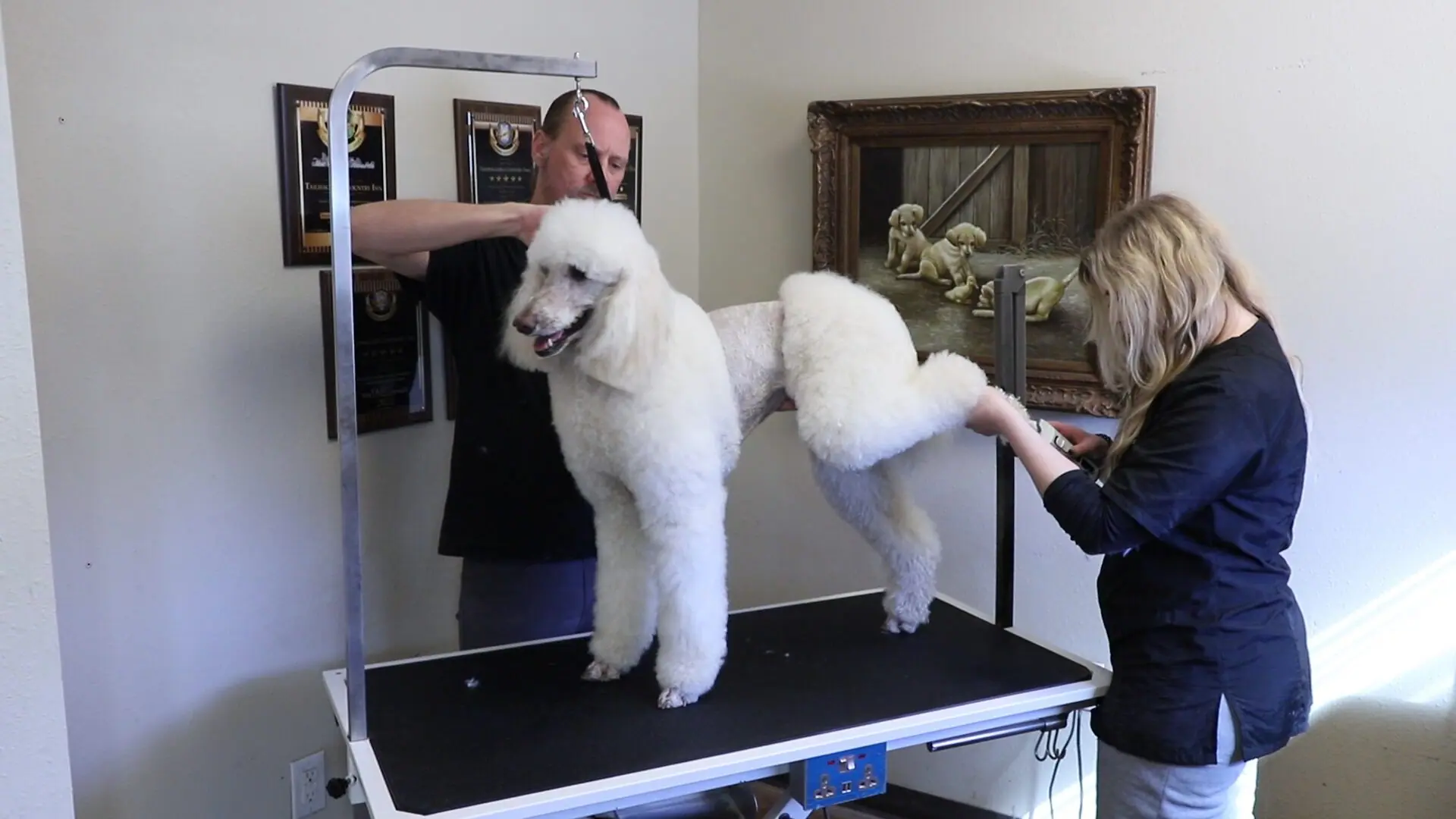
Groomers catch exactly the changes owners normalize: new lumps, skin irritation, coat thinning, unusual sensitivity, weight shifts, reduced mobility, behavior changes, confusion during a familiar appointment. Right now those observations leak away. One groomer fires off a text. Another scribbles a free-form note. A third mentions it at pickup while three dogs bark and the next client waits. A fourth notices and says nothing because the conversation feels awkward. "Before the Vet" turns that scattered instinct into a standardized service.
Do Not Build Another Grooming Operating System
The most important decision is what not to build.
The grooming software market is already crowded with full-stack operating systems. DaySmart Pet runs scheduling, reminders, payments, reporting, pet profiles, and photos on plans from $29 to $199 a month. MoeGo offers customizable report cards with before-and-after photos and mood notes. GrooMore, Groomy, and Gingr all make photo capture and owner texting easy. Trying to replace any of them is a bad heist. You'd burn years rebuilding calendars, online booking, route optimization, SMS, payments, and payroll, only to watch your one interesting feature shrink into a checkbox buried in a bloated sales deck.
Build the missing layer instead. The opportunity is a narrow, opinionated piece of pet care SaaS that sits beside the existing system and does one thing better than any general-purpose grooming software: turn recurring non-clinical observations into a visual timeline an owner cannot argue with.
The Product: Professional Memory for Recurring Pet-Care Providers
Unlock the Vault.
Join founders who spot opportunities ahead of the crowd. Actionable insights. Zero fluff.
“Intelligent, bold, minus the pretense.”
“Like discovering the cheat codes of the startup world.”
“SH is off-Broadway for founders — weird, sharp, and ahead of the curve.”


