


The $4 Article: Build the Checkout Lane for Subscription-Fatigued Readers
A reader finds something good. A sharp essay shared on X, a Reddit thread pointing to a deep investigation, a LinkedIn post linking to a guide they actually need. The headline is right. The teaser delivers. They click.
Then the wall:
Subscribe for $8/month to keep reading.
The reader doesn't hate paying for writing. They hate the commitment. They'd happily drop $3, $5, maybe $9 to read this one piece. What they won't do is evaluate an entire publication, take on another recurring charge, and set a reminder to cancel it before the next billing cycle.

So they close the tab.
That tab-close is the opportunity. It sits in the gap between wanting a piece of content and wanting a relationship with the person who made it. Every major newsletter platform is built for the relationship. Almost nobody is built for the single piece.
The heist is to build the missing checkout lane. A writer uploads a premium article, pastes in a teaser, sets a price. The tool spits out a clean link. The reader clicks, pays once with Apple Pay or a card, and gets the piece through a secure hosted page or a personal magic link. No subscription, no account, no platform migration.
Just: Unlock this article for $4.
It sounds too simple to be a business, which is precisely why it's worth a look. Here's the opportunity:
The money: 1,000 active writers each booking $300/month in sales at a blended 5% take is $15,000 MRR. Substack already proved 5M readers will pay for independent writing.
Inside:
• 30-day MVP scope for hosted premium posts
• Two-tier pricing: 7% free, 3% Pro plan
• Concierge GTM with outreach email template
• Four-stage moat in workflow and data
The Subscription Economy Has a Missing Middle
Substack settled the big question: readers will pay for independent writing. The platform crossed five million paid subscriptions in early 2025, more than double its two million in 2023. Later that year it raised $100 million at a valuation above $1.1 billion. More than fifty writers now clear a million dollars a year on it. The model is clean, with Substack taking 10% of every subscription.
That aggregate hides a harder truth for the individual creator. A reader who gladly pays for one or two favorite publications will still refuse to stack up eight, twelve, twenty recurring charges. Each new subscription asks the same heavy question: is this writer worth a permanent line on my credit card statement? For an unfamiliar name, the honest answer is usually no, even when this specific article is worth money.
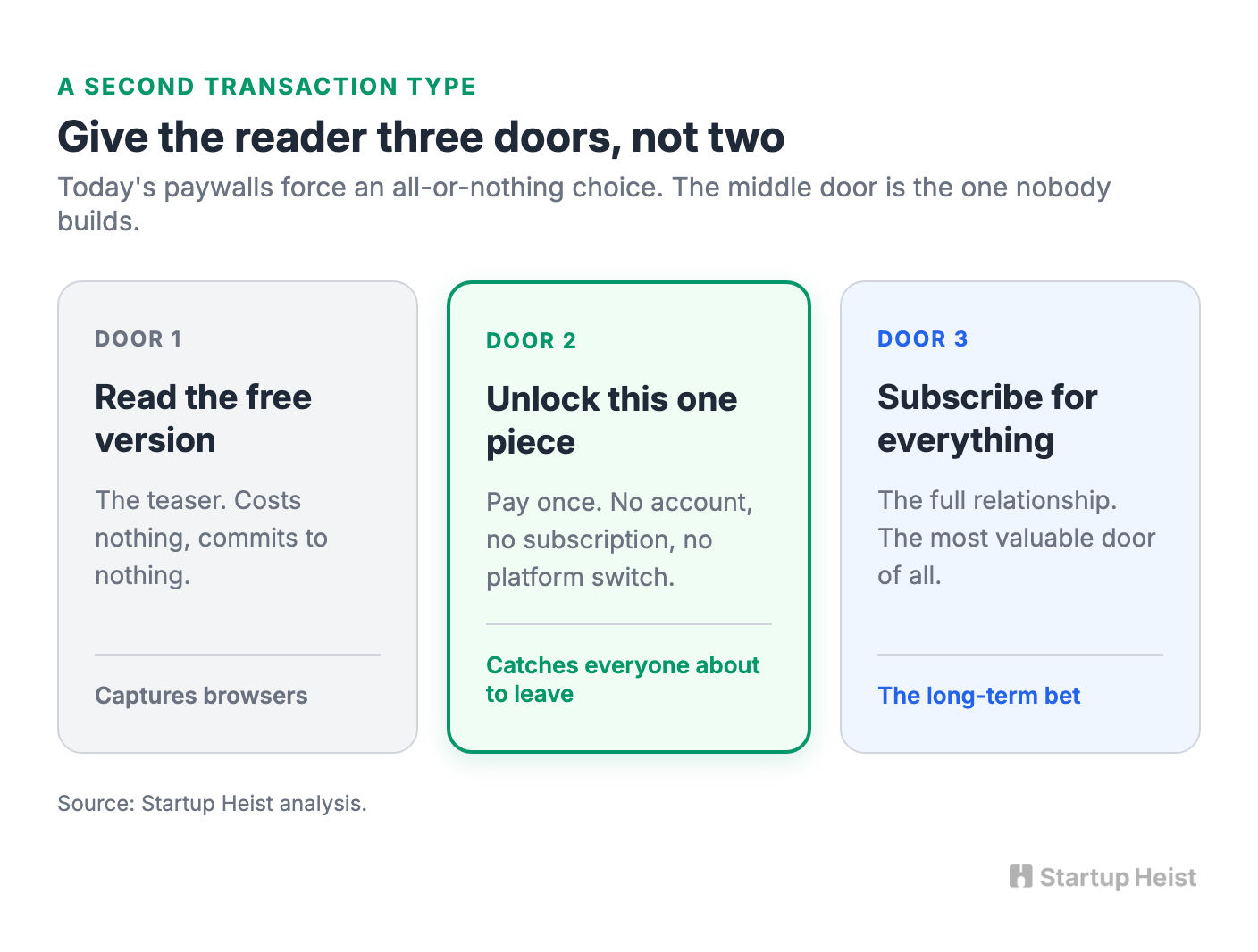
So the money walks. That's especially true for writers who produce occasional high-value work: the deep business breakdown, the technical tutorial, the investment memo, the recipe collection, the local investigation, the downloadable worksheet. A large slice of those readers will never become monthly subscribers. Plenty of them would still be buyers.
None of this is an argument against subscriptions. It's an argument for a second transaction type. Give the writer three doors instead of two: read the free version, unlock this one piece, or subscribe for everything. The third door is the most valuable. The second catches everyone who was about to leave through none of them.
Don't Build the Fifty-Cent Micropayment Product
The seductive version of this idea is the wrong one. It goes: why charge $10 a month when a reader could just pay fifty cents for one article?
Micropayments have been the graveyard of media monetization for two decades, and the economics are the reason. Stripe's standard U.S. card fee is 2.9% plus $0.30 per transaction. That fixed thirty cents is a wrecking ball at small prices.
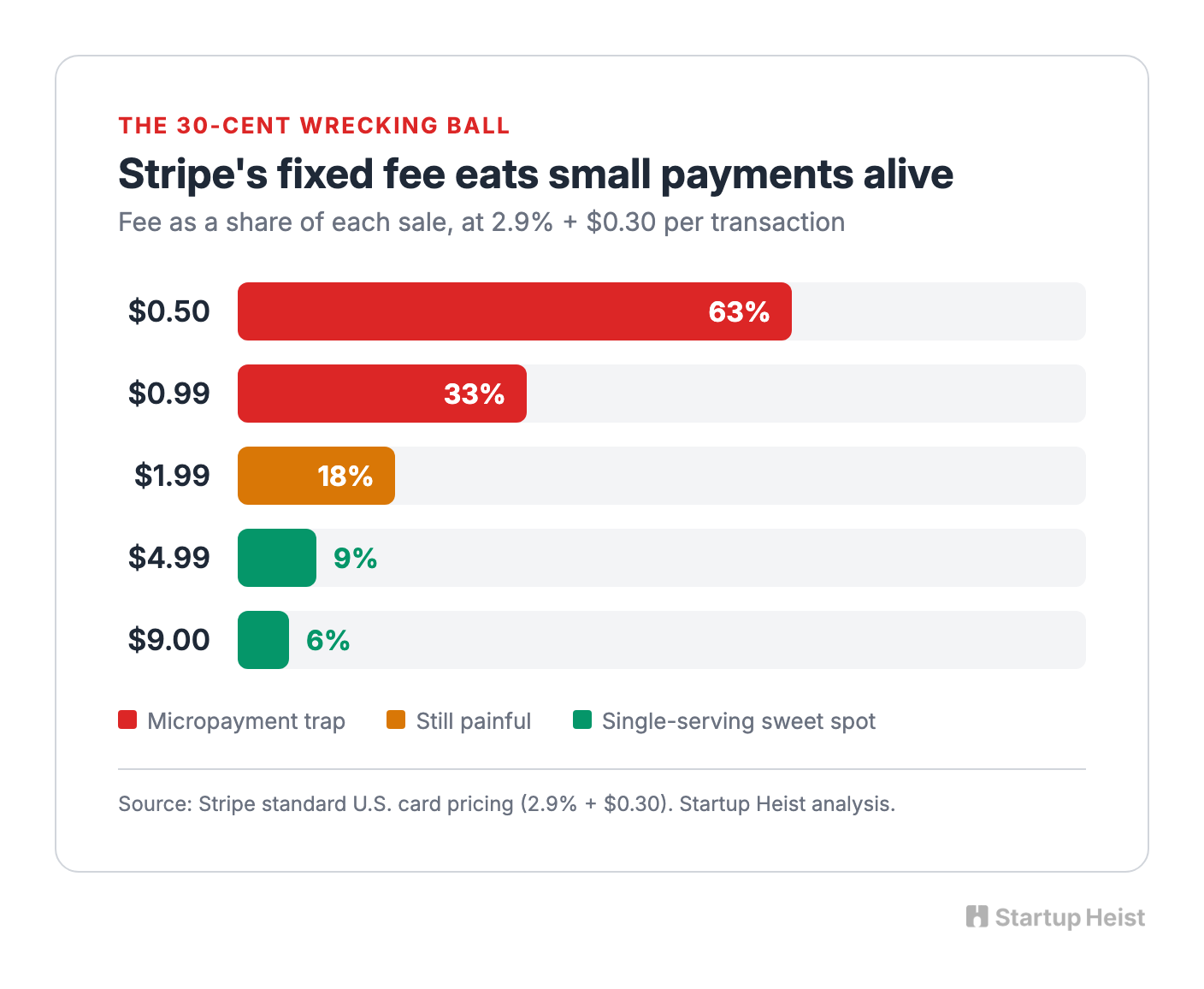
A fifty-cent payment feels elegant and dies on contact with the fee schedule. Worse, it assumes the reader's main objection is price. It usually isn't. The real friction is commitment. A one-time $4 charge is easier to justify than a $96-a-year relationship, even though it costs more per article than a monthly sub would.
So the wedge isn't micropayments. It's single-serving premium content: each article priced like a small digital product rather than a metered newspaper page. The sweet spots:
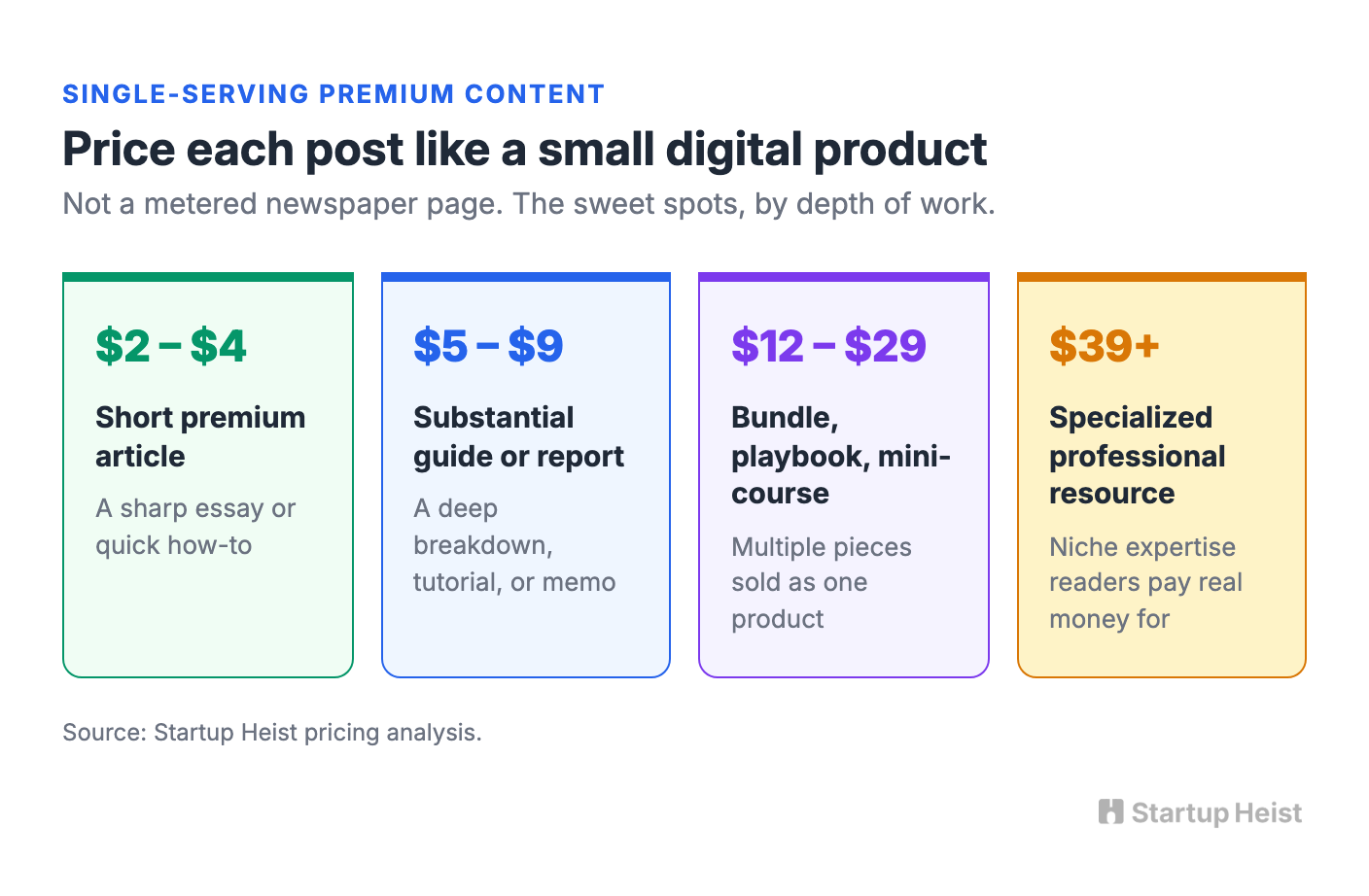
Less revolutionary than fifty-cent payments. Far more likely to pay the rent.
Start With Substack's Audience, Not a Substack Hack
Substack is the obvious beachhead. It's packed with writers already trained to monetize and readers already trained to hit paywalls. Its 10% cut even gives creators a reason to go looking for extra revenue lanes.
But the product cannot scrape Substack, manipulate its paywalls, or sell itself as a way to dodge Substack's fees. That's fragile technically and legally. Substack's publisher agreement explicitly bars creators from circumventing their payment obligations by soliciting subscription payments off-platform. It names PayPal and Patreon directly, and tells creators to report anyone who pitches a workaround.

A one-time digital product is a different animal from a substitute subscription, but the line matters, so build on the safe side of it. The writer owns and uploads the content directly, the paid page is hosted independently, the tool sells a standalone piece, and nothing in the marketing promises a way around platform fees. Tell paid-Substack writers to get their own legal read before leaning on off-platform links.
That discipline produces cleaner positioning anyway: sell your best posts as mini-products without moving your newsletter. It works for Substack writers. It works just as well for Ghost, Beehiiv, WordPress, Medium, LinkedIn, and independent blogs. Substack is a distribution channel, not a dependency.
Why the Existing Tools Don't Close the Gap
This isn't greenfield. Writers can already sell digital products today. The real question is whether a focused tool can make the workflow simple enough that selling a single post becomes routine rather than a project.
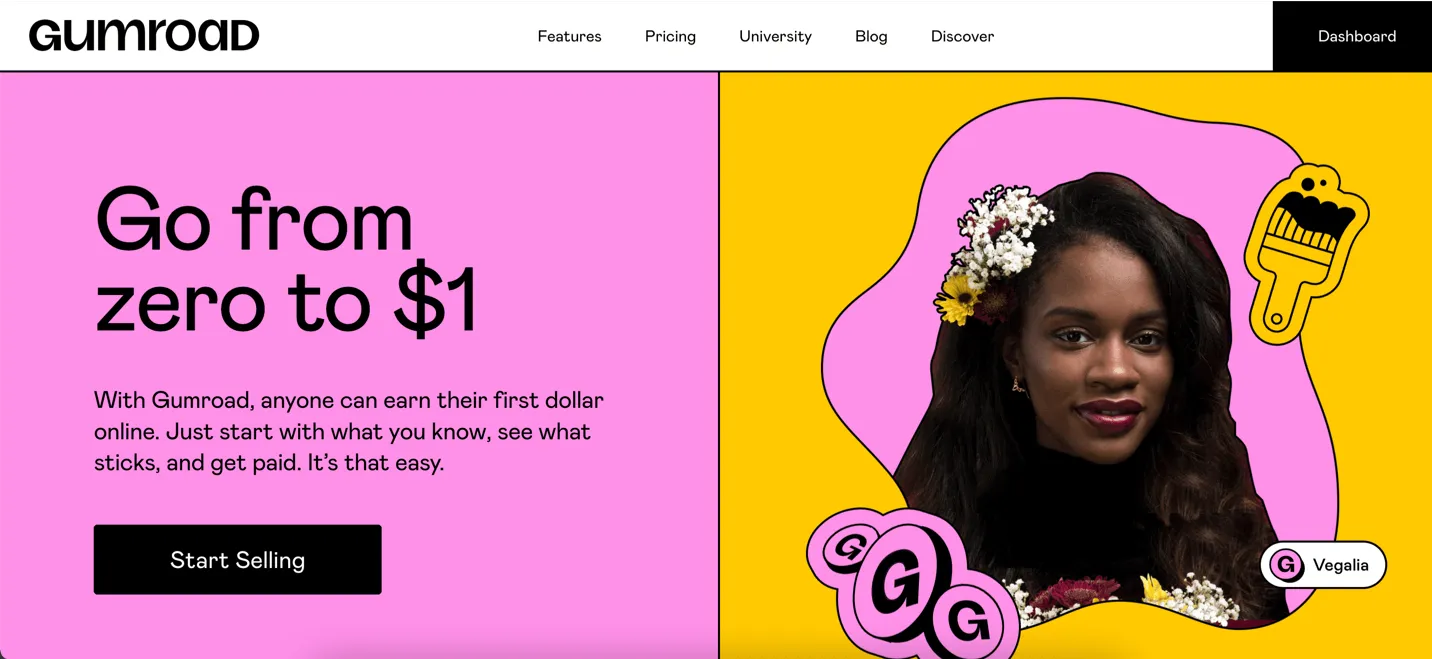
Run the alternatives and a pattern emerges. Stripe Payment Links give a technical creator a checkout, but Stripe is a payment engine, not a publishing workflow, so the writer still has to host the content, deliver the file, track buyers, handle refunds, and stitch together a coherent reader experience by hand. Gumroad sells PDFs through a direct link at 10% plus $0.50 (and a brutal 30% on marketplace-sourced sales), but it's a generic storefront that feels heavy for a writer who wants to test a premium essay before dinner. Lemon Squeezy adds a valuable merchant-of-record layer for tax compliance at 5% plus $0.50, yet the fixed fee still punishes cheap articles and it remains general-purpose commerce (Stripe acquired Lemon Squeezy in 2024, so building here means competing with Stripe's own merchant-of-record product). The newsletter platforms are the real threat. Beehiiv advertises a 0% take on paid subscriptions and digital products (Stripe fees aside), and in April 2026 it shipped customizable and metered paywalls. Ghost offers strong membership tiers for publishers who own their site. The common thread is that every one of them treats single-article sales as a side feature rather than the main event, and each locks the writer into one platform's walls.
The market is starting to notice the gap. Beehiiv's paywall expansion is one tell. Content Credits, a per-article micropayment platform, landed a Virginia Press Association partnership in April 2026 to power pay-per-article on a cluster of local papers. Early movers prove the idea is legible enough to attract builders, but they're also a warning: don't build the most obvious version. A generic JavaScript paywall is a feature. The differentiated play is a creator-friendly premium-content operating system, with excellent hosted pages, secure delivery, conversion analytics, pricing guidance, and a clean path from single articles to collections.
The Wedge: Hosted Premium Posts
Resist the urge to start with plugins, scraping, a universal API, or an elaborate reader wallet. Start with hosted premium pages.
A writer should be able to launch a paid post in five minutes: create an account, connect Stripe, paste or upload the content, write a public teaser, set a price, copy the link, paste it wherever they already have an audience. That's the whole loop.
Starting here buys you five things at once. You avoid platform fragility, with no dependence on Substack's HTML, Ghost themes, or WordPress plugins. You control the entire reading experience, from landing page to checkout to magic-link delivery. You can serve writers who don't even own a website, so a creator with nothing but a LinkedIn following can sell a premium piece. You collect cross-platform conversion data nobody else has. And you get a natural expansion path, because the same infrastructure later sells bundles, archives, reports, and paid collections. The hosted article isn't a compromise. It's the best possible first product.
MVP Scope: The Smallest Useful Version
A competent solo builder can ship the first credible version without heroic engineering:

Unlock the Vault.
Join founders who spot opportunities ahead of the crowd. Actionable insights. Zero fluff.
“Intelligent, bold, minus the pretense.”
“Like discovering the cheat codes of the startup world.”
“SH is off-Broadway for founders — weird, sharp, and ahead of the curve.”


