


The Calmest Room in the Kennel Is a Playlist With a CRM
Pet businesses have digitized almost everything over the past decade. Reservations, payments, vaccination records, staff scheduling, check-in alerts, customer messaging, daily report cards. The software stack for a modern boarding facility is genuinely good.
The one thing it ignores is the room itself.
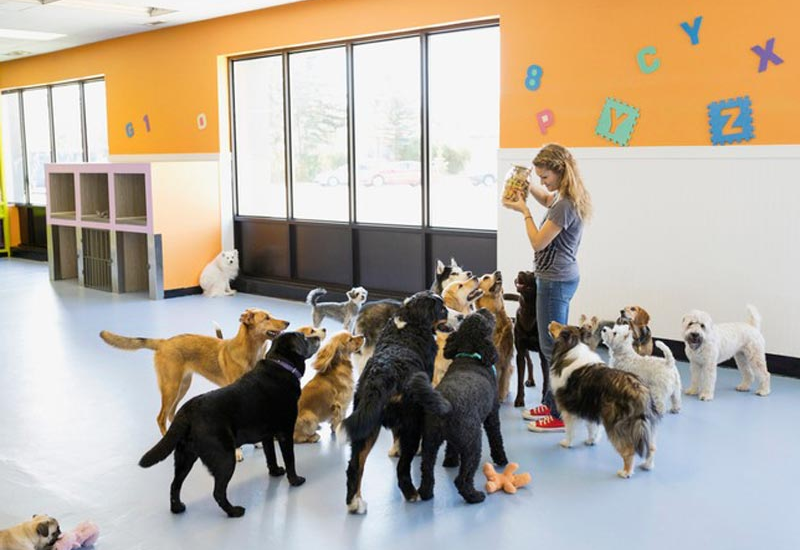
A boarding facility houses dozens of dogs inside a building full of barking, clanging metal doors, cleaning equipment, unfamiliar smells, and a door that opens every few minutes. A daycare operator notices that certain dogs unravel before pick-up. A groomer knows one client's dog settles in a quiet corner with a slower handoff. That knowledge lives in an employee's head, a sticky note, or nowhere at all.
Now picture a thin software layer that turns "we try to keep the dogs calm" into a service you can name, run, and bill for.
Calm Kennel Protocol is a tablet-friendly micro-SaaS for boarding facilities, dog daycares, and grooming salons. Staff give each dog a profile, run a structured audio session during the stressful part of the visit, tap a few observable behavior markers, and send the owner a branded "calm care" report when it's done.
The audio is not the business. The workflow is.
Here's the opportunity:
The money: 100 boarding locations at $99/mo is roughly $10K MRR solo. 250 puts you near $25K with a low-support product.
Inside:
• Thin-SaaS MVP: 7 features, no native app
• Pricing ladder: $49 to $249 multi-location
• Calm Care Upgrade: $6-12 per-stay add-on
• The moat: longitudinal session dataset
Why this is hiding in plain sight
On May 27, 2026, a consumer app called Pawse.ai launched on Product Hunt as an "acoustic regulation system for dogs." It skips the generic playlist and offers situational modes — Sleep, Home Alone, Loud Noise, Travel, Vet Visit — built from published research on canine hearing rather than what sounds soothing to a human ear. It streams through an Apple TV or iPad and runs from a phone. The team is also reportedly building a "Pawse Tag" biometric collar that would correlate what a dog hears with its stress signals, which only sharpens the case for claiming the business layer before the consumer side locks in its data.
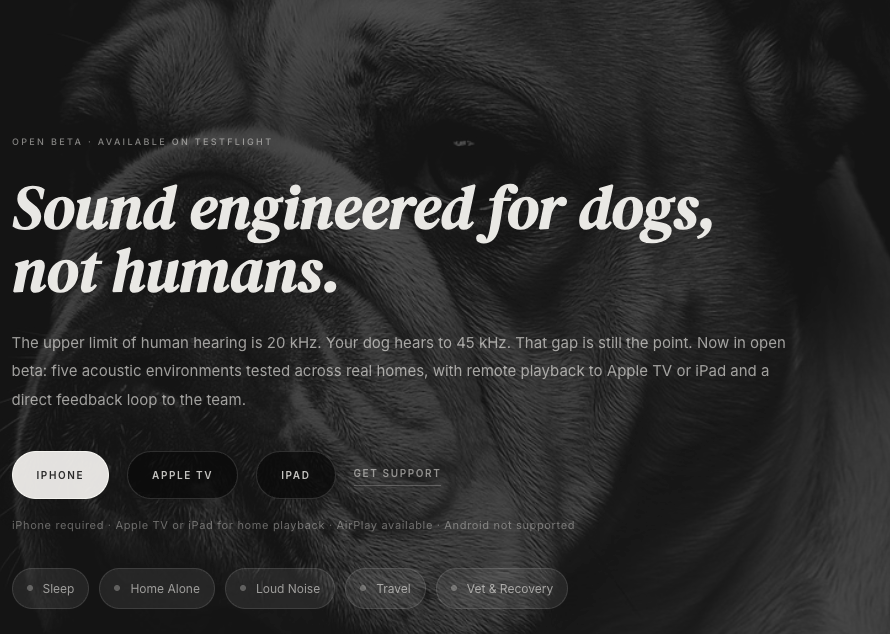
The obvious move is to clone it: another consumer app for anxious owners. That's the wrong heist.
Consumer pet apps are brutal to retain. The content is trivial to imitate, and any owner can pull up hours of calming music for dogs on Spotify or YouTube for free. Even a well-designed audio experience drifts toward novelty-subscription territory, the kind that gets canceled the month the dog seems fine.
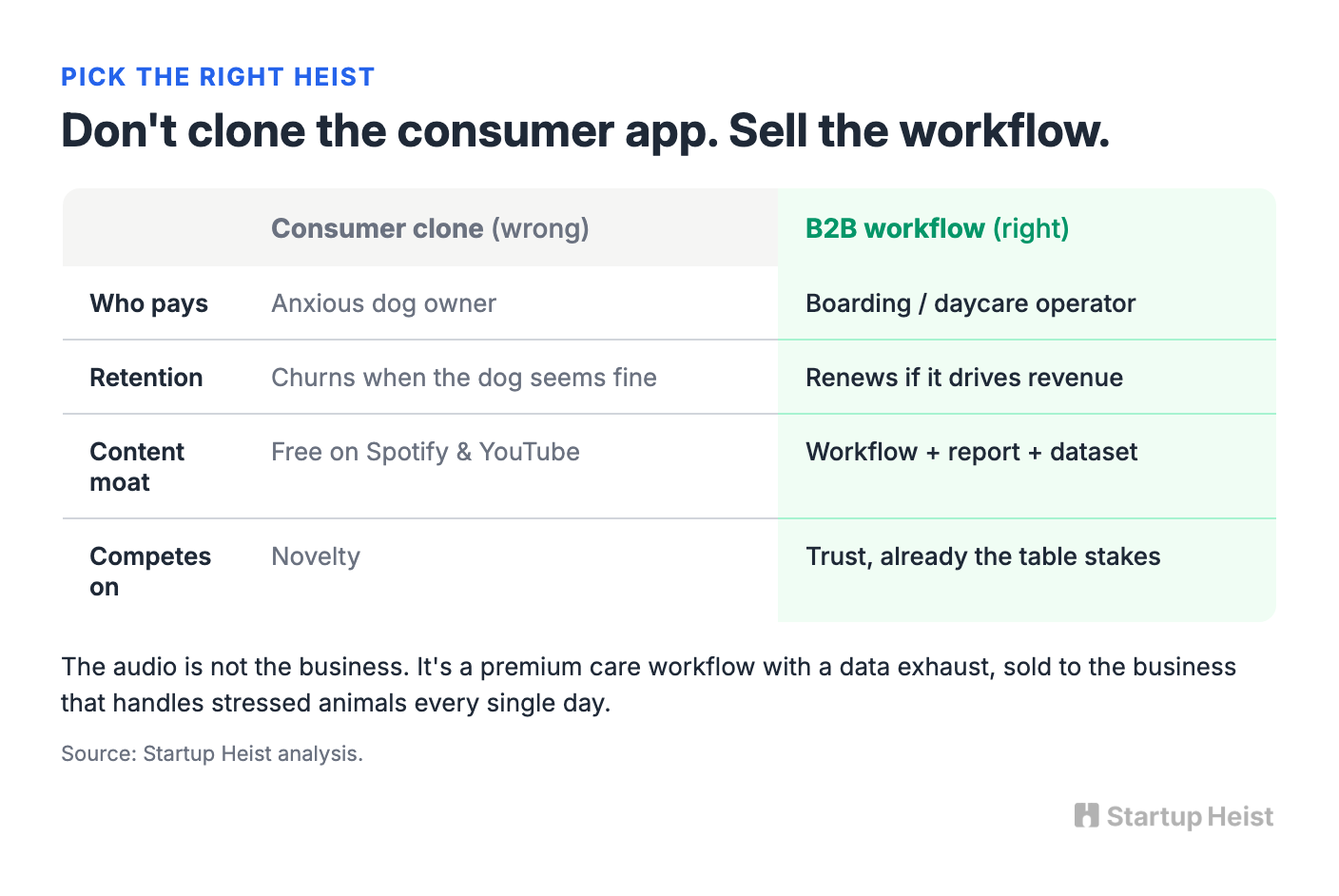
The better target is the business that handles stressed animals every single day and already competes on trust. A boarding operator does not need to claim a playlist cures anxiety. It needs to deliver a visibly more thoughtful experience: "Bailey was pacing during the afternoon transition, so we ran a 20-minute quiet-time protocol in a lower-traffic area and logged a calmer posture afterward. Here's today's calm care report."
That small operational change carries an outsized emotional payoff. The owner gets proof the facility paid attention. The business gets a story no competitor down the road is telling. The staff quietly builds a record of what seems to help each dog. None of this is a veterinary platform. It's a premium care workflow with a data exhaust.
The market rewards a narrow product
U.S. pet grooming and boarding is fragmented, growing, and dominated by tiny operators. IBISWorld pegs it as a multibillion-dollar category spread across roughly 170,000 businesses, no single one of which holds more than 5% of the market, and the number that matters most is staffing: the average operator employs fewer than two people. Nobody in this market wants a heavy enterprise system or a six-month rollout.
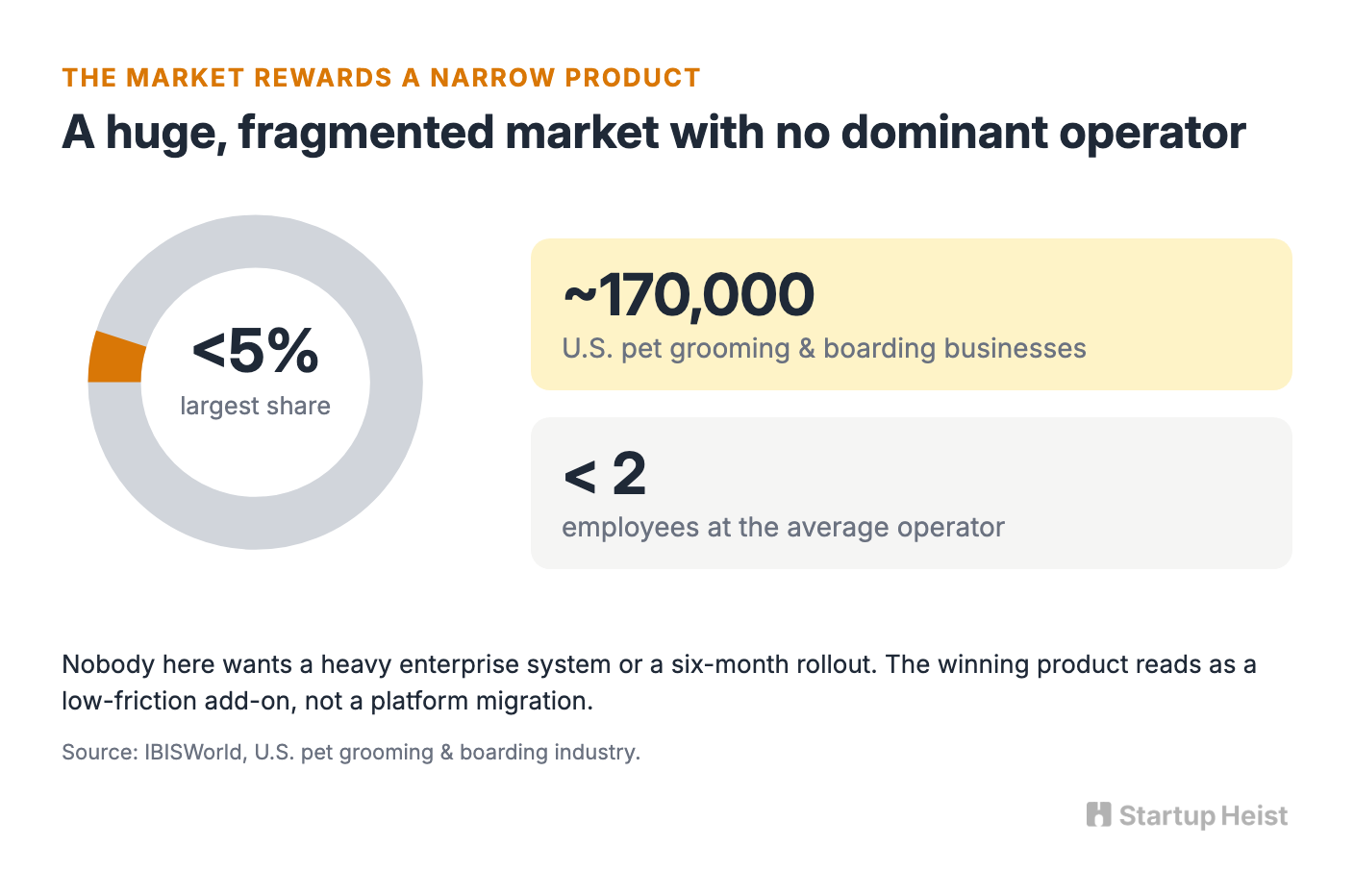
So the product has to read as a low-friction add-on, not a platform migration. A $49-to-$149 monthly subscription is reasonable for pet boarding software that helps a facility communicate better, justify premium pricing, and make staff behavior more consistent. But the ceiling is real. Paw Partner — which handles boarding, daycare, grooming, stay reports, medication tracking, staff tasks, and revenue reports — lists at $99.99 a month. That single number anchors the whole opportunity.
You are not building a $500-per-location operational backbone. You're building a specialized module that's easy to add, easy to test, and easy to cancel. That constraint is the strategy.
This is a Quick Steal: a credible path to a focused $5,000-to-$20,000 MRR business, with a conditional route to something bigger if the dataset and distribution start to compound.
The science is real, but it is not the pitch
There is enough evidence to justify structured sound environments. A 2017 study in Physiology & Behavior exposed 38 kenneled dogs to five genres — soft rock, Motown, pop, reggae, and classical — over five days. Heart rate variability rose (a marker of lower stress) most under soft rock and reggae, and dogs spent more time lying down whenever music played. The sharpest finding for a product builder: rotating genres kept the effect alive, while a single repeated soundtrack lost its power as dogs habituated.
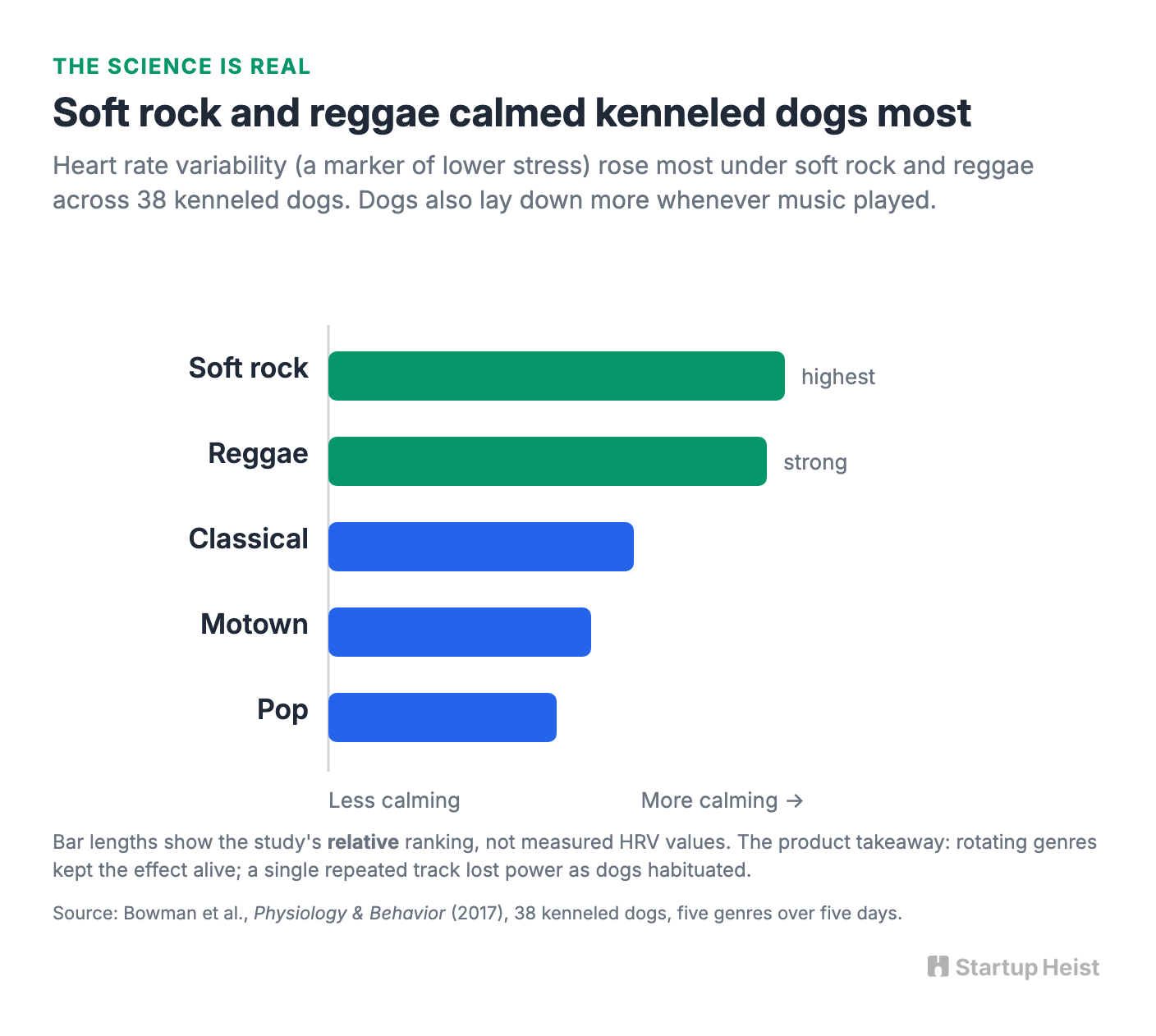
The wrong takeaway is "reggae calms every dog." The right one is that different sound environments correlate with different observable responses, and the best intervention varies by animal, context, and timing. That uncertainty is the product, not a weakness in it.
A generic playlist assumes one soundtrack works for everyone. Calm Kennel Protocol helps operators test simple routines, watch what happens, and build a history per dog. The system stays deliberately clear of medical claims. Staff never diagnose anxiety or promise outcomes. They log what they can see:
- Barking: none, occasional, persistent
- Pacing: absent, intermittent, repetitive
- Posture: settled, alert, tense, hiding
- Context: check-in, kennel time, grooming wait, pre-pick-up
The software records what happened before and after a session, and never pretends to prove causation. That line is what keeps the product honest, useful, and buildable.
Sell the report card, not the playlist
Pet businesses already grasp the value of report cards. Gingr markets them as digital snapshots sent to pet parents during or after a visit. MoeGo lets staff build grooming, daycare, and boarding reports with notes, photos, and video, wrapped in a full kennel management workflow. The category has trained operators to expect a polished update at pickup, and trained owners to love getting one.
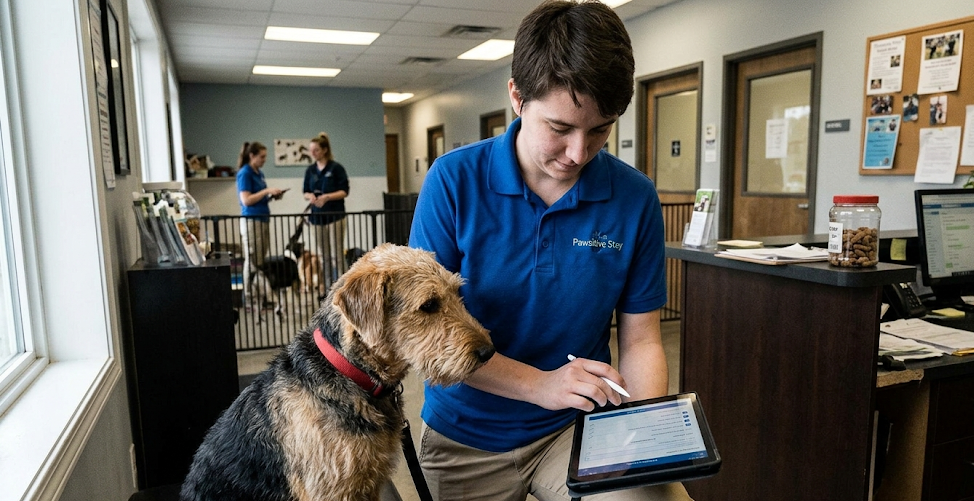
So you know exactly where Calm Kennel Protocol sits. Don't introduce it as an experimental audio gadget. Introduce it as a more structured, more credible version of the report card operators already send:
Unlock the Vault.
Join founders who spot opportunities ahead of the crowd. Actionable insights. Zero fluff.
“Intelligent, bold, minus the pretense.”
“Like discovering the cheat codes of the startup world.”
“SH is off-Broadway for founders — weird, sharp, and ahead of the curve.”


