


The Heist: Build the "cashflow + contracts" operating system for creators earning $10K–$100K/year
Layer a $29–$99/month back-office subscription on top and this becomes one of the more compelling fintech business ideas hiding in plain sight.
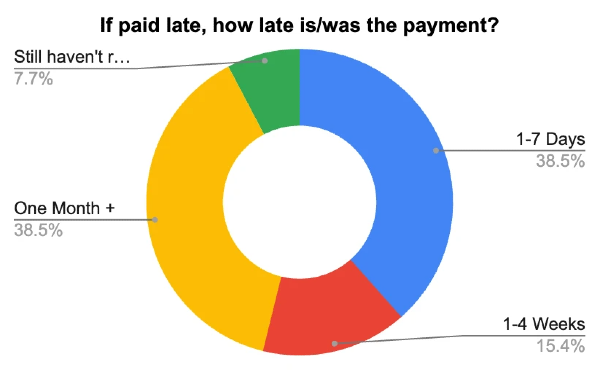
Mid-tier creators earning $10K to $100K a year from brand deals don't have a content problem. They have a cashflow problem. Net-60/90 payment terms, vendor onboarding forms designed for procurement departments, and follow-up emails that turn "creator" into unpaid accounts receivable clerk. Up to 87% of creators have experienced late payments or payment issues. 55% say they'd refuse to work with a brand again after a late payment. Campaign US published a major investigation in September 2025 documenting the crisis — dozens of creators, agencies, and talent managers interviewed, many speaking anonymously for fear of being blacklisted. The picture: an industry that relies on creator labor while routinely failing to deliver timely payment.
Meanwhile, major financial players are validating creators as a legitimate business segment. Visa formally recognized creators as small businesses in 2024. Karat Financial has extended over $1.5 billion in credit to creators using social metrics and revenue data instead of FICO scores, and announced a Visa partnership exploring agentic AR/AP tools slated for 2026. The infrastructure layer is being acknowledged. The integrated workflow product hasn't been built.
That's the micro SaaS idea at the core of this play — and it scales well beyond micro. Guaranteed payouts plus back-office automation, from contracts to invoicing to collections to instant payout. The winning product isn't "an invoicing tool for creators." It's a vertical fintech rail that owns the transaction graph between brands, agencies, and creators. Whoever sits in the flow of funds earns the right to become the operating system.
The creator economy hit an estimated $200–$250 billion in 2024 and is projected to approach $480 billion by 2027. The instant-payout model already works: Willa (founded by former Spotify team members) pays creators immediately after invoice submission for a 2.9% fee, then collects from the brand on their terms. They raised $21 million and had 150,000+ freelancers on their waitlist — though Tracxn listed the company as "not active anymore" in 2025, which suggests the execution window may be reopening for a sharper entrant.
MONET has positioned "invoice us, get advanced" as its core value prop, verifying invoices with brands before advancing funds. Karat's average cardholder has 2 million followers and $300K in annual revenue — and their expansion into full business banking confirms that underwriting on creator data works at scale. HoneyBook offers proposals, contracts, and invoicing, but it's built for service businesses — photographers, event planners — not the brand-deal lifecycle. After hiking its Starter plan from $19 to $36/month in February 2025 (roughly 89%), it's created real dissatisfaction among solo operators looking for alternatives.
Factoring proves the unit economics. Creator banking proves the underwriting. What nobody has built is the full-stack, creator-native system that runs from deal detection through contract, invoice, collections, payout, and tax ledger — all in one place. That's the open slot. And you should assume that Karat, Visa, and well-funded fintechs will move toward it once someone proves it works. Speed matters here.
The Play: What You're Actually Building
Unlock the Vault.
Join founders who spot opportunities ahead of the crowd. Actionable insights. Zero fluff.
“Intelligent, bold, minus the pretense.”
“Like discovering the cheat codes of the startup world.”
“SH is off-Broadway for founders — weird, sharp, and ahead of the curve.”


