


Kim Kardashian just made a chemical no one had heard of into a Walmart category. The supplement aisle hasn't caught up.

Caffeine is one of the most durable consumer chemicals on earth. Coffee owns the morning, energy drinks own the gas station, pre-workout owns the gym. Office workers, students, gamers, nurses, drivers, founders, parents, and teenagers have all built tiny rituals around the same molecule.
The problem is that caffeine has always been a blunt instrument. It works, but the tradeoffs are familiar to anyone who has stood in a coffee line at 3 p.m.: jitters, anxiety, a racing heart, sleep disruption, tolerance, and the quiet calculation of Can I have this and still sleep tonight?
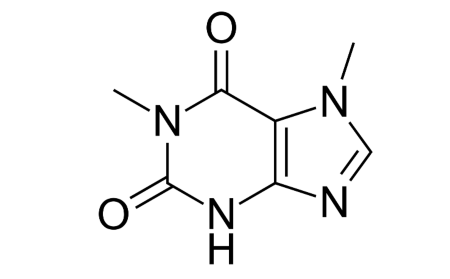
Paraxanthine is the molecule attempting to dissolve that calculation. It's the primary metabolite your body produces when it breaks down caffeine, and emerging human research suggests a paraxanthine supplement can deliver a similar focus and alertness lift with a smoother side-effect profile.
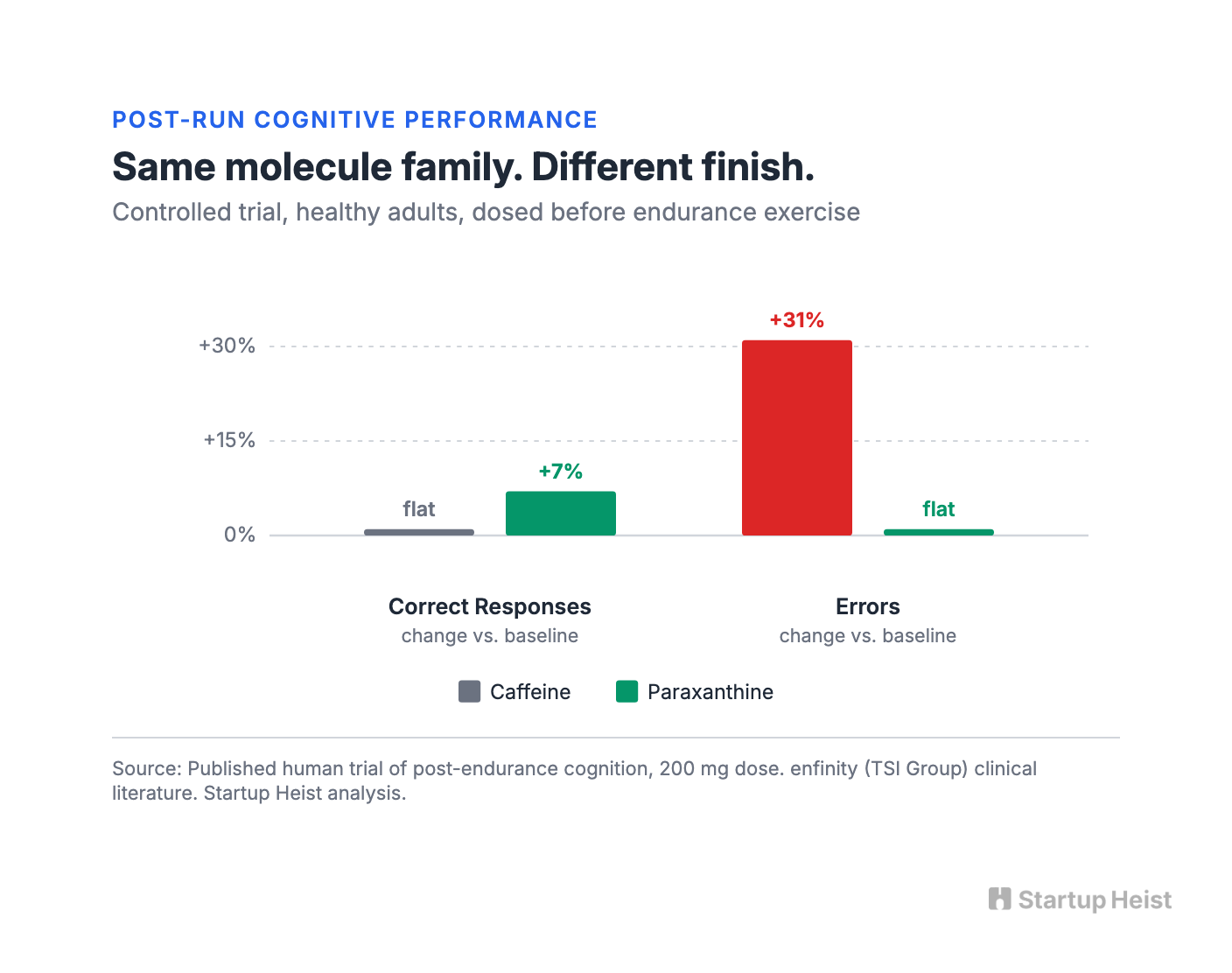
Two hundred milligrams of branded paraxanthine improved attention and reaction time in healthy adults. In a controlled study of post-run cognitive performance, the caffeine group made 31% more errors by the end of the run while the paraxanthine group actually improved correct responses by about 7%.
The science is still early, and no serious operator should market it like magic. But on March 1, 2026, UPDATE, the paraxanthine-powered energy drink relaunched with Kim Kardashian as co-founder, rolled into more than 4,000 Walmart stores in five flavors. That single distribution event turned paraxanthine from a biohacker footnote into a mass retail conversation.
Startup Heist readers shouldn't try to compete with UPDATE in beverages. That's the sucker play. Beverages are capital-intensive, logistics-heavy, shelf-space-driven, and brutally competitive. Kim Kardashian and Walmart will spend the next year educating America on a chemical your average shopper has never heard of. A small team should let them do it.
The opening is the side door: own the non-beverage paraxanthine use case before the supplement aisle catches up.
The money: A single SKU at 2,000 bottles a month at $32 average price clears $64K MRR. At 5,000 bottles it's a $1.5M–$2M brand.
Inside:
• Full MVP scope, dose, channel mix
• Coffee-math pricing for daily repeat use
• Creator outreach template that gets replies
• The four-layer moat against fast followers
Why now
Three forces are aligned for a small, sharp launch.
Mass-market education is arriving for free. The UPDATE drink's Walmart rollout gives paraxanthine a celebrity-backed consumer explanation in plain language: energy without the classic caffeine crash. Whether the Kim Kardashian energy drink itself becomes a dominant beverage brand is almost beside the point. Its existence turns paraxanthine from an unfamiliar word into a search term, a TikTok question, and an Amazon comparison shop.
Ingredient infrastructure is ready. enfinity, the branded paraxanthine distributed by TSI Group, has self-affirmed GRAS status, multiple published human clinical studies, and Informed Ingredient certification. TSI isn't chasing a consumer brand; it actively wants downstream operators to build capsules, gummies, pre-workouts, and pouches around its molecule. A small team doesn't need to invent the molecule, fund basic safety research, or convince a contract manufacturer that the ingredient exists.
The use cases are obvious. Human research already points at three high-intent markets: knowledge work, sports nutrition, and afternoon focus. Paraxanthine has shown stronger cognitive performance than caffeine after endurance exercise, a finding that maps directly onto every gym, office, study desk, and commute in America.
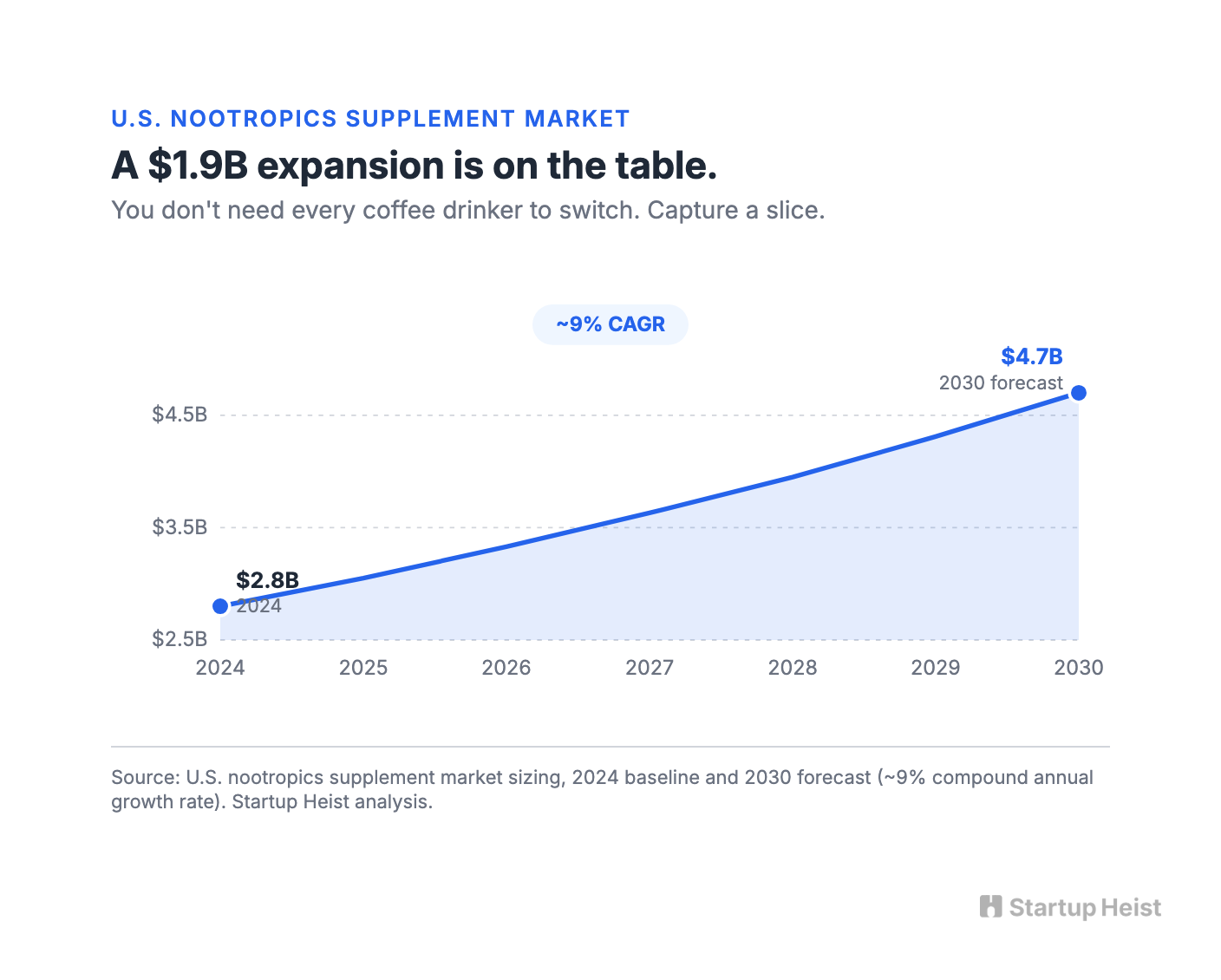
Demand doesn't need to become universal for this to work. The U.S. nootropics supplement market alone is on pace to grow from roughly $2.8 billion in 2024 to $4.7 billion by 2030. You don't need every coffee drinker to switch. You need a small, motivated slice of consumers who already spend money on focus, fitness, and clean-energy products to try a more precise version.
A beverage brand has to win attention at scale. A niche supplement brand can win intent.
The actual wedge
"Paraxanthine for everyone" is too broad, too expensive, and too easy to copy. Three viable wedges exist, and they aren't interchangeable:

Unlock the Vault.
Join founders who spot opportunities ahead of the crowd. Actionable insights. Zero fluff.
“Intelligent, bold, minus the pretense.”
“Like discovering the cheat codes of the startup world.”
“SH is off-Broadway for founders — weird, sharp, and ahead of the curve.”


