


DropPress: The Vinyl Drop Layer for Indie Creators
Vinyl did not come back because dads rediscovered Steely Dan.
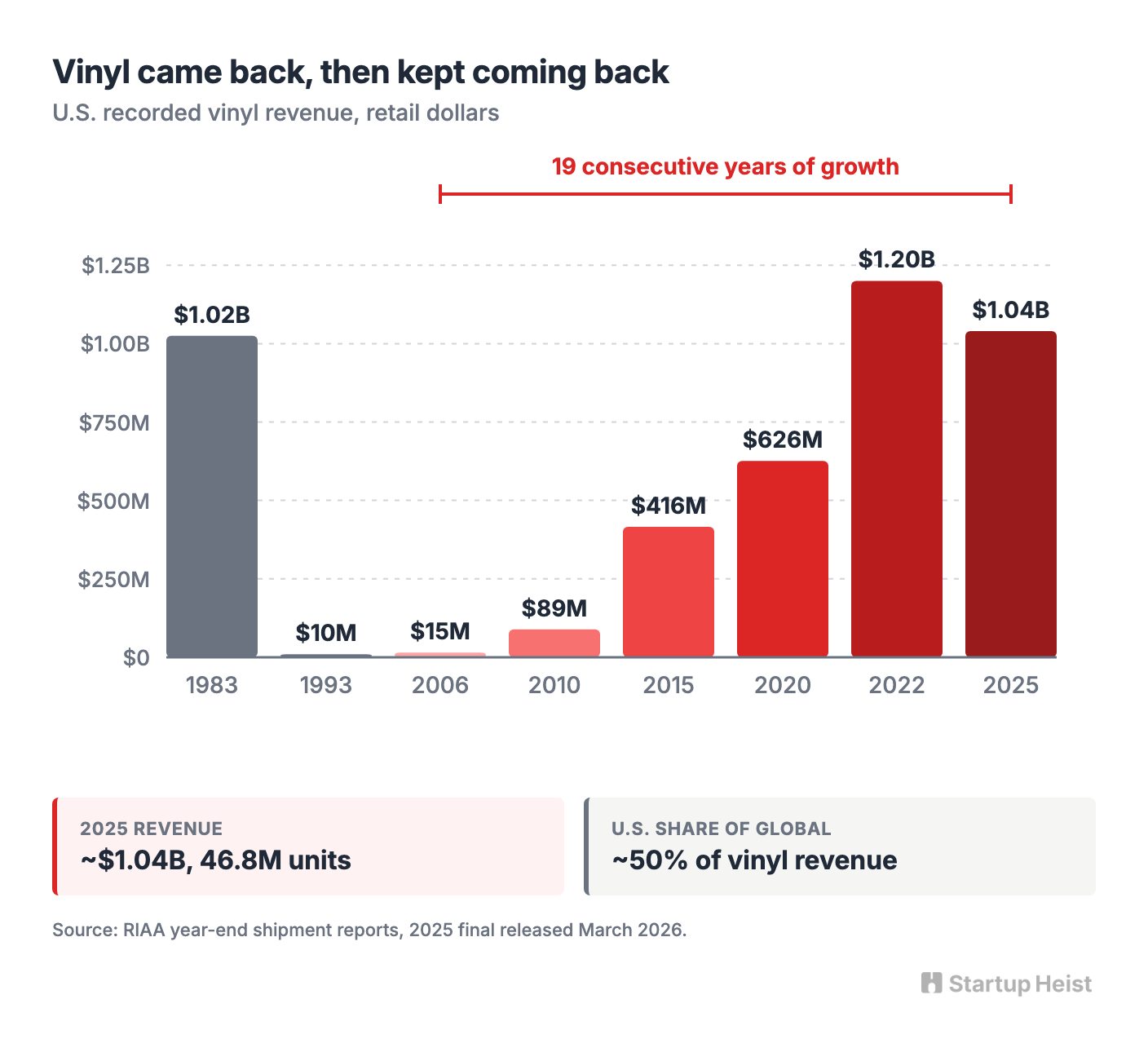
That is the lazy read. The sharper one is that vinyl has become one of the few physical artifacts a streaming-native culture still respects. A record is music, merch, proof-of-fandom, identity signal, and limited-edition collectible bundled into one object. RIAA's 2025 year-end report, released on March 16, 2026, put U.S. vinyl revenue at roughly $1.04 billion, with about 46.8 million units sold and a 19th consecutive year of growth. American buyers now account for nearly half of all global vinyl revenue.
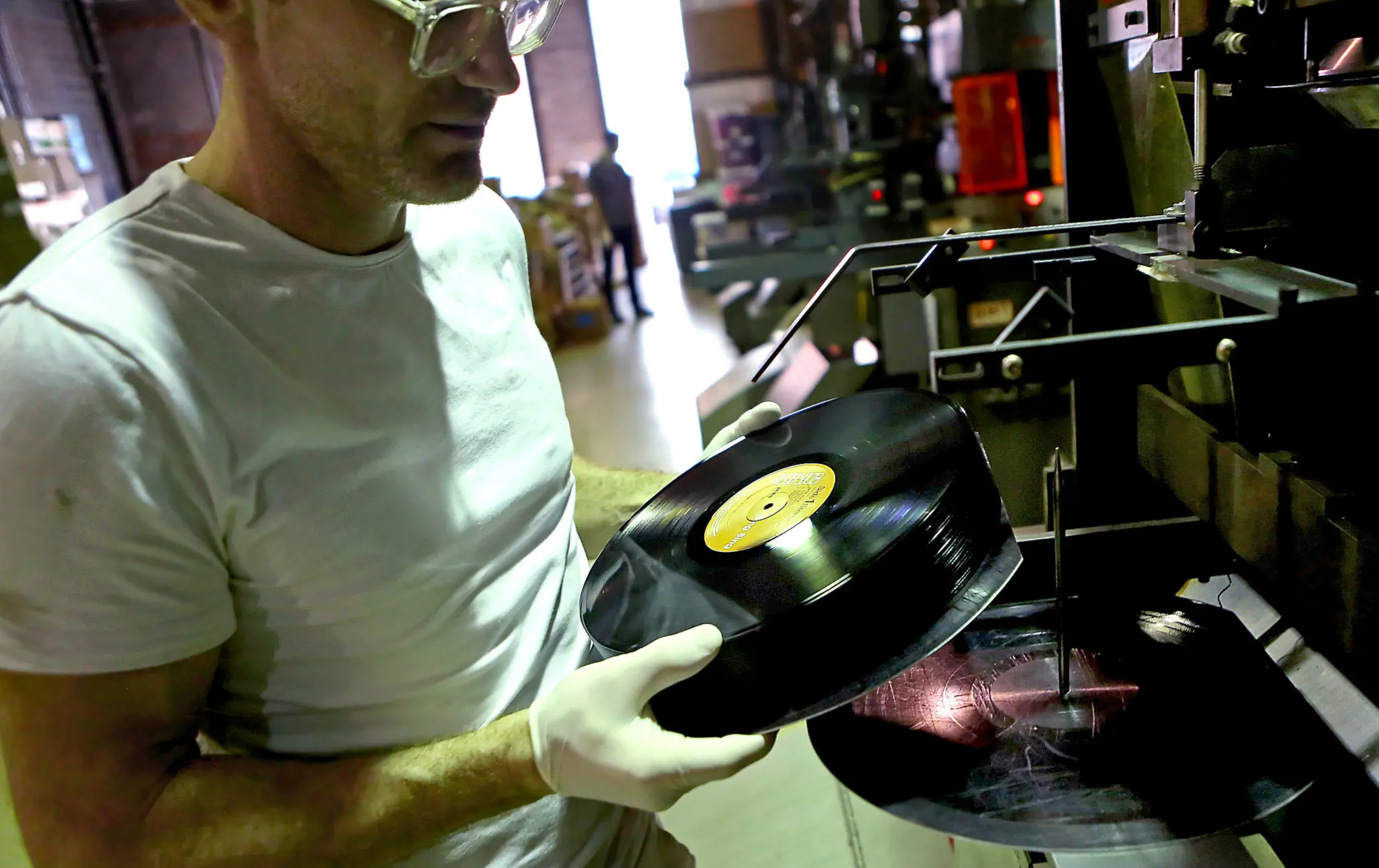
Major artists already understand the playbook. Taylor Swift sells variants, scarcity, cover art, bonus tracks, colors, and the feeling of participating in a release cycle. The same behavior shows up around Sabrina Carpenter, Kendrick Lamar, Billie Eilish, and legacy catalog reissues. Fans want a physical object that says, "I was here for this." The interesting startup opportunity sits one layer below the headliners, in the long tail of indie vinyl pressing and creator commerce.
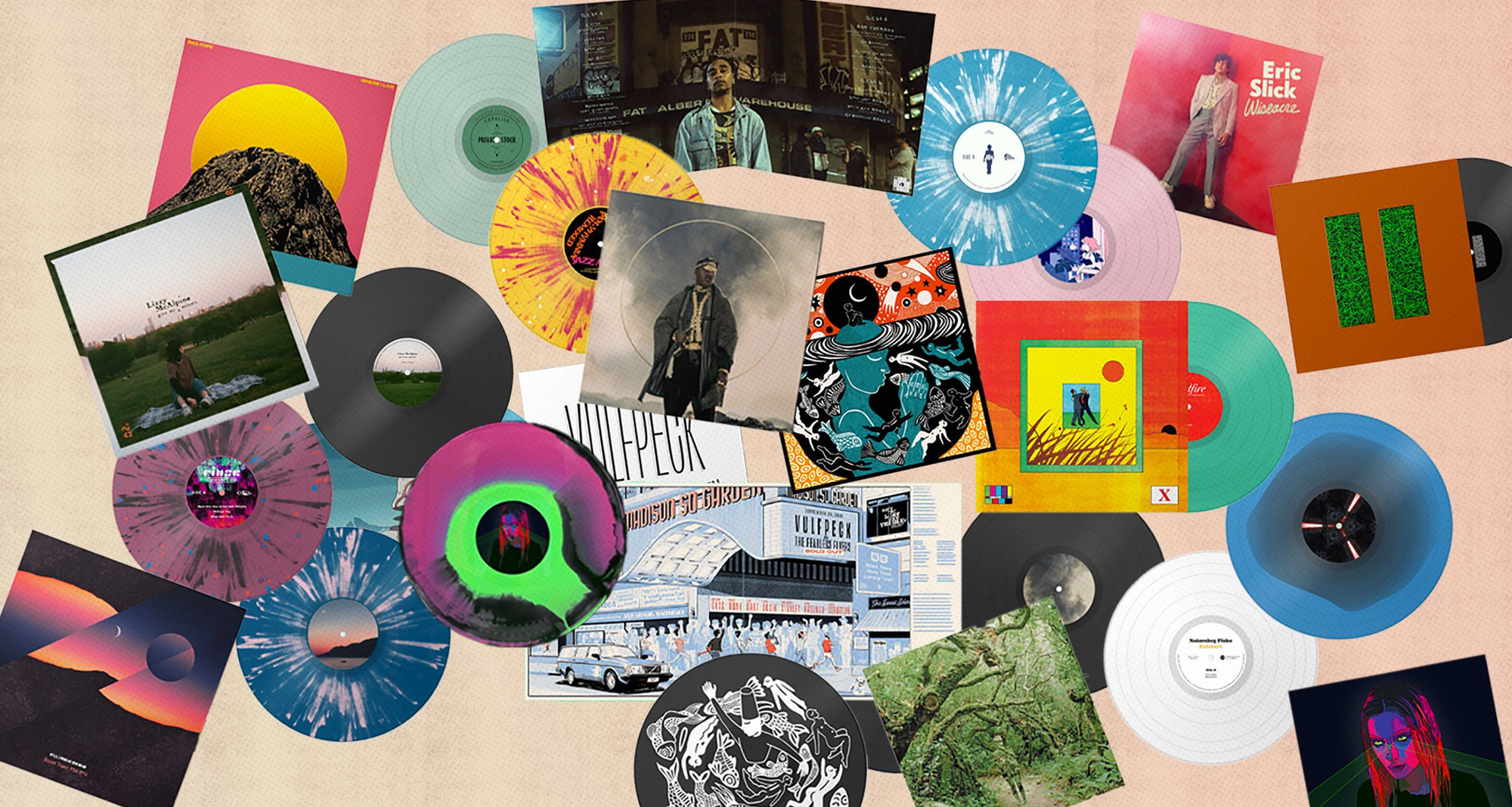
There are thousands of musicians, podcasters, YouTubers, ambient producers, niche electronic acts, fantasy audio creators, tabletop channels, and internet-native personalities with 5,000 to 100,000 true fans. Most of them can't move 1,000 records. Most can't responsibly front $5,000 to $10,000 for inventory. A surprising number, though, can sell 50 to 300 limited physical pieces if the offer is packaged well. That is the wedge for DropPress: a purpose-built preorder vinyl platform for limited drops by indie creators.
Here is the shape of it.
The money: $10K to $30K/mo from 20 funded campaigns at $7K average GMV. Qrates and Bandcamp already proved fans pay months in advance.
Inside:
• Three drop tiers: Test Cut, Fan Pressing, Bundle
• Economics calculator as top-of-funnel asset
• Five-pilot rollout playbook with templates
• Four moats: routing, data, fan ownership, repeats
Why Now
Three forces are converging on the same gap.
Physical music is no longer a nostalgia sideshow. A 19-year growth streak and a $1 billion-plus U.S. revenue milestone signal durable consumer behavior, even inside a market still dominated by streaming. Manufacturing has loosened enough to make a software layer possible. Diggers Factory lists vinyl production at a 100-unit minimum. Qrates has long operated on a 100-copy crowdfunding threshold and takes a 15% cut on funded projects. Bandcamp's vinyl service runs a 250-record campaign with a 30-day funding window. Small lathe-cut shops will run 10 to 50 copies for anyone with a credit card. With those options live, a platform can route creators to the right production path instead of forcing one supplier model on everyone.
Fulfillment infrastructure has matured for creator commerce. ShipBob now sells fulfillment services explicitly to influencer and creator brands, with inventory sync, branded unboxing, and multichannel operations. It became one of the first U.S. fulfillment partners inside TikTok's "Fulfilled by TikTok" program, a strong signal that creator-led commerce is now a logistics category in its own right.
The factories exist. The buyers exist. The payment rails exist. The fulfillment partners exist. What's missing is the vertical operating system for small physical media drops.
The Problem
The mistake is thinking the opportunity is "pressing plants have high minimums." A decade ago, that was true. Today, short-run and lathe-cut vendors are everywhere. The real pain is that the entire process is still too fragmented for a creator who isn't already operating like a label, and pressing backlogs at major plants still run 12 to 20 weeks during peak periods, with some indie artists waiting six months or more.
A creator deciding to do this needs answers to twelve questions before they can even start. Lathe-cut or pressed? What price clears? Where is break-even? How many fans need to convert? How long until delivery? Who handles refunds if the drop fails? Who handles shipping? Can buyer emails be captured? Can digital files, bonus episodes, demos, stems, liner notes, or private community access be bundled in? Can the whole thing run without their apartment becoming a mailroom?
Most creators don't know how to price physical media either. They underprice because they compare vinyl to streaming. They overestimate fan demand because likes feel like purchases. They forget shipping, packaging, taxes, rejected test pressings, artwork prep, production delays, refund risk, and payment processing. A creator with 25,000 followers doesn't need a lecture about vinyl's cultural comeback. They need a calculator that says: "You need 87 buyers at $49 to fund this 100-unit drop. If you sell 150, your estimated profit is $1,950. If you sell 250, switch to this production path and your per-unit margin improves." That's the moment a platform becomes useful.
The first customer, then, is the creator with enough emotional audience density to sell a limited object but not enough operational maturity to manage production alone. Independent musicians with 5,000 to 100,000 followers across bedroom-pop, ambient, lo-fi, vaporwave, punk, metal, electronic, jazz, experimental, soundtrack, and niche-genre work. Podcasters with cult audiences. YouTubers with music-adjacent or lore-heavy communities. Tabletop RPG creators releasing soundtracks or campaign audio. Indie game developers with original soundtracks. Newsletter and media creators with a strong aesthetic identity. Small labels that want to run more experiments without taking inventory risk. The sweetest segment is the not-quite-label creator: serious enough to have fans, artwork, mailing lists, and release calendars, not serious enough to have production managers, distributor relationships, or the stomach for dead stock.
The Thesis
The independent creator economy has a merchandise problem. Digital content is infinite. Fan attention is rented. Platform algorithms are unstable. Streaming payouts are thin. Creator income keeps getting pushed toward memberships, live events, paid communities, courses, sponsorships, and merch.
Vinyl sits in the most attractive corner of that map. It's high-perceived-value creator merchandise that doesn't feel like merchandise. A T-shirt says "support me." A record says "this work matters enough to become an object." A mid-tier creator might struggle to sell 300 hoodies at $60. A limited vinyl pressing at $39 to $69 can move because it reads as a collector's item, a patronage act, and a cultural artifact at once. The buyer isn't paying for playback. They're buying proof of closeness.
DropPress should not position itself as "cheap vinyl for small artists." That's a race into low-margin manufacturing comparison. The stronger positioning is one line:
Run a limited vinyl drop without becoming a record label.
Bandcamp, Qrates, and Diggers Factory already trained the market to accept preorder-funded vinyl. A newer model is also live: elasticStage, partnered with SoundCloud as of July 2025, runs an on-demand vinyl service with no minimums and no preorder funding required, paying artists up to 50% per sale. That is a real and disruptive parallel category. Kickstarter is also partially in the space through its MAKE Vinyl partnership with Qrates. The on-demand catalog model and the generic crowdfunding model both have merit. Neither is built for what DropPress is built for.
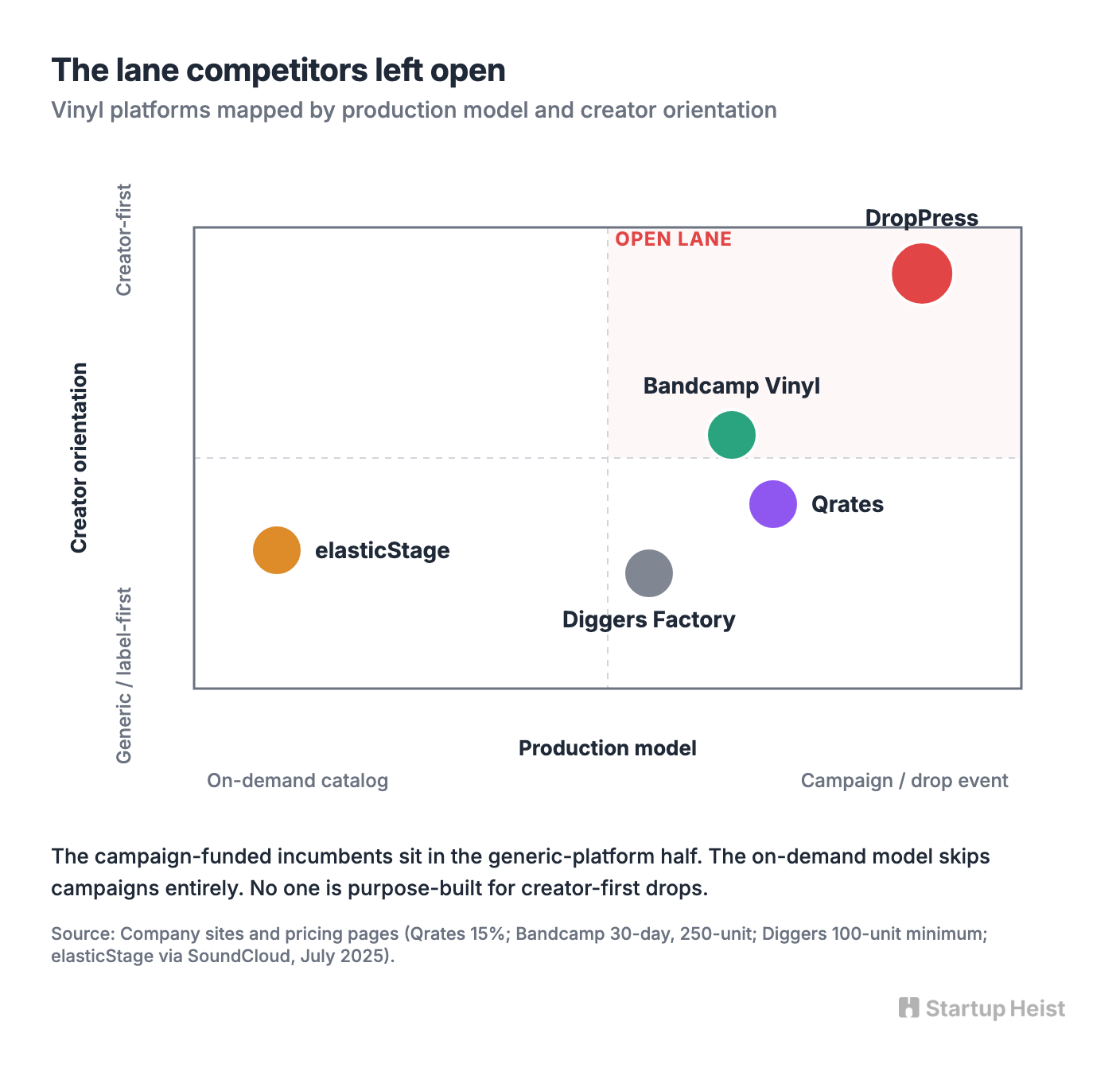
DropPress sits in the campaign and event lane. The on-demand model treats a record as a passive catalog listing. The drop model treats it as an event with edition size, a funding window, a creator narrative, a bundle, and a clear emotional reason for the object to exist. That framing is what makes the economics work for a 25,000-follower creator who needs a 0.4% to 1.2% conversion rate to fill a 100-unit run. The product DropPress sells isn't vinyl pressing. The product is confidence: economics coaching, data capture, bundle architecture, and the operational layer that turns a release into a moment.
A creator should be able to log in, connect their audience channels, upload assets, choose a format, see honest economics, launch a clean drop page, collect preorders, capture fan emails, fulfill digital bonuses, and let DropPress route production and shipping. That sequence is the business.
The Product
DropPress should ship as a tightly scoped vertical commerce product. The v1 doesn't need a marketplace. It doesn't need discovery. It doesn't need social features. It doesn't need to build manufacturing infrastructure. It needs to help creators launch a profitable vinyl drop with less risk than doing it manually.
The core flow:
Unlock the Vault.
Join founders who spot opportunities ahead of the crowd. Actionable insights. Zero fluff.
“Intelligent, bold, minus the pretense.”
“Like discovering the cheat codes of the startup world.”
“SH is off-Broadway for founders — weird, sharp, and ahead of the curve.”


