


The Senior-First Micro-App Studio
The next consumer software opening sits in the least fashionable corner of the App Store: adults in their late seventies and eighties.
The interesting demographic isn't "seniors" as a vague feel-good category, and it isn't wellness software for fifty-five-year-olds with Pelotons. The sharper wedge is adults roughly seventy-eight to eighty-eight years old, plus the adult children quietly managing their parents' calendars, medication lists, appointment reminders, family communication, and daily check-ins. The market for caregiver apps and elderly parent tools has quietly become one of the largest underbuilt corners of consumer software.
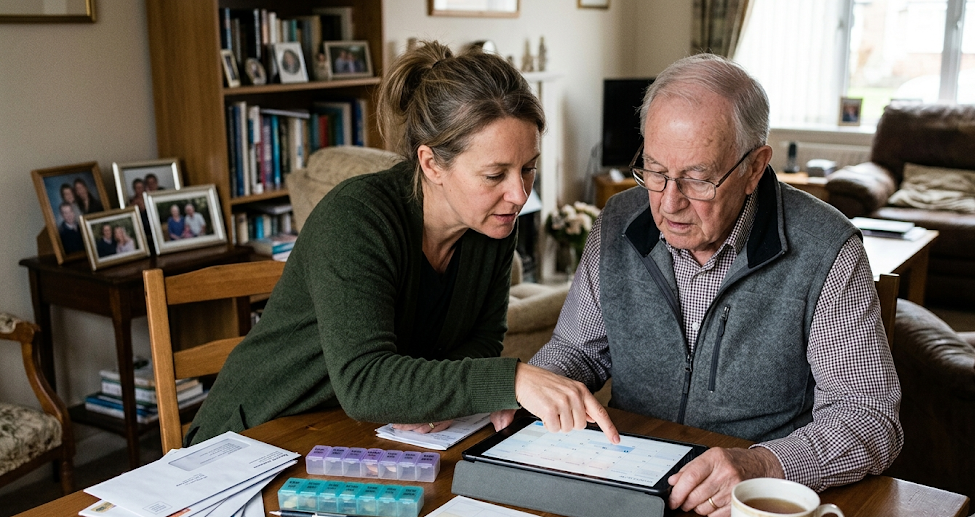
Most app builders still design for themselves. A founder in their twenties builds for creators, students, gym people, crypto people, productivity nerds. The App Store fills with AI wrappers and chat interfaces for users already drowning in tools. Meanwhile, the oldest baby boomers crossed eighty in January 2026, and the practical software layer around daily aging remains thin.
The market moved faster than founder intuition. Here's the opportunity:
The money: Solo studio path: 1,000 paying families at $8/mo blended = $8K MRR. Larger studio version targets $20K+ MRR across two products. Storyworth proved the wedge at $1.5M ARR with ten people.
Inside:
• Full MVP scope and senior-first UX rules
• Caregiver-led pricing and concierge setup
• Six-channel distribution playbook
• 90-day build plan with beta targets
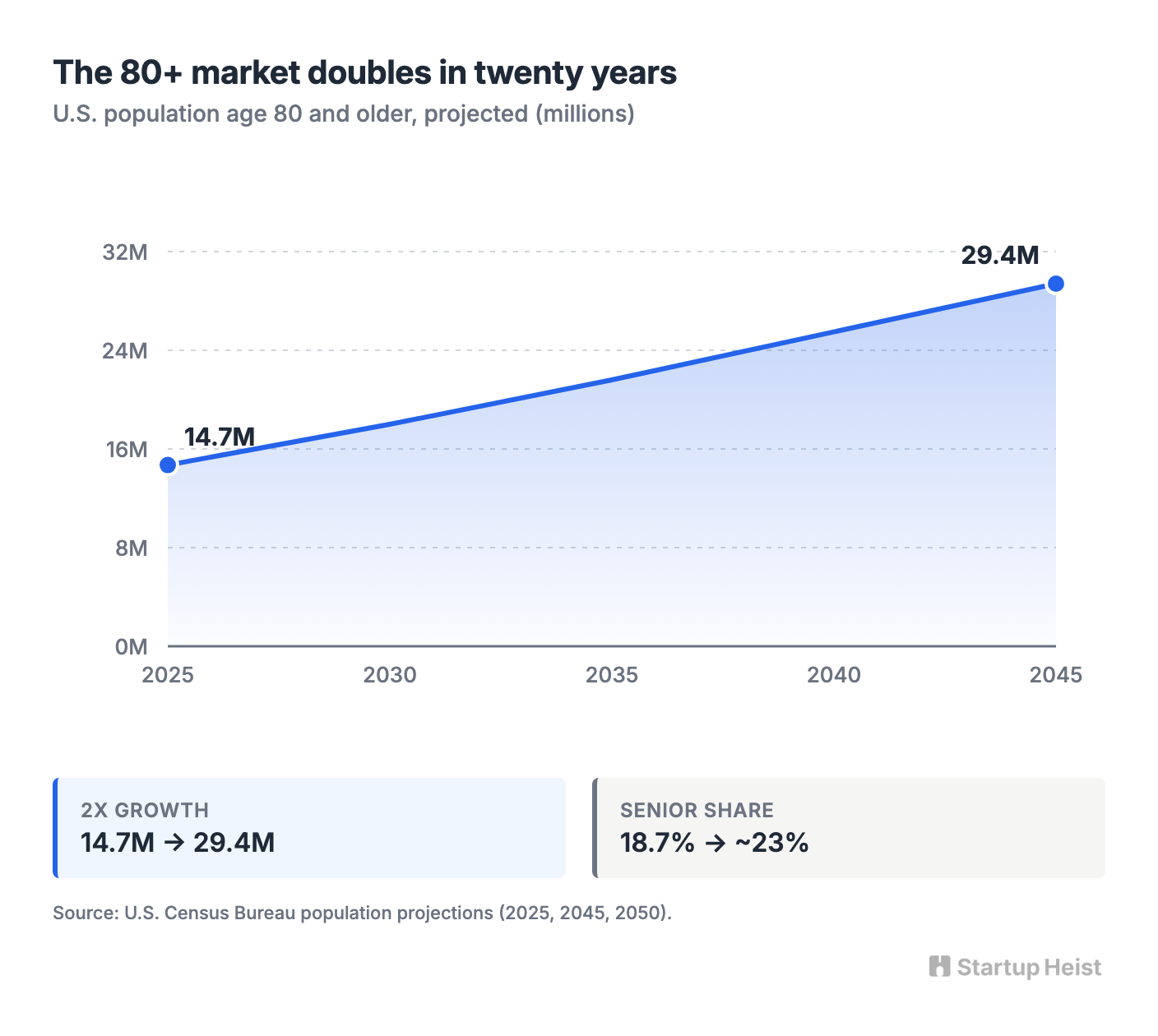
The U.S. eighty-plus population is projected to double from 14.7 million in 2025 to 29.4 million in 2045. The senior share of the overall U.S. population grows from 18.7 percent in 2025 to nearly twenty-three percent by 2050. That's not a niche. That's a demographic shift the size of a country.
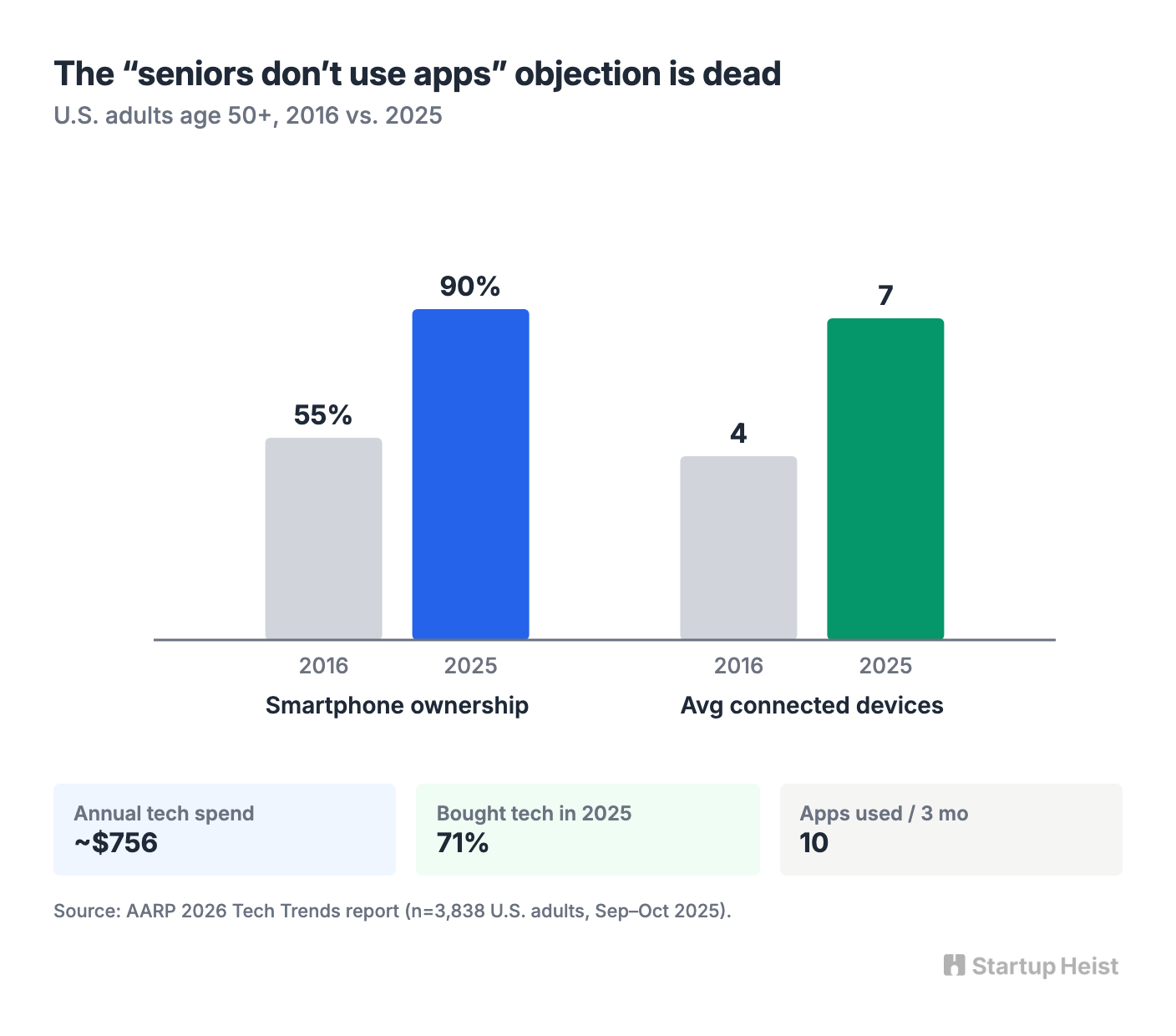
The old objection used to be that seniors don't use apps. That objection is mostly dead.
AARP's 2026 Tech Trends report, fielded across 3,838 U.S. adults between September and October 2025, found smartphone ownership among adults age fifty-plus reached ninety percent, up from fifty-five percent in 2016. Older adults now own an average of seven connected devices, up from four in 2016. Seventy-one percent bought at least one tech product in 2025, with average annual tech spending around $756. Adults fifty-plus use fourteen digital services and ten different apps in a typical three-month window. The fastest-growing categories are practical: shopping, banking, fitness.
The new problem is more interesting. Older adults use technology, but most technology isn't built for how aging actually feels. Small type. Dense menus. Notification chaos. Forgotten passwords. Permission prompts. Subscription confusion. "Tap here" instructions from an adult child over the phone. A product can be technically usable and emotionally exhausting at the same time.
That gap is the opening.
The play here is a senior-first micro-app studio: a small portfolio of narrow, paid, voice-friendly, caregiver-aware tools for older adults and the families who support them. Start with low-regulation utilities and memory products. Avoid clinical claims at the outset. Treat medication adherence and the new CMS Medicare App Library as second-stage expansion, not the opening move.
Why The Timing Is Unusually Good
Three forces converge in a way that hasn't happened before in this category.
Demographics first. The oldest boomers entering their eighties starts a long demand tail for products that help older adults live independently, stay connected, and reduce caregiver load. The eighty-plus cohort doubles in twenty years. The eighty-five-plus cohort grows even faster. Markets like this stay invisible until they aren't.
The device base is already installed. This isn't 2012, when a founder needed to convince older adults to buy smartphones. The phone is already in the house. The tablet is often already there. The smart TV is sometimes there too. Seven devices per household, on average. The opportunity is software simplification, not hardware adoption.
App creation just got cheap. Worldwide app releases in Q1 2026 rose sixty percent year over year across Apple and Google, with iOS releases alone up eighty percent. April 2026 releases climbed 104 percent across both stores. AI coding tools are pulling more builders back into small-app experimentation.
That sounds like competition. It's also leverage. Most of the new app supply will chase the same obvious markets: AI chat, creator tools, fitness, dating, journaling, habit trackers. Almost none of it will be designed around an eighty-four-year-old with mild arthritis, hearing loss, low confidence, and a daughter tired of explaining iCloud settings on the phone.
The App Store is crowded. Senior-first software isn't.
The Real Buyer Is Often Not the User
The structural mistake most founders make in this category is assuming the older adult is the economic buyer.
Sometimes they are. Many older adults are financially independent and pay for useful tools. The cleaner early go-to-market is caregiver-purchased software. The pain shows up in the adult child first: missed appointments, unanswered calls, repetitive tech support, medication anxiety, family history disappearing, the quiet dread of not knowing whether a parent is okay.
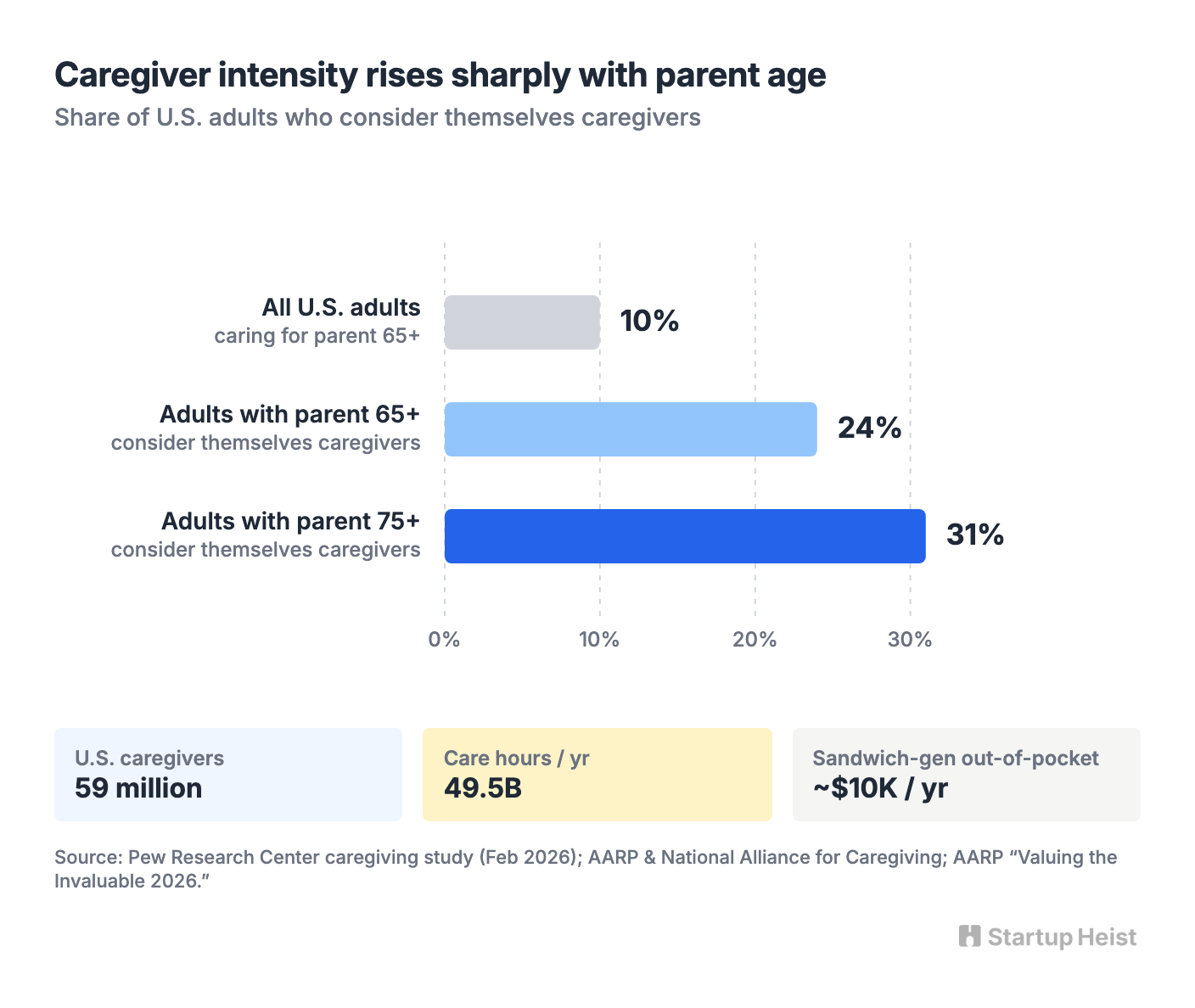
Pew Research's February 2026 caregiving study makes the audience obvious. Ten percent of all U.S. adults care for a parent age sixty-five or older. Among adults with a parent that age, twenty-four percent consider themselves caregivers. Once the parent crosses seventy-five, the figure jumps to thirty-one percent. Among parent-caregivers, Pew finds nearly half of women and roughly a third of men report a negative emotional impact, with physical strain close behind. AARP and the National Alliance for Caregiving estimate fifty-nine million Americans now provide care to another adult family member, up roughly forty percent over a decade. AARP's "Valuing the Invaluable 2026" report puts the labor at 49.5 billion hours per year, worth more than $1 trillion. Sandwich-generation caregivers spend roughly $10,000 a year out of pocket.
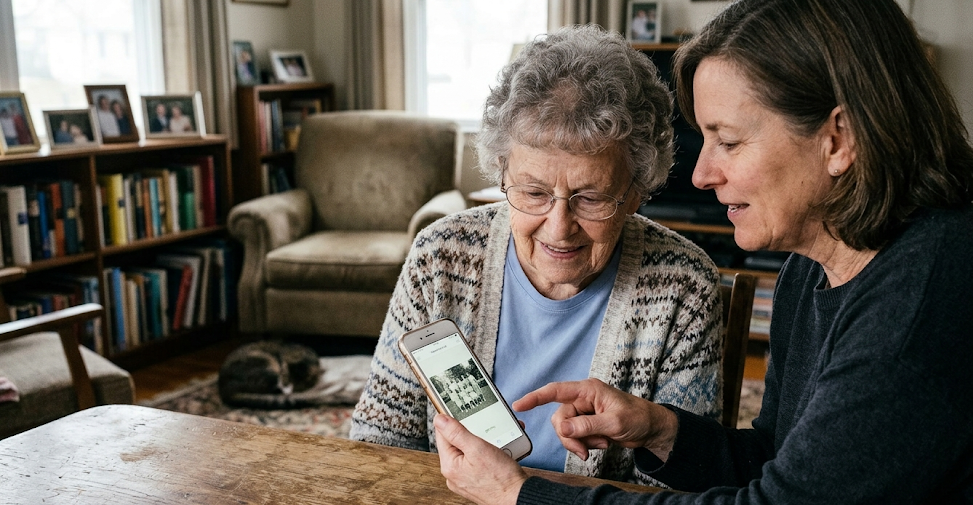
The product must serve two people at once. The older adult needs an interface that feels calm, respectful, almost impossible to break. The adult child needs setup, confidence, remote control, visibility, and trust.
This is where generic apps fail. A normal calendar app assumes the user manages the calendar. A normal voice assistant assumes the user understands the ecosystem. A normal family-photo app assumes everyone can navigate albums and sharing permissions. A normal medication app assumes the patient is the primary operator.
The winning product assumes the opposite. The adult child configures. The older adult experiences. That single design principle changes the whole product.
The Wedge: Family Stories
A strong first product should look less like senior software and more like a private memory studio for families:
Unlock the Vault.
Join founders who spot opportunities ahead of the crowd. Actionable insights. Zero fluff.
“Intelligent, bold, minus the pretense.”
“Like discovering the cheat codes of the startup world.”
“SH is off-Broadway for founders — weird, sharp, and ahead of the curve.”


