


Clean Exit Health: The Resignation Compliance Kit for Burned-Out Nurses
There's a strange little business in Japan that should make American founders pay attention.
For nearly a decade, Japanese workers have paid third-party companies to quit their jobs for them. The category is called taishoku daikō, resignation by proxy. The category leader, Exit, launched in 2017 and now charges around ¥20,000 (about $144) to call a worker's employer and handle the awkward goodbye. Late-2024 reporting put Exit's annual client count in the tens of thousands, and by 2025 more than 100 companies offered the service, with roughly 60 percent of customers in their 20s and 30s. On April 1, 2025 — Japan's fiscal new year — competitor Momuri (Japanese for "I can't anymore") logged 134 resignation requests in a single day.
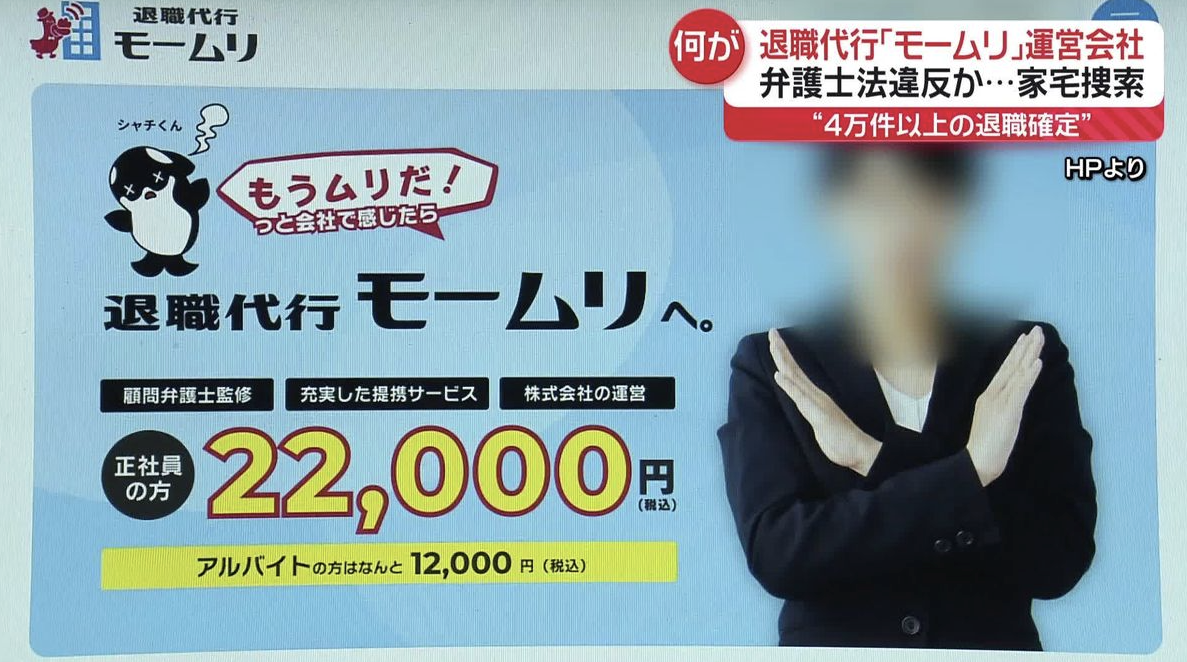
Treat this as a quirky cultural story and you miss the lesson. Quitting is a transaction with risk. In Japan, the risk is social: disappointing the boss, violating hierarchy, getting pressured to stay. In the United States, especially in healthcare, the risk is structural. Health insurance gaps. Unpaid PTO. License records. Non-competes. Training repayment clauses. Scheduling retaliation. Getting marked "not eligible for rehire." Being walked out before you've collected your documents. Saying the wrong thing to HR while exhausted. That gap is where the business sits.
Here's the opportunity:
The money: 150 customers a month at a $325 blended price is roughly $48,750 in revenue. ContractsCounsel pegs flat-fee resignation letters at $610.
Inside:
• Four-tier ladder from $199 kit to attorney review
• 30-day no-code MVP plan with 5 state templates
• Wage-claim referral as the second business
• Distribution stack: search, Reddit, TikTok, lawyers
The Startup Heist isn't a company that quits your job for you. That positioning is gimmicky and legally sloppy in the U.S. context. The better business is a resignation compliance service for healthcare workers: a productized, attorney-reviewed exit kit that helps nurses, CNAs, technicians, therapists, and hospital staff resign cleanly without accidentally creating legal, financial, or licensing problems. Call it something like Clean Exit Health.
The core product isn't a dramatic "we call your boss" service. That's the premium upsell. The base product is calmer and easier to trust: a $199 to $399 kit with a state-specific resignation letter, contract-risk checklist, COBRA timeline, PTO calculator, HR conversation script, final-shift checklist, and optional live support from a trained resignation coordinator or paralegal.
The Pain Is Operational, Not Emotional
Healthcare workers don't need a novelty quitting service because they're shy. They need it because quitting a healthcare job can feel operationally dangerous. A burned-out nurse may know she needs to leave. The questions pile up fast. Will I lose health insurance immediately or at the end of the month? Can I use COBRA if I voluntarily quit? What happens to unused PTO? What if my employer claims I owe money for a sign-on bonus, training program, relocation benefit, or tuition reimbursement? Do I have to give two weeks' notice? Can my manager retaliate by giving a bad reference? What documents should I download before my badge stops working?
None of these questions is exotic. Together, they create paralysis. COBRA alone is confusing enough. Department of Labor rules say a worker who voluntarily quits is still entitled to COBRA continuation coverage, gets a 60-day election window from the date the election notice arrives, and can elect retroactively so coverage backfills the gap. Almost nobody learns this at the right moment. They hear "if I quit, I lose insurance," and stay another three months in a job that's wrecking their health.
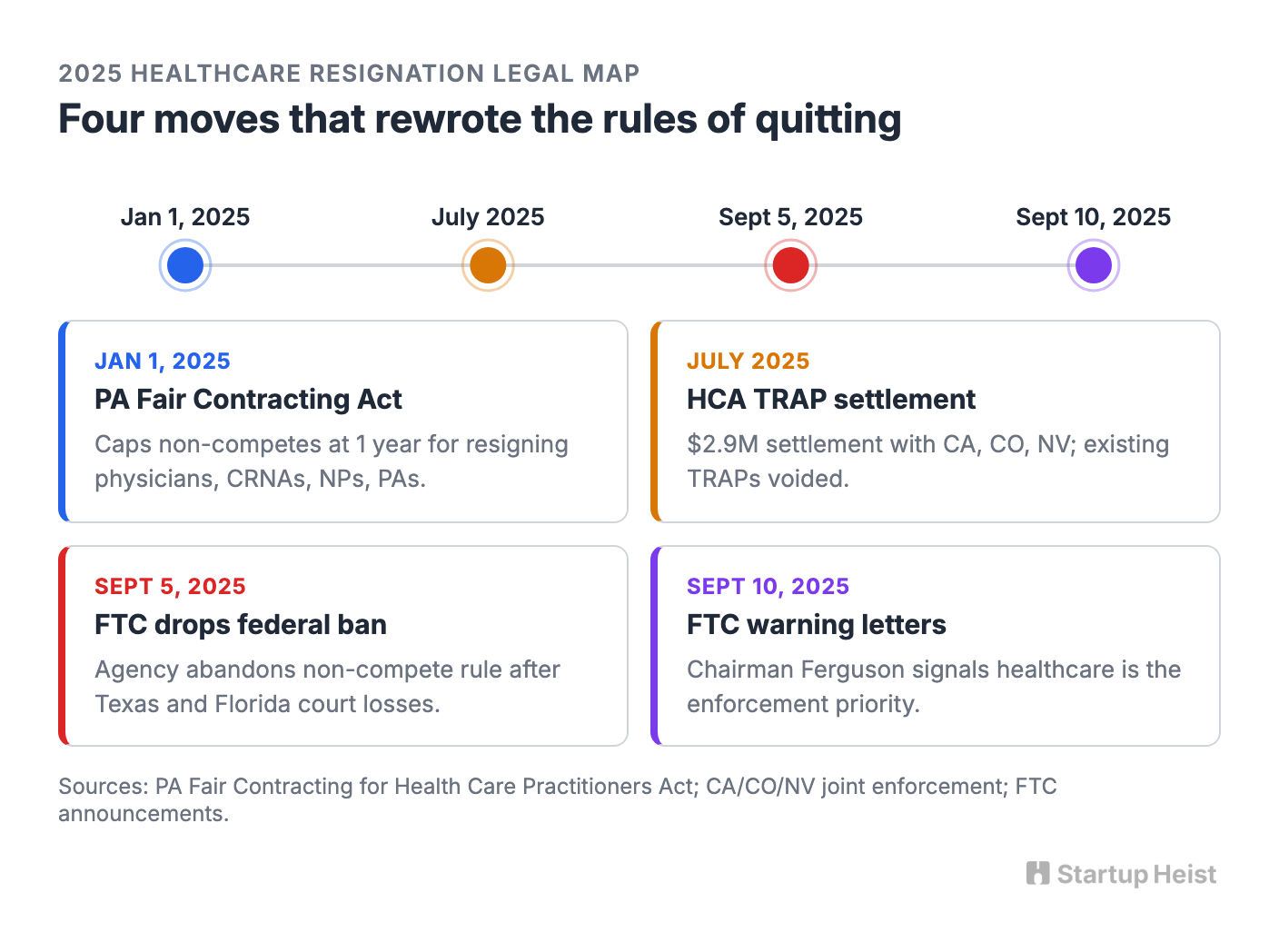
The legal landscape is also moving fast. Pennsylvania's Fair Contracting for Health Care Practitioners Act took effect January 1, 2025, capping non-competes at one year for voluntarily resigning physicians, CRNAs, nurse practitioners, and physician assistants, and voiding them entirely if the employer terminates the relationship. The Act applies only to agreements signed on or after January 1, 2025; pre-existing non-competes remain enforceable. Staff RNs aren't covered, which is itself a confusion point worth explaining. At the federal level, the FTC formally abandoned its blanket non-compete ban on September 5, 2025 after court losses in Texas and Florida. Five days later, FTC Chairman Andrew Ferguson sent warning letters to large healthcare employers and staffing companies, signaling that healthcare is now the agency's enforcement priority. Resignation in healthcare is no longer a polite letter and a handshake. The complexity itself is what you're selling.
Why Healthcare First
Don't start with "all workers." That path leads to a fuzzy consumer app with bad conversion. Healthcare has every condition a resignation product needs: brutal turnover, deep burnout, real fear, dense legal complexity, and obvious distribution channels.
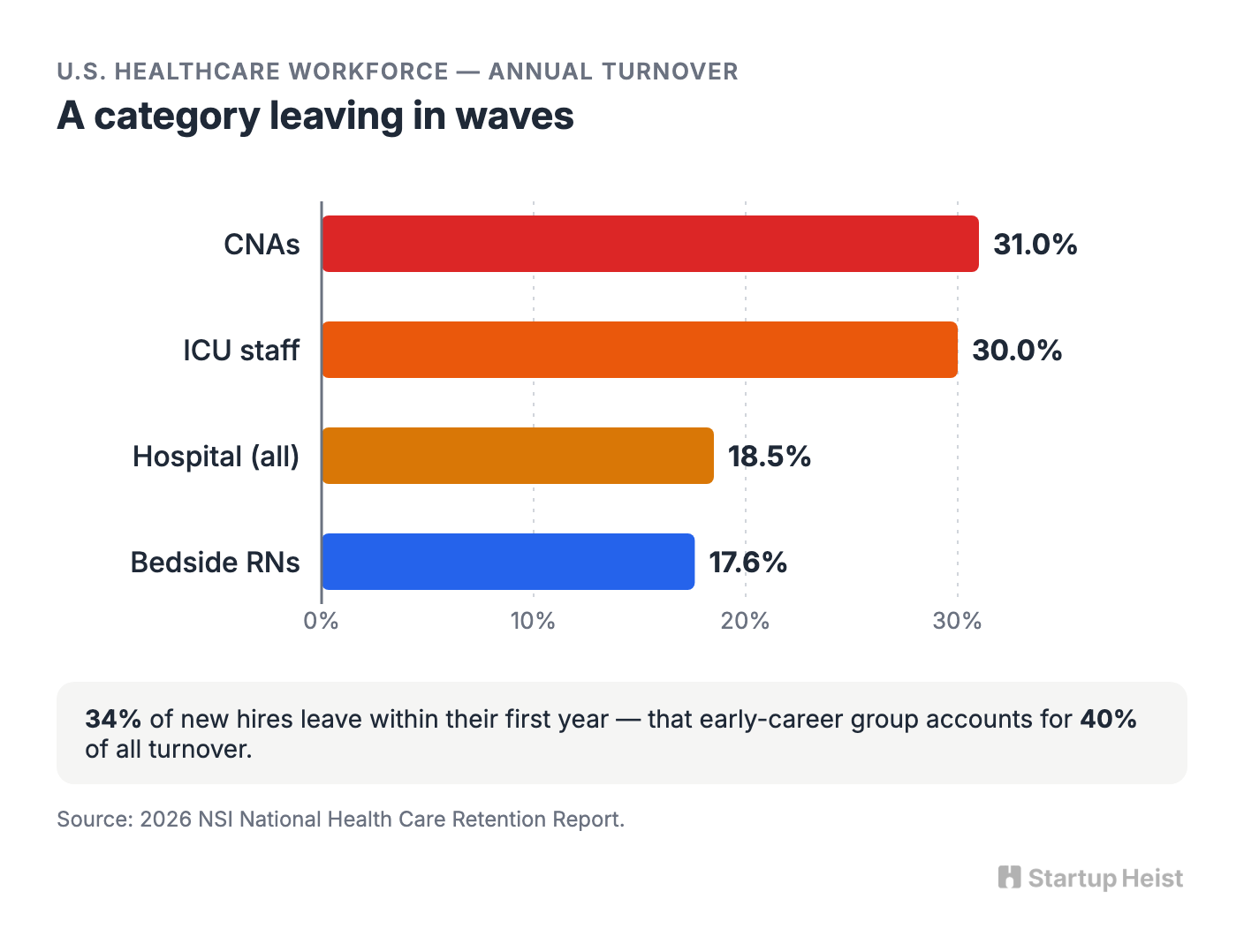
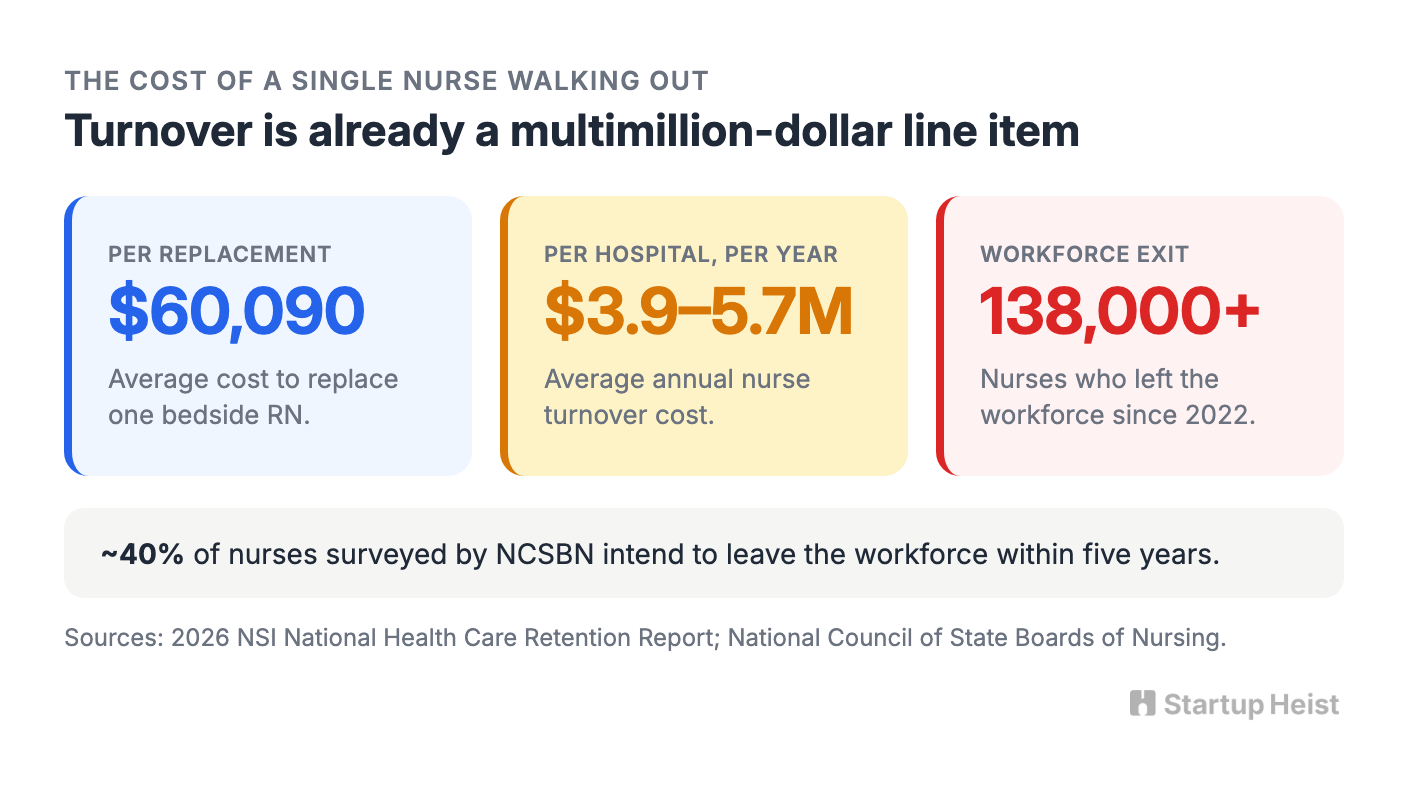
The 2026 NSI National Health Care Retention Report, the industry's authoritative turnover dataset, pegs hospital turnover at 18.5 percent, with RN turnover at 17.6 percent. CNA turnover runs near 31 percent. ICU staff sit close to 30 percent. Most striking: 34 percent of all new hires leave within the first year, and that early-career group accounts for 40 percent of all turnover across the 36-state sample. The National Council of State Boards of Nursing reported that more than 138,000 nurses had left the workforce since 2022, with nearly 40 percent intending to leave within five years. Nurse turnover now costs the average hospital $3.9 million to $5.7 million per year, with each bedside RN replacement averaging $60,090 according to the 2026 NSI report.
The resignation moment is also more emotionally loaded than in white-collar jobs. Nurses leave teams that are already understaffed. They feel guilt. They expect pressure. They worry about abandoning patients. They often move between hospitals in the same local network, where reputational risk feels real. All of that creates a strong willingness to pay for a clean, low-drama exit. The customer can write a resignation email on her own. What she wants is confidence before walking into an HR meeting that could quietly cost her thousands.
The Product: A Resignation Compliance Kit
The strongest version of this business isn't a call center. It's a productized legal-adjacent workflow.
Name the base product something serious: Resignation Compliance Kit, Healthcare Edition. Price it at $199. Deliver within 24 to 48 hours. The kit has seven pieces:

Unlock the Vault.
Join founders who spot opportunities ahead of the crowd. Actionable insights. Zero fluff.
“Intelligent, bold, minus the pretense.”
“Like discovering the cheat codes of the startup world.”
“SH is off-Broadway for founders — weird, sharp, and ahead of the curve.”


