


The "Order My Usual" Layer for Local Merchants
Build a vertical AI regulars concierge that lets repeat customers text "same as last Friday, pickup at 6" or "repeat the dog food, smaller bag this time," and turn that message into a real order, payment, and fulfillment ticket inside the merchant's existing stack.
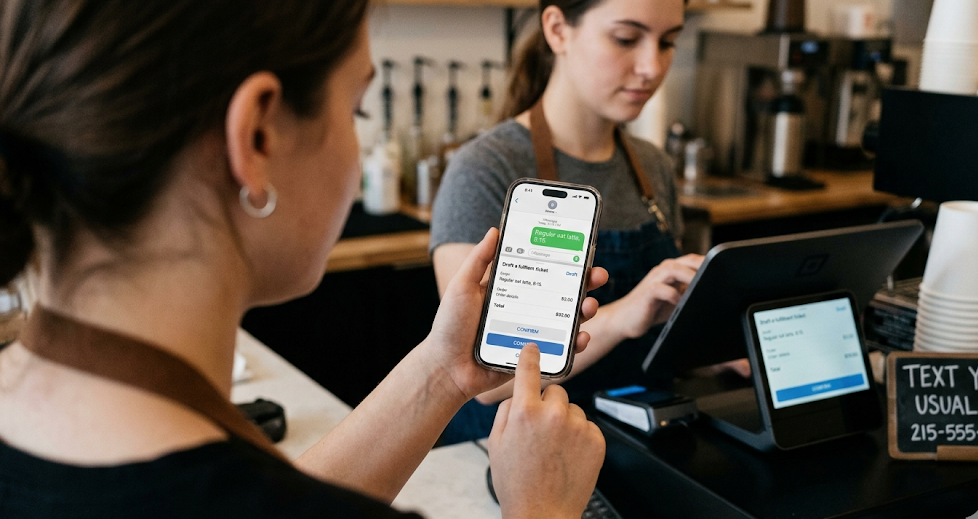
This is repeat-commerce, not chat. The interface is deceptively simple: SMS, WhatsApp, web chat, eventually voice. The customer doesn't browse, log in, or search the menu. They say what they want in shorthand:
"Usual oat latte, 8:15."
"Same lunch as Tuesday, no drink."
"Repeat Max's food, but the smaller bag."
"Two meal prep boxes this week instead of four."
The system identifies the customer, understands the merchant's catalog, confirms ambiguity when needed, drafts the order, sends a payment link, and pushes the ticket into Square, Shopify, or Toast. Repeat order automation, customer-initiated.

China has already shown the shape. Meituan's Xiaomei agent, launched in September 2025, was framed internally as an "orchestrator plus execution agent" capable of handling requests like "Order my usual lunch, but deliver it 20 minutes later today." Harvard Business Review's April 24, 2026 analysis confirmed the pattern: AI assistants on Chinese commerce platforms have moved past product search and now handle the full workflow of intent, payment, and fulfillment. The agent doesn't chat. It closes.
The U.S. has no Meituan-style super-app for local commerce. That fragmentation is the opening. The "usual" layer won't arrive here as one giant consumer app. It'll arrive as vertical AI for local commerce, bolted onto Square cafés, Shopify pet stores, meal-prep operators, bakeries, and quick-service restaurants. Call it UsualBot.
Here's the opportunity:
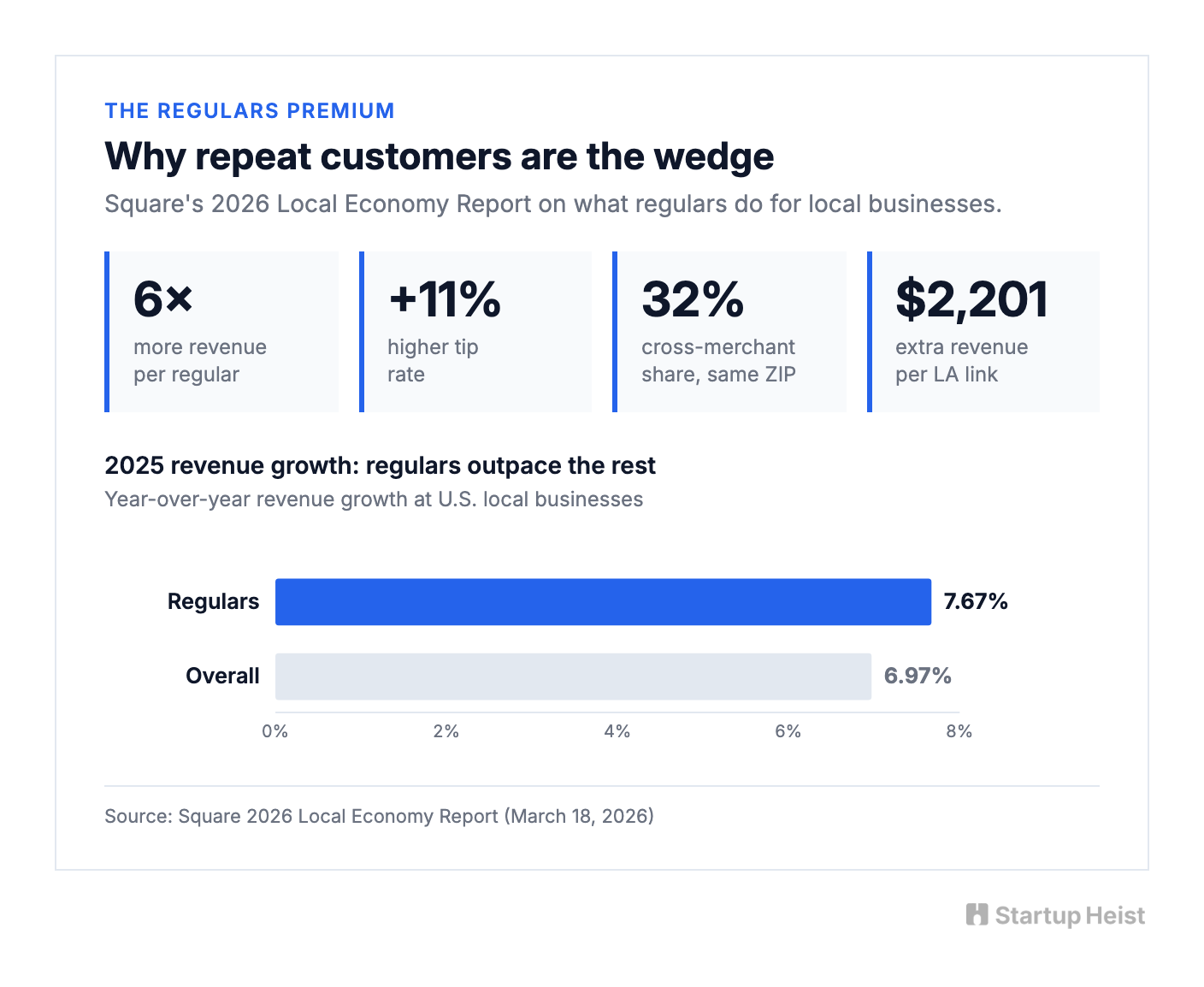
The money: 500 merchants at $149/month plus 1% of AI-assisted GMV is roughly $75K MRR before transaction fees. Square's 2026 data: regulars drive 6x more revenue for local businesses.
Inside:
• SMS reorder MVP scope on Shopify
• Three-tier pricing with assisted-order take rate
• Founder-led outreach wedge and templates
• Five-layer moat against platform copycats
• 90-day playbook from pilot to paid
The wedge is helping local merchants protect and monetize their best customers by making repeat ordering feel effortless. Square's 2026 Local Economy Report, published March 18, 2026, makes the math impossible to ignore. Regular customers drive 6x more revenue for local businesses, tip 11% higher, and get shared across 32% of businesses in the same ZIP code, generating roughly $2,201 in extra annual revenue per cross-merchant connection in Los Angeles. Most striking: regular-customer revenue grew 7.67% in 2025, faster than overall revenue growth of 6.97%. Regulars are getting more valuable.
Local merchants don't wake up wanting "agentic commerce." They wake up wanting the same 300 regulars to come back more often. That's the sell.
Why This Is Happening Now
For the last decade, local commerce software pushed customers into interfaces: apps, menus, QR codes, loyalty portals, email campaigns, reorder buttons, checkout pages. The new layer is about removing browsing. A good regular already knows what they want. The merchant knows it too. The software still treats every transaction like a new shopping session, and that mismatch creates the opening.
The behavior already exists in the physical world. A barista starts the usual the moment the customer walks in. A pet-store owner knows the golden retriever family buys the same food every four weeks but switches bag size sometimes. That memory is valuable. It's also trapped in people's heads, order histories, text threads, and POS records. The product is memory plus execution.
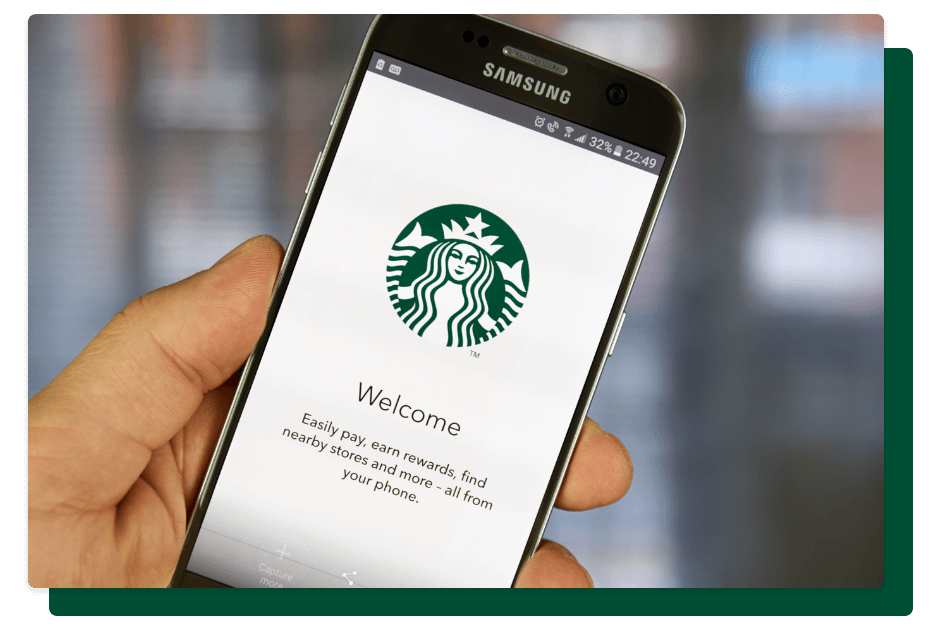
Three things are converging that make this winnable now. Consumer behavior has been trained by Starbucks reorder, Alexa repeat purchase, and Shopify SMS reorder tools like Postscript and TxtFi, but those are merchant-initiated campaign engines, not natural-language memory built around the customer's voice. Payment infrastructure has caught up: on April 30, 2026, Stripe announced a major upgrade to Link with one-time-use cards, OAuth-authorized agents, spend controls, and approval flows, then said the wallet has crossed 250 million users and is being prepared as the substrate for Stripe Link agent payments. And the merchant platforms are mature enough to build on. Square's Customers and Orders APIs expose profiles, loyalty, and repeat-purchase data. Shopify's Admin order endpoints expose line items, SKUs, variants, and customers. Toast's orders API supports order creation through approved partners. The pieces are lying around. The winner packages them into a workflow merchants understand: "Your regulars can text their usual. We handle the rest."
The category is also getting priced. Juniper Research's April 2026 forecast pegs agentic commerce spend at $8 billion globally in 2026, climbing to $1.5 trillion by 2030. The number to focus on isn't 2030. It's that the curve has officially started.
The Wedge Is Not "All Local Merchants"
Florists, salons, dry cleaners, butchers, bakeries, restaurants, groomers, liquor stores, specialty grocers — all have some version of "the usual." Building across all of them on day one is how this dies. Each vertical carries different complexity. A coffee order is high-frequency, low-risk, and forgiving. A florist order is emotionally loaded, where a wrong flower or wrong recipient turns an "elegant" idea into a refund. A salon booking carries scheduling, deposits, and staff availability. A pet-food reorder is simple: same SKU, same dog, same cadence, occasional size change. Meal prep sits in a sweet spot: recurring behavior, predictable menus, skip and modify language, high lifetime value, and existing dependence on SMS reminders.
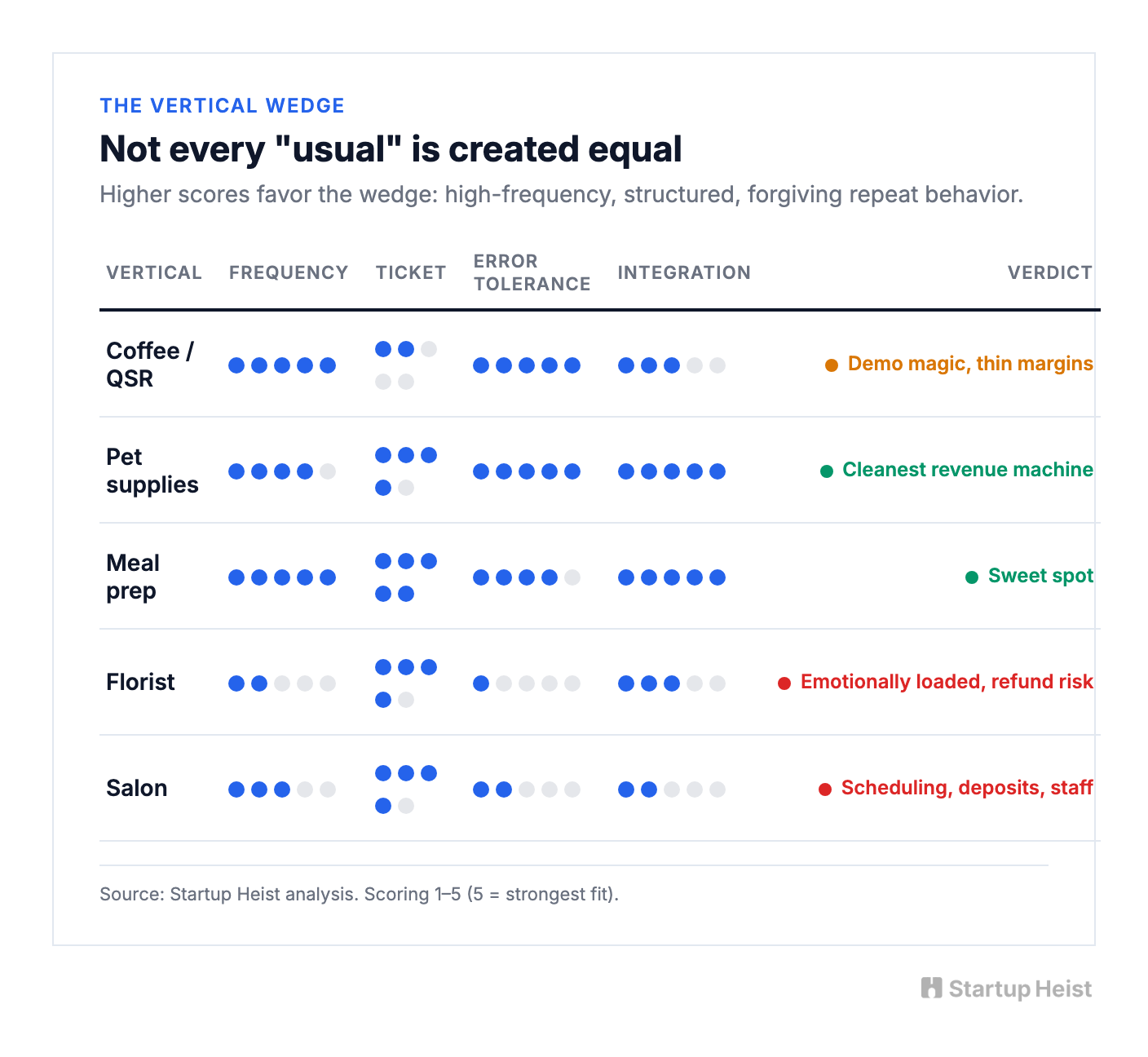
The correct wedge: start with high-frequency, repeat-purchase categories where the customer's "usual" is structured, forgiving, and easy to reconstruct from past orders. Three verticals worth testing first:
- Coffee and quick-service food on Square or Toast
- Pet supplies and dog food on Shopify or Square
- Meal-prep operators on Shopify
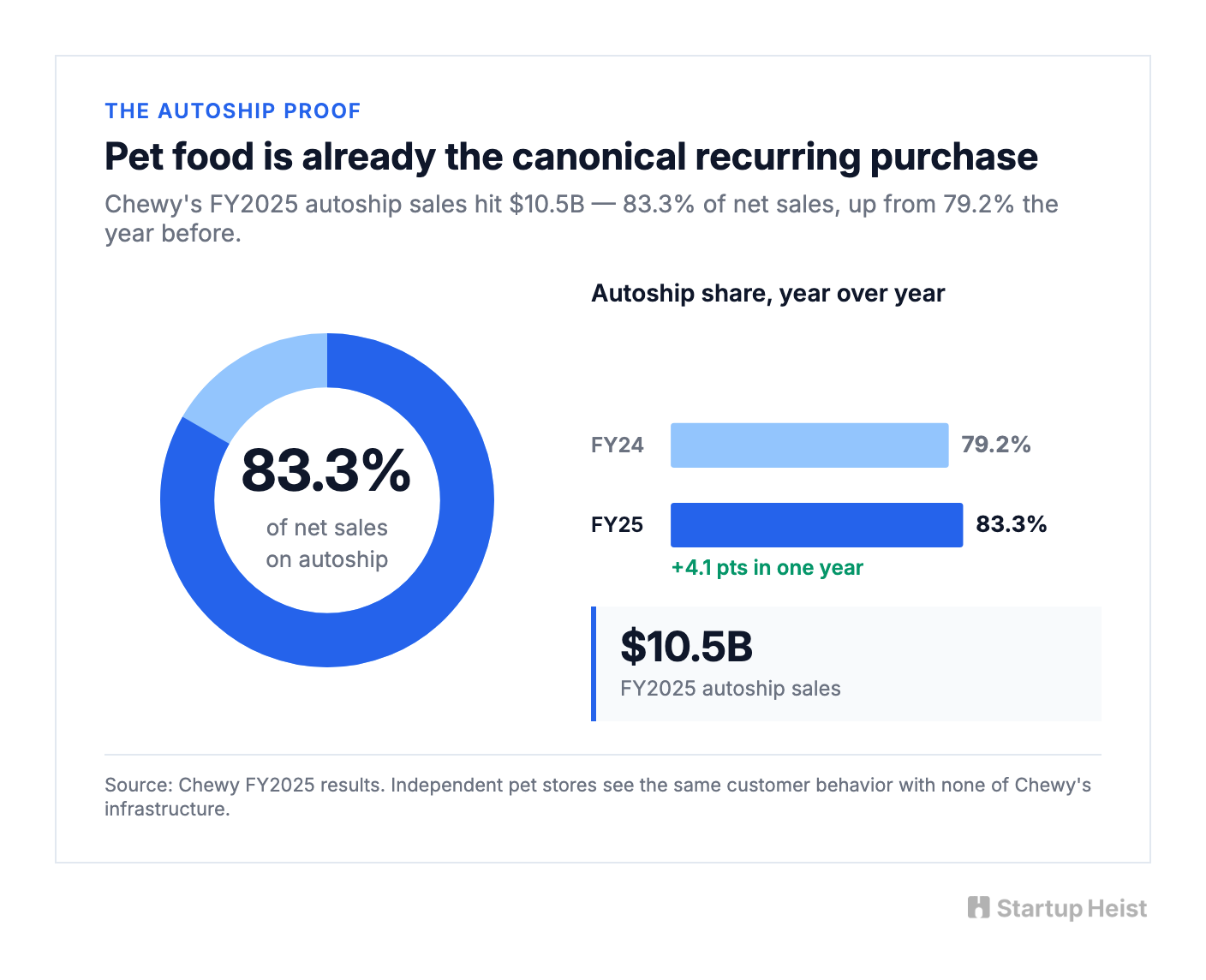
Coffee gets the demo magic but loses on margins: low ticket, integration drag, operational chaos. Pet supplies are less glamorous but cleaner. Stable SKUs, higher baskets, predictable cadence, easy natural-language changes ("same food, smaller bag," "ship to my parents this time"). The economics are already proven at scale: Chewy's autoship business reached $10.5 billion in fiscal 2025, 83.3% of total net sales, up from 79.2% the prior year. Pet food is the canonical recurring purchase. Independent pet stores see the same customer behavior with none of Chewy's infrastructure. Meal prep delivers the same fundamentals with even more natural language: "skip this week," "add two extra chicken bowls," "send the lighter plan."
For the highest demo magic, prototype with coffee. For the cleanest revenue machine, sell into pet supplies and meal prep. The strategic move is doing both: coffee for the story, pet and meal prep for the bank account.
What The Product Actually Does
The customer sees a phone number or chat widget: "Text us your usual." The merchant sees a dashboard: "AI-generated repeat orders from known customers, routed into your existing order system." Five layers run underneath:
Unlock the Vault.
Join founders who spot opportunities ahead of the crowd. Actionable insights. Zero fluff.
“Intelligent, bold, minus the pretense.”
“Like discovering the cheat codes of the startup world.”
“SH is off-Broadway for founders — weird, sharp, and ahead of the curve.”


