


The Widget Layer: Build Premium iPhone Dashboards for Professionals Who Live in Too Many Tools
The iPhone homescreen is quietly becoming valuable again. For most of the last decade it was a launcher: colorful squares, muscle memory, badge anxiety. Open Slack. Open Stripe. Open Gmail. Open Calendar. Open Linear. Open Notion. Open the bank app. Close everything. Repeat by lunch.
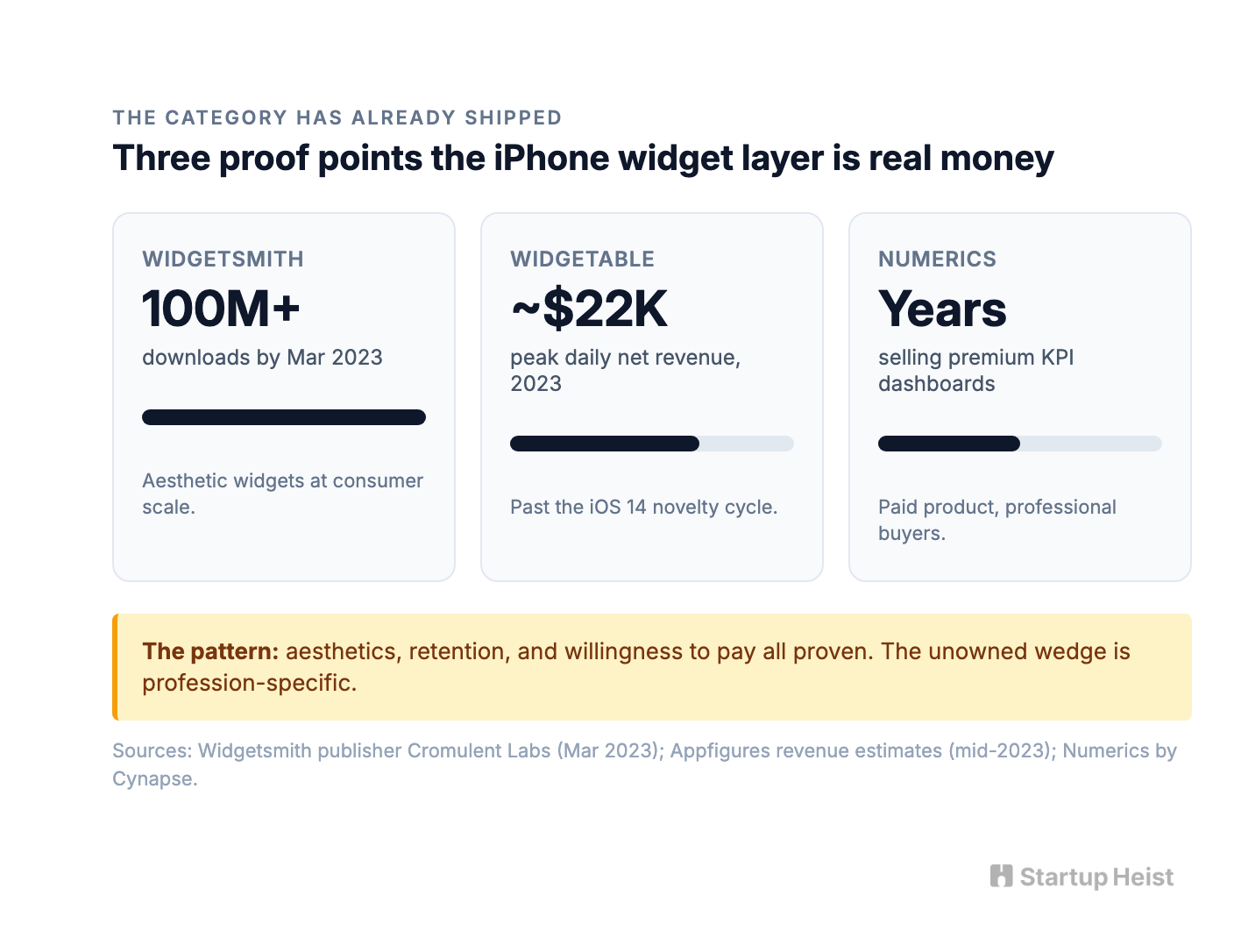
Widgets changed the math. Widgetsmith proved ordinary users would customize their homescreens at massive scale, passing 100 million downloads by March 2023. Widgetable showed the category could keep monetizing well past the iOS 14 novelty cycle, with Appfigures clocking a peak around $22,000 in daily net revenue in mid-2023. Numerics has been quietly selling premium KPI dashboards for Apple devices for years. The category is real. It also keeps getting framed wrong.
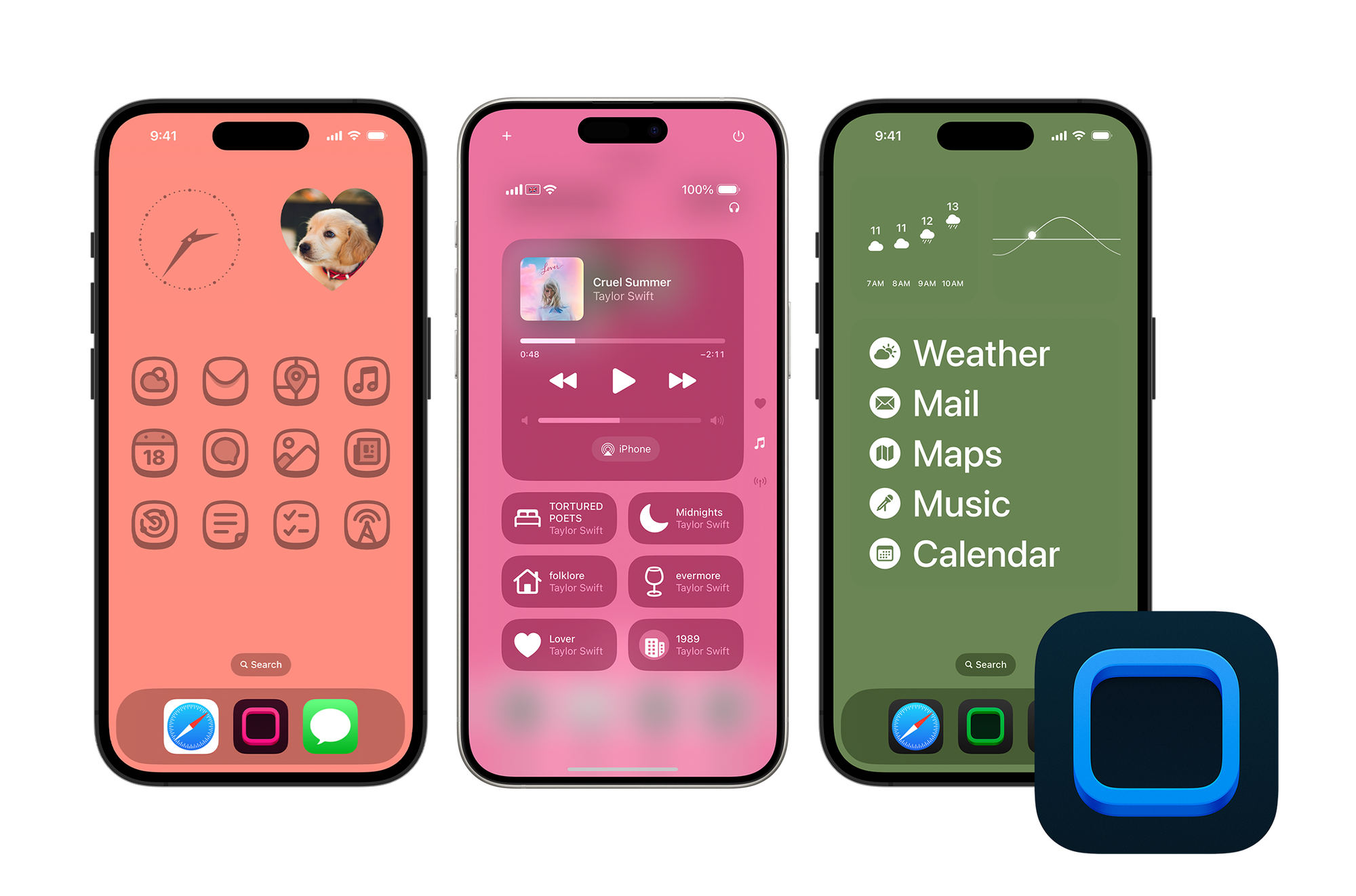
There's a fresh trigger. Skye, an "AI home screen" app from Signull Labs founded by Nirav Savjani, raised about $3.58 million in pre-seed funding from a16z, True Ventures, and SV Angel before launch, with a waitlist reportedly in the tens of thousands. The pitch isn't "make your phone prettier." It's "stop opening apps; let your phone surface the right cards." That distinction is the whole game.
Here's the opportunity:
The money: $79,000 ARR from 1,000 paid users at $79/year. A focused iOS micro-SaaS with a credible path to $500K ARR across vertical "Pulse" apps.
Inside:
• MVP: 5 widgets, 3 integrations, one niche
• Three-tier pricing from free to $199/year
• Visual distribution playbook for TikTok and X
• Four moats a horizontal app can't copy
The obvious rookie move is to ship a generic widget pack: pretty founder widgets, aesthetic finance widgets, maybe some AI summaries. Those die fast. Generic packs get copied, ignored, and buried under Apple's next design update. The better play is narrower and far more useful: premium operational widgets for one profession, connected to the tools they already pay for.
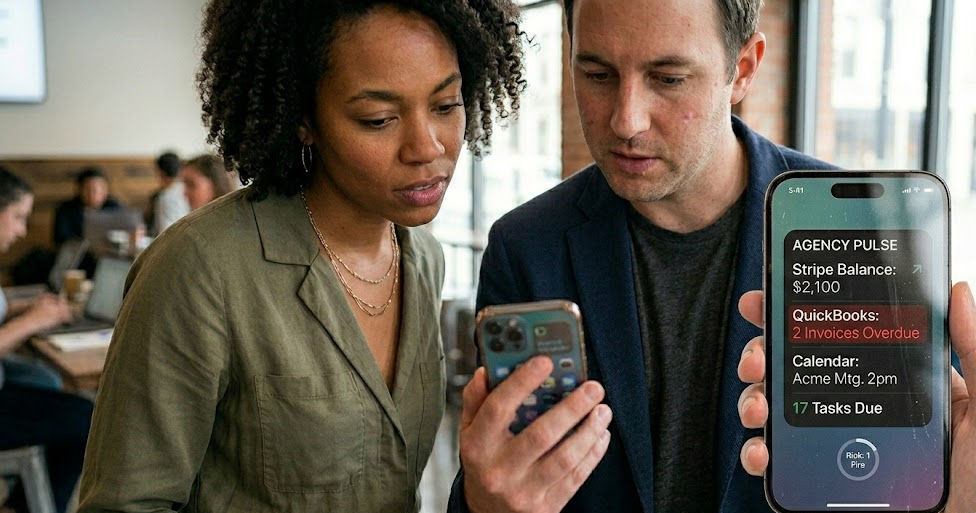
A solo agency owner wakes up and sees: unpaid invoices, today's client calls, yesterday's Stripe deposits, overdue Asana tasks, and one red client-risk warning. A founder sees MRR, churn alerts, GitHub PRs waiting, calendar load, and yesterday's support spike. A recruiter sees interviews today, candidate stages, stale follow-ups, and hiring-manager bottlenecks. A real estate agent sees today's showings, hot leads, listing saves, mortgage-rate movement, and open-house prep.
The product isn't a dashboard app. The product is fewer app opens. That's the wedge.
Why This Is Opening Now
Three things changed at once.
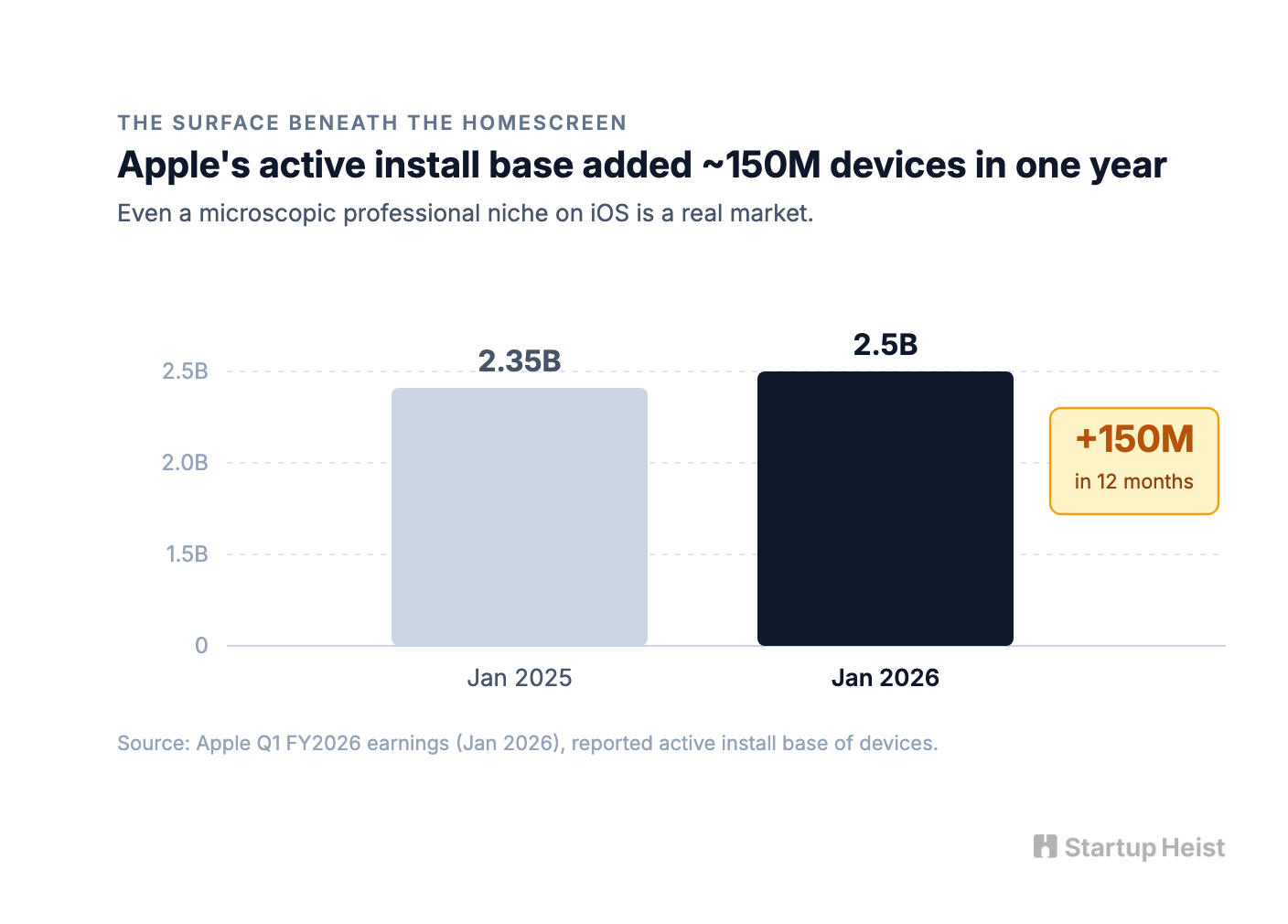
Apple now has more than 2.5 billion active devices, according to its Q1 FY2026 earnings report in January 2026, an install base that grew by roughly 150 million in a single year. Most widget apps will not get huge from that alone. What it does mean is the surface is enormous, and even microscopic professional niches can produce real revenue if the app fixes a daily workflow.
The technical surface improved too. Apple's WidgetKit now supports widget push notifications through APNs, so a server can request a timeline reload when data actually changes. WWDC 2025 went further, adding new interactivity to widgets in session 278. Earlier widgets were often too stale for operational use. A weather card can lag an hour. A Stripe revenue card, a client-risk alert, or a sales follow-up cannot.
Apple's own AI layer has slipped. The company delayed personalized Siri and app-action features into 2026, after promoting them as part of Apple Intelligence. At WWDC 2025, executives publicly acknowledged the more advanced Siri system hadn't met their reliability bar. The big AI companies are racing to own the assistant. Apple is racing to own the operating system. There's a smaller, more shippable layer in between, and almost nobody is building for it: the professional homescreen. Not Apple Intelligence at full strength. Not "replace your phone." When you pick up your phone, the five things you actually need are already there.
Professionals Don't Want Another App
Most productivity software is sold as a destination. Log in. Check the dashboard. Configure the workspace. Visit analytics. Build a view. Save a report. Invite the team. That model works for managers reviewing performance. It doesn't work for operators running a day.
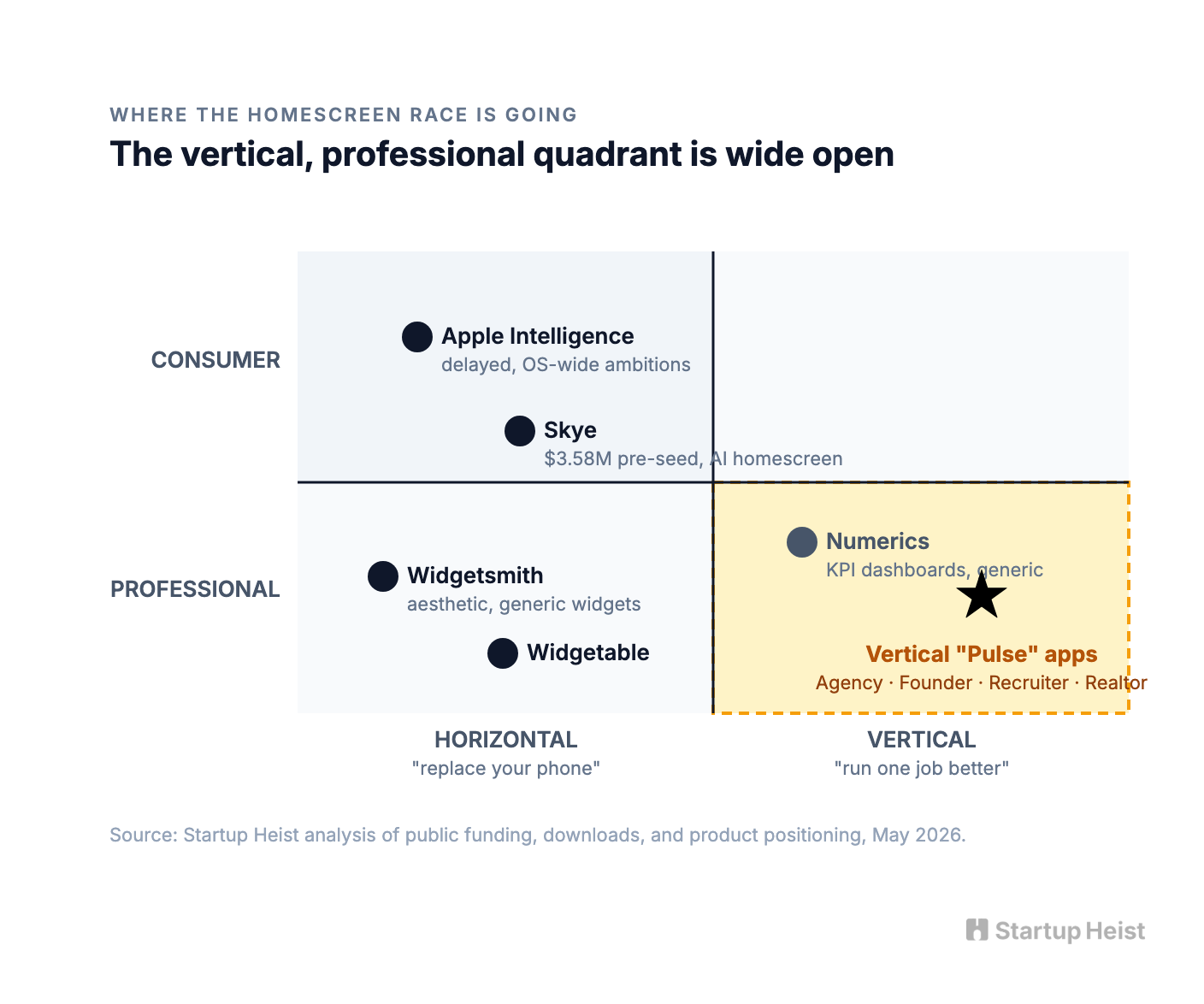
The agency owner doesn't want a better dashboard at 8:30 a.m. They want to know which client is on fire before they walk into school drop-off. The founder doesn't want a weekly metrics review. They want to see whether yesterday's launch created revenue or noise. The recruiter doesn't want another ATS view. They want to know which candidate will go cold if no one follows up today.
The widget layer works because it doesn't ask for attention. It borrows attention that already exists. The phone is in the hand. The product just makes the glance useful. Calling the homescreen "the new App Store" is too horizontal. The real frame is the homescreen as the new status layer for professionals. Status is worth money.
Pick a Niche With Clean Data and Daily Anxiety
Skip doctors. Skip wealth managers. Skip regulated finance. Skip anyone whose data access requires six months of compliance theater. Start where the data is already cloud-based, API-accessible, emotionally important, and checked constantly:

Unlock the Vault.
Join founders who spot opportunities ahead of the crowd. Actionable insights. Zero fluff.
“Intelligent, bold, minus the pretense.”
“Like discovering the cheat codes of the startup world.”
“SH is off-Broadway for founders — weird, sharp, and ahead of the curve.”


