


The AI-Slop-Free Kids Video App
There is a specific moment when a parent stops thinking of YouTube Kids as a convenience and starts thinking of it as a loaded weapon with cartoons on the handle.
For years, the worry was inappropriate content: fake Peppa Pig, sudden violence, off-color jokes slipping past automated filters. Bad, but legible. The internet was messy. Platforms were vast. Moderation was hard.
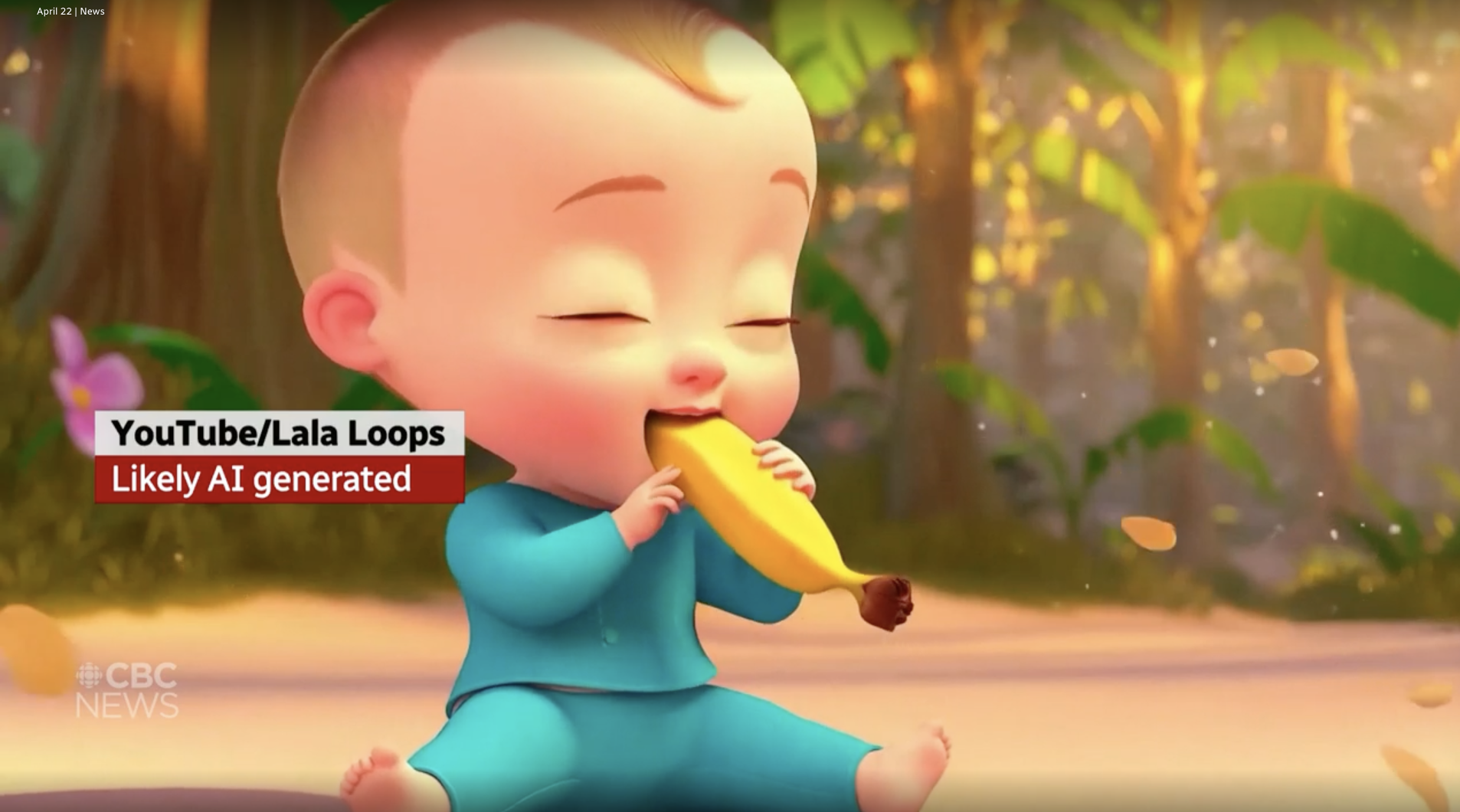
The new problem is different in kind. Generative AI has turned children's video into an industrial spam category. Cheap synthetic animation, singsong narration mass-produced from prompts, stolen character tropes, nonsense plots dressed in fake educational framing, sensory sludge optimized to win an autoplay recommendation. A solo operator no longer needs a studio, a curriculum expert, an animator, or much taste. They need prompts, thumbnails, upload volume, and a recommendation system willing to test the content on toddlers.
A real market opens behind that anxiety.
The wedge isn't "replace YouTube Kids." That fight is too broad, too capital-intensive, and fought on Google's home turf. Build a narrower thing: a parent-approved, AI-slop-free viewing mode for young kids. The opposite of a recommendation engine. A finite, human-curated layer of kids video safety on top of YouTube. Approved channels, approved playlists, session limits, no Shorts, no autoplay rabbit holes, no open search in kid mode. The brand promise reduces to one sentence a tired parent can repeat to themselves:
Your child can watch videos here, but the algorithm is not invited.
This is a credible micro-SaaS. Plausibly a $10K–$50K MRR subscription business if executed tightly, and potentially the trusted "Common Sense Media for kids' internet video" if the curation layer compounds over years.
Why The Window Is Open Now
Parental anxiety has moved from vague to specific.
On April 1, 2026, the children's advocacy group Fairplay published an open letter to YouTube CEO Neal Mohan and Google CEO Sundar Pichai. The letter was signed by 135 organizations and more than 100 individual experts, including the American Federation of Teachers, the American Counseling Association, MIT's Sherry Turkle, pediatric surgeon Dr. Dana Suskind, and The Anxious Generation author Jonathan Haidt. The asks are sharp: label every AI-generated video, ban AI-generated content from YouTube Kids, prohibit AI "made for kids" content on the main app, bar the algorithm from recommending AI content to anyone under 18, ship a parental toggle that disables AI content by default, and halt all investment in AI-generated content aimed at children.
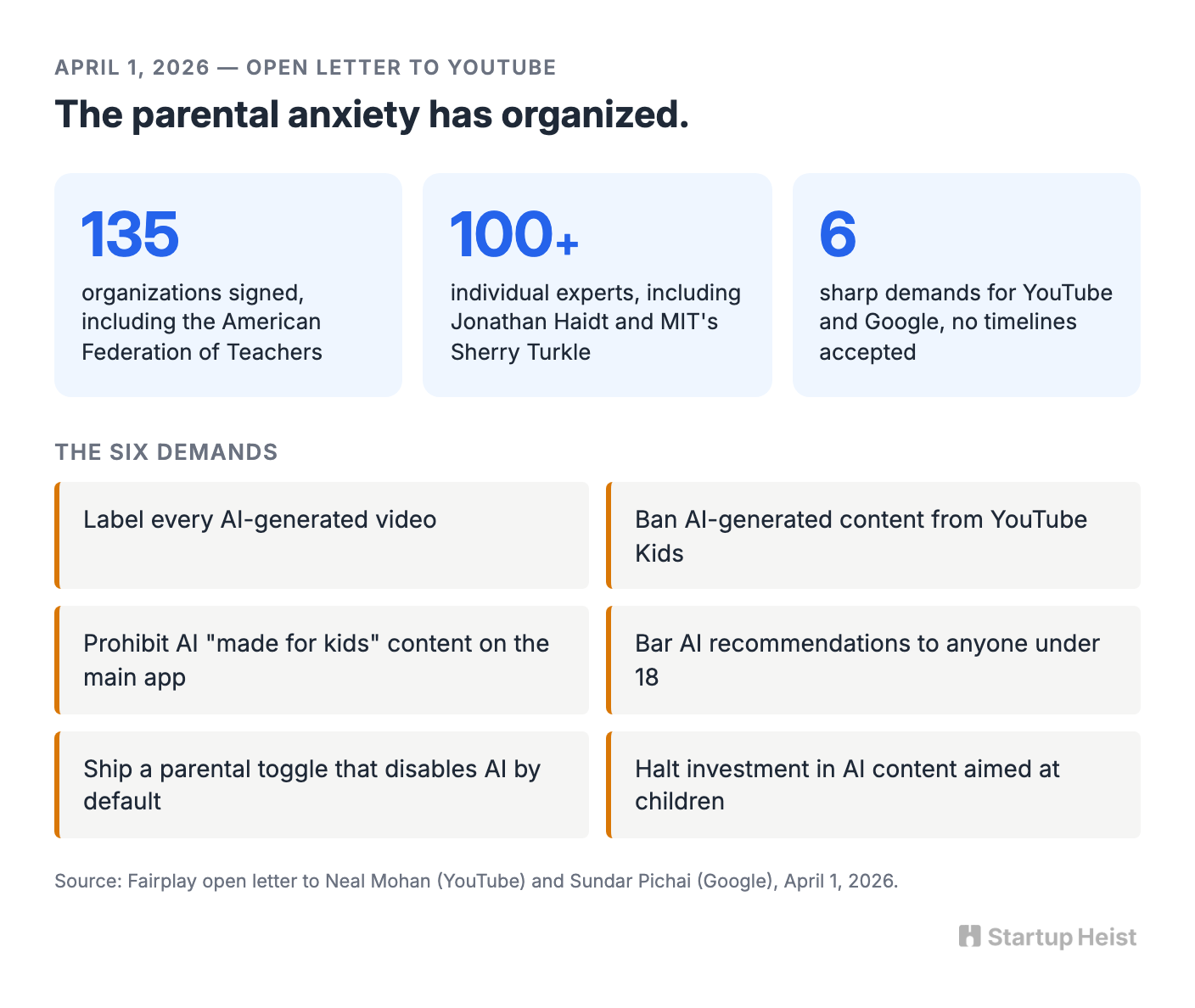
This is not a niche Reddit complaint. It is mainstream legitimacy.
YouTube's response acknowledges the concern without resolving it. The company says it has high standards for YouTube Kids, limits AI-generated content in the app to a small set of high-quality channels, gives parents blocking tools, and is developing AI labels specifically for YouTube Kids. It hasn't committed to a timeline. The market lives in that gap. Parents don't need to believe YouTube is evil. They only need to believe YouTube is conflicted, and it is. The platform's business model wants more viewing. Parents want less uncertainty. A parent with a fussy four-year-old doesn't want to become a part-time trust-and-safety analyst. They want a YouTube parental controls layer that simply doesn't drift.
"AI slop" is a powerful frame because it names the enemy. It converts diffuse parental guilt into a concrete product category. The issue is no longer "you let your child watch videos." The issue is "the feed is being polluted by synthetic, hyperstimulating content engineered to exploit attention." A real villain produces a real product.
The Platform Constraint
This business depends on YouTube. The risk can't be hand-waved.
YouTube's API Services terms and Required Minimum Functionality rules govern how third-party apps use YouTube data and embedded playback. A product like this has to respect embedded player requirements, attribution, playback behavior, API quotas, child-directed rules, and developer policies. You aren't building a sovereign video platform. You're building a controlled front end over allowed YouTube embeds and metadata.

Frame the product accordingly. Skip "a better YouTube Kids." Say instead: "a parent workflow that makes approved-only YouTube easier, calmer, and more trusted." The MVP can't imply YouTube endorses it, can't strip required player functionality, can't collect unnecessary child data, and can't position itself as a workaround. The safest version may begin as a parent-controlled web app rather than a mobile app. A web MVP validates demand, curation, pricing, and parent trust before colliding with App Store review, mobile child-privacy law, and YouTube playback quirks across devices. The technical product is doable. The platform positioning has to be careful from day one.
The Customer
The buyer isn't "all parents." It's a millennial or older Gen Z parent of a child aged two to seven, already uneasy about YouTube but still using it because it works.
Skip the anti-screen absolutist; that parent wants no videos at all. Skip the indifferent parent, too; they'll keep using the free default until something breaks. The buyer is the guilty pragmatist. They need twenty minutes to cook dinner. They want Ms. Rachel, Bluey clips, Sesame Street, animal videos, simple songs, drawing tutorials, calm educational content. They don't want the next autoplay to be a synthetic nightmare cow teaching colors in a fever dream.
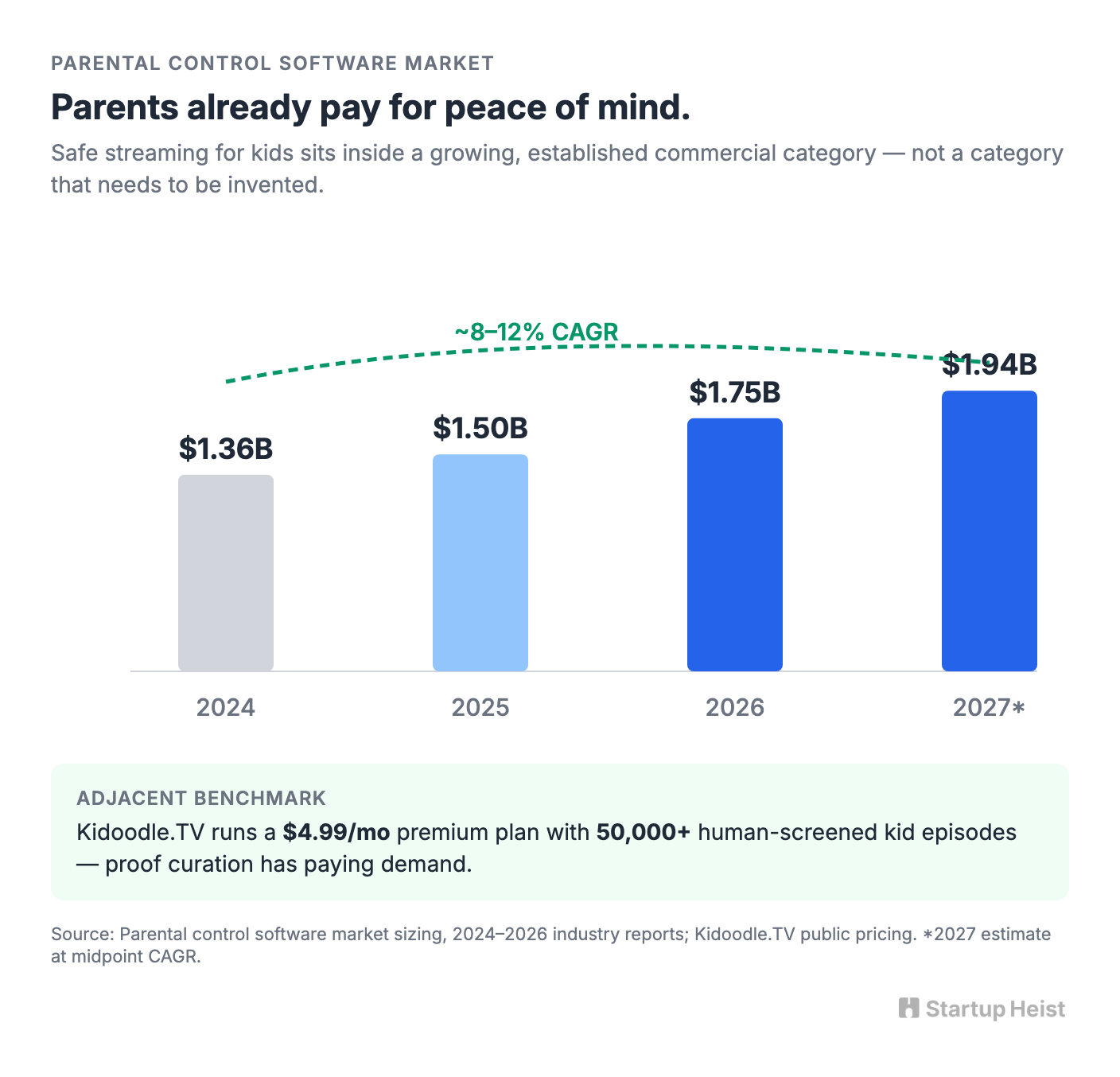
This customer already pays for peace of mind: baby monitors, child locks, car seat upgrades, parental control apps, sleep training courses, kids' tablets, family subscription bundles, and educational apps. The parental control software market was valued at roughly $1.5 billion in 2025 and is projected to reach about $1.7–1.8 billion in 2026, growing 8–12% annually. Safe streaming for children is an established commercial category. Kidoodle.TV says every show on its service has been watched and screened by a real human, runs a $4.99/month premium plan, claims 50,000+ kid-safe episodes, and is kidSAFE certified. Human-curated kids videos already have a paying audience. The question is whether this product is meaningfully easier than free options. The wedge lives there.
The Competitive Landscape
YouTube Kids is the giant incumbent. It already ships parental controls, age settings, search controls, blocking, and approved-only workflows. By the company's own description, the app provides a more contained environment and helps parents guide what their kids see.
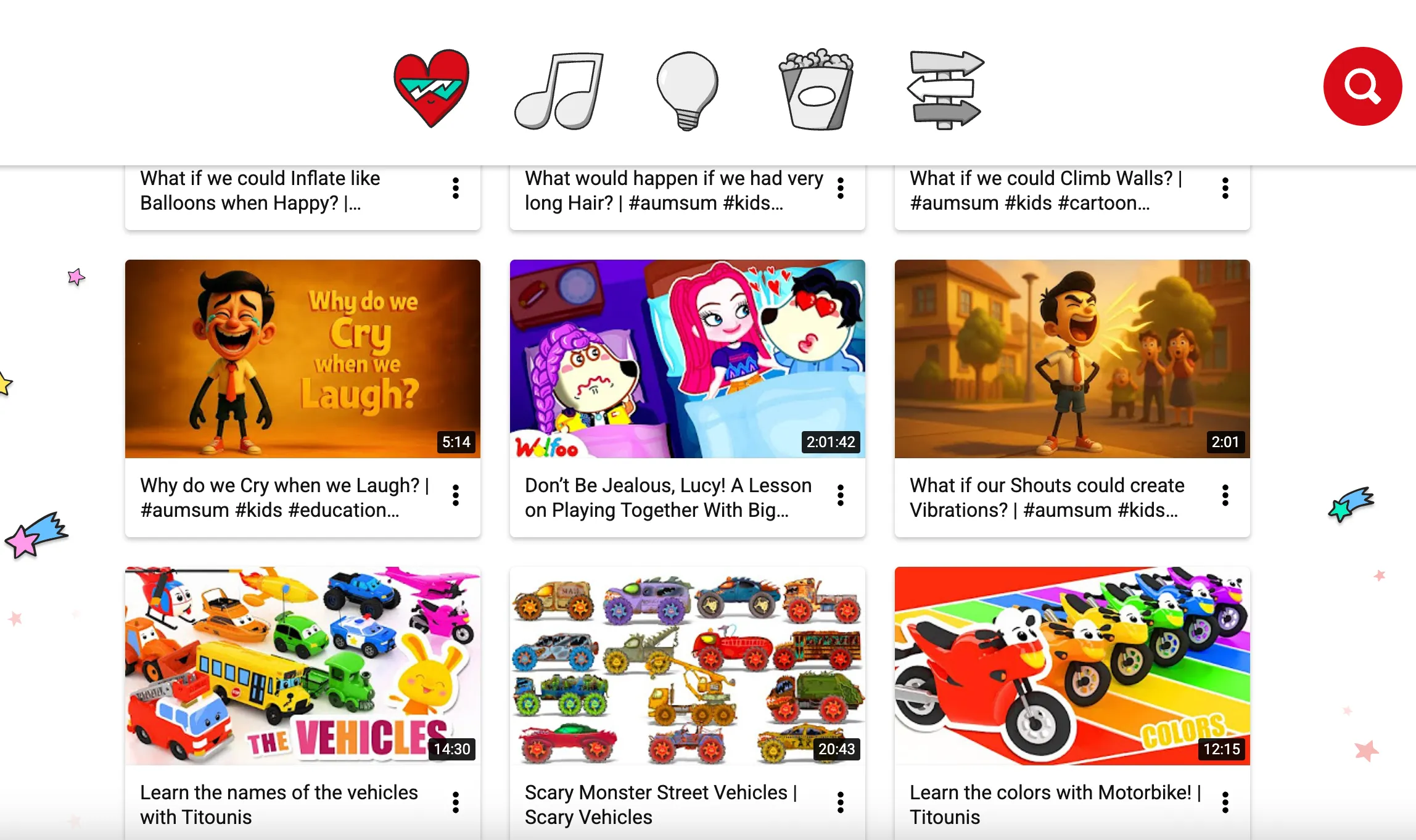
That should be the end of the opportunity. It isn't. The trust gap is now emotional rather than functional. Parents don't evaluate these tools by reading the settings menu. They evaluate them by asking: "Do I feel safe handing this to my child?" If the answer is no, good settings are invisible infrastructure.
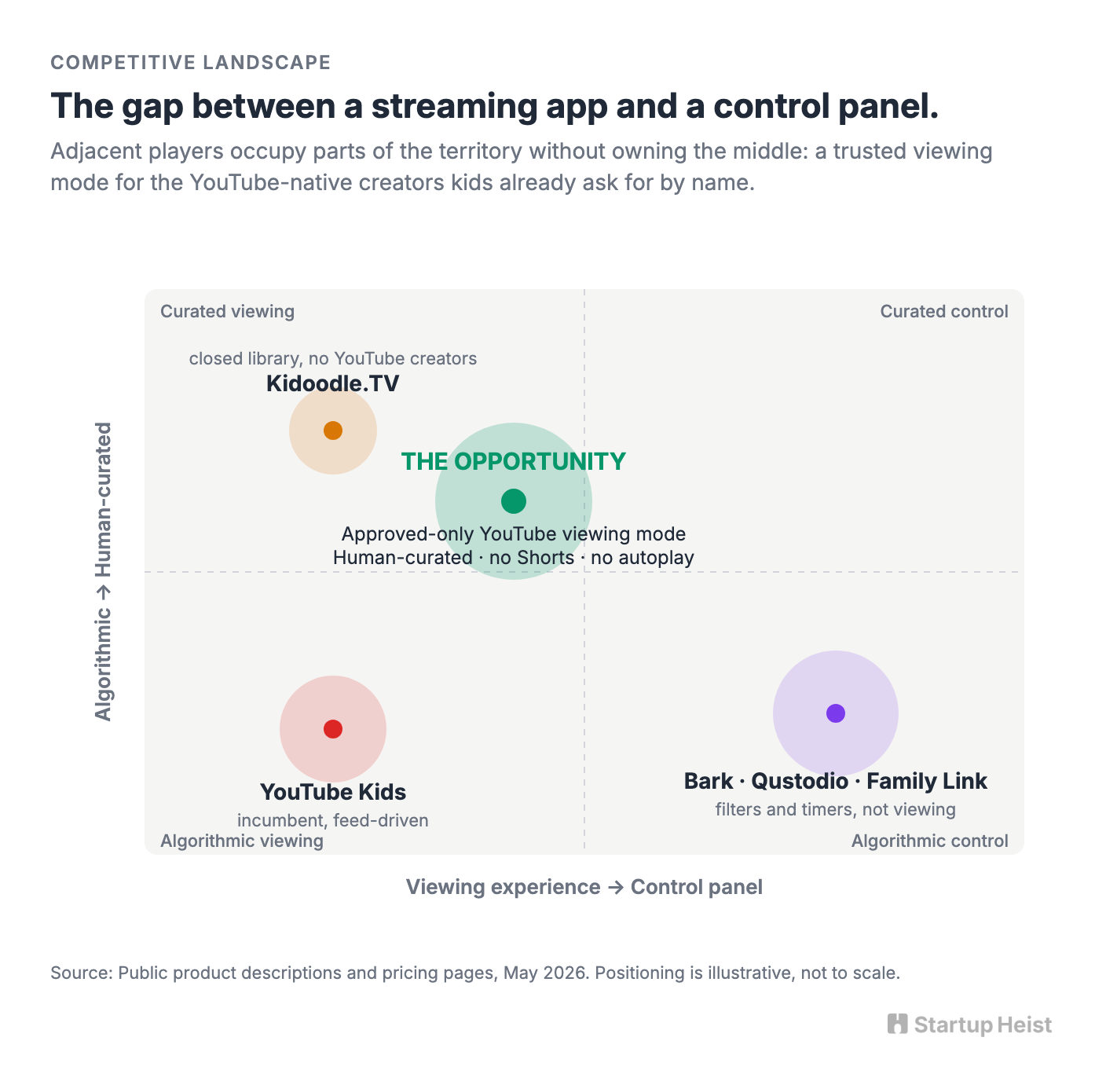
Adjacent players occupy parts of the territory without owning it. Kidoodle.TV is a legitimate YouTube Kids alternative with a large catalog and human-screened positioning, though its closed library often lacks the internet-native YouTube creators a child is already asking for by name. General parental control tools like Canopy, Bark, Qustodio, and Google Family Link cover filtering, screen time tools, device limits, and web safety. They are control panels rather than viewing experiences. They block. They don't solve the "good video, bad recommendation graph" problem elegantly. The opportunity sits between these categories. Neither a streaming service nor a device-control suite. A trusted viewing mode for YouTube-native children's content. Narrow enough to build. Valuable enough to sell.
The Real Moat
The moat isn't the app. A decent developer can build version one in weeks. React Native or Flutter. Firebase or Supabase. YouTube Data API. Embedded player. Admin dashboard. Stripe.
The moat is trust operations. A clear review standard. A growing approved library. Transparent rejection criteria. Parent-request workflows. Expert advisory input. Age-specific collections. Fast response when a creator changes direction. A brand voice parents believe.
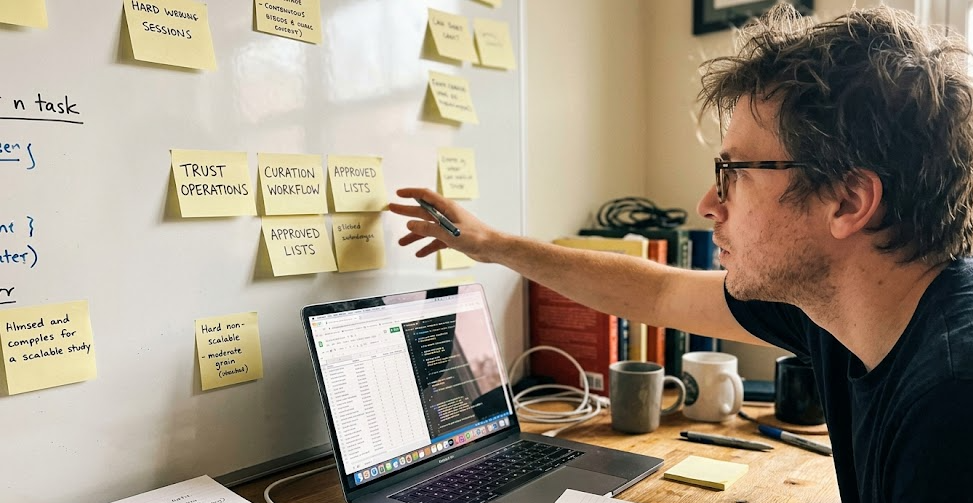
A curated allowlist isn't a deep technical moat, but it becomes a brand moat if the company compounds three assets. First, the database. Every reviewed channel is structured knowledge: age range, content type, pacing, educational value, language, visual intensity, AI indicators, commercial intensity, upload consistency, character safety, parent notes, review date. Second, the workflow. Parents request channels. The company reviews them. Over time the product learns what parents actually ask for, what children repeatedly watch, and where the risky edge cases live. Third, the trust brand. When parents start to think "I don't know if this channel is okay, check it in the app," the company owns something more durable than a wrapper. The long-term version isn't a player. It's a children's video trust database. Start with the panic. Build the trust layer underneath it.
Who pays: Millennial and older Gen Z parents of kids aged 2–7. Guilty pragmatists who need 20 minutes to cook dinner but no longer trust the feed.
Wedge: A finite, human-approved library. No Shorts, no recommendations, no open search in kid mode. Brand promise in one sentence: the algorithm is not invited.
Pricing: $8/month or $72/year. $49/year founding plan for the first 1,000 families.
Targets: 1,000 paying families = $8K MRR. 10,000 paying families = $80K MRR. Strong indie business if churn stays controlled.
Moat: Trust operations, not code. A reviewed-channel database, a parent-request workflow, and a brand parents repeat to each other.
The Product
The MVP should be aggressively simple. Call it KidList, QuietTube, Playroom, TinyScreen, GoodCartoons. The name matters less than the promise.
The product is a child-safe video player built around human-approved sources. Parents create a child profile, choose an age range, and the app exposes only approved channels, playlists, and videos. The child never sees YouTube search, YouTube recommendations, YouTube Shorts, comments, suggested videos, or autoplay chains. The parent sees a control layer. The child sees a calm video library.
Version one ships with ten things and stops:
Unlock the Vault.
Join founders who spot opportunities ahead of the crowd. Actionable insights. Zero fluff.
“Intelligent, bold, minus the pretense.”
“Like discovering the cheat codes of the startup world.”
“SH is off-Broadway for founders — weird, sharp, and ahead of the curve.”


