


Sponsored AI Fan Videos: The Local Sports Activation Hiding Inside a Viral Meme
Every few years, a consumer gimmick accidentally reveals a business market.
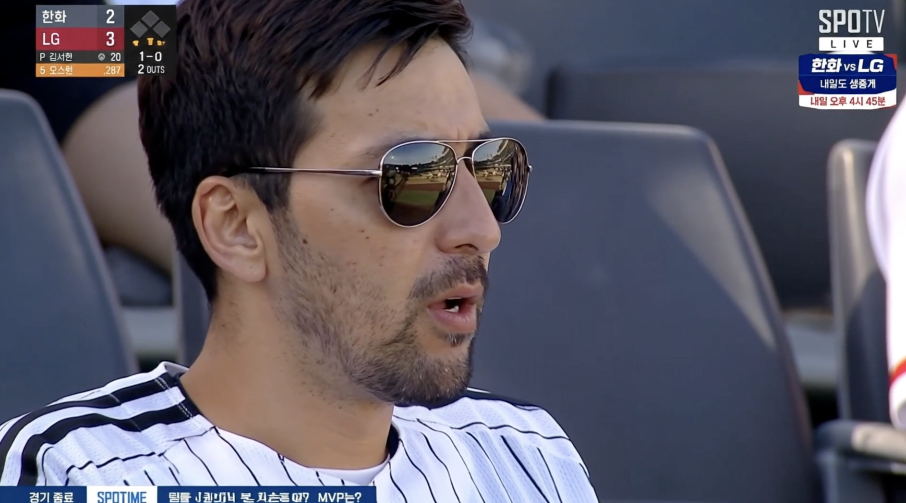
The gimmick right now is the AI fan video. A user uploads a portrait. A video model turns them into a hyper-realistic spectator in a sports broadcast shot: cheering, waving, moving with the crowd, caught by an imaginary camera operator at exactly the right cinematic moment.
It's silly. It's shareable. It's emotionally obvious. And that emotional legibility is what makes it a business signal rather than a meme.
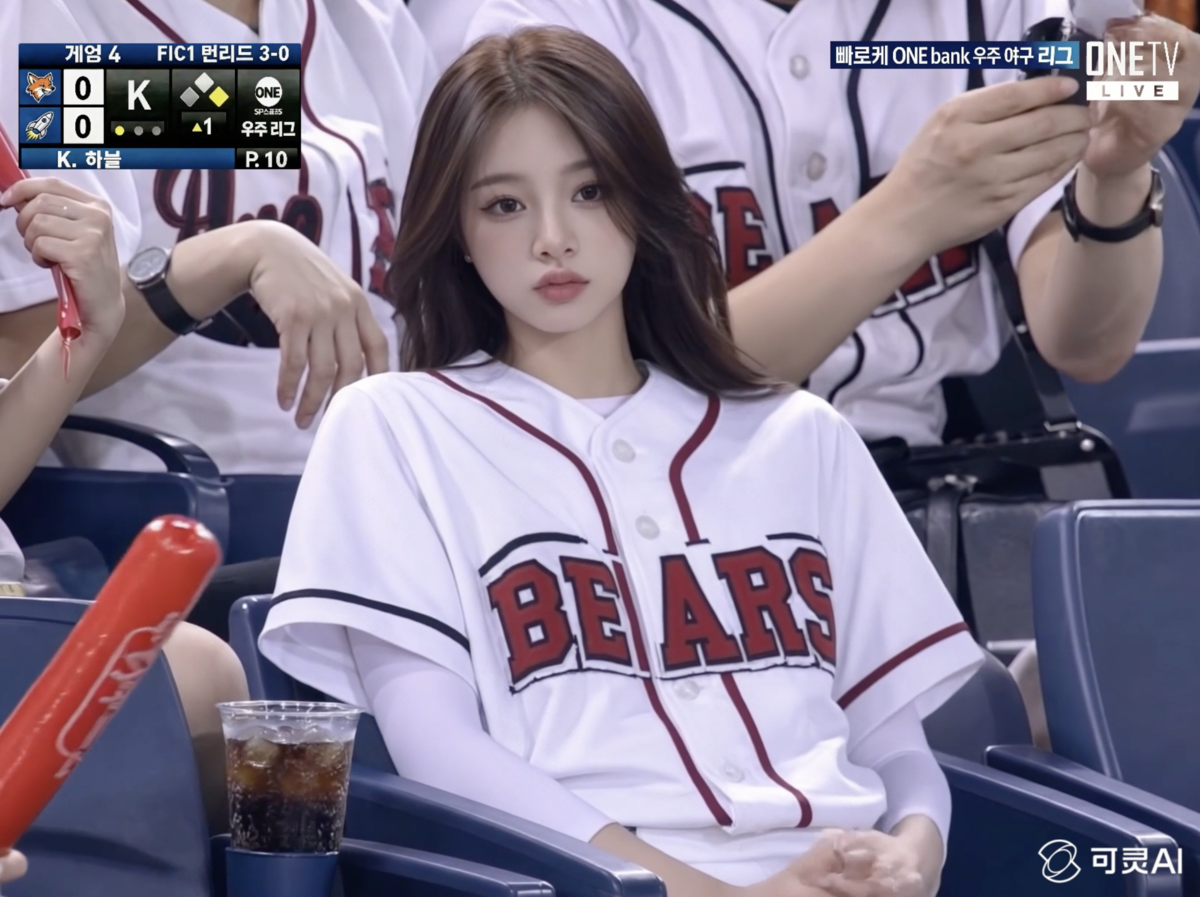
On May 14, 2026, Kling AI announced it had hit the No. 1 spot on App Store overall rankings in 42 countries, including Germany, Brazil, Thailand, the Philippines, Saudi Arabia, and the UAE. The driver was the Korean Baseball Trend, powered by the Kling 3.0 model series, which lets users insert themselves into Korean broadcast-style fan shots with strong character consistency and motion stability.
The format worked because it didn't ask users to understand AI. It gave them a fantasy they already understood: what would it look like to be in the crowd, on camera, inside the moment?
The startup opportunity isn't to clone the meme. It's to turn the behavior into a sponsored local sports activation.
Here's the opportunity:
The money: 20 campaigns/month at $1,500 with 55–65% margin clears $15–20K MRR solo. Agency white-label scales to six figures. 250+ brands already activating AI in live sports.
Inside:
• 4–8 week MVP scope and moderation flow
• Three pricing models: campaign, SaaS, agency
• Sponsor-first outreach template that converts
• Four moats once the model goes commodity
Minor league teams, college athletic departments, sports marketing agencies, and local sponsors already spend money trying to create moments fans will share. Most local sponsorship inventory is still boring: signs, logos, email blasts, PA reads, tabling, coupon codes, halftime contests. Useful, but rarely viral.
A sponsored AI fan video platform gives local sports marketers a new unit of inventory. Fans scan a QR code, upload a selfie, pick a team-themed template, and receive a short cinematic video of themselves cheering from the stands, entering the stadium, reacting to a walk-off, or appearing on a fictional broadcast cam. The clip carries team branding, sponsor placement, and trackable sharing links.
The team gets fan engagement and lead capture. The sponsor gets branded content people actually want to post. The fan gets a small, personalized piece of sports theater.
Don't try to build a "local stadium AI engine." That version is too broad, too expensive, too dependent on model quality, and too easy to slide into novelty. Build the sponsored AI fan video activation platform for local sports marketers.
The Market Is Already Buying the Ingredients
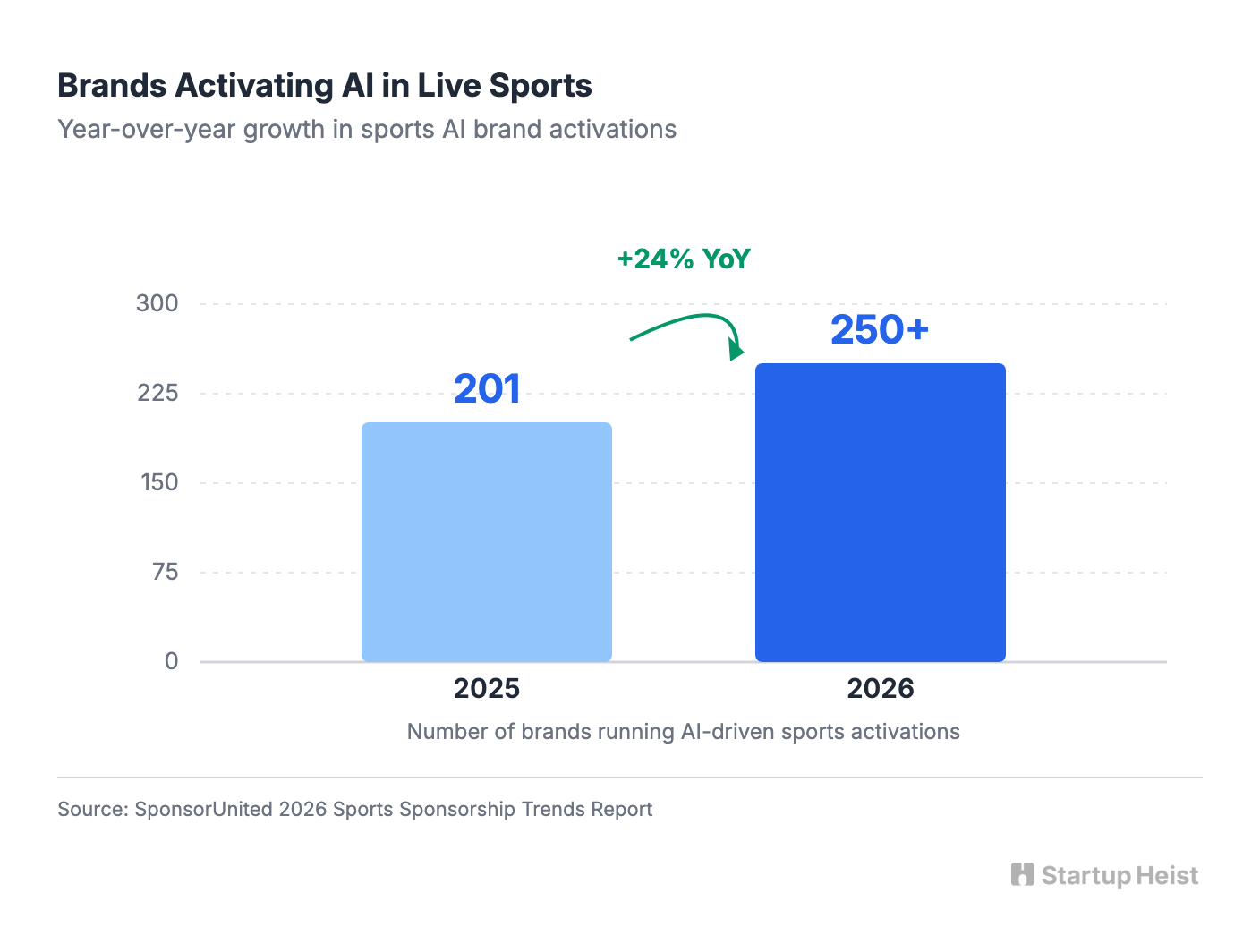
The B2B activation version of this idea works because the buyer already has a reason to spend. SponsorUnited's 2026 sports sponsorship trends report describes AR and AI as core activation layers, with more than 250 brands activating AI-driven experiences across live sports and entertainment in 2026, up from 201 the year before. PwC's 2026 sports fan engagement analysis frames personalization, interactive sponsorship activations, and exclusive digital experiences as the new revenue layer around fandom. In March 2026, Adobe expanded its MLB partnership to deploy Firefly's generative AI for fan-created content: personalized social graphics, AI-generated branded fan posts, team-styled creative. The league market is already buying AI sports activation; the gap remains at MiLB and college.
A consumer AI fan-cam app has obvious problems. The viral template may fade. CapCut, Pixverse, and CyberLink's MyEdit are already shipping one-click Korean Baseball Trend templates today. Consumers churn fast. Paid conversion is weak. The meme belongs to the internet, not to a small founder.
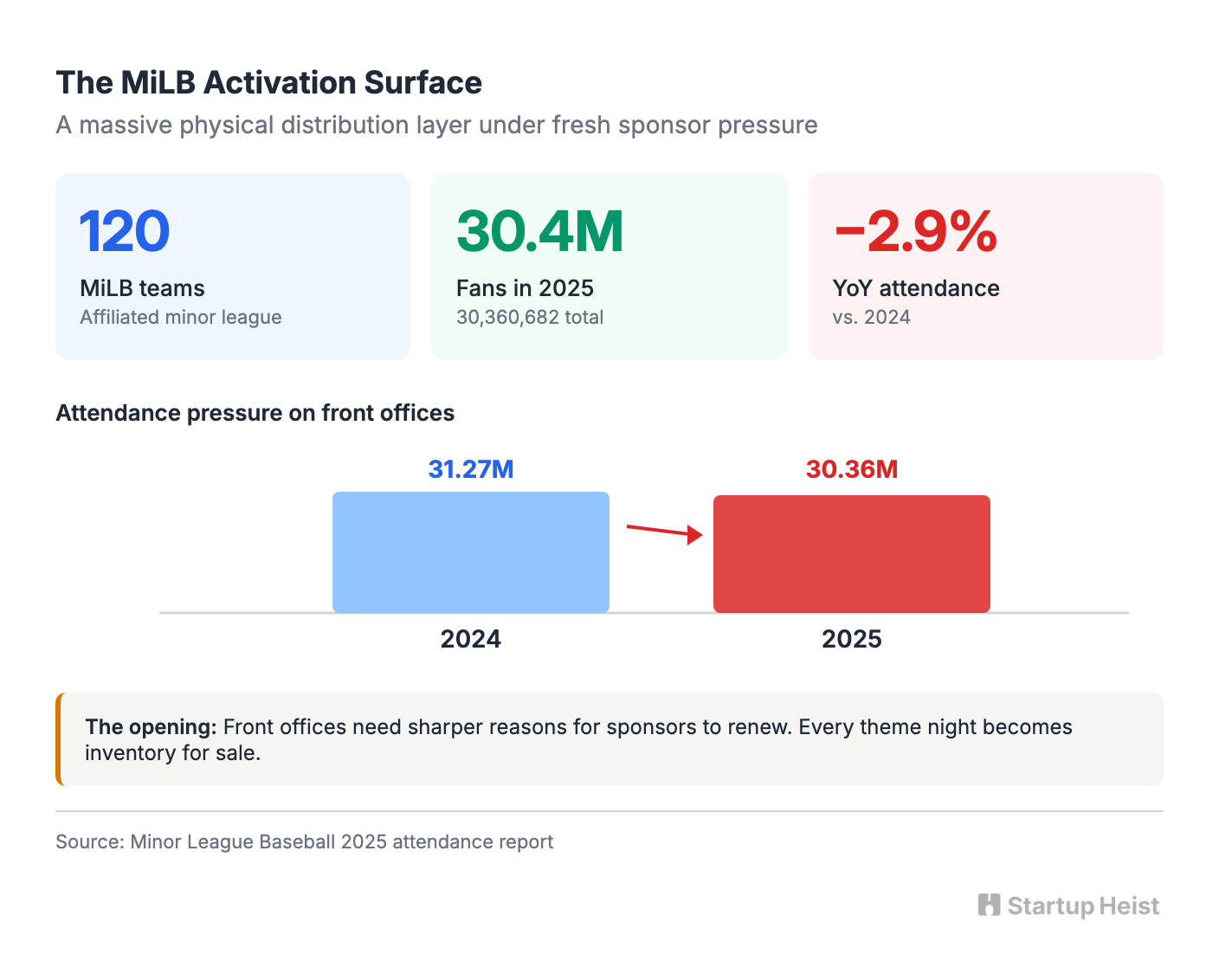
Minor League Baseball is the cleanest first lane. MiLB's 120 teams drew 30,360,682 fans in 2025, down 2.9% from 2024, which means front offices are under fresh pressure to make every promotion count and to give sponsors a sharper reason to renew. It isn't NFL-scale money. It's something better for a founder: a massive physical distribution surface of family nights, theme nights, giveaways, regional banks, car dealers, hospitals, colleges, insurance agencies, restaurants, and brands trying to associate themselves with community sports. Minor league baseball is promotion-heavy by design: fireworks nights, Star Wars nights, bark-in-the-park nights, bobblehead nights, kids' club nights. A personalized AI fan video drops straight into that calendar.
College athletics is the natural second lane, but bigger emotional intensity comes bundled with NIL rules, school branding standards, athlete likeness restrictions, conference approvals, and procurement processes. Prove the model with minor league teams, small colleges, and sports activation agencies first. High school sports should wait. Too many minors, too many privacy issues, too much sensitivity for a product built around face uploads and synthetic media.
The Product Is the Campaign Unit, Not the Clip
The easy trap is to think the product is "generate a cool clip." That isn't what the buyer buys. The buyer buys a campaign they can sell, launch, measure, and explain to a sponsor.
A local team doesn't want a prompt box. A sponsor doesn't want a video model. A marketing director doesn't want to debug generation failures on game night. They want something like:
"Presented by First County Bank: Put Yourself on the Fan Cam."
Fans scan a QR code at the stadium or from the team's social feed. They upload a selfie. They choose from three team-approved moments: walk-off celebration, broadcast crowd shot, rivalry night entrance. The video arrives by SMS or email with a branded frame, team colors, a sponsor board in the generated background, and a call-to-action: claim an offer, enter a sweepstakes, join the fan club, buy tickets, share with a hashtag.
That is the product. The AI is just the production layer. The distinction changes pricing, roadmap, sales copy, compliance, reporting, and defensibility. A pure AI generator competes with Kling, Runway, and every consumer app. A campaign activation platform competes with sponsorship agencies, fan engagement vendors, photo booths, and local promotion tools, which is a much more forgiving market.
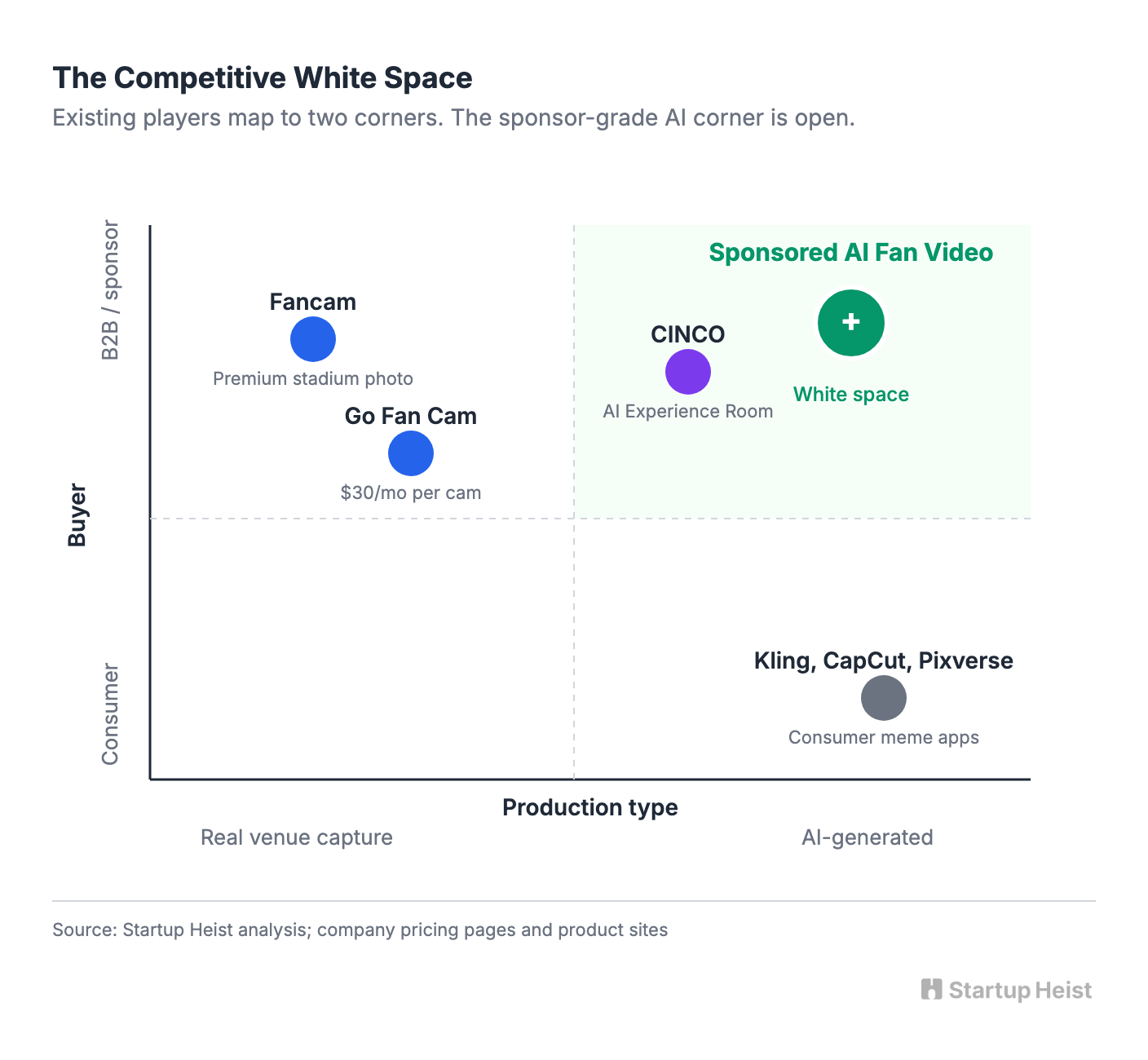
Teams already buy fan-cam software. Go Fan Cam sells QR-based fan-cam software for stadium big screens at $30 per month per cam, with moderation, sponsor assets, broadcast software integration, and a post-match stats PDF. Fancam runs a more premium stadium-photo model, capturing entire crowds and turning shared images into branded reach, lead generation, and sponsor visibility. Those companies validate the category and expose the gap: traditional fan-cam products capture real people in real venues, while the sponsored fan cam built on AI creates a personalized fantasy moment that can run before, during, or after the game with no stadium camera, broadcast crew, or real-time screen integration. Cheaper to run, easier to repeat.
The Best First Product Is Narrower Than You Think
Resist the temptation to build a generalized "AI sports video generator." Build a campaign machine with five constraints:
Unlock the Vault.
Join founders who spot opportunities ahead of the crowd. Actionable insights. Zero fluff.
“Intelligent, bold, minus the pretense.”
“Like discovering the cheat codes of the startup world.”
“SH is off-Broadway for founders — weird, sharp, and ahead of the curve.”


