


France spent the 1930s building the most expensive wall in history. The Maginot Line ran along the German border, a chain of underground forts with rail lines, air conditioning, and artillery that could shred anything coming at it head-on. The thing was genuinely impregnable. Soldiers lived down there like it was a submarine.
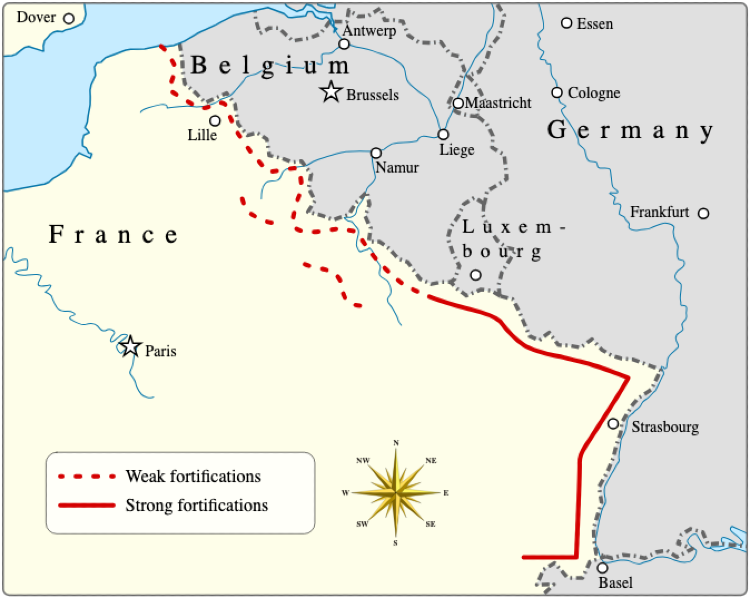
Then May 1940 arrived, and the Germans just didn't come at it head-on. They drove their tanks through the Ardennes, a forest to the north the French generals had written off as too dense for armor. Straight around the wall. Paris fell in six weeks, and the Maginot Line barely fired a shot. It held perfectly, defending a border nobody bothered to attack.
That's the trap with a fortress. You pour everything into stopping the last war, and a smarter enemy strolls around the part you forgot to guard.
Schools are building that exact wall right now. Generative AI broke the take-home essay, so Turnitin scanned over 200 million papers hunting for AI writing while the cheating rate barely budged. The whole edtech market rushed to build a taller wall at the border. Students get around it by lunch.

The real opening sits one step upstream, in assessment design. Call it AssignmentForge: an instructor pastes in a vulnerable assignment and gets back a redesigned package. Process scaffolds, oral-defense prompts, source-trail rubrics, AI-use policy language. Work the student actually has to show up and do.
You don't need any proprietary AI to build it. 700 instructors at $149/year is roughly $9K MRR solo, and a handful of $12K–$35K institutional contracts push it past $20K. The moat isn't the model anyone can call. It's owning the assessment-pattern library nobody else is bothering to build.
Read the full playbook here:
AI detection is the wrong fight. Turnitin scanned 200M papers and the cheating rate didn't move. The durable business is one layer upstream: helping instructors redesign assignments before AI can hollow them out.
From the Vault:
Japan's sticker boom and the digicam revival aren't separate trends — they're one consumer mood nobody has packaged into a brand yet.
Pet spending hit $158B in 2025, yet 52% of owners skip recommended care. No one decodes the estimate at the moment of panic — that silence is the business.


