


The Heisei Nostalgia Store
The internet keeps rediscovering childhood, but it never does it neatly.
One month it is Tamagotchi. The next it is Canon PowerShot cameras. Then puffy Japanese stickers, then iPod Nanos, then flip phones, then "digital camera night out" TikToks, then tiny keychain toys clipped to a designer bag. Each wave looks like its own fad, and most founders treat them that way and move on.
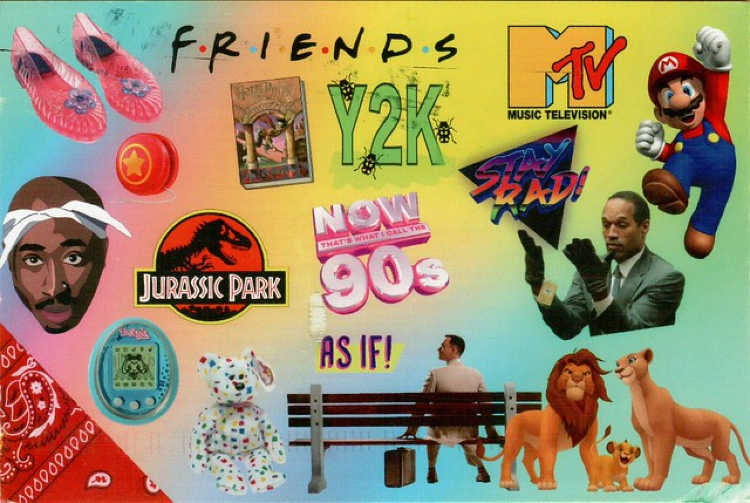
They are misreading it. A single consumer mood is forming underneath all of it: pre-smartphone nostalgia. Not vintage in the dusty antique-store sense, and not retro gaming for hardcore collectors. This is 2000s mall culture, Japanese stationery, low-megapixel photos, charm straps, plastic colors, and the emotional memory of objects that did one thing badly but charmingly.
Here is the opportunity.
The money: 1,000 subscribers at $29/month is roughly $29K in revenue and $10-12K in monthly contribution margin. STICKII Club has proven the format for years.
Inside:
• Six-week MVP from sourcing to founding drop
• Four-tier product and pricing architecture
• TikTok-native, five-pillar GTM playbook
• Five moats that keep cheap clones out
The play is a direct-to-consumer nostalgia store built around that mood. Not a random retro catalog, and not an eBay shop with better photos. A focused Heisei/Y2K brand with one recurring product at the center, a $29 monthly sticker subscription box, supported by limited drops of refurbished digicams and single-purpose retro devices. Stickers are the wedge, TikTok is the growth engine, the drops expand the margin, and taste is the moat.
The Signal
Japan tends to be early to these small-object waves, and it is early again.
Osaka stationery maker Q-Lia launched a product called Bonbon Drop in March 2024, plump three-dimensional stickers in a hard case, vivid and tactile. By late 2025 they had set off a national sticker craze, selling roughly 13 million sheets by November 2025 as retailers struggled to keep them in stock. The Japan Times covered the boom that December. Adults are driving it, not just kids. Women who traded stickers as schoolgirls 25 years ago are collecting again, often alongside their own daughters. That detail is the whole thesis in miniature. This is not "kids like stickers." This is adults buying tactile, collectible, expressive objects on purpose.
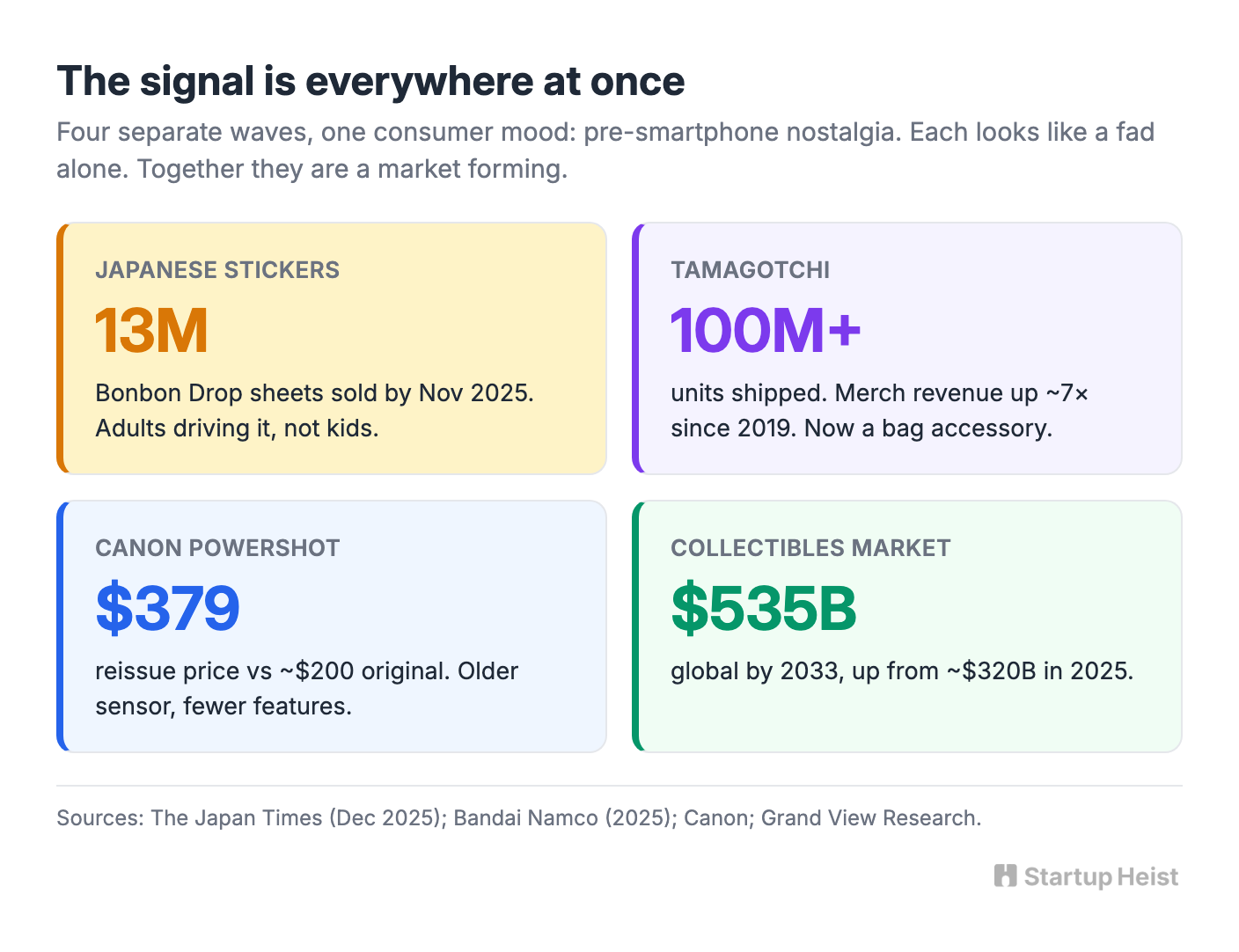
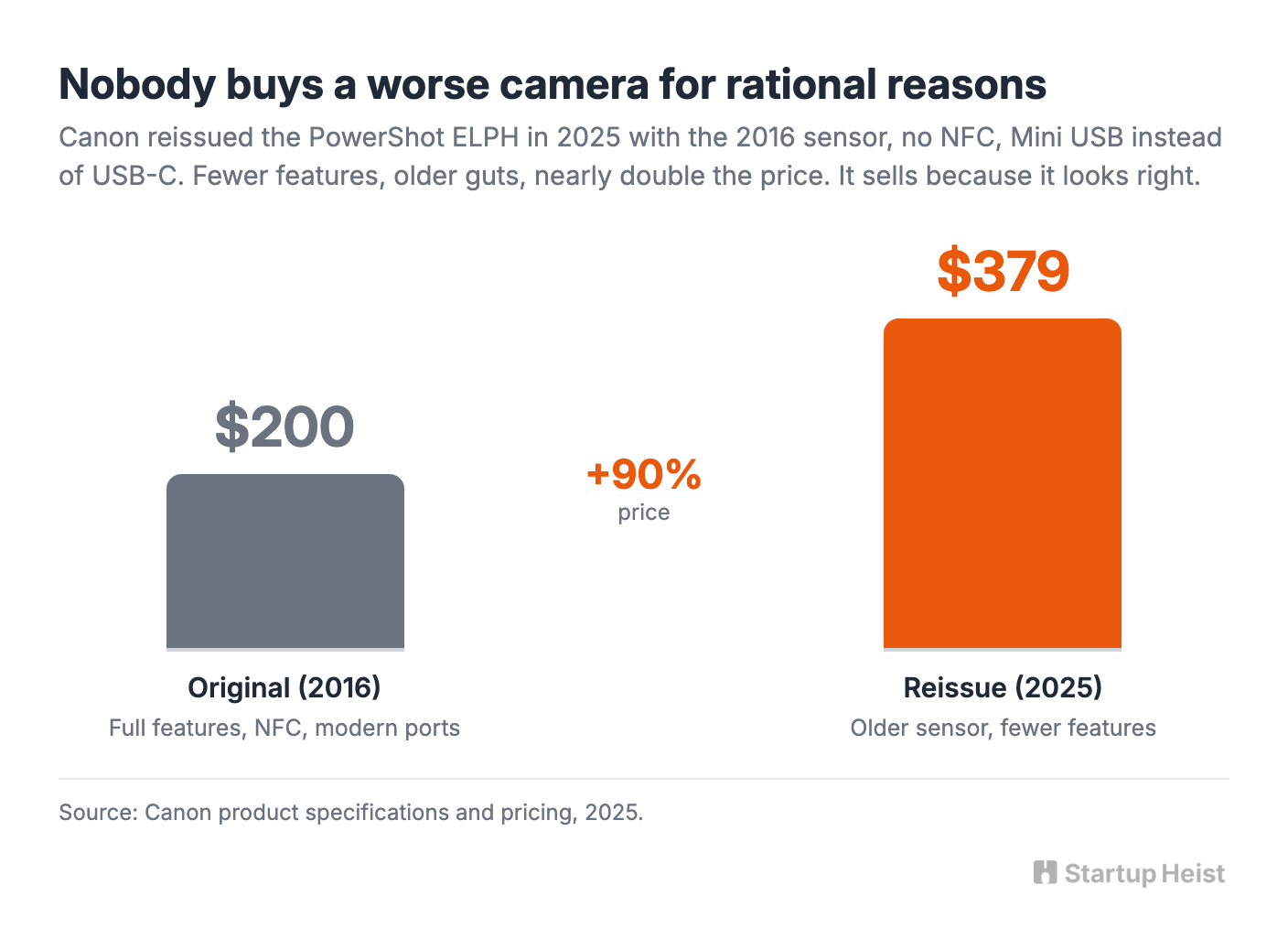
The same loop runs through retro tech, and the clearest proof is almost comic. Canon's PowerShot ELPH 360 HS went viral after Kendall Jenner and Dua Lipa were seen shooting on old compacts, so Canon reissued it in 2025. The new version kept the 2016 sensor, dropped NFC, stuck with a Mini USB port instead of USB-C, and switched to microSD. Fewer features, older guts. The original launched at around $200. The reissue sells for $379. Nobody buys a worse camera at nearly double the price for rational reasons. They buy it because it looks right. Tamagotchi tells the same story at scale: Bandai Namco confirmed in 2025 that the toy has shipped more than 100 million units worldwide, with merchandise sales up roughly sevenfold in five years from 2019. It is a fashion accessory clipped to bags now, not a children's toy.
This is the heart of it. Gen Z and younger millennials are not buying these objects because they outperform a smartphone. They are buying them because the smartphone is too smooth, too infinite, too algorithmic. A point-and-shoot takes worse photos than an iPhone, and that is exactly the appeal. The customer is not buying utility. They are buying a controlled little portal back to a simpler consumer internet, and right now nobody has packaged that portal into a brand worth subscribing to.
The Play
Build a Heisei/Y2K nostalgia store as a DTC brand, with a monthly sticker subscription as the spine.
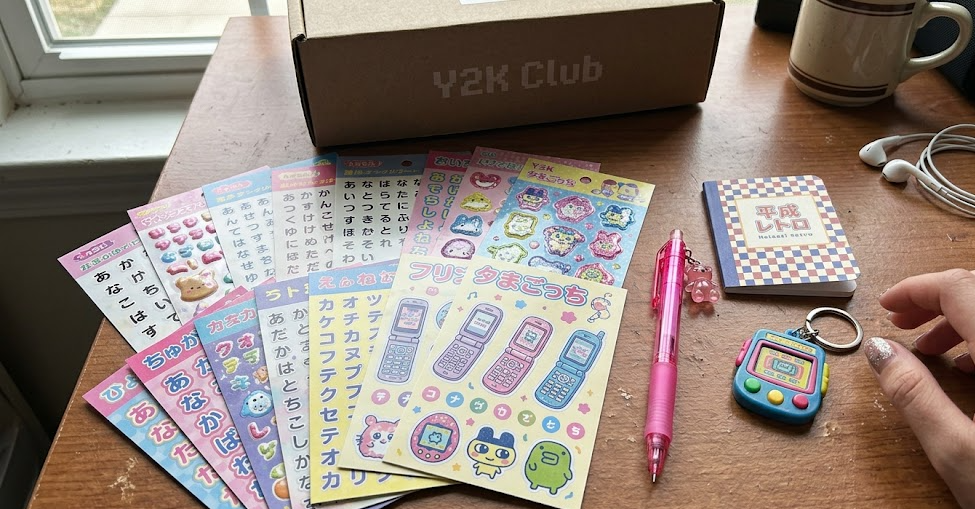
The core product, at $29/month, ships 8-12 themed sticker sheets, 2-3 small stationery or charm items, one collectible insert card, the occasional artist collaboration, and rotating themes: Heisei Retro, Y2K Mall, Flip Phone Summer, Harajuku Desk, Digital Camera Night, 2006 Sleepover, Arcade Keychain.
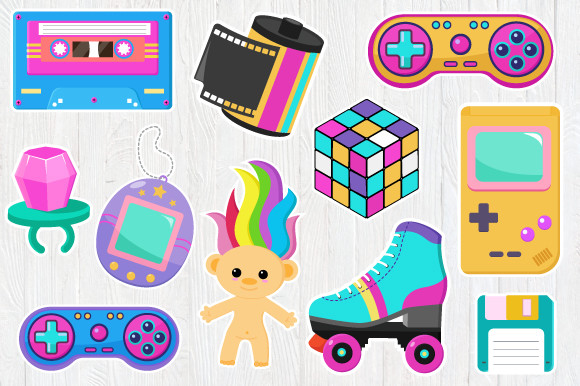
Then layer on limited drops. Refurbished digicams, including Canon PowerShot, Nikon Coolpix, Sony Cyber-shot, and Panasonic Lumix, at $89-249 depending on model and condition, each bundled with an SD card, battery, wrist strap, and starter guide. Single-purpose retro devices like Tamagotchi, iPod Nano and Shuffle, simple MP3 players, calculator watches, and flip phones sold as props or "digital detox" objects, at $39-199.
The mistake is trying to become the Amazon of nostalgia. The sharper version is a monthly collectible club with a storefront attached. The subscription gives you predictable revenue, repeat behavior, and a reason to keep making content. The drops create spikes, social proof, and scarcity. The stickers are the engine, and the devices are the theater.
Why Stickers Are the Wedge
Sticker subscriptions already work, which means you do not have to teach the market anything.
STICKII Club has run a monthly sticker subscription at $12 for years: 7 sticker sheets, 3 stationery pieces, and a storage insert per pack, sorted into Cute, Vintage, and Pop, with a steady rotation of indie artist collaborations. Their positioning is not "cheap stickers." It is curated art and collecting. That proves two things: consumers understand the format, and the market leaves room above the basic tier.
The value proposition is not "more stickers." It is a tiny box of the internet from before everything became content. That is emotional positioning, and it is what lets the product carry $29, as long as the brand over-delivers on curation, packaging, and limited-run design. The box should feel like contraband from a 2007 Japanese mall kiosk.
Why Hardware Should Stay Limited
The retro-device category is seductive. The photos look great and the ticket size is higher. A refurbished Canon PowerShot at $149 feels more exciting than a $29 sticker box. But hardware is operationally dangerous. Every unit has to be sourced, tested, cleaned, photographed, described, shipped, and sometimes supported. Batteries fail, screens dim, cards corrupt, customers misread condition, and margins vanish into returns.
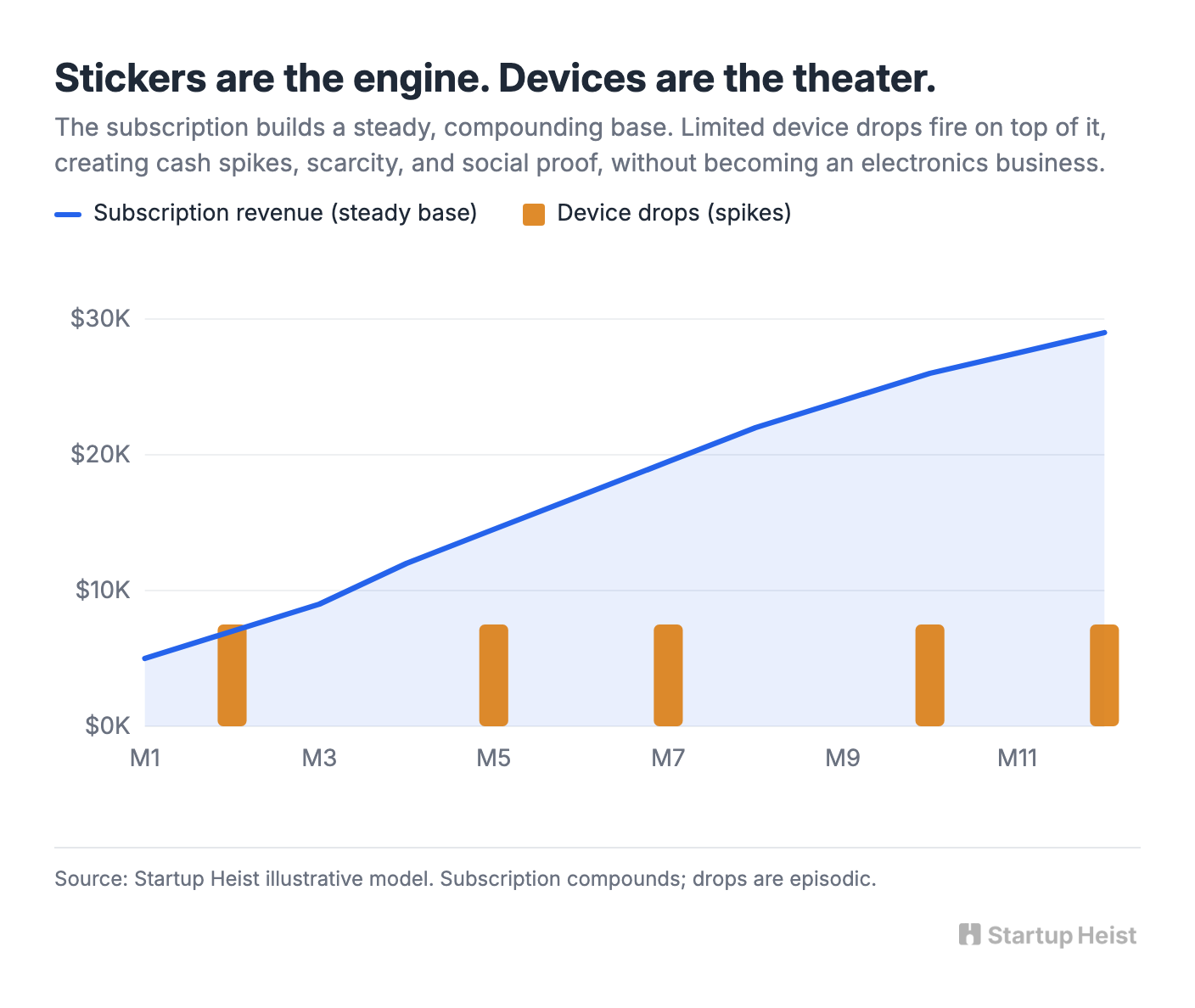
So hardware should not be the base of the business. It should be the scarcity layer. A sticker box scales through planned manufacturing. A digicam drop creates urgency: twenty cameras, all tested, all with straps, drop opens Friday. Try to keep 500 refurbished cameras in stock and you become an electronics refurbisher. Sell 25 to 50 curated cameras per drop and you stay a taste-driven nostalgia brand. That single choice decides which business you actually own.
Market Size: Real, Not Venture-Scale by Default
This is unlikely to become a billion-dollar company unless it grows into a media, marketplace, or licensed-product platform. But the underlying demand is large and rising. Grand View Research pegs the global collectibles market at roughly $320 billion in 2025, growing to about $535 billion by 2033. The U.S. second-hand camera market alone is projected by market researchers to climb from roughly $2 billion in 2025 to over $3 billion by 2034, and prices on decade-old consumer cameras have climbed sharply as demand outran supply.
The honest scale of this specific business is smaller, and worth saying plainly. A strong operator could build a focused subscription box with small drops into $10K-30K per month. A great content-led brand could reach $50K-100K per month if TikTok hits and retention holds. This is not a SaaS-margin business; it is a taste-and-operations business. That is exactly why it is available. Most software people will underestimate it, most resellers will underbrand it, most stationery brands will stay too narrow, and most retro-tech sellers will stay too functional. The opening is in the middle, and almost nobody is standing there.
The Customer
The best customer is not a hardcore collector. Collectors are picky, price-aware, and already know where to source. They will compare your camera to eBay sold comps and complain that the Tamagotchi shell has a scuff.
The better customer is the aesthetic buyer. She wants the feeling, not the spreadsheet. She has saved TikToks of digicam photos, likes Japanese stationery, and keeps a Pinterest board of old flip phones, glitter nails, and blurry flash photography. She does not know the difference between a Canon SD1000 and a PowerShot ELPH 360. She just knows what looks right.
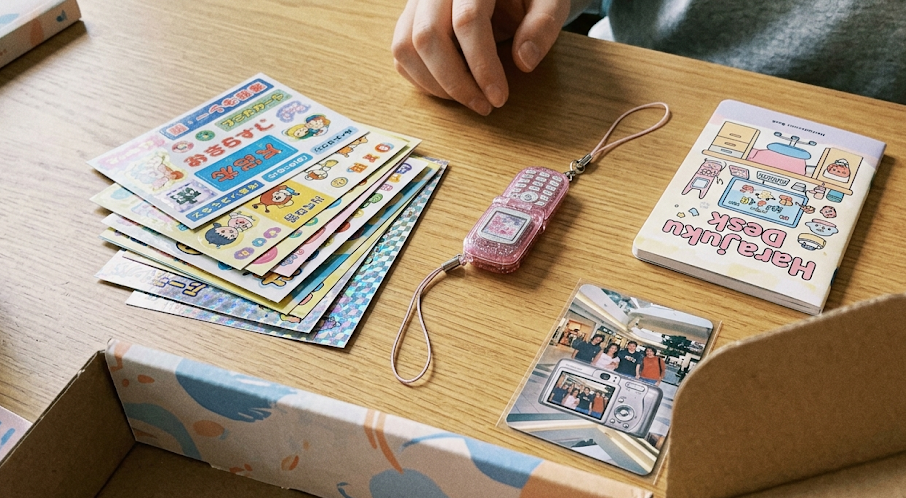
Build the product for her: fewer specs, better bundles, better packaging, a stronger visual identity, simple starter guides, and "how to use this in your life" content instead of marketplace listings. Do not sell "Used Canon PowerShot ELPH 180, tested, minor scratches." Sell the Going-Out Digicam Kit: a tested compact camera, battery and charger, SD card, wrist strap, a tiny sticker sheet, a photo-transfer guide, and a "best settings for flash photos" card. Same camera. The kit is where the margin lives.
Positioning
Avoid generic nostalgia language. "Nostalgia store" is too broad. "Y2K shop" is saturated. "Vintage tech" sounds like a repair counter. "Japanese stationery" is too narrow. The sharper line: a monthly club for pre-smartphone nostalgia.
Possible brand language:
- "Objects from the internet before the algorithm."
- "A tiny monthly drop of Heisei/Y2K nostalgia."
- "Stickers, digicams, and cute tech from the pre-smartphone era."
- "For people who miss plastic buttons, blurry flash photos, and decorating everything."
The world should be specific: Heisei-era Japan, Y2K malls, flip-phone charm culture, early digital cameras, stationery collecting, photo-booth aesthetics, mall-kiosk objects. Specificity is the moat. "Retro" is not defensible. "Pre-smartphone cute tech and sticker culture" is.
The MVP
Do not start with 100 SKUs. Start with one subscription and one drop, over six weeks:
Unlock the Vault.
Join founders who spot opportunities ahead of the crowd. Actionable insights. Zero fluff.
“Intelligent, bold, minus the pretense.”
“Like discovering the cheat codes of the startup world.”
“SH is off-Broadway for founders — weird, sharp, and ahead of the curve.”


