


Then vs. Now: The Photo Booth Add-On Operators Can Actually Sell
Photo booths have a strange problem. The technology keeps improving, and the experience keeps getting easier to copy.
A guest walks up to an iPad and poses. The software swaps the background or drops them into an AI-generated fantasy world, they scan a QR code, and the photo lands on their phone. It works, and it looks like every other booth at every other wedding.
A small startup can win here by skipping the obvious move, yet another photo booth platform, and building one memorable event format instead.
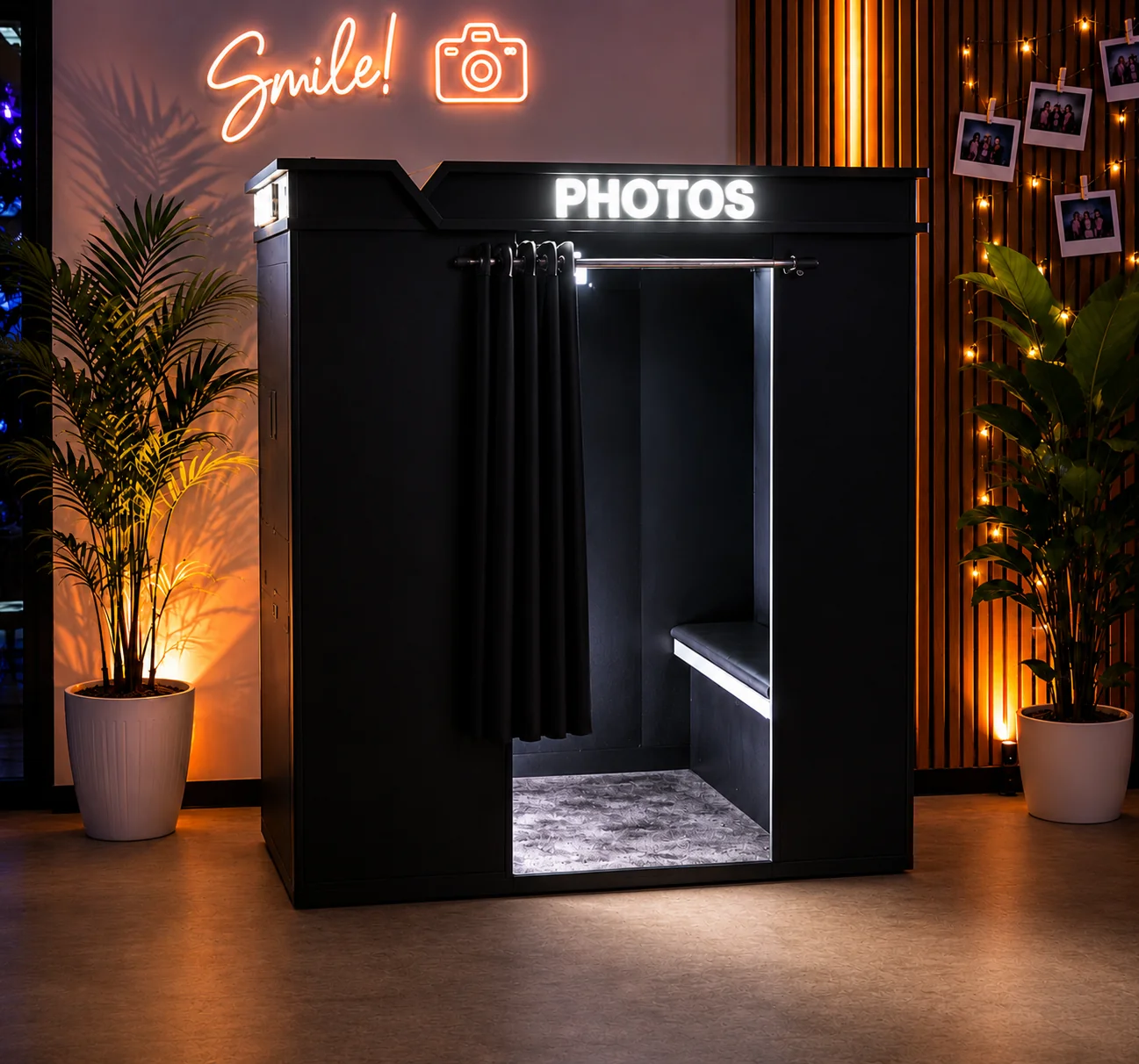
Call it Then vs. Now. A guest uploads an old photo of themselves from their phone, takes a new photo at the booth, picks how spicy they want the commentary, and receives a beautifully designed receipt comparing the two:
1998: Cargo shorts. Frosted tips. Completely certain you would own a Ferrari by 30.
2026: Sensible quarter-zip. Excellent dental insurance. Googled "is 9:30 too late for coffee?" before arriving.
Add the wedding monogram or the sponsor's logo, and an ordinary photo booth has become a social game. You sell it as a white-label event activation that runs alongside the photo booth software and hardware operators already own, with tone modes that range from wholesome to savage depending on the room. What you're selling is the format, and the AI underneath is the cheapest part of it.
Here's the opportunity in brief:
The money: 100 operators on a $99 monthly plan is $9,900 MRR, and 500 is $49,500. Only 26% of booth rentals currently include any add-on.
Inside:
• Eight-screen MVP with phone-to-booth QR upload
• Pricing that leaves operators $160 per event
• Cold email to land your first 10 operators
• Kill metrics for a 60-day validation test
A Real Market Where the AI Gap Already Closed
Plenty of money moves through photo booths. Future Market Insights sizes the global market at $639.1 million in 2026, growing to $1.56 billion by 2036 at a 9.3% CAGR. IBISWorld counted 3,322 photo booth rental businesses in the U.S. as of 2024. The most useful number comes from Check Cherry, the booking software many of those operators run on, which analyzed roughly 118,000 rentals booked since January 2024: the median event runs $681, half land between $452 and $1,022, and the top 10% clear $1,642.
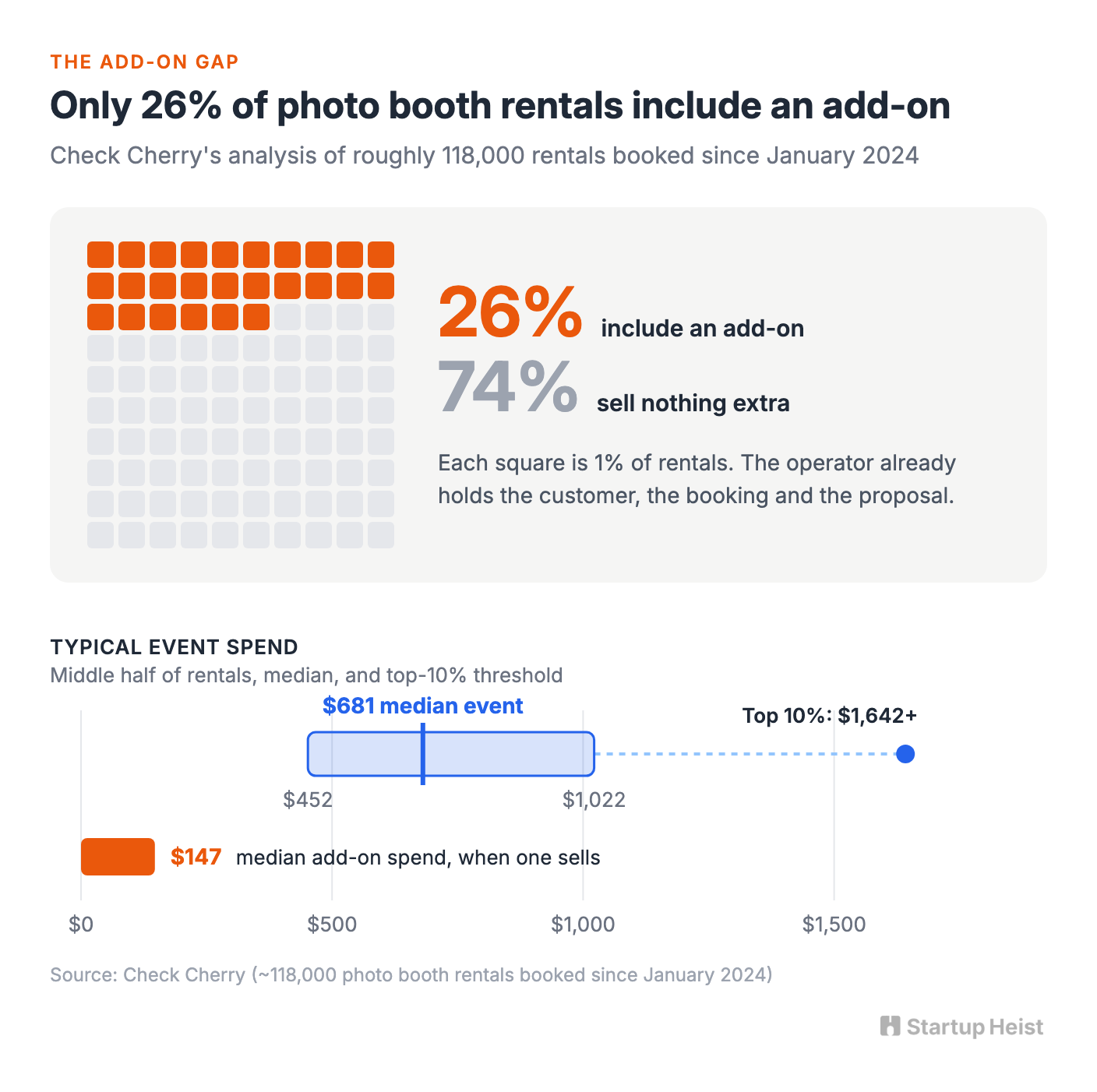
Buried in that dataset is the number this whole opportunity hangs on. Only 26% of rentals include a photo booth add-on, and when one sells, the median add-on spend is $147. Operators have the customer, the booking and the proposal in hand, and three times out of four they still sell nothing extra.
Don't assume the industry forgot about AI, though. Simple Booth sells an AI Effect Studio starting on its Plus plan at $99 a month, with usage billed at $0.10 per credit. Snappic bundles AI-FX, moderation, surveys, 360 video and analytics into its $189-a-month Business plan. Snapbar runs fully browser-based AI activations on iPads and guests' own phones, priced by custom quote. Backgrounds, face swaps, superhero portraits and stylized headshots are table stakes in AI photo booth software now, and a company pitching "photo booths are boring, let's add AI" has arrived two years late. The scarce resource in this market has moved from effects to experiences an operator can put on an invoice.
The Product: Then vs. Now
Take a 20-year high school reunion. The operator already owns the iPad, the stand, the lighting and the printer, and their standard booth runs all night.
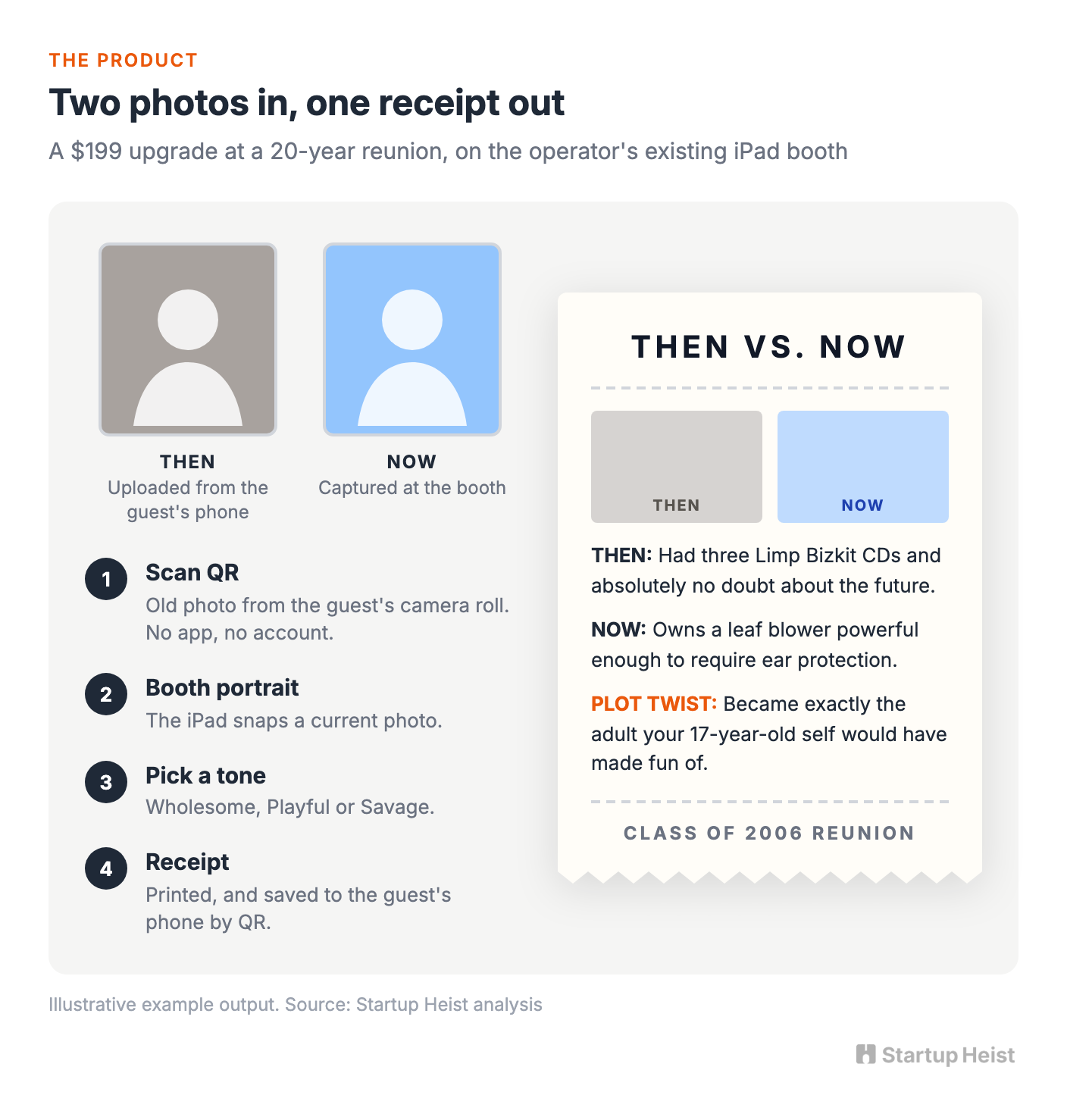
For another $199, the reunion committee upgrades to Then vs. Now. A guest reads READY TO MEET YOUR FORMER SELF? on the screen and taps Start. A QR code appears. They scan it, pick an old school photo from their camera roll, and it lands in the active booth session with no app to install and no account to create. The iPad snaps a current portrait, the guest chooses Wholesome, Playful or Savage, and a few seconds later:
THEN VS. NOW
THEN: Had three Limp Bizkit CDs and absolutely no doubt about the future.
NOW: Owns a leaf blower powerful enough to require ear protection.
PLOT TWIST: Became exactly the adult your 17-year-old self would have made fun of.
CLASS OF 2006 REUNION
The guest laughs. Friends crowd in to read it. A thermal printer spits out a copy, and the next person in line is already digging through their phone for a yearbook photo. An event product needs exactly that kind of output, one that recruits the next participant, and the AI is almost incidental to it.
Why a Receipt Beats a Filter
Most AI booth products are transformations: make me a superhero, put me in the 1980s, give me a professional headshot. They look impressive, and they compete at the model level. When image models improve, every vendor improves at once, and a style that goes viral on Monday is on every competitor's menu by Friday.

Then vs. Now runs on a different input: personal history. Two guests who pick the same AI style get near-identical fantasy portraits, but nobody else in the room brought your childhood. Age-transformation booths already exist. Snapbar's AI age generator pushes a fresh selfie older or younger, inventing a past from today's photo, while Then vs. Now starts from the guest's real one. The old photo is the artifact and the new one creates the contrast. The copy delivers the punchline, the event supplies the context, and the product packages all four into something personal enough to keep.
The consumer appetite is already proven. In fall 2025, the "hug my younger self" trend swept Instagram, with people uploading a childhood photo and a current one so Google's Nano Banana image model could render the two embracing. People will happily dig up old photos to sit beside new ones. None of the major booth platforms sells that impulse as a packaged format yet, and the room where it lands hardest is wide open: a reunion, a milestone birthday, a company's 25th anniversary.
Sell to Operators
The most important decision in this business is who buys. Skip brides, party-host marketplaces and consumer ads, and sell to photo booth operators.
Unlock the Vault.
Join founders who spot opportunities ahead of the crowd. Actionable insights. Zero fluff.
“Intelligent, bold, minus the pretense.”
“Like discovering the cheat codes of the startup world.”
“SH is off-Broadway for founders — weird, sharp, and ahead of the curve.”


