


The HOA Dealbreaker: A $29 Report That Could Save a $500,000 Home Purchase
The House Is Perfect. The Rules Aren't.
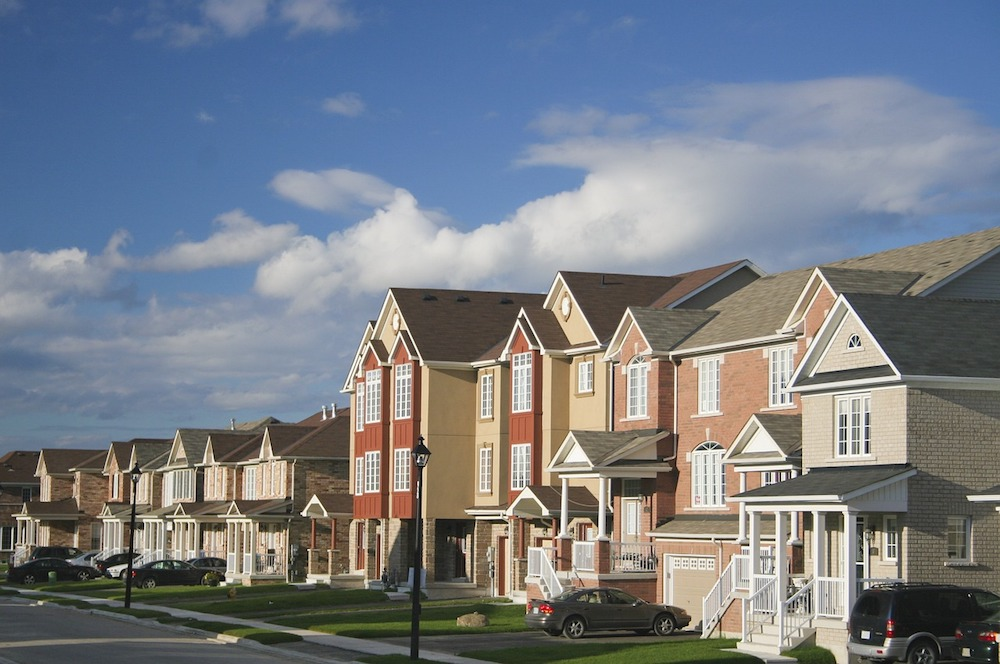
A buyer finds a $500,000 house in a Phoenix suburb. Four bedrooms, a big backyard, a two-car garage, a good school district. They make an offer, negotiate the price, and start packing.
Then the HOA disclosure packet arrives. Buried across a 2004 declaration, a 2018 amendment, and a rules document updated in 2025 are three provisions. Dogs over 50 pounds are prohibited. Commercial vehicles can't be parked in driveways overnight. Owners can't lease their homes during the first 24 months of ownership. This buyer owns two 75-pound dogs, drives a branded work van, and plans to rent the house if their employer relocates them next year.
Nobody hid anything. The rules were in the documents the whole time. Finding them meant reading a few hundred pages of legal drafting under a contract deadline, and the person coordinating that work was a real estate agent juggling inspections, financing, and three other closings. The buyer's real question was simple: can I live the life I plan to live in this house? Nothing in the transaction was built to answer it.
Software can. Build a tool that takes a buyer's specific plans (pets, vehicles, rentals, renovations), checks them against the association's governing documents and the state laws that override them, and produces a source-cited report showing what conflicts, what's unclear, and what needs written confirmation before closing. Plenty of tools already help a buyer read an HOA packet. This one helps them decide whether to walk away. Here's the opportunity:
The money: 250 reports a month at a blended $22 is $5,500 MRR; 1,000 reports is $22,000. Raw compute runs about $1.10 a report.
Inside:
• Four-stage buyer compatibility report spec
• Arizona statute overlay and MVP build
• Phoenix launch inside the five-day window
• 90-day plan from benchmark to paid pilot
A Third of American Housing Runs on Private Rules
The Foundation for Community Association Research counted 373,000 community associations in the U.S. in 2025, covering 29.6 million housing units and 78.1 million residents. That's 35.2% of the nation's housing, and the count includes condominiums and co-ops alongside suburban HOAs. Every one of those homes carries a private rulebook layered on top of local law.
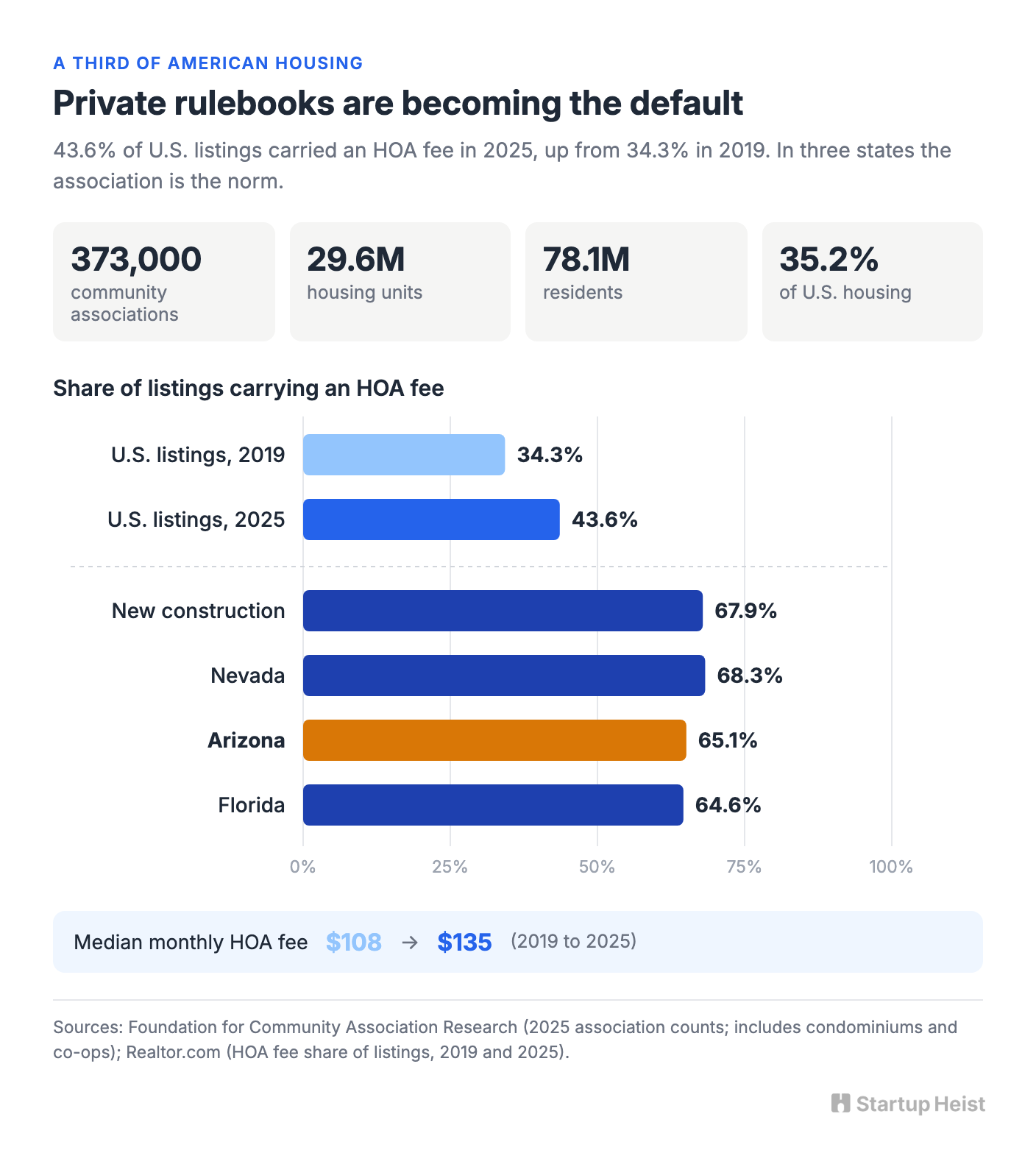
The share is climbing fastest where buyers are actually shopping. Realtor.com found that 43.6% of U.S. listings in 2025 carried an HOA fee, up from 34.3% in 2019, and the median monthly HOA fee rose to $135 from $108. New construction is the most HOA-heavy segment at 67.9% of listings. In three states the association is the norm: Nevada at 68.3%, Arizona at 65.1%, and Florida at 64.6%.
Keep the market math honest. NAR counted 4.06 million existing-home sales in 2025, the lowest total since 1995. Apply the 43.6% listing share and you get roughly 1.77 million HOA-touched transactions a year, or about $51 million at $29 a report if every buyer paid, which nobody will. This is a transaction-frequency business: big enough to support several profitable specialists, too small for a venture-scale story on per-report fees alone. It also means you can't win on price against the tools already selling.
The Summary Is Already a Commodity
The obvious version of this product (upload the packet, get ten red flags back) already exists, and it's cheap. Eli Report sells AI-assisted condo and HOA document reviews from free summaries up to $40 Pro reports, with an unlimited professional plan at $359.99 a year. GoverningDocs offers three free analyses with no sign-up, then $39 full reports with page-linked findings, an A-to-F "HOA Health Grade," reserve assessments, and questions to ask the association. Upstream, RealPage acquired Rexera in July 2025, pairing Rexera's AI agents, which already automate HOA resale documents, lien searches, and payoffs for title and lending firms, with HomeWiseDocs, an established HOA document-delivery platform. And any agent can paste a PDF into ChatGPT or Claude and ask for every rule about pets and parking.
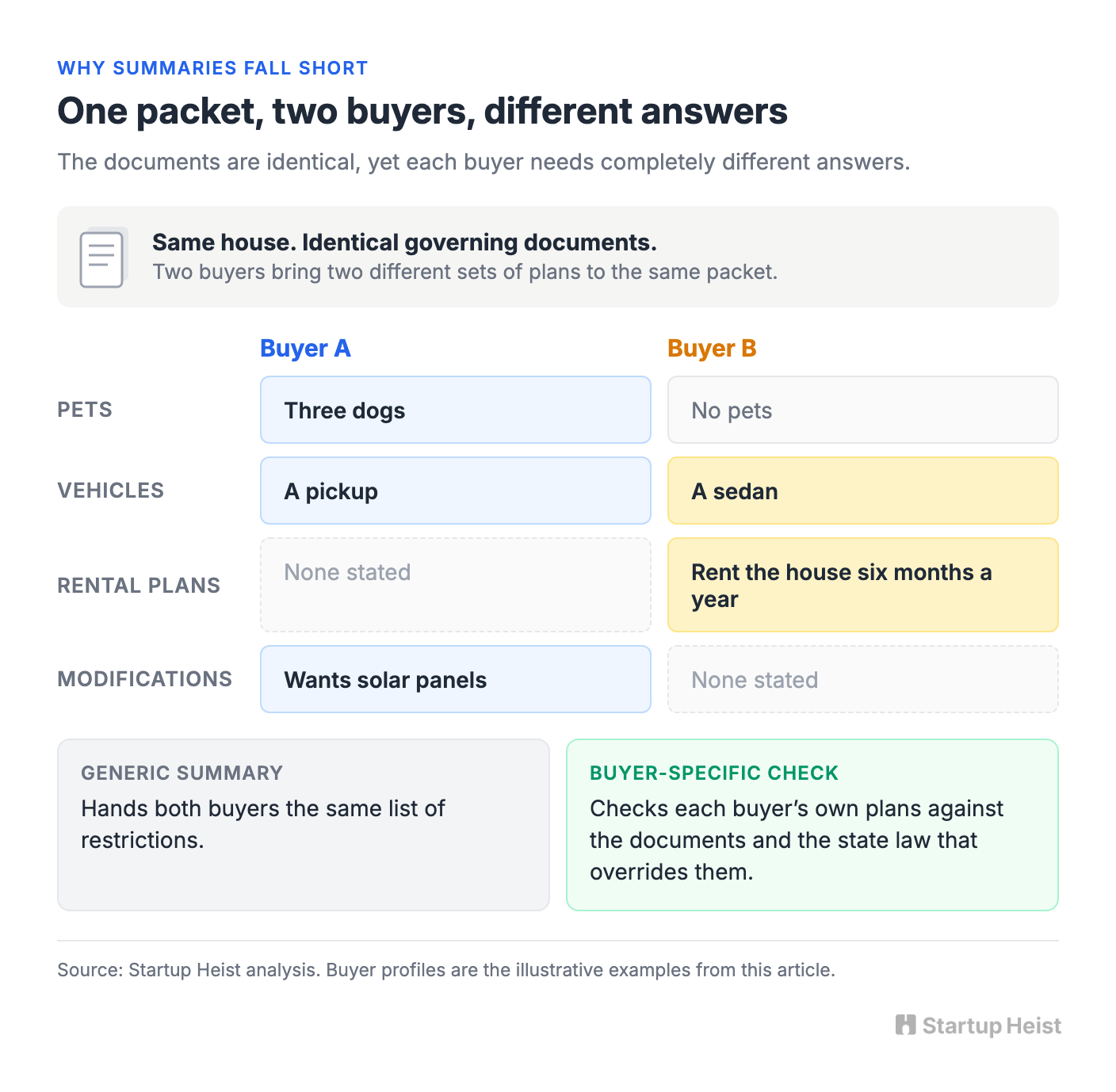
Page citations, restriction extraction, and generic buyer questions are table stakes, and the incumbents compete on financial health: reserves, assessments, and lender warrantability. None of the tools we found starts from the buyer. Take two buyers looking at the same house. Buyer A has three dogs, a pickup, and wants solar panels. Buyer B has no pets, drives a sedan, and plans to rent the house six months a year. The documents are identical, yet each buyer needs completely different answers, and a generic summary hands both of them the same list of restrictions.
The summarizers also treat the documents as the final word, when state law can override them. That gap is where a defensible product lives.
The Rules Above the Rules
Arizona HOA law shows how much a document-only reading gets wrong. Under A.R.S. § 33-1816, an association can't prohibit solar energy devices; it can only adopt reasonable placement rules that don't impair performance or add cost. A summarizer that flags "solar panels require architectural approval and may be denied" has produced a false alarm that could scare off Buyer A for nothing.
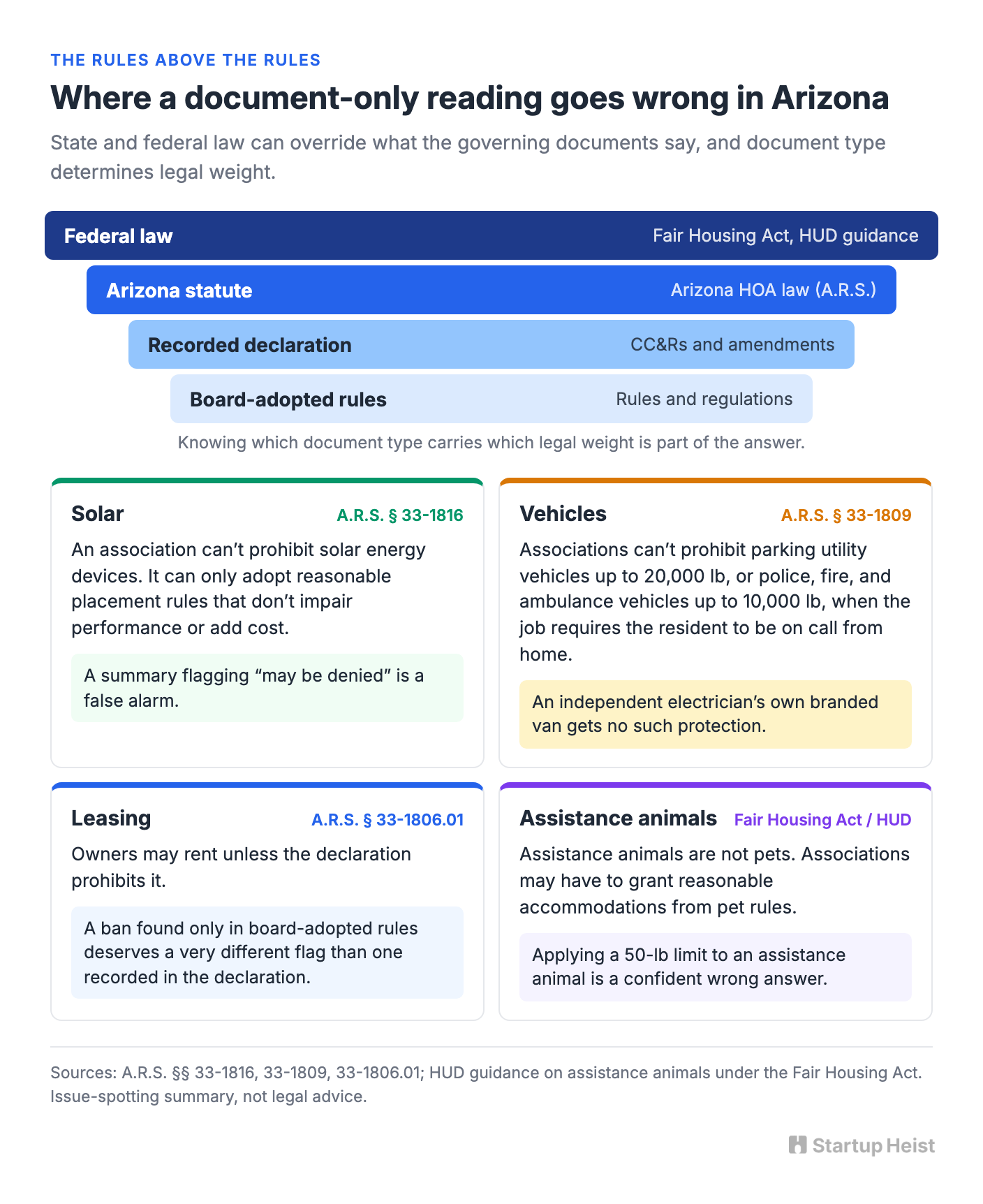
Vehicles work the same way. A.R.S. § 33-1809 bars associations from prohibiting residents from parking certain utility and public-safety vehicles: utility vehicles up to 20,000 pounds and police, fire, and ambulance vehicles up to 10,000 pounds, when the job requires the resident to be on call from home. An independent electrician driving their own branded van gets no such protection, even though the van might look nearly identical in the driveway. Leasing has its own wrinkle. Under A.R.S. § 33-1806.01, owners may rent unless the declaration prohibits it, so a leasing ban that appears only in a board-adopted rules document deserves a very different flag than one recorded in the declaration itself.
Federal law adds another layer. HUD guidance states that assistance animals are not pets, and associations may have to grant reasonable accommodations from pet rules under the Fair Housing Act. Apply a 50-pound limit to a buyer's assistance animal and the tool has given a confident wrong answer. Software that knows the state and federal overlays, and knows which document type carries which legal weight, gives the agent something a PDF upload can't: the right questions to ask before the deadline runs out.
The Product: A Buyer-Specific Compatibility Report
Call it Dealbreaker for now. An agent opens a transaction, enters the buyer's plans, uploads the association packet, and gets back two reports within the hour. The interface stays simple while the work happens underneath, in four stages.
Unlock the Vault.
Join founders who spot opportunities ahead of the crowd. Actionable insights. Zero fluff.
“Intelligent, bold, minus the pretense.”
“Like discovering the cheat codes of the startup world.”
“SH is off-Broadway for founders — weird, sharp, and ahead of the curve.”


