


The Art Market Doesn't Need Another Viewing Room. It Needs a Better Way to Make an Offer.
A $59.6 billion industry still runs some of its most valuable sales on PDFs, email threads, and memory. The opening is a lightweight private-offer tool for art advisors and dealers that cleans up that workflow without asking anyone to change their website, inventory system, or habits.
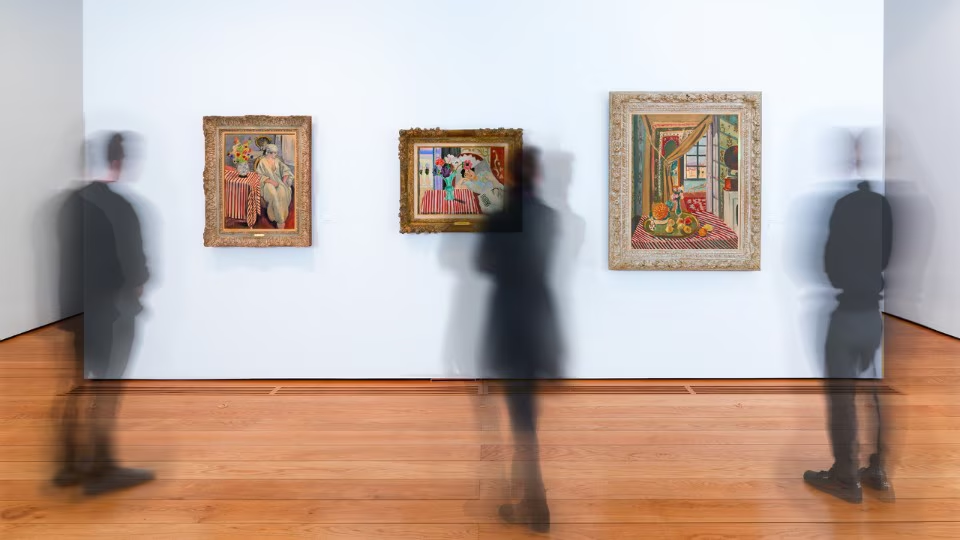
An independent art advisor is preparing selections for three collectors. She has twelve works sourced from four galleries, each with its own photographs, descriptions, availability, and pricing. Some works carry different terms depending on the buyer.
She builds a PDF for the first collector, cuts three works, reorders the rest, and writes a personal email. The second collector gets a different PDF with different works and prices. The third gets a shorter deck padded with artist background.
Two days later, one gallery tells her a painting has sold.
Now she has to reconstruct which clients saw that painting, at what price, and which of those conversations are still live. Her source of truth is a sent-mail folder.
None of this is unusual. Art has always sold through relationships, and software has done little to remove the manual work wrapped around them. A beautiful presentation is easy enough to make. The hard, expensive part is keeping control of a dozen individualized offers while prices, buyers, and availability keep moving.
The opportunity is a tool that lets independent advisors and specialist dealers create private, recipient-specific artwork offers in minutes. Each buyer sees a clean presentation with the right works, approved prices, supporting material, and a discreet way to respond. The seller can update an offer, expire access, and pull up an exact record of what each person was shown.
It sits alongside whatever the seller already uses, so there's no website migration, new inventory system, or enterprise rollout to sell. The product only has to make one high-stakes moment in the sale noticeably better, and it can leave the rest of the gallery's operations alone. Here's the short version:
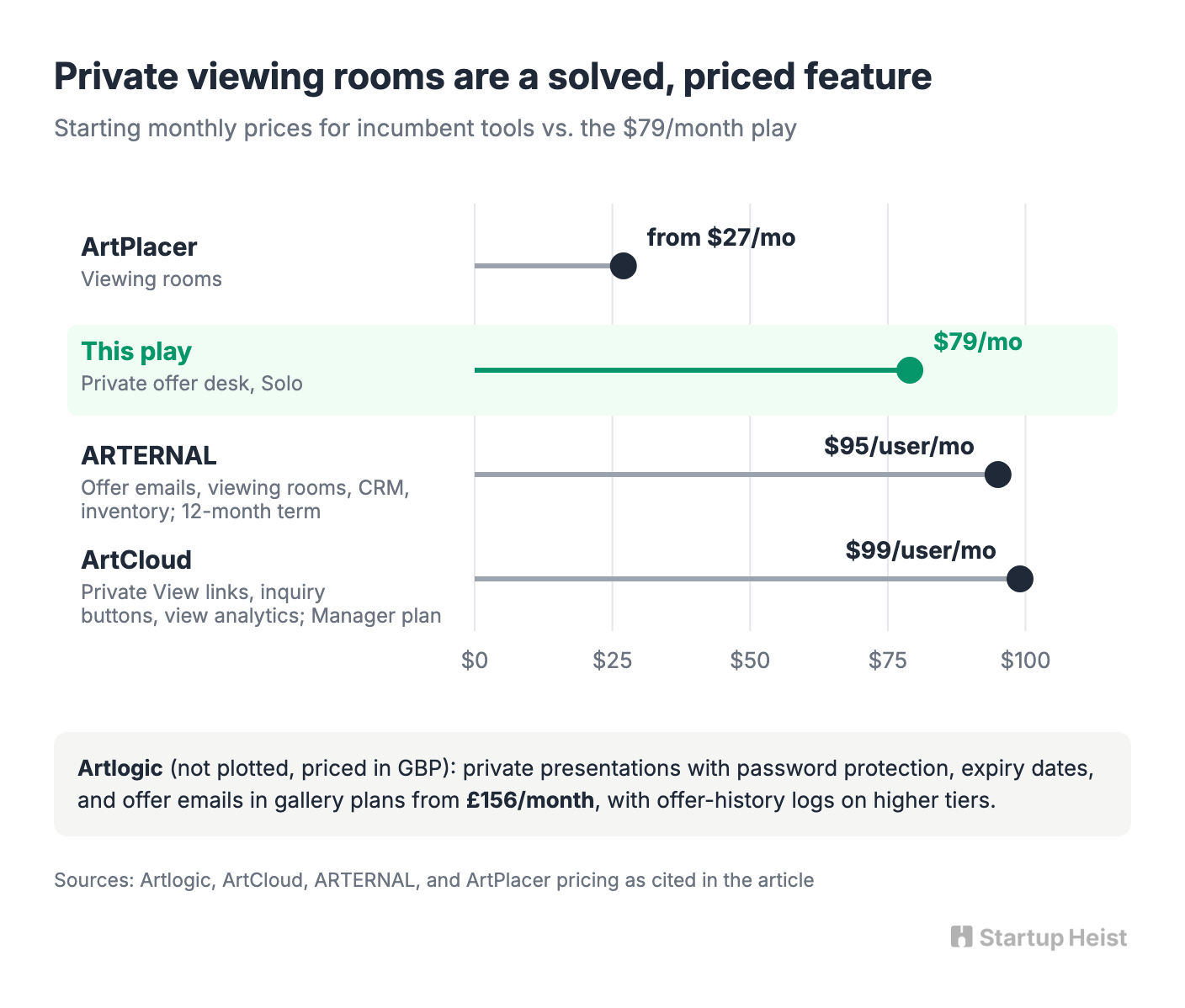
The money: 75 sellers at $79/month is $5,925 MRR, a real solo business; 300 sellers reach $23,700 MRR. Incumbent art suites already charge $95 to $99 per user.
Inside:
• Eight-feature MVP scoped for a solo builder
• Versioning and revocation: the trust details
• Subscription tiers plus a concierge offer service
• Outreach email and a 90-day go/no-go plan
Collectors Want Privacy, Research, and a Human on the Other End
On October 8, 2026, Art Basel and UBS released their Survey of Global Collecting, drawn from 3,100 high-net-worth collectors across ten markets. Privacy runs through the findings. Some 64% of respondents preferred to keep their ownership of art within their household or a closed circle; only 10% wanted wide recognition as collectors. Gen Z, now the highest-spending generation in the sample, is the most guarded: 39% restrict in-person access to their collections to family and close friends, and 42% share online only through restricted or invitation-only groups.
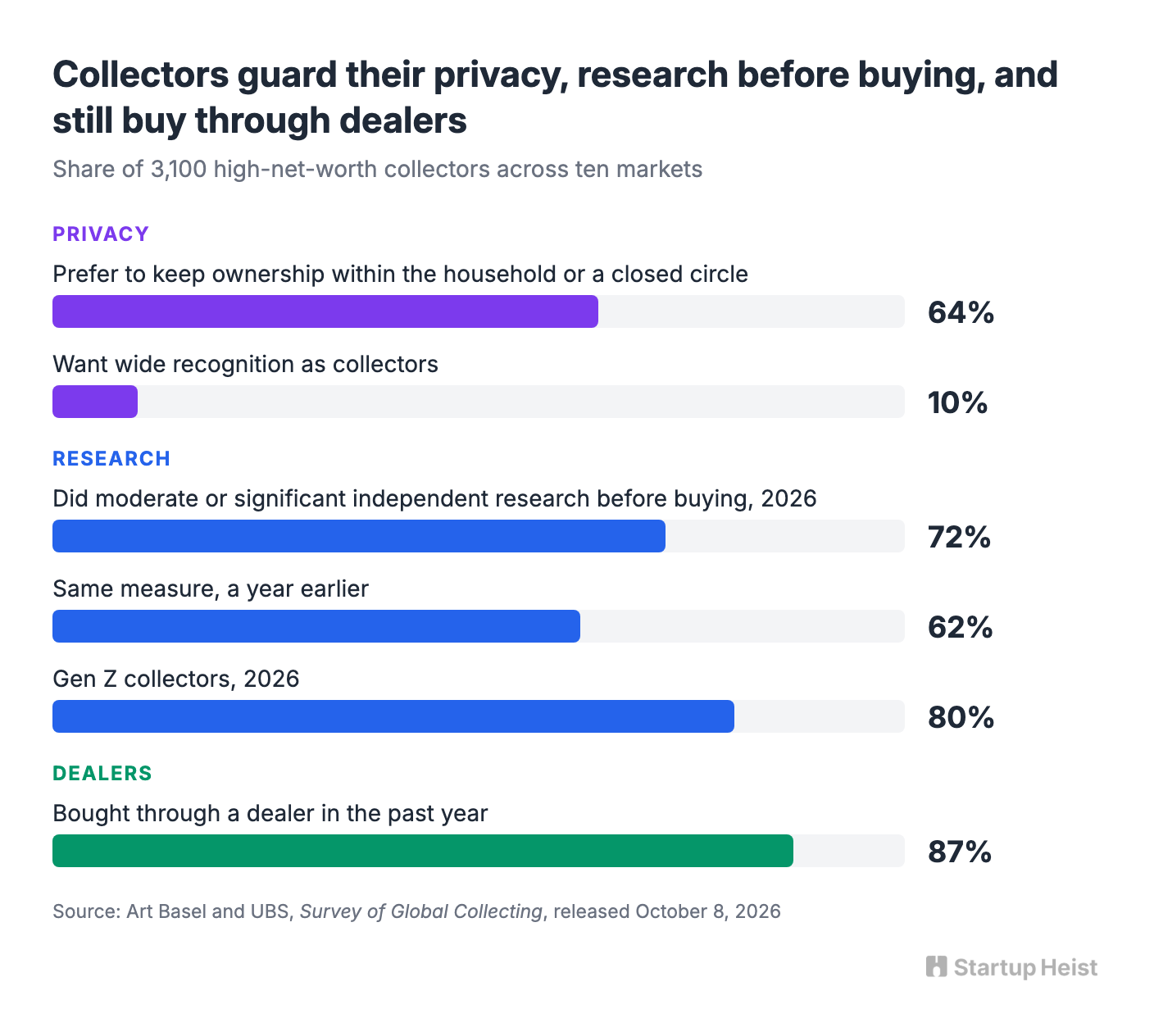
Private collecting doesn't automatically translate into demand for private viewing software, so the commercial case rests on two other findings. Collectors are doing more homework: 72% did moderate or significant independent research before buying in 2026, up from 62% a year earlier, and 80% among Gen Z. Dealers also remain at the center of the deal. Some 87% of collectors bought through a dealer in the past year, and around two-thirds preferred to transact with dealers by website, phone, email, or Instagram rather than in the gallery.
The buying experience those numbers describe is a trusted human working through digital channels, backed by material the buyer can study privately before committing. The same survey named price transparency and the security of personal and collection data as collectors' top concerns. Whoever builds the tool between dealer and collector inherits both of those expectations.
Small Books, Expensive Mistakes
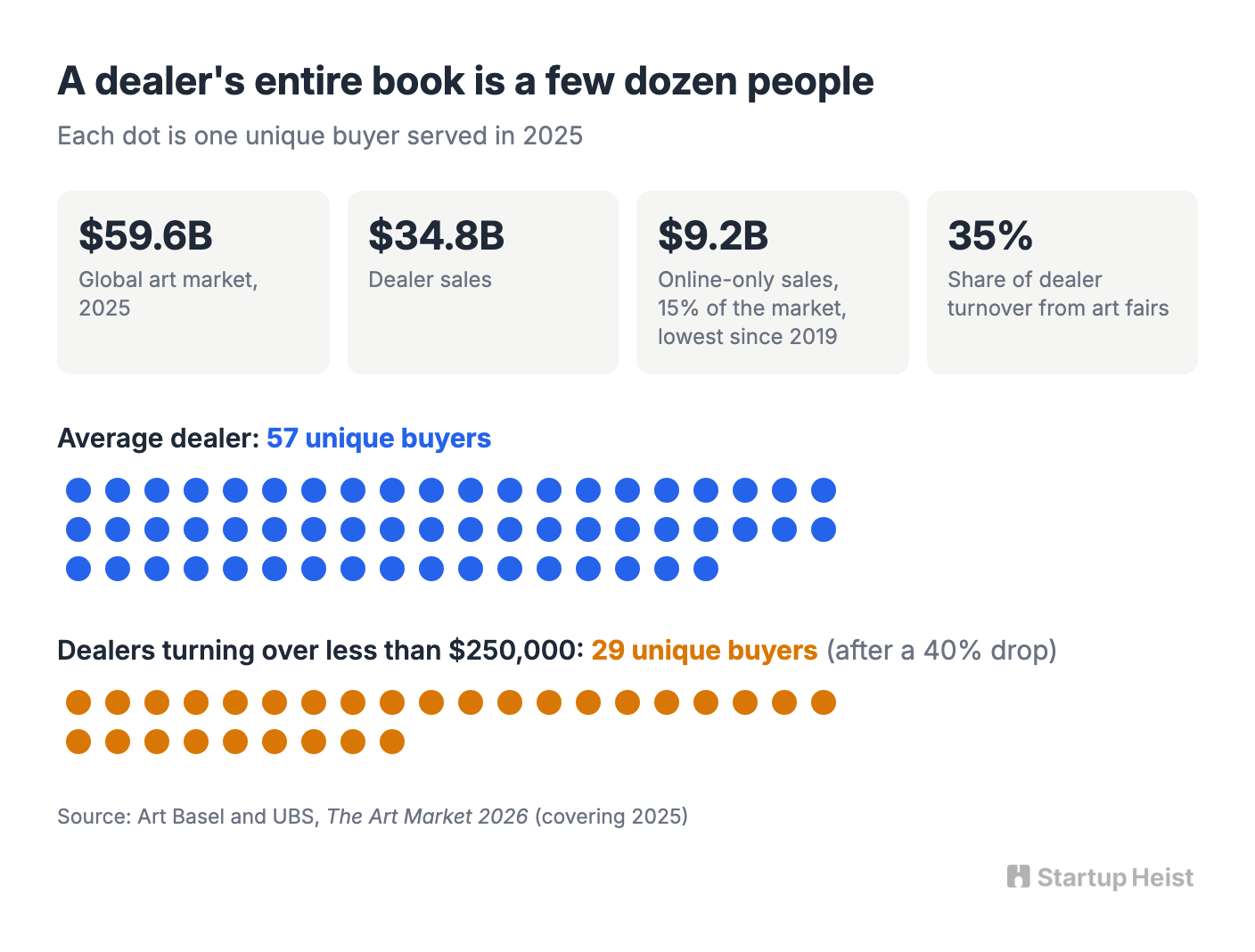
The 2026 Art Basel and UBS Art Market Report, covering 2025, sized the market at $59.6 billion, with dealers accounting for $34.8 billion. Online-only sales fell to $9.2 billion, their lowest level since 2019, and slipped to 15% of the market. Art fairs moved the other way, rising to 35% of dealer turnover.
The sales themselves are staying offline, while the paperwork around them has already gone digital. A collector meets an advisor at a fair, reviews works on a phone that night, requests a condition report by email, and closes on a phone call two weeks later. Every step after the handshake happens on a screen, and most of it lives in attachments.
The customer counts are what make this a software opportunity. The average dealer served just 57 unique buyers in 2025. Dealers turning over less than $250,000 averaged 29, after a 40% drop. When your entire book is a few dozen people, showing the wrong price to one of them or losing track of an interested buyer costs far more than a weak website conversion rate. Managing offers is where the money is lost, which makes it a better target than another online exhibition and blunts some of the incumbents' head start.
The Viewing Room Is Already Built
Private viewing rooms are a solved feature in gallery management software. Artlogic, the category's heavyweight, bundles private presentations with password protection, expiry dates, and offer emails into gallery plans starting at £156 a month, with offer-history logs on its higher tiers. ArtCloud, which announced a merger with Artlogic in July 2025, offers Private View links with inquiry buttons and view analytics on Manager plans from $99 per user per month, though its analytics can lag up to 48 hours; together the two report more than 6,000 galleries, artists, and collectors, over 15 million artworks, and 10,000-plus daily users. ARTERNAL is the sharpest competitor on this exact job, with personalized offer emails, viewing rooms, CRM, and inventory from $95 per user per month on a 12-month term. Art Galleria ties its viewing rooms to engagement tracking and offers, and it markets a solutions page for art advisors. At the cheap end, ArtPlacer sells viewing rooms from $27 a month.
Every one of those products assumes the seller owns the inventory and keeps it inside their system, and that assumption leaves a gap. An advisor sourcing from four galleries doesn't have an inventory database; she has an inbox, an image folder, and a spreadsheet. Generic proposal tools like Qwilr and PandaDoc can expire a proposal and track opens, but they know nothing about editions, dimensions, or a price that differs by buyer. Some independent sellers want structured offers without adopting an entire art-business platform, and that segment is where this product lives. The bet is that a narrower tool with less commitment and faster setup wins them over. It's unproven, since complex incumbent software doesn't mean unhappy users.
The Product: A Private Offer Desk
The product replaces one workflow: spreadsheet → artwork PDF → personal email → scattered follow-up.
Unlock the Vault.
Join founders who spot opportunities ahead of the crowd. Actionable insights. Zero fluff.
“Intelligent, bold, minus the pretense.”
“Like discovering the cheat codes of the startup world.”
“SH is off-Broadway for founders — weird, sharp, and ahead of the curve.”


