


The $499 Brief Before the Zoning Hearing
A developer wants to build a 40-unit apartment building. The land is under contract, the architect has preliminary plans, and the engineers have spent weeks on drainage, parking, and access. The last hurdle is a public zoning hearing.
The developer knows the ordinance, and the attorney knows the approval standards. Neither has reconstructed how this municipality handled the last six comparable projects: which objections surfaced, what staff recommended, which conditions got negotiated, and why some applications were approved while others were continued or denied.
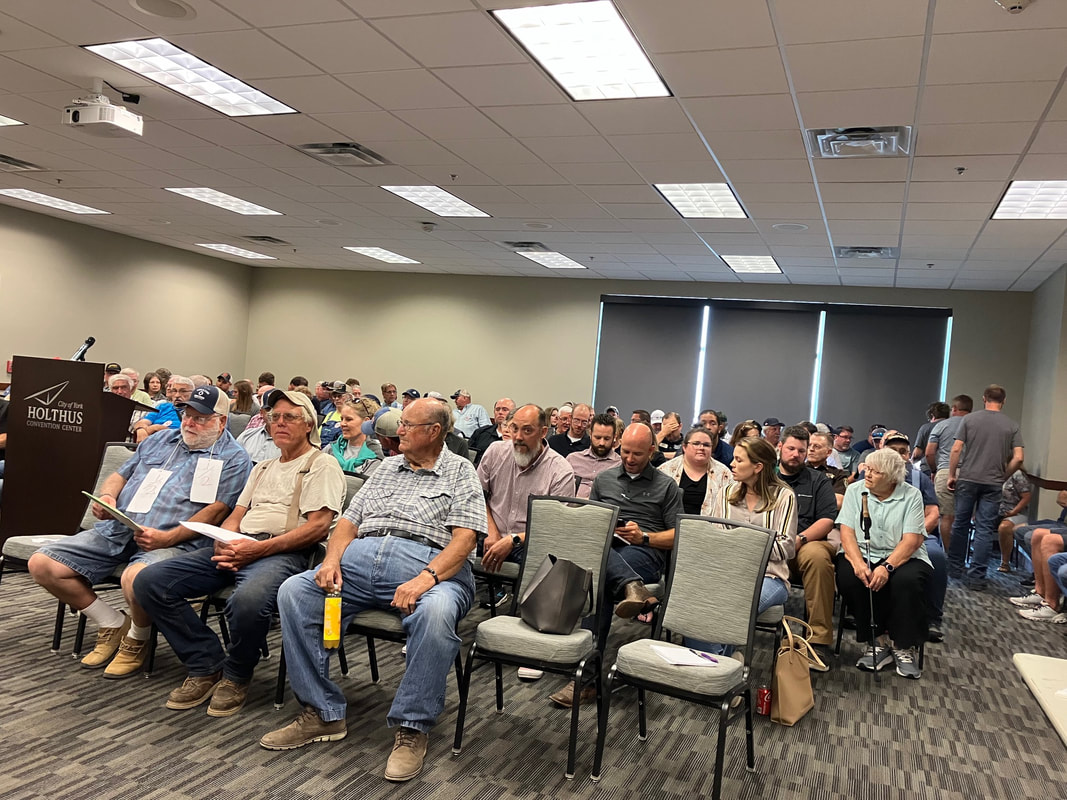
All of that history exists, scattered across meeting minutes, staff reports, revised applications, hearing video, and final decisions. Someone could spend days stitching it together, or the firm could pay $499 for a professionally reviewed brief that does it for them.
The business is a local, source-linked hearing-preparation service. It tells applicants what happened the last time someone tried something like this in the same town and what they should be ready to answer. It skips vote prediction and neighbor profiling and sells one commercially valuable answer, one hearing at a time.
Here's the opportunity:
The money: Twelve firms ordering 1.5 briefs a month bring in about $9,000 monthly; twenty firms at two a month near $20,000. Shovels already charges $599 a month for raw decisions data.
Inside:
• Three-phase MVP and 12-week build plan
• Reviewer-hour unit economics and price tiers
• Records-first outreach script for law firms
• Two pilot tests with go/no-go gates
The expensive months before a vote
Land-use entitlement is a strange kind of business risk. The rules are written down, but the practical history of how they get applied is buried. An engineer can model stormwater capacity and an attorney can read the ordinance, yet neither exercise reveals that three comparable projects were continued over access design, or that the board has repeatedly accepted a certain operating-hours condition.
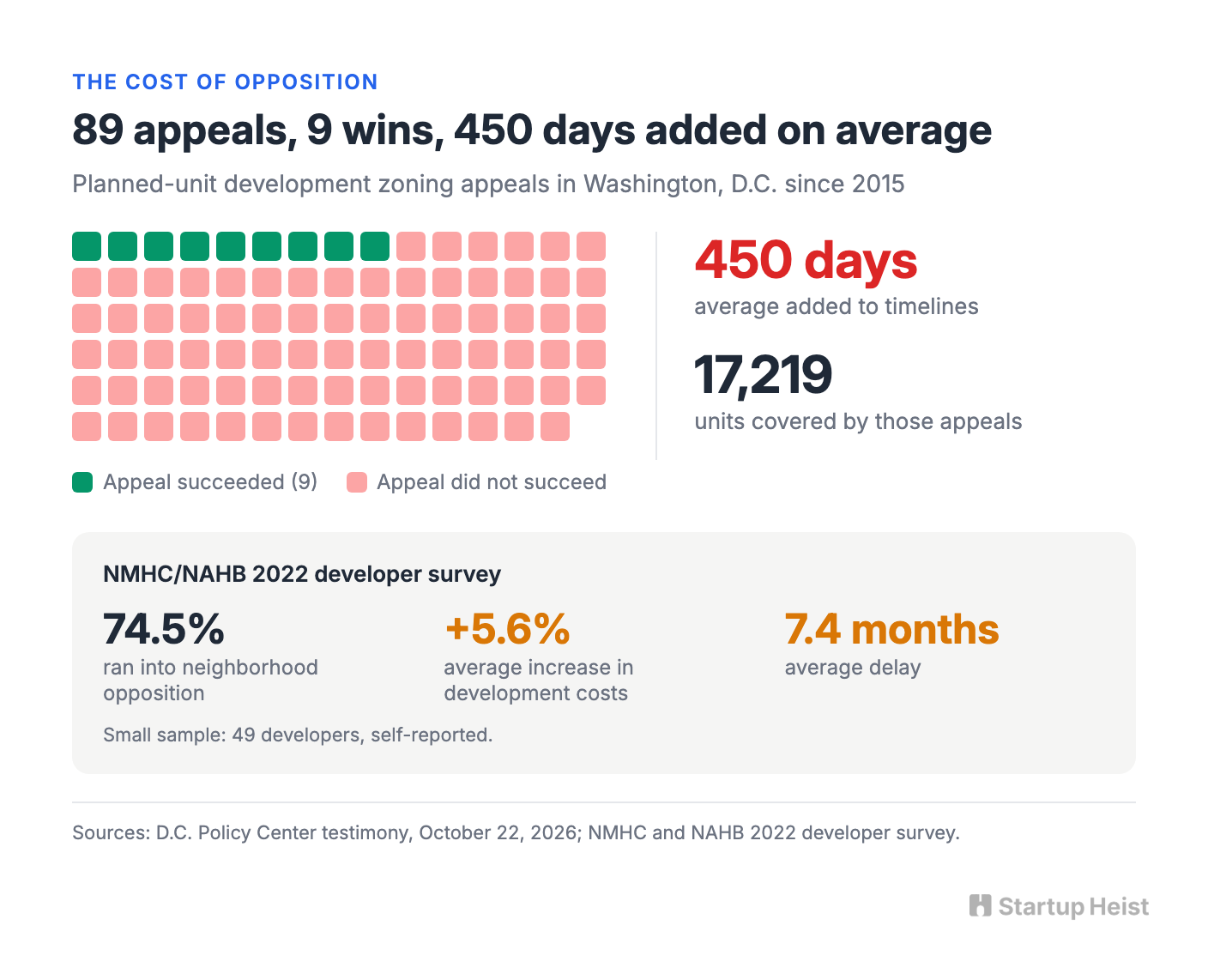
Learning that late is expensive. In a 2022 survey by the National Multifamily Housing Council (NMHC) and the National Association of Home Builders (NAHB), 74.5% of responding developers said they had run into neighborhood opposition, and they associated it with an average 5.6% increase in development costs and 7.4 months of delay. The sample was small, 49 developers, and the numbers are self-reported, but the direction is clear. Washington, D.C. shows the tail risk. In testimony dated October 22, 2026, the D.C. Policy Center counted 89 appeals of planned-unit development zoning decisions since 2015. Only nine succeeded, yet the process added an average of 450 days to timelines, and those appeals covered 17,219 units.
On a hypothetical $6 million project, one extra month of carrying costs, redesign, and professional fees can easily exceed $499. The brief doesn't have to prevent every delay. It has to surface something useful often enough that the firm orders another one.
The data layer is already being built
The obvious AI startup here ingests every municipal meeting and predicts which officials will object. It demos beautifully and makes a weak business, because approvals hinge on governing law, staff findings, site conditions, and the specific decision body, and five past votes can't tell you what caused them.
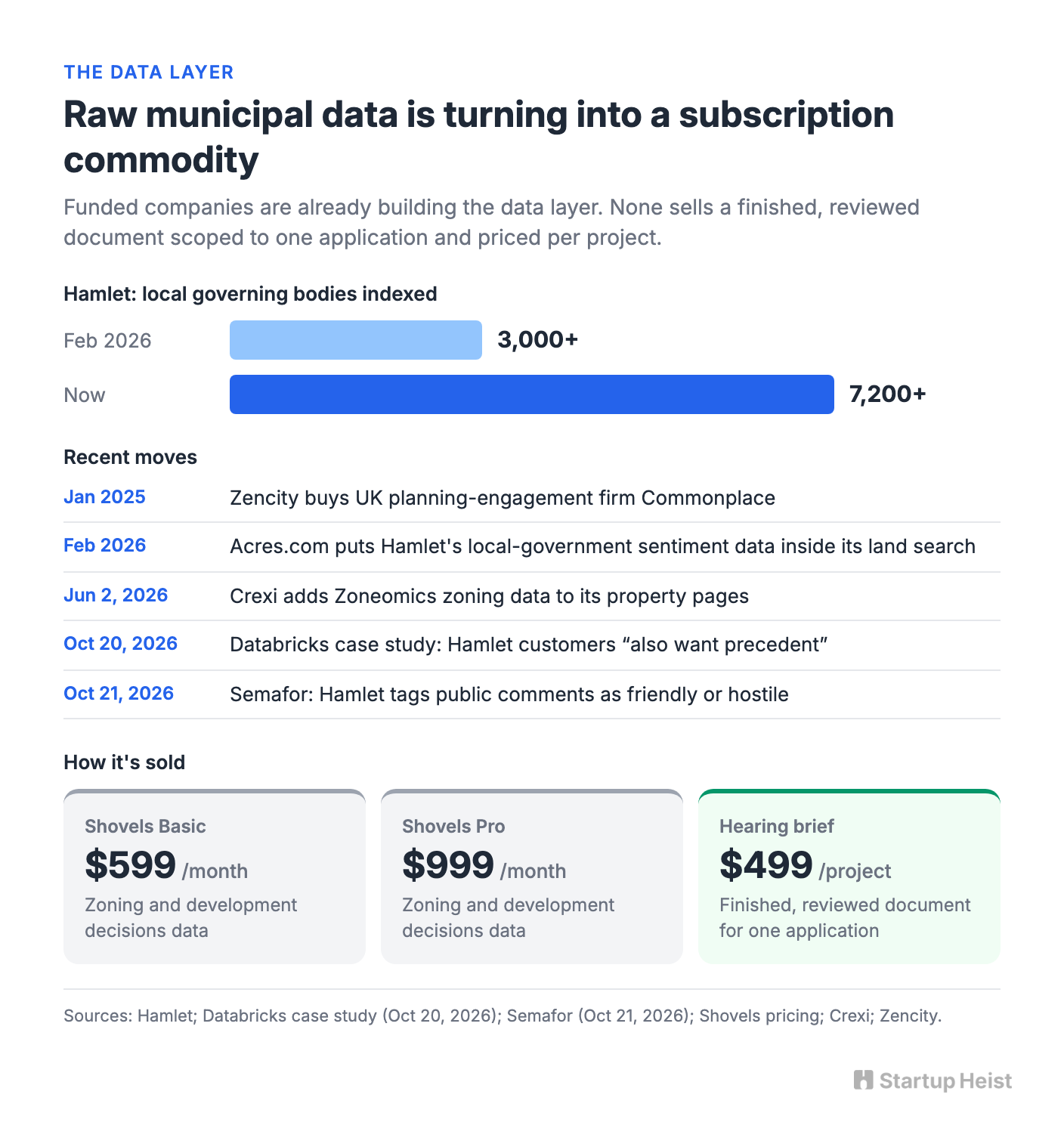
Funded companies are already building the data layer. Hamlet indexes and transcribes meetings from more than 7,200 local governing bodies, up from 3,000-plus in February 2026, identifies speakers, and links remarks to the source video. That same February, Acres.com partnered with Hamlet to put Hamlet's local-government sentiment data inside the Acres.com land-search product. In an October 20, 2026 Databricks case study, Hamlet CEO Sunil Rajaraman named real estate developers, data center developers, and retailers as customers, and a colleague added that "they also want precedent," meaning they want to know whether a project like theirs has been approved or rejected before. On October 21, Semafor reported that Hamlet tags public comments as friendly or hostile and counts a data-center developer and a data-center financing fund among its paying customers. Shovels sells a decisions dataset covering "zoning and development decisions, before a permit is filed," with Basic at $599 a month and Pro at $999. On June 2, 2026, the commercial real estate marketplace Crexi added Zoneomics zoning data to its property pages, and on the government side, Zencity bought the UK planning-engagement firm Commonplace in January 2025.
Raw municipal data is turning into a subscription commodity. None of these players sells a finished, reviewed document scoped to one application and priced per project. The gap is a packaging and workflow wedge that incumbents could copy, so defensibility has to come from how the business operates.
The buyer who files again next month
Consider two customers. One is a developer who needs a variance every three years, pays $499, likes the report, and never returns. The other is a land-use law firm representing several developers across neighboring towns, whose attorneys and paralegals constantly need to establish what happened in prior applications, what staff required, and which conditions appeared in comparable cases.
Build the business around the second customer. Three account types come first:
- Small and midsized land-use law practices. The strongest first target. They can evaluate precedent, apply local standards, and reuse the research in client prep, and they may bill the brief through to the client.
- Civil engineering and land-development consultants. They need to know when prior cases turned on stormwater, access, or buffering, and can fold the cost into a larger engagement.
- Regional commercial and multifamily developers. Good direct buyers when they file recurring discretionary approvals without in-house research staff.
An attorney who has appeared before the same board for fifteen years won't learn much from a summary of its recent meetings. Sell the work the firm hasn't done yet: a second jurisdiction, an unfamiliar project type, an old condition nobody can find, a remembered precedent that may no longer hold. Small firms spread across several municipalities feel that gap most. A report that repeats what the client already knows will never earn a second order.
Precedent beats prediction
Unlock the Vault.
Join founders who spot opportunities ahead of the crowd. Actionable insights. Zero fluff.
“Intelligent, bold, minus the pretense.”
“Like discovering the cheat codes of the startup world.”
“SH is off-Broadway for founders — weird, sharp, and ahead of the curve.”


