


The $899 Museum Narrator: Sell the Stories, Not the Software
Thousands of small museums own fascinating collections and lack the hours to turn them into visitor experiences. AI made narration nearly free, which leaves room for a small editorial studio that does the work museums never get to.
A historic house might hold a hundred years of family correspondence, carefully researched room descriptions, and volunteers who know every object in the building. What it usually lacks is a way to share those stories with the self-guided visitor who walks through on a Tuesday afternoon.
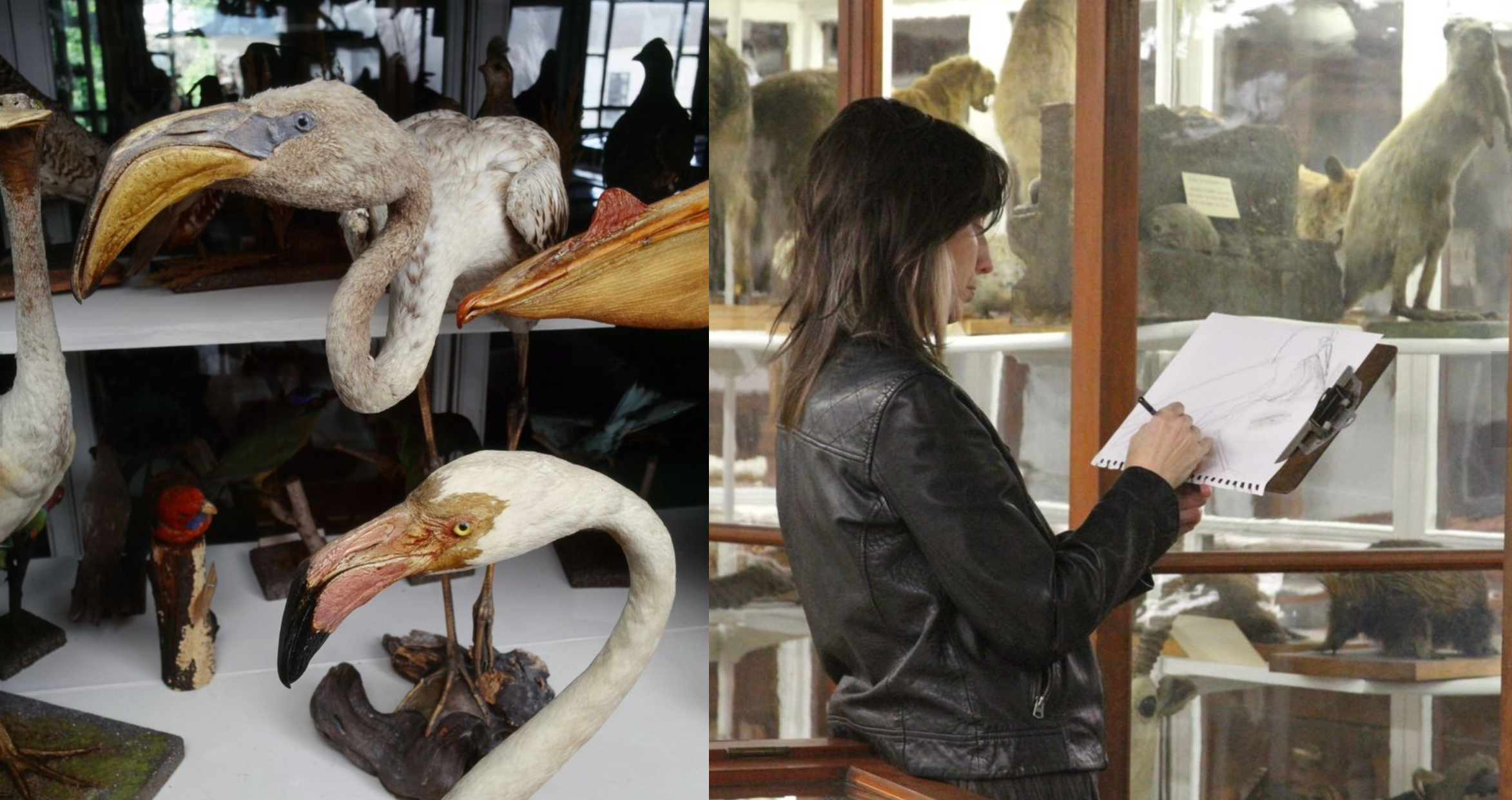
The information exists, and much of it is already written. Converting it into something a visitor wants to hear takes a different skill set: choosing what matters, writing for the ear, checking historical claims, translating carefully, producing audio, and making it all work on a phone. A large museum spreads that work across education staff, curators, audio producers, and a digital team. A historic house run by three employees and a rotation of volunteers leaves it on the wish list for a decade.
The gap supports a specialized service: ten professionally edited, institution-approved audio stories, reachable by QR code, delivered as a complete package for $499 to $899. Think of it as a compact editorial studio that carries a museum's existing research all the way to a finished audio guide, with no app to download and no AI narrator improvising facts about artifacts. The technology costs almost nothing, so the money sits in everything around it.
Here's the opportunity at a glance:
The money: Fifty $899 bilingual tours a year averages $3,746 a month in project revenue. Ten venues on a $300 monthly update program would add $3,000 MRR.
Inside:
• Ten-stop MVP and six-step production workflow
• $499 and $899 packages with unit economics
• Outreach email and the humanities-grant close
• 30-day launch plan and validation metrics
Why Now: Narration Got Cheap, Interpretation Stayed Expensive
On October 16, 2026, OpenAI made prompt-to-voice available to all API customers. Developers describe a narrator in plain language (warm, knowledgeable, a little theatrical, with the measured pace of a veteran heritage guide) and get a reusable synthetic voice. The same release added nine voices across German, French, Hindi, Japanese, and Korean. Creating a voice is free.
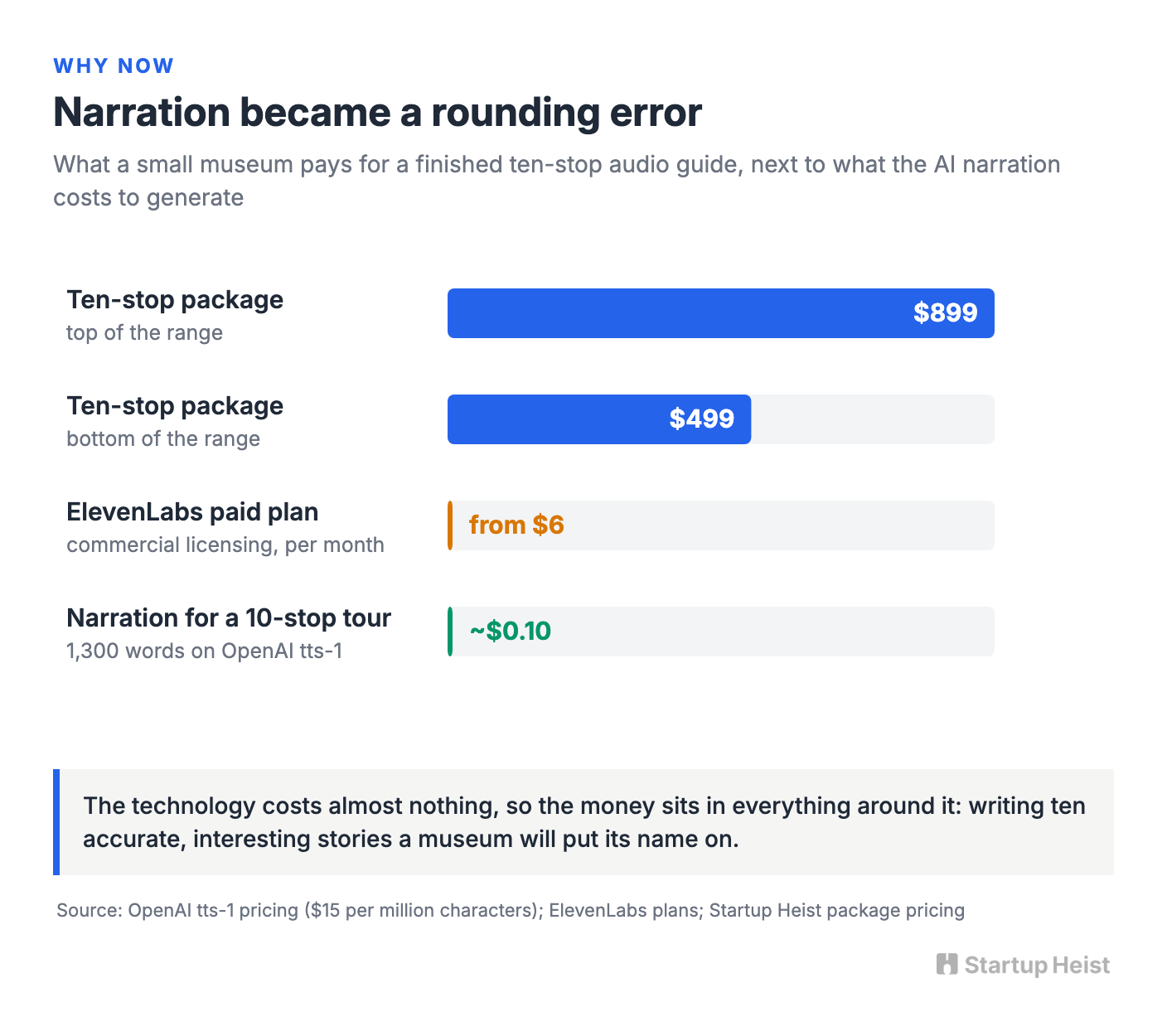
Those prompt-generated voices come with a catch: they run only inside GPT-Live sessions, billed at $0.05 per minute. OpenAI's documentation states they aren't supported by its Text to Speech, Realtime, or Chat Completions APIs, so there's no straightforward path from an approved exhibit script to a downloadable MP3 in your custom voice. Recorded tours run on other text-to-speech tools. OpenAI's standard tts-1 model costs $15 per million characters, which puts the narration for a ten-stop, 1,300-word tour at roughly a dime. ElevenLabs offers voice design on every plan and commercial licensing on paid plans starting at $6 a month.
Cheap, controllable AI narration turns the audio into a rounding error. A conventional production stacks scriptwriting, a voice actor, a studio session, editing, translation, and implementation, and coordinating those specialists often costs more than the recording. An independent producer now needs AI-assisted drafting, near-free narration, lightweight web publishing, and an occasional contractor. A ten-stop English guide runs 1,000 to 1,400 spoken words, about ten minutes of audio, and generating it costs pennies. The business lives in the harder job of writing ten accurate, interesting stories a museum will put its name on.
The Buyer: Thousands of Institutions With Stories and No Staff
In a 2014 count, the Institute of Museum and Library Services tallied 35,144 active U.S. museums. Nearly half, 16,880, were historical societies and historic preservation organizations. The count is dated and isn't a list of buyers, but it shows where the density is. The American Association for State and Local History describes small museums as running on annual budgets under $250,000, with staff wearing several hats and volunteers performing key staff functions. These are places with remarkable collections and no marketing department, developer, or interpretation specialist.
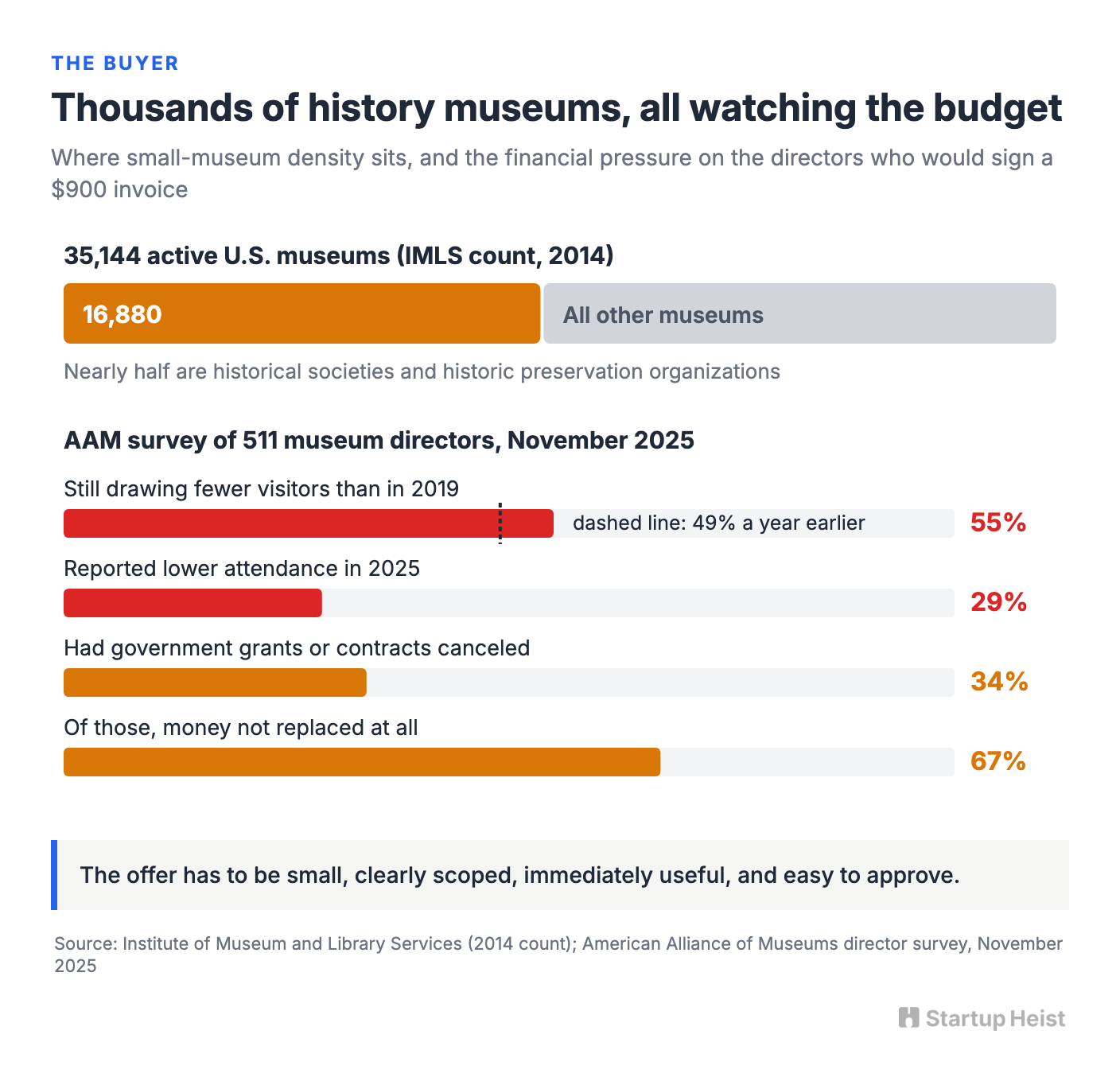
They're also under financial pressure. The American Alliance of Museums' November 2025 survey of 511 directors found 55% of museums still drawing fewer visitors than in 2019, up from 49% a year earlier. Twenty-nine percent reported lower attendance in 2025, tied to weaker tourism and economic uncertainty. A third, 34%, had government grants or contracts canceled, mostly from IMLS, NEH, and NEA, and 67% of those said the money hadn't been replaced at all. A director with a $150,000 budget will scrutinize a $900 invoice even if they love the idea, so the offer has to be small, clearly scoped, immediately useful, and easy to approve.
The format itself is proven. Bloomberg Connects hosts free guides for more than 1,400 cultural institutions across 47 countries and 57 languages. Your target is narrower: institutions with enough organization to commission a project and too little capacity to execute it. Look for usable existing material (labels, docent scripts, brochures, published research), one accountable approver, a concrete reason to launch (a new exhibit, a reopened room, tourism season, a language-access push), and a scope that fits in ten stops. A volunteer-run heritage railway reopening for summer can be a better prospect than a richer museum that already employs digital staff. Size matters less than the distance between the stories an institution owns and the stories it can actually deliver, and the software market has made that distance easy to see.
The Software Is Already Free
Anyone selling QR audio-guide software to museums walks into a wall of credible, cheap alternatives. Bloomberg Connects charges participating institutions nothing. Wexplo offers a free five-stop tier and a $49-a-month plan for 25 stops, with auto-generated QR codes, one-click narration, one-click translation into 14 languages, and synced transcripts. STQRY's marketplace starts free, with paid plans from $20 a month. Nubart sells public-QR subscriptions to museums and nonprofits at €199 to €349 a month, plus a prepaid-card model. Guide-ID will even generate tour scripts from basic exhibition information. A basic museum audio website is no longer a product advantage, and drafting is heading the same way.
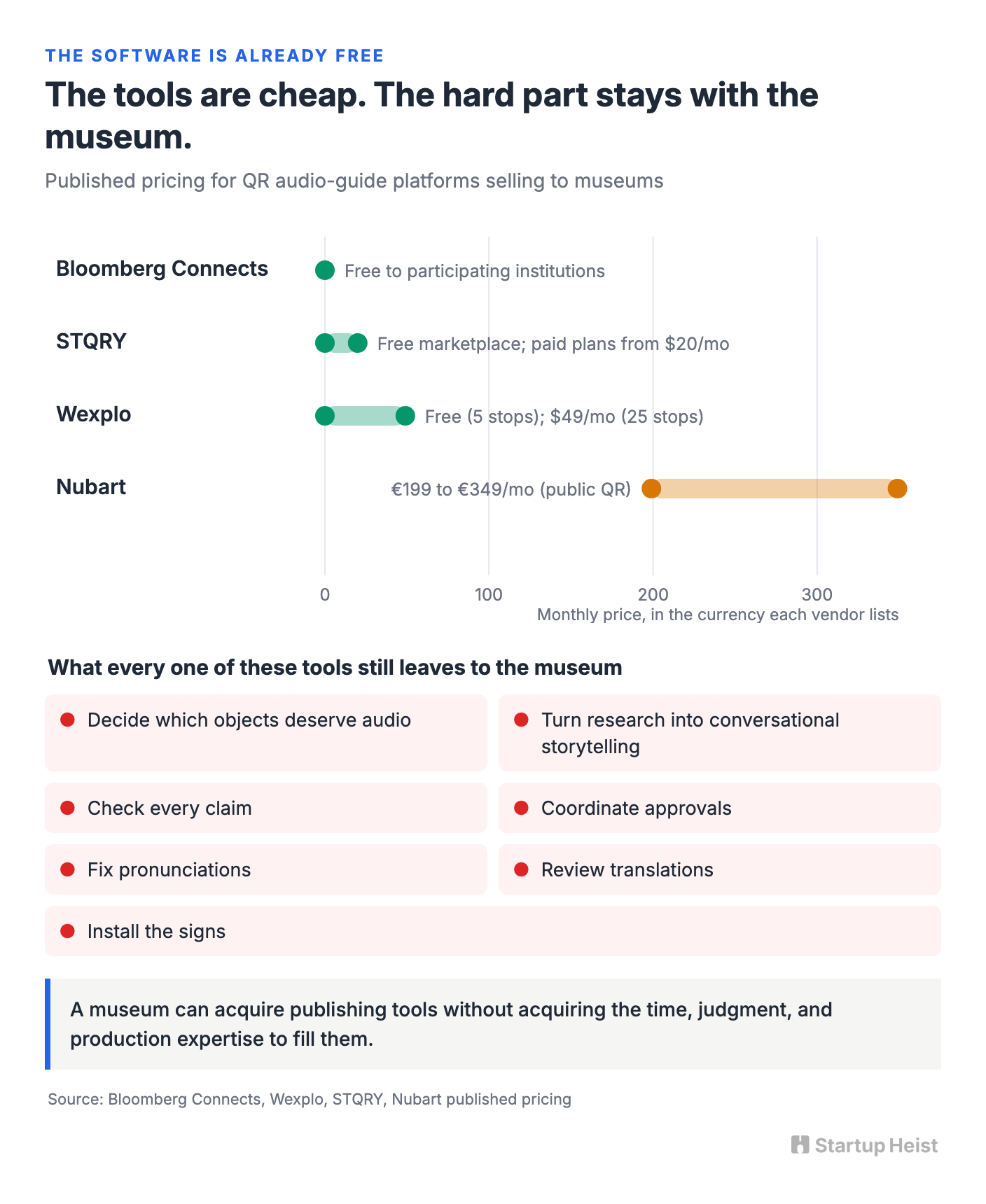
Every one of those tools still leaves the hard part to the museum. Someone has to decide which objects deserve audio, turn the research into conversational storytelling, check every claim, coordinate approvals, fix pronunciations, review translations, and install the signs. Guide-ID's own workflow builds in a step for staff to review and approve what its AI generates, which is exactly the labor a three-person historic house can't spare. A museum can acquire publishing tools without acquiring the time, judgment, and production expertise to fill them.
Your pitch follows directly: You already have the history. We'll turn it into ten stories worth hearing, review everything with your team, and deliver the finished package. The customer keeps whatever platform it already uses. If it's on Bloomberg Connects, you prepare assets to that platform's publishing requirements; if it has a website, you publish there; if it has nothing, you supply a simple hosted guide. The deliverable is portable cultural content, which turns the free platforms into distribution.
The Product: Ten Stories, One Route, No App
Keep the core package deliberately small: one institution, one visitor route, ten stops, about a minute each. Every stop gets an approved script, finished audio, a readable transcript, and a stable URL behind a printable QR code. Visitors scan, pick a language if one is offered, tap Play, and listen while standing in front of the object, with nothing to download and no account to create.
Unlock the Vault.
Join founders who spot opportunities ahead of the crowd. Actionable insights. Zero fluff.
“Intelligent, bold, minus the pretense.”
“Like discovering the cheat codes of the startup world.”
“SH is off-Broadway for founders — weird, sharp, and ahead of the curve.”


