


Most public records businesses make the same mistake: they think the product is data. The product is timing.
Every day, local governments across the United States publish high-intent commercial signals — newly filed LLCs, failed restaurant inspections, fresh building permits, liquor-license applications, code violations, ownership transfers. This information is technically public. It's also, for practical purposes, buried. The records sit behind clunky government portals, inconsistent file formats, CAPTCHA walls, and form-heavy search interfaces that no busy operator checks every morning.
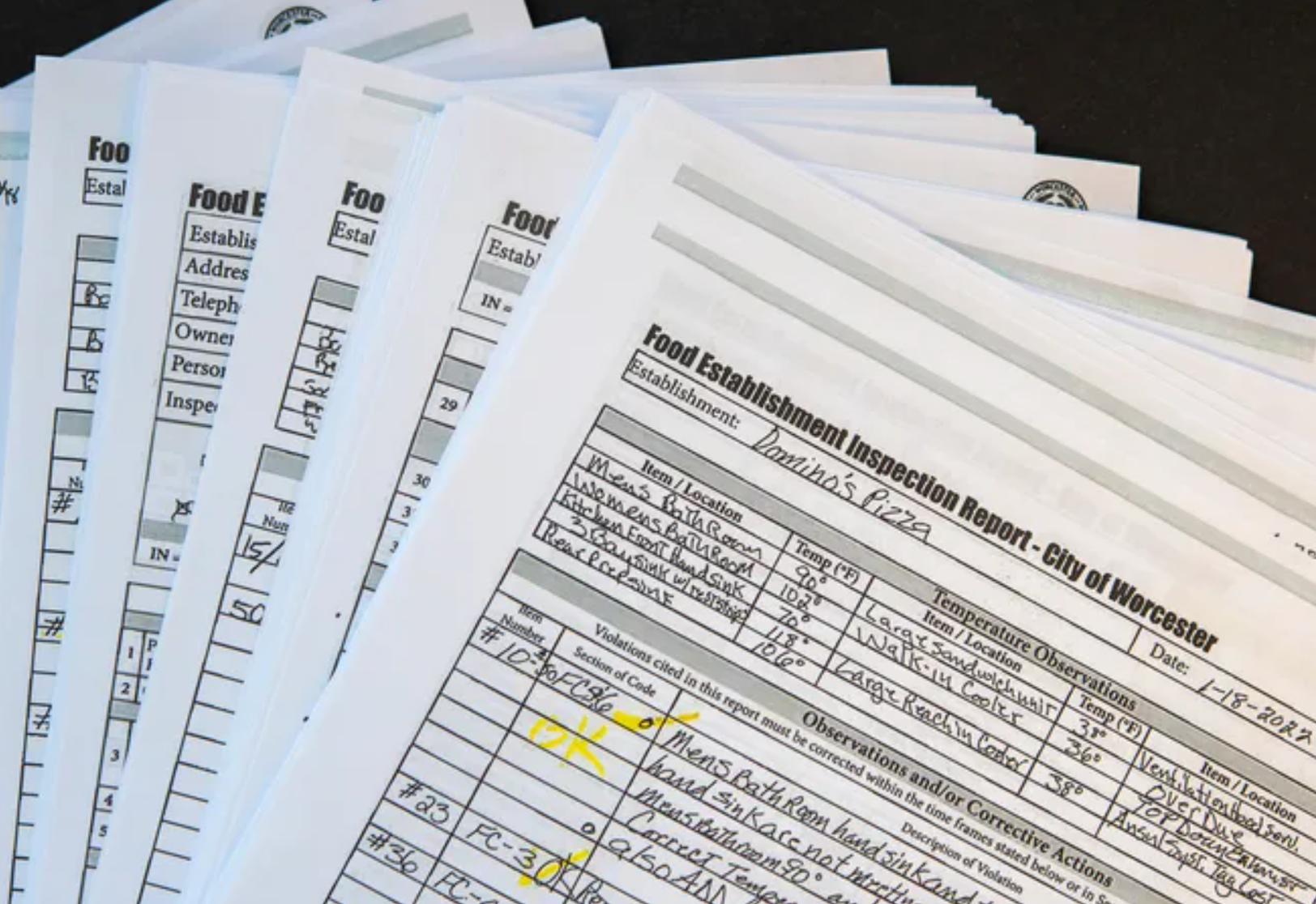
The gap between "public" and "accessible" is where the business lives. Pick one vertical, one geography, and one buying use case, then build a recurring pipeline that collects the signal reliably and delivers it in a form customers can act on.
Here is the opportunity at a glance.
The money: 30 subscribers at $299/month = $8,970 MRR from one metro and one signal type.
Inside:
• Browser-agent collection stack
• Wedge product selection framework
• Three-phase build and launch plan
• Pricing tiers and go-to-market script
Why This Works Now
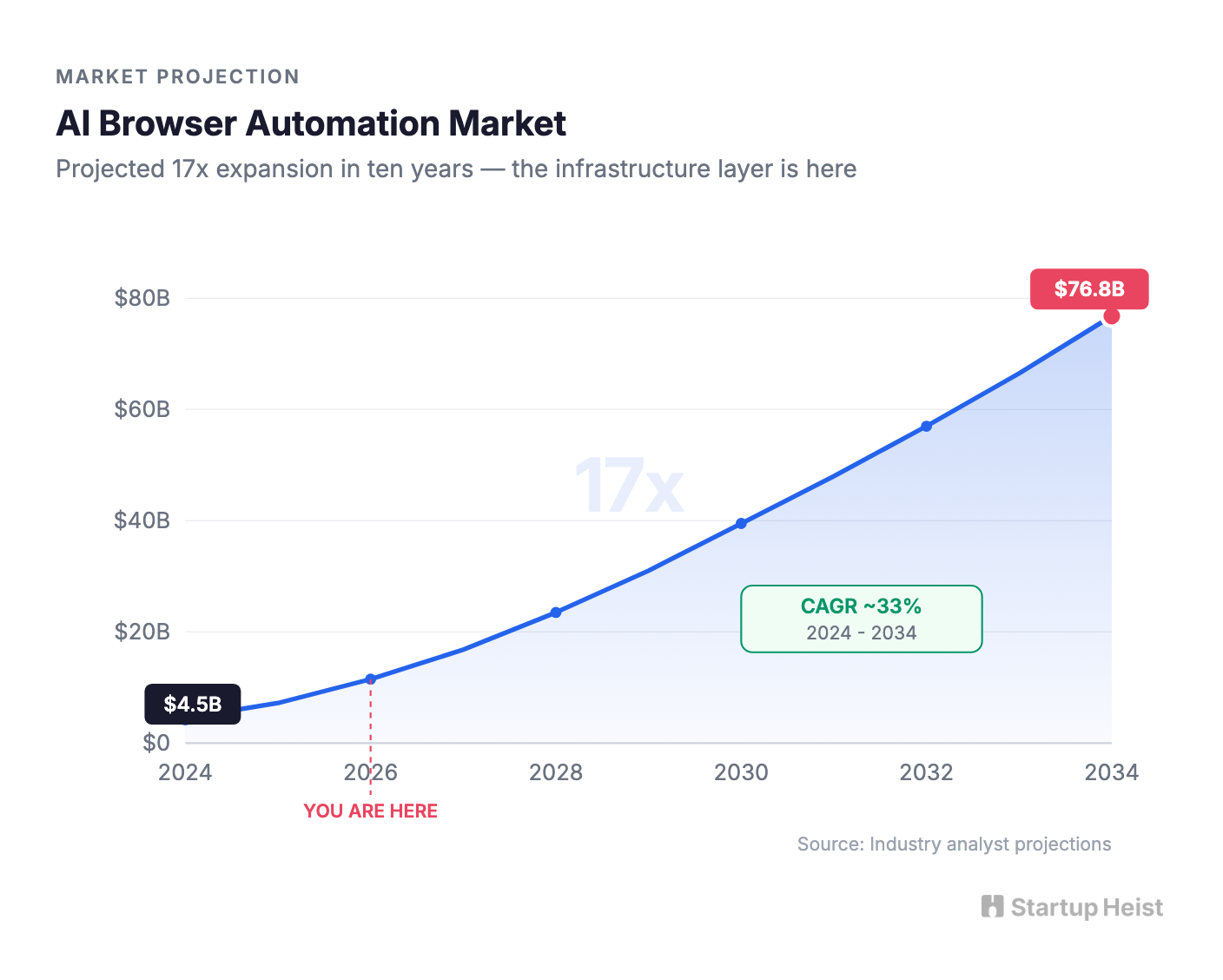
Browser-agent platforms like Skyvern and Notte now handle changing layouts, multi-step government workflows, and form-heavy portals without the selector fragility that made traditional scraping expensive to maintain. Notte charges $0.05 per browser-hour, making nightly collection across twenty jurisdictions cheaper than a single freelancer. Separately, Agentplace topped Product Hunt on March 25, 2026 as the #1 product of the day, a sign that the broader AI agent market is attracting serious attention. Industry analysts project the AI browser automation market will grow from $4.5 billion in 2024 to $76.8 billion by 2034. The infrastructure is production-grade and the costs are solo-founder friendly.
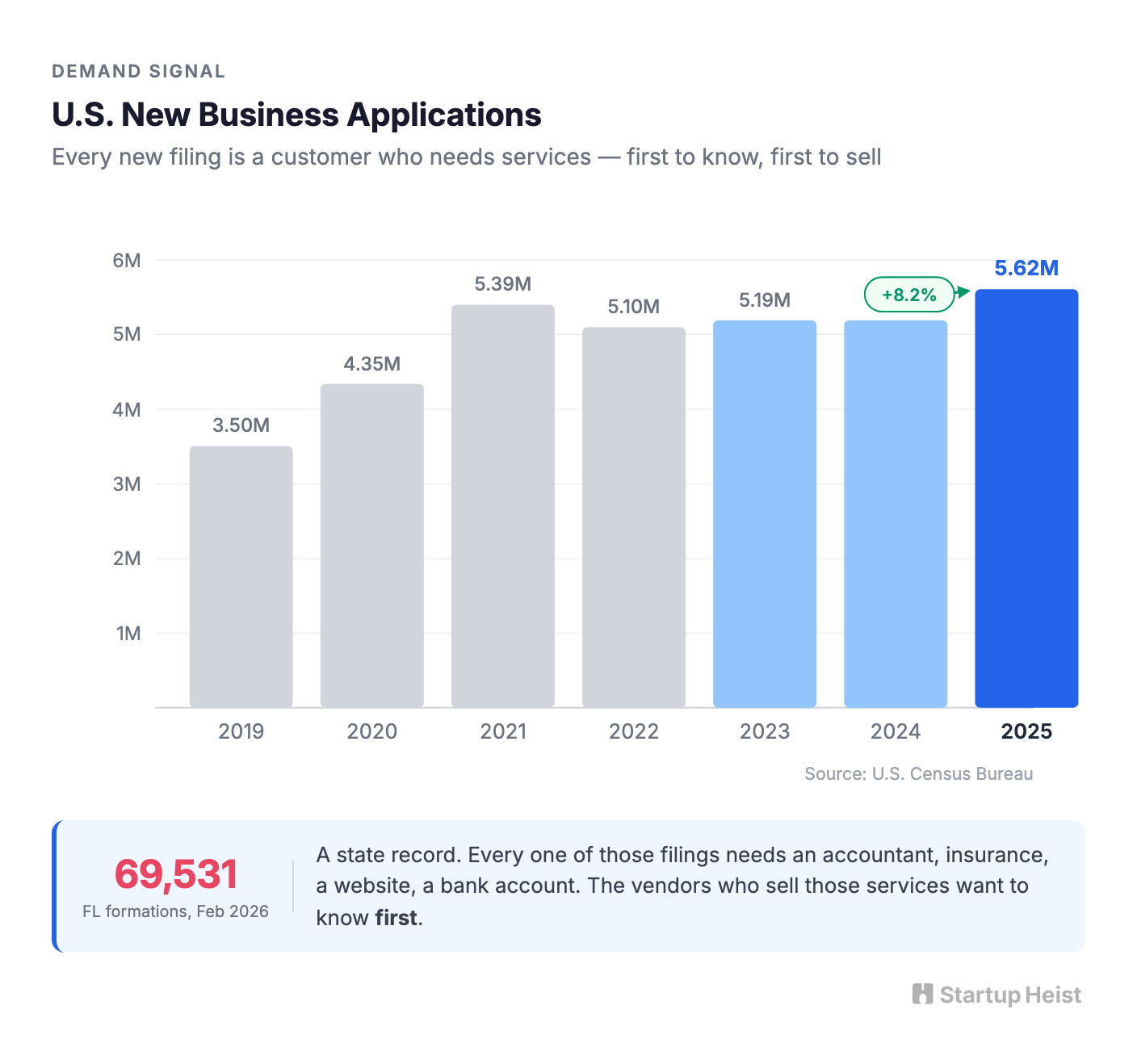
The demand side keeps accelerating. The U.S. Census Bureau reported 5.62 million new business applications in 2025, up 8.2% year-over-year, and early 2026 formation data from multiple state-level trackers is running well ahead of the same period last year. Florida alone recorded 69,531 new formations in February 2026, a state record. Every one of those filings is a new business that needs an accountant, insurance, a website, a bank account. The operators who sell those services want to know about new filings before their competitors do. Broad vendors sell volume at fractions of a penny per record. The niche operator sells the right record at the right moment and charges accordingly.
The Best Wedge
The instinct for a data business is to launch with the most comprehensive product possible. Resist it.
The best wedge is a job-shaped product, something a buyer understands in one sentence: "Get every restaurant in your metro that just got a poor inspection grade, delivered each morning."
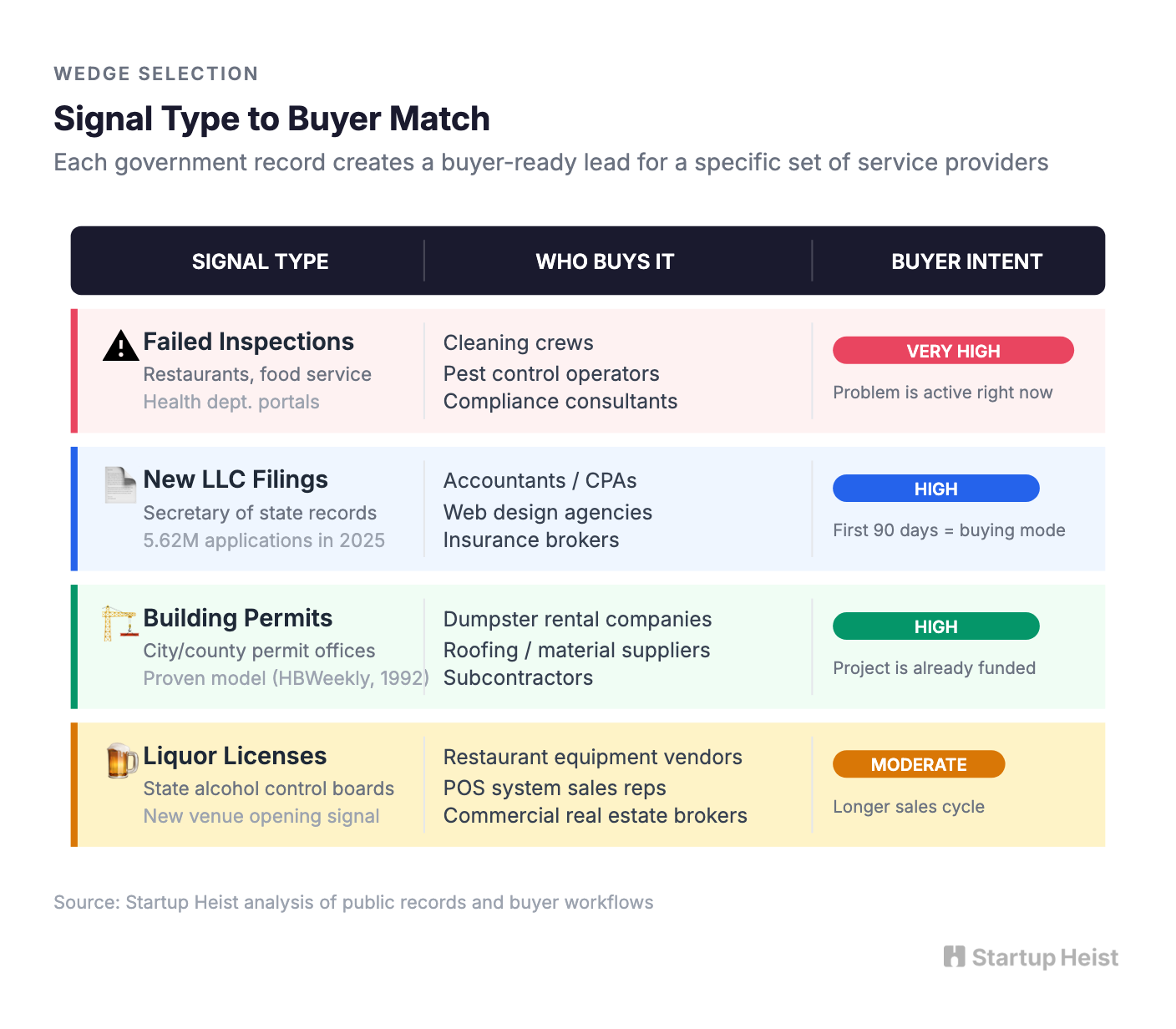
Compare that to "restaurant compliance data." The buyer already knows what to do with a failed-inspection list. Cleaning crews pitch sanitation services. Pest control pitches remediation. Consultants pitch compliance help. The list is small enough to feel curated, fresh enough to feel unfair, and close enough to revenue that a local buyer will tolerate much higher per-record economics than a national list broker would. The same logic works for newly filed LLCs sold to accountants and web agencies, new building permits sold to dumpster rental companies and roofing suppliers, or liquor-license applications sold to restaurant equipment vendors.
You're selling a head start. Companies like Shovels, PropertyRadar, and HBWeekly have already built real businesses proving there are buyers willing to pay for it month after month.
What the Business Actually Looks Like
Don't imagine a self-serve platform on day one. The smartest version starts as a narrow data product with subscription delivery. A two-person team can build this in three phases:
Unlock the Vault.
Join founders who spot opportunities ahead of the crowd. Actionable insights. Zero fluff.
“Intelligent, bold, minus the pretense.”
“Like discovering the cheat codes of the startup world.”
“SH is off-Broadway for founders — weird, sharp, and ahead of the curve.”


