


Vault Certified: The Trust Layer Luxury Resale Hasn't Built Yet
Secondhand Stopped Being a Discount Channel
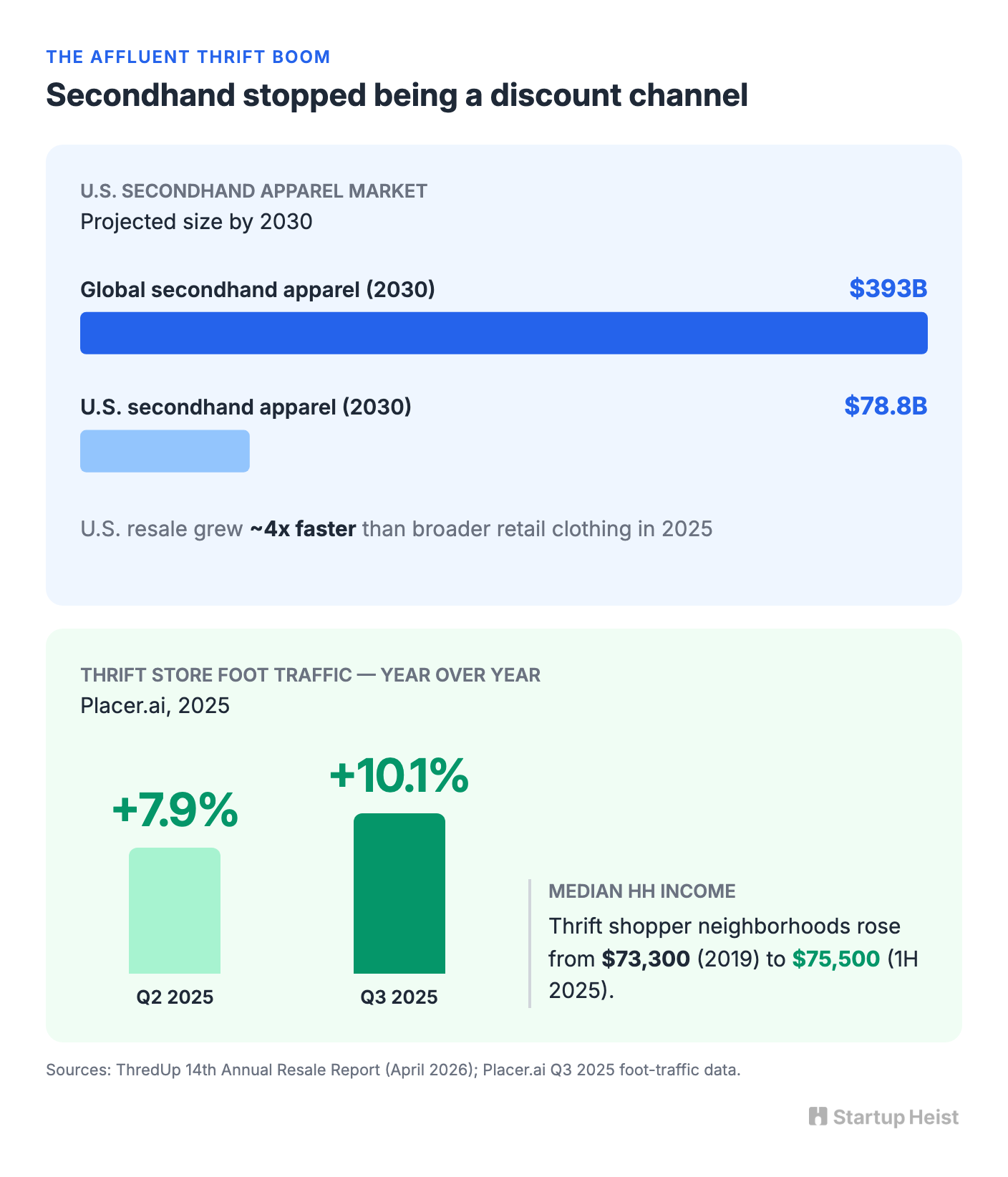
The resale boom is no longer a bargain-hunter story. ThredUp's 14th Annual Resale Report, published April 2, 2026, projects the global secondhand apparel market to reach roughly $393 billion by 2030, representing nearly ten percent of total apparel spending at that point. The U.S. piece alone is projected to hit $78.8 billion by 2030. In 2025, the American secondhand market grew nearly four times faster than the broader retail clothing market.
Placer.ai foot traffic data tells the same story from a different angle. Thrift store visits rose 7.9 percent year-over-year in Q2 2025 and accelerated to 10.1 percent in Q3. The median household income of neighborhoods feeding thrift store traffic climbed to about $75,500 in the first half of 2025, up from $73,300 in 2019. The shopper is not only more numerous. She's richer.
The next buyer entering luxury resale often isn't trying to save eighteen dollars on a sweater. She's trying to buy a $1,500 to $4,000 designer handbag, watch, or accessory without being humiliated in public. Different shopper, different stakes. The market can tolerate bad search, mediocre listings, and clunky seller tools. It can't tolerate counterfeit luxury at scale.
Here's the opportunity:
The money: 2,000 power sellers on a $99/mo bundle plus 20 Shopify and consignment integrations at $3K/mo equals roughly $258K MRR, in a category where Entrupy already clears $1.4B in authenticated volume.
Inside:
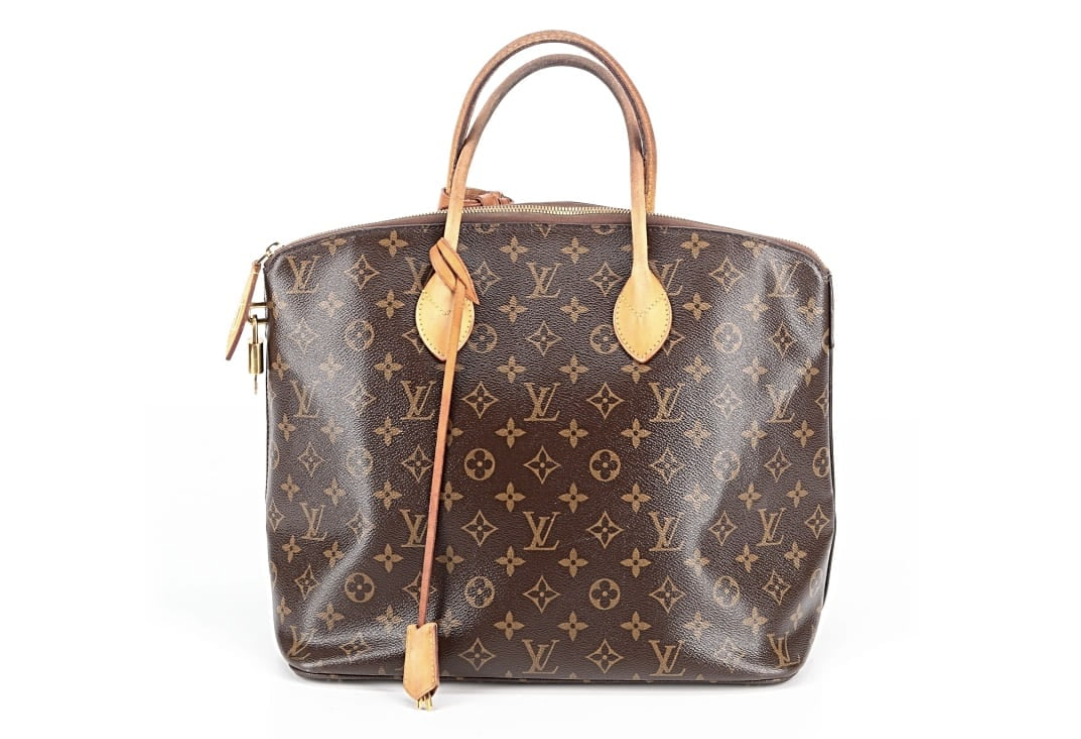
• Six-shot LV capture protocol and MVP spec
• Two-tier pricing: per-item plus API SaaS
• Five-layer moat stack for trust products
• Power-seller GTM with outreach script
The Trust Problem Changed Shape
Trust is now the choke point. The OECD and EUIPO's Mapping Global Trade in Fakes 2025 put global trade in counterfeit goods at roughly $467 billion in the most recent measurement year, about 2.3 percent of all imports. Clothing, footwear, and leather goods rank among the most heavily faked categories. Roughly 65 percent of seizures now involve small parcels and mail, which is exactly the channel that feeds resale inventory into the market.
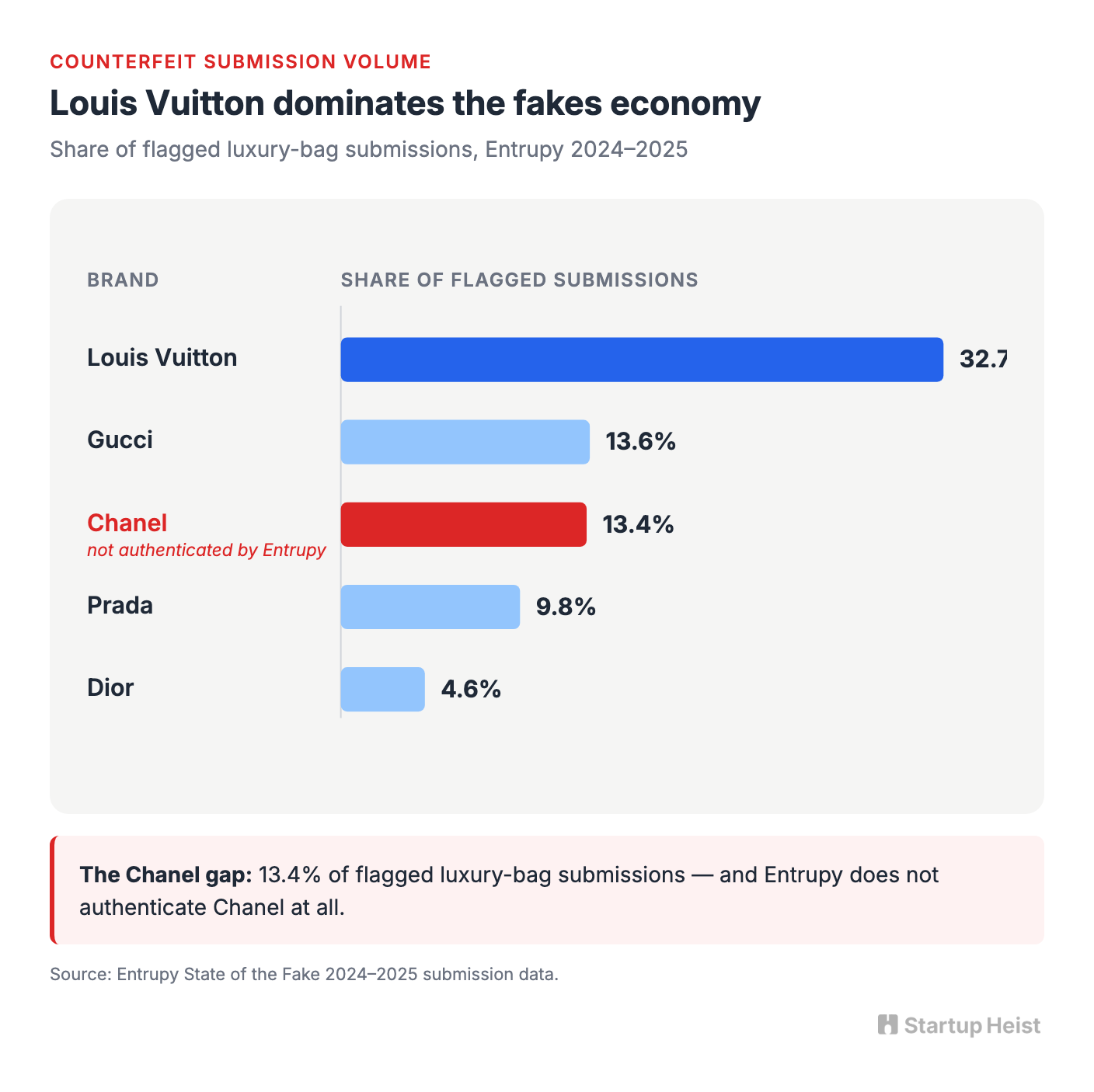
The counterfeits are also better. Superfakes use high-grade leathers, accurate hardware, and in some cases 3D-printed components to replicate details that used to separate the real from the fake. Entrupy's 2024–2025 submission data shows Louis Vuitton leading counterfeit-bag submission volume at 32.76 percent, followed by Gucci at 13.6 percent, Chanel at 13.4 percent, Prada at 9.8 percent, and Dior at 4.6 percent. A separate cut of the same data shows Goyard, Prada, Givenchy, Loewe, and Saint Laurent carrying the highest counterfeit risk rates — the percentage of submissions actually flagged fake. Either way you slice it, for a buyer putting three thousand dollars on the table, the cost of being wrong is immediate and personal.
The resale market solved transactions. It hasn't solved portable trust.
The Incumbent Map Leaves an Obvious Gap
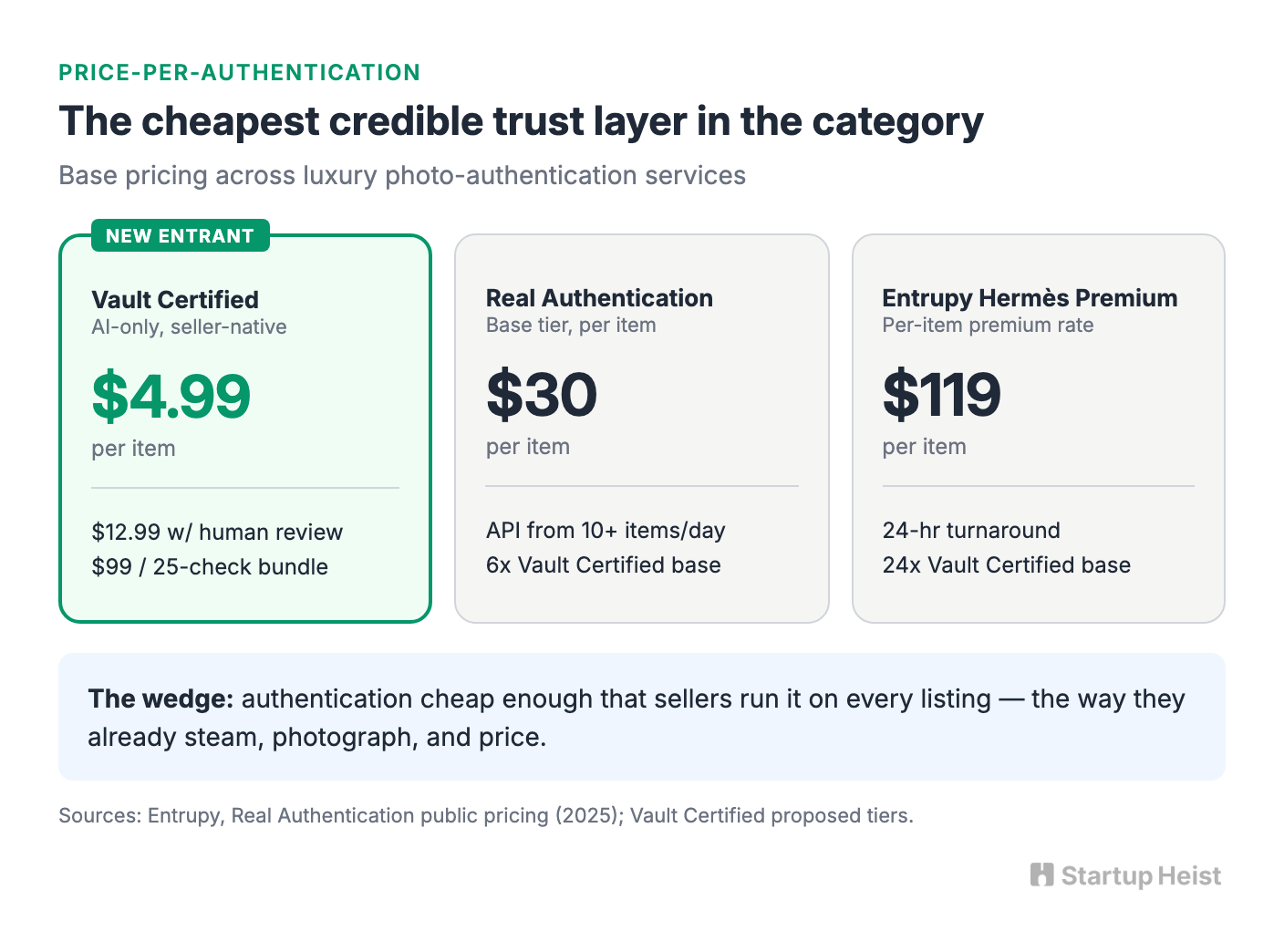
The existing authentication landscape is real and credible, and every player has left the same hole. Entrupy covers a roster of major luxury brands through a subscription model, with Hermès premium items billed separately at $119 per authentication and twenty-four-hour turnaround — and tellingly, Entrupy does not authenticate Chanel at all, a glaring gap given Chanel alone accounts for 13.4 percent of flagged luxury-bag submissions in their own 2025 data. Real Authentication charges $30 per item at the base tier and opens API integration to businesses handling at least ten items per day. LegitGrails has trained the market to accept photo-only authentication but positions itself toward individual buyers and worried gifters rather than sellers. TheRealReal runs the most technologically aggressive internal system, with Athena AI flowing 35 percent of inbound items fully through the pipeline by the end of 2025. It's captive to their own consignment channel.
Marketplaces inherit the same shape. Poshmark's Posh Authenticate only kicks in for items sold at $500 or more and routes the item through Poshmark after the sale, not before the listing goes live. A serious reseller still has a problem before the item sells: how does she price it, list it confidently, defend it in DMs, and reduce buyer hesitation? Post-sale platform inspection is a different product. It protects the buyer once money has moved. It doesn't help the seller close the sale in the first place.
The opening isn't invention. It's a different product shape: low-cost, API-first, sub-minute turnaround, seller-native, with a badge designed to lift listing conversion.
Why This Becomes a Business in 2026
Large retail is moving downmarket and upmarket at the same time, and that timing is what turns authentication from a feature into infrastructure. On January 16, 2025, Walmart launched a pre-owned luxury section on Walmart.com powered by a partnership with Rebag, loading roughly 27,000 items from Louis Vuitton, Hermès, Chanel, Gucci, Dior, Saint Laurent, Fendi, Prada, Bottega Veneta, and Goyard into Walmart Marketplace. Amazon followed with its own Rebag deal in June 2025, launching at roughly 30,000 items. Walmart's Marketplace pre-loved luxury segment posted roughly 200 percent year-to-date growth.
When the largest retail pipes in the country decide they want authenticated luxury inventory flowing through their marketplaces, authentication stops being a boutique service and becomes a prerequisite layer. Somebody is going to build the API that non-specialist channels plug into. Right now, nobody owns that seat.
The Wedge: One Brand, One Workflow
Unlock the Vault.
Join founders who spot opportunities ahead of the crowd. Actionable insights. Zero fluff.
“Intelligent, bold, minus the pretense.”
“Like discovering the cheat codes of the startup world.”
“SH is off-Broadway for founders — weird, sharp, and ahead of the curve.”


