


VibeCheck: The Trust Layer for Messy Rental Deals
Millions of Americans still find their next home the old-fashioned internet way: a Marketplace post, a Craigslist room-share, a WhatsApp group for a sublet, a Discord server for traveling nurses, a campus housing board at 2 a.m. during move-in week. These channels move faster than institutional rental platforms. They carry the weird inventory nobody else has, like two-month sublets, lease takeovers, summer rooms, friend-of-a-friend swaps. And they're a scammer's paradise.
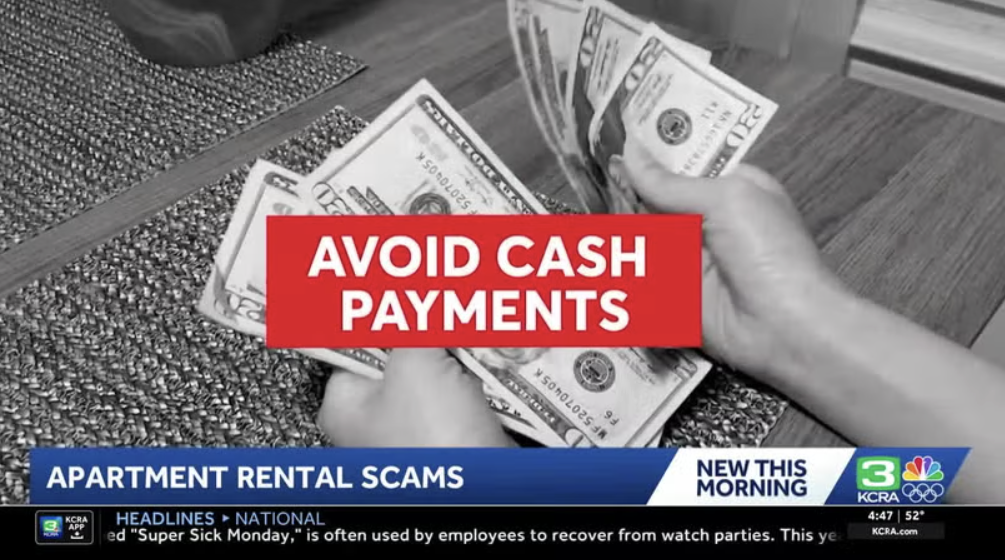
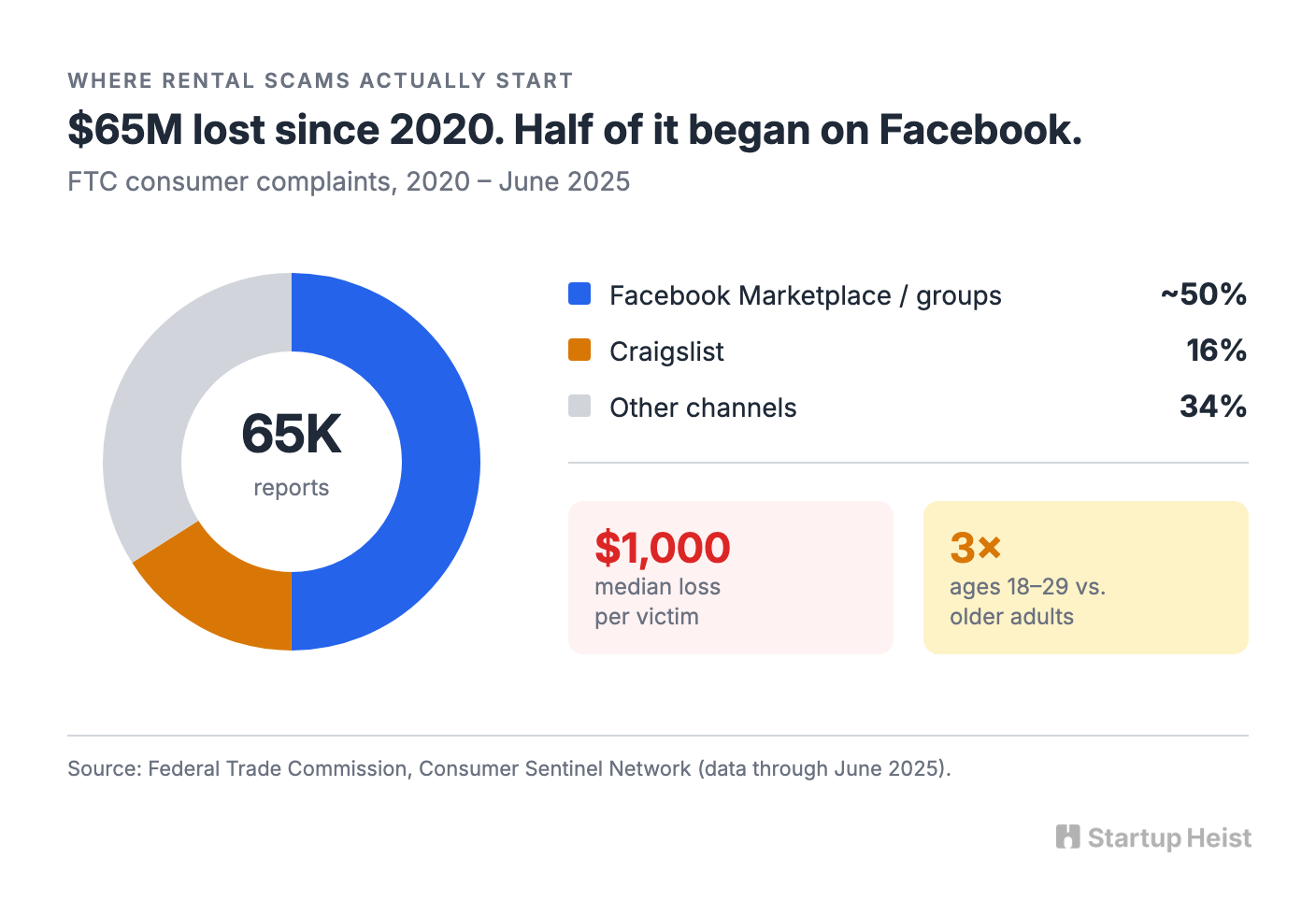
Since 2020, consumers have reported nearly 65,000 rental scams to the Federal Trade Commission, with total losses approaching $65 million. The median reported loss is $1,000. The FTC notes those figures capture only a fraction of the real damage, because most victims never file a complaint. In the twelve months ending June 2025, about half of those scams started with a fake ad on Facebook, and another 16% began on Craigslist. People ages 18 to 29 were three times more likely than older adults to lose money. These are the exact renters who can't afford it.
The opportunity is hiding in plain sight. It isn't background checks for landlords or another roommate-matching app. It's a lightweight, consumer-facing trust check for the exact moment a renter is about to send a deposit, share ID, or agree to move in with a stranger. Call it VibeCheck: rental scam prevention for the channels where people actually get burned.
Here's the opportunity:
The money: 5,000 paid reports a month at $19 is $95K MRR. One viral TikTok on rental scams is often worth thousands of reports in a week.
Inside:
• Three-layer MVP scope for solo founders
• Freemium plus $19 and $49 tier pricing
• Four-axis moat: data, trust graph, distribution
• GTM plus partnership outreach templates
Why the timing works now
Rental supply has splintered. Institutional platforms got safer, but the most liquid edges of the market still live outside them: sublets, room shares, lease takeovers, internships, summer moves, traveling professionals. Those renters use peer-to-peer channels because they need speed and flexibility, not a polished leasing workflow. And that's precisely where fraud thrives: fake ownership, recycled photos, last-minute urgency, off-platform payment requests, and identity mismatches that only surface after the wire clears.
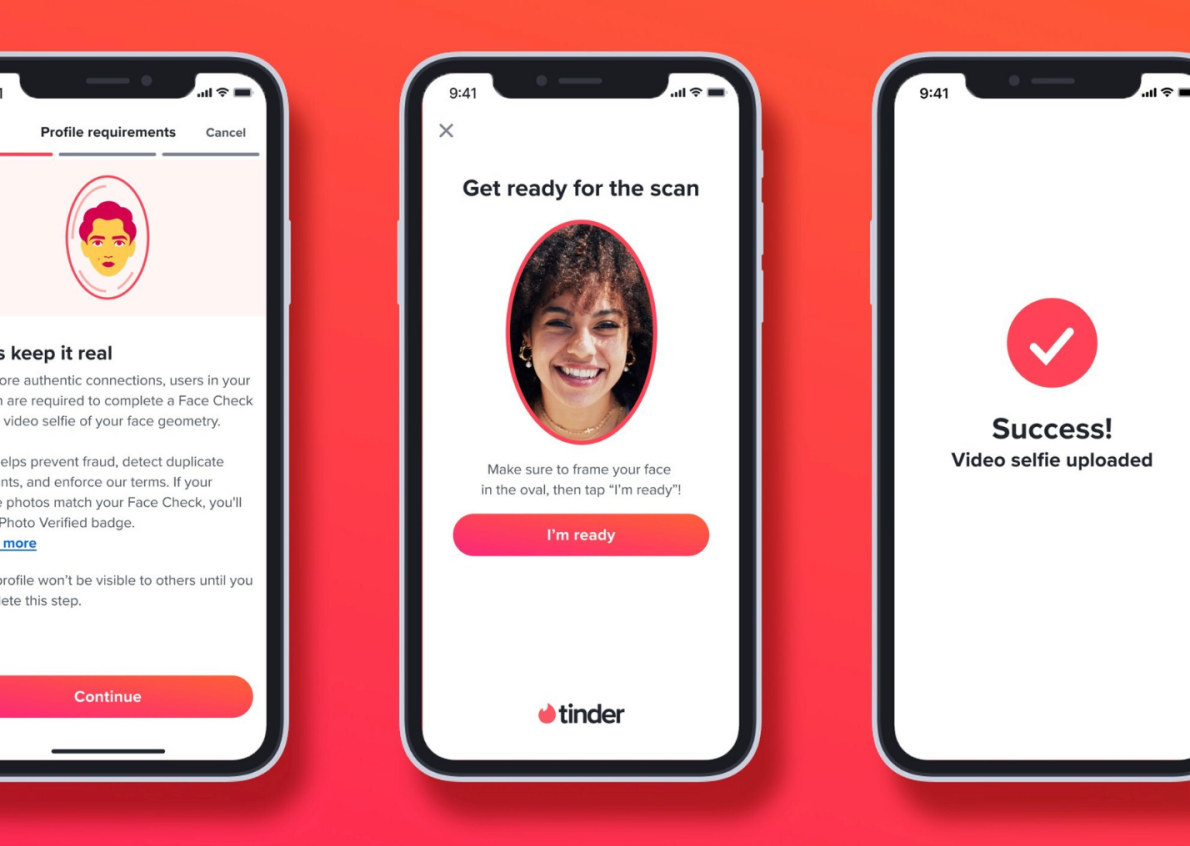
Meanwhile, dating apps are quietly training every adult in America to accept a new baseline. Before you meet a stranger from the internet, you might want an authenticity layer. On October 22, 2025, Tinder expanded its mandatory Face Check video-selfie verification to all new users in California and seven countries, with more U.S. states rolling out through early 2026. Match Group says the feature cut exposure to bad actors by more than 60% and bad-actor reports by more than 40% where it shipped. In Q1 2026, Match is extending Face Check to Hinge with U.S. testing beginning in March 2026, part of a broader rollout across Mexico, Brazil, Australia, and Canada.
The signal isn't really about dating. It's about consumer behavior. People are getting comfortable with a five-second trust check before trusting a stranger. Housing is the next obvious place that instinct shows up, and the stakes are higher. A bad swipe costs an evening. A bad deposit costs a month of rent.
The market underneath the wedge
The broader screening market isn't hypothetical. Per Data Bridge Market Research, the North American background check market hit $1.91 billion in 2024 and is projected to reach $4.90 billion by 2032, growing at roughly 12.6% a year. Incumbent tools have already normalized paid checks inside the rental funnel: TransUnion SmartMove starts around $25 and runs up to $40 per applicant depending on depth, TenantCloud's credit-only screening is $30 and its full check is $40, RentSpree and LeaseRunner sit in the same range. Landlords and structured rental workflows already pay for screening as a routine cost of closing a lease.
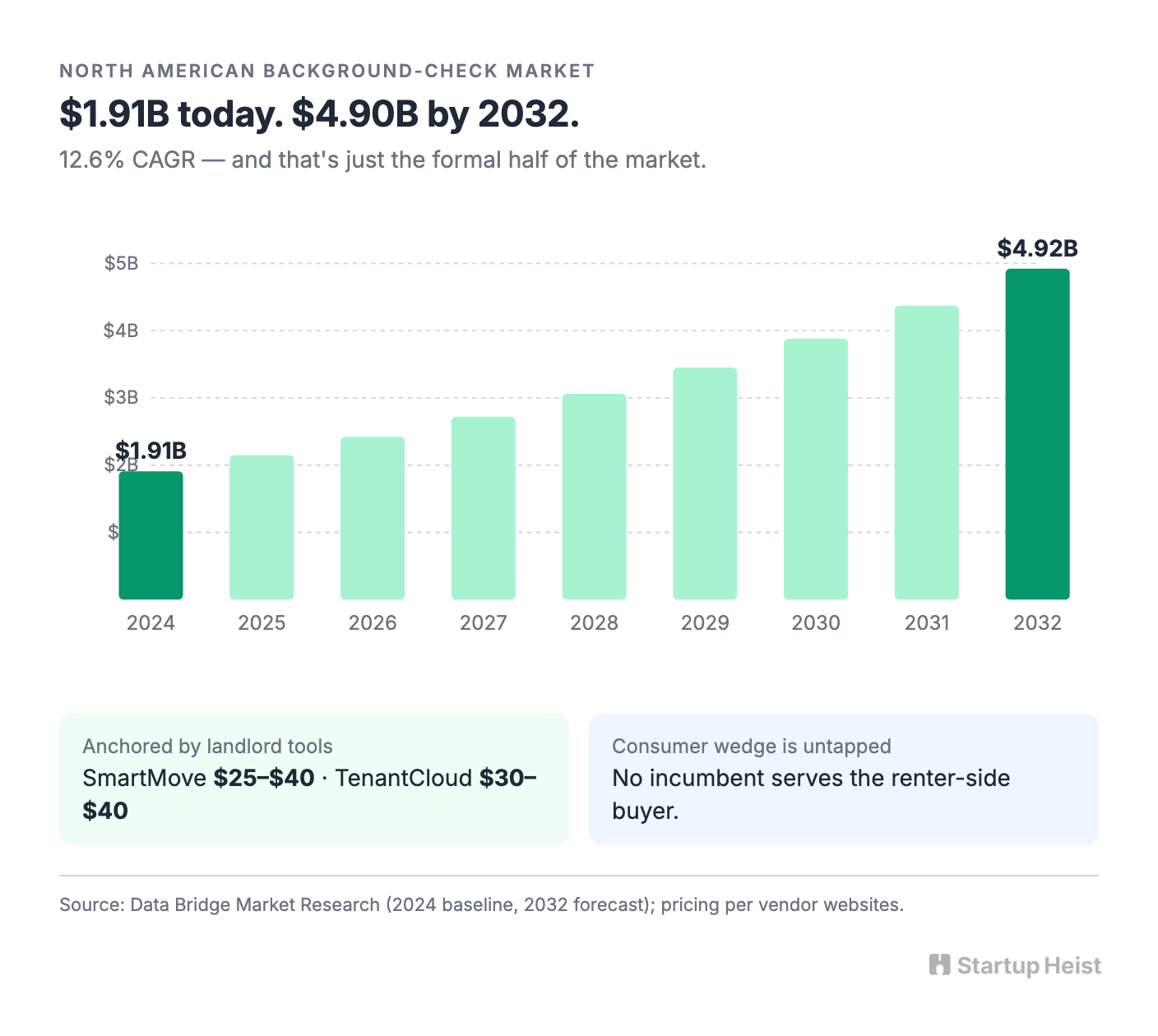
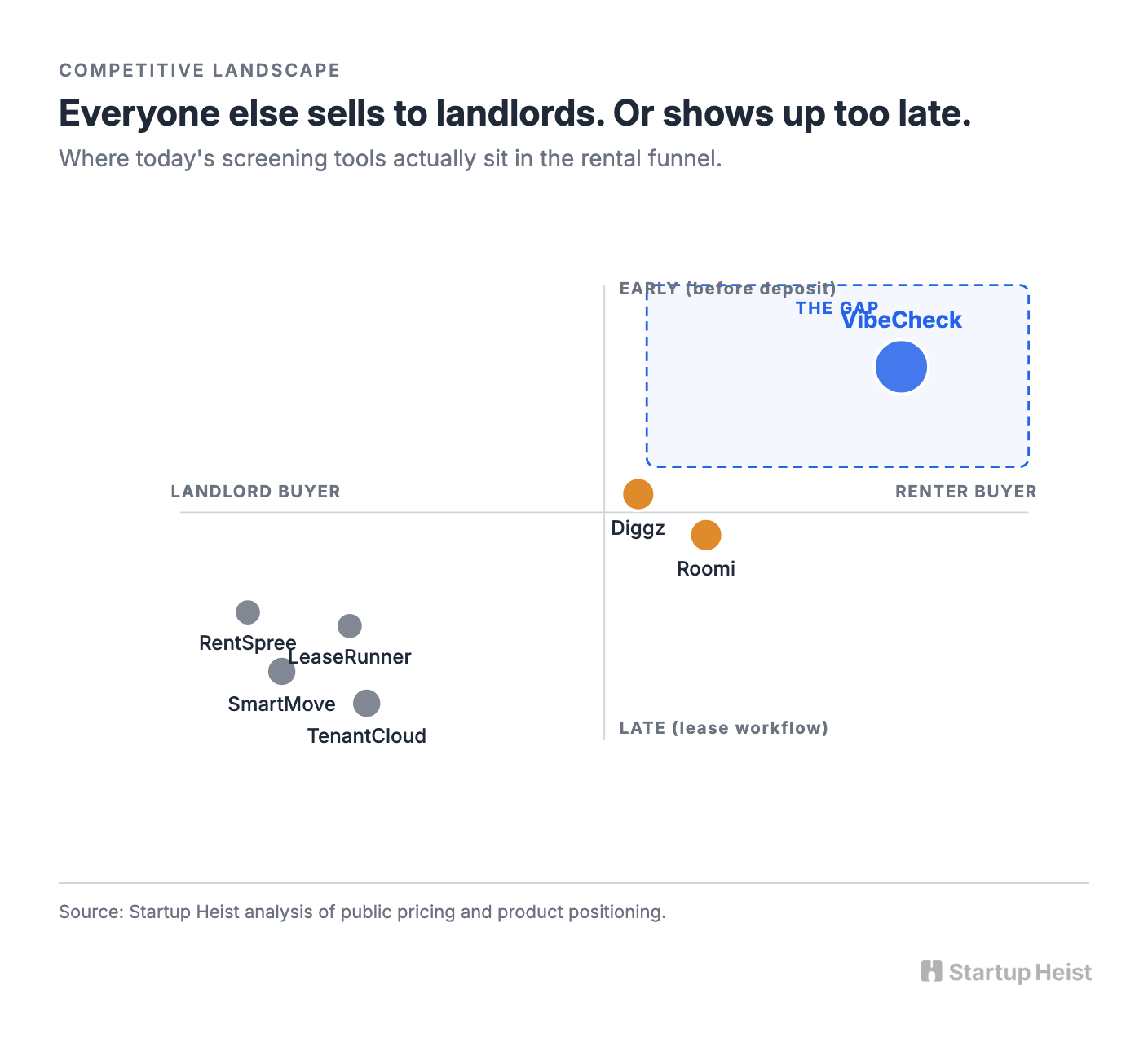
VibeCheck shouldn't try to compete with any of that. Those are landlord tools, priced for landlord workflows, regulated by landlord law. They sit late in the funnel and usually depend on formal consumer-reporting infrastructure. Your wedge sits earlier, lighter, and with a different buyer. The question VibeCheck answers isn't "should I approve this tenant?" It's "should I keep talking to this person, show up to the viewing, or send the deposit?" That's a consumer market incumbents can't serve without cannibalizing their core.
Where the gap actually opens
Roommate apps like Diggz and Roomi already do some verification. Diggz offers ID, phone, social, and reference verifications. Roomi requires background checks for all users. Formal vendors like SmartMove, TenantCloud, RentSpree, and LeaseRunner go deeper. So why is the problem still $65 million and growing?
Three mismatches.
Channel mismatch. Existing roommate apps work when both parties are already inside the app. The deals where anxiety peaks, like Marketplace listings, Craigslist rooms, Telegram sublet groups, and text-message negotiations, happen nowhere near those apps. Those users don't want another subscription. They want a one-time answer, on their phone, before they respond.

Output mismatch. Formal screening reports are dense landlord documents. Average renters can't read them, and most don't need a credit file to decide whether a subletter looks fake. They need a readable synthesis: does the identity cohere, do the facts line up, are there obvious risk patterns, what should I ask next, and is this worth walking away from?
Job-to-be-done mismatch. The real job isn't "screen this person." It's "help me avoid getting scammed or trapped in a weird living situation." That includes signals FCRA reports never touch: online consistency, explanation gaps, image reuse, urgency, payment friction, communication style, off-platform behavior. Those signals are where consumer fraud actually lives.
The product that wins this space looks less like a tenant-screening portal and more like a modern fraud-prevention layer for renters — a way to verify a Craigslist listing, a Marketplace sublet, or a roommate DM before a dime moves.
The three-layer MVP
Don't launch with criminal checks, credit pulls, or aggressive scraping. That path drags you into FCRA exposure, cost inflation, and platform dependency before you have a single paying user. Launch three distinct layers, priced separately, that stack into a single report.

Unlock the Vault.
Join founders who spot opportunities ahead of the crowd. Actionable insights. Zero fluff.
“Intelligent, bold, minus the pretense.”
“Like discovering the cheat codes of the startup world.”
“SH is off-Broadway for founders — weird, sharp, and ahead of the curve.”


