


Dead-Hour Arbitrage: Brokering Empty VFW Halls Into Recurring Community Homes
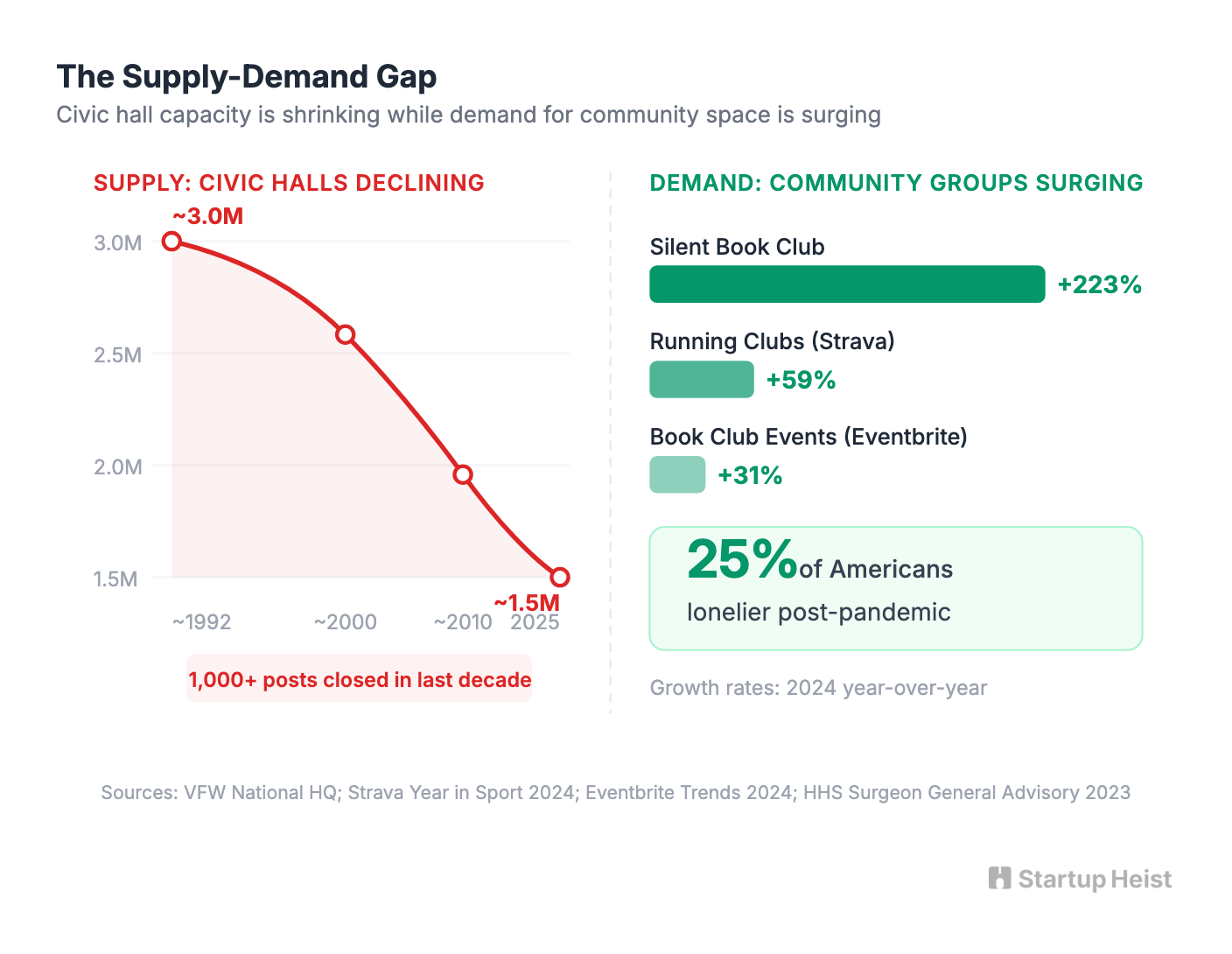
Well over 50,000 civic buildings are scattered across the United States — VFW posts, American Legion halls, Elks lodges, Masonic temples, Knights of Columbus halls, church fellowship rooms, union buildings — and most of them sit empty on weeknights. VFW membership, including auxiliary, has fallen to roughly 1.5 million, about half its peak in the early 1990s. More than 1,000 posts have closed in the last decade. The average member age at many posts is north of 72. The buildings still have parking lots, commercial kitchens, stages, sound systems, and banquet seating. What they don't have is enough people walking through the door.
On the other side, demand for community gathering space is accelerating. Running-club participation rose 59% globally in 2024. Book club events on Eventbrite grew 31% in the same year, with Silent Book Club chapters specifically up 223%. The Surgeon General declared loneliness a public health epidemic in May 2023. Twenty-five percent of Americans reported feeling lonelier in 2024 than before the pandemic. Third places are closing faster than they're being replaced.
The gap between those two trends is wide open — and nobody in the U.S. is working it.
The money: Three halls, 12 recurring nights per month at $225 average. $1,400 to $1,600 net per hall after costs.
Inside:
• Three models from broker to operator
• First-hall pilot deal structure
• 4-week MVP with zero code
• Outreach templates for halls and groups
The Pricing Mismatch
Legacy civic hall rental prices are built for events. A birthday party, fundraiser, or banquet can absorb a one-time fee of $500 to $1,000. A Tuesday-night reading club cannot.
Actual venue rental rates vary wildly. A VFW in West Chester, Pennsylvania lists a four-hour base rate of $700. A Seattle post charges $100 to $150 per hour with a four-hour minimum. A Texas veterans hall lists $350 for eight hours and explicitly allows 90-day lease periods — proof that recurring blocks already exist in the wild.
Those are event prices. The number you care about is the dead-hour price — what the hall will accept for time nobody is bidding on. A flat monthly guarantee of $600 to $1,200 for three weeknight blocks is a number most underused halls will entertain. They're earning zero on those hours right now. Your offer is found money.
Why the Venue Marketplace Model Misses This
Peerspace hit $100 million in revenue and $500 million in gross bookings in 2024. Tagvenue, Splacer, and Giggster compete in the same category. They take 15 to 20 percent from hosts, charge guests a processing fee, and optimize for one-off bookings — photo shoots, corporate offsites, pop-up events. For on-demand discovery when someone needs a space once, they work.
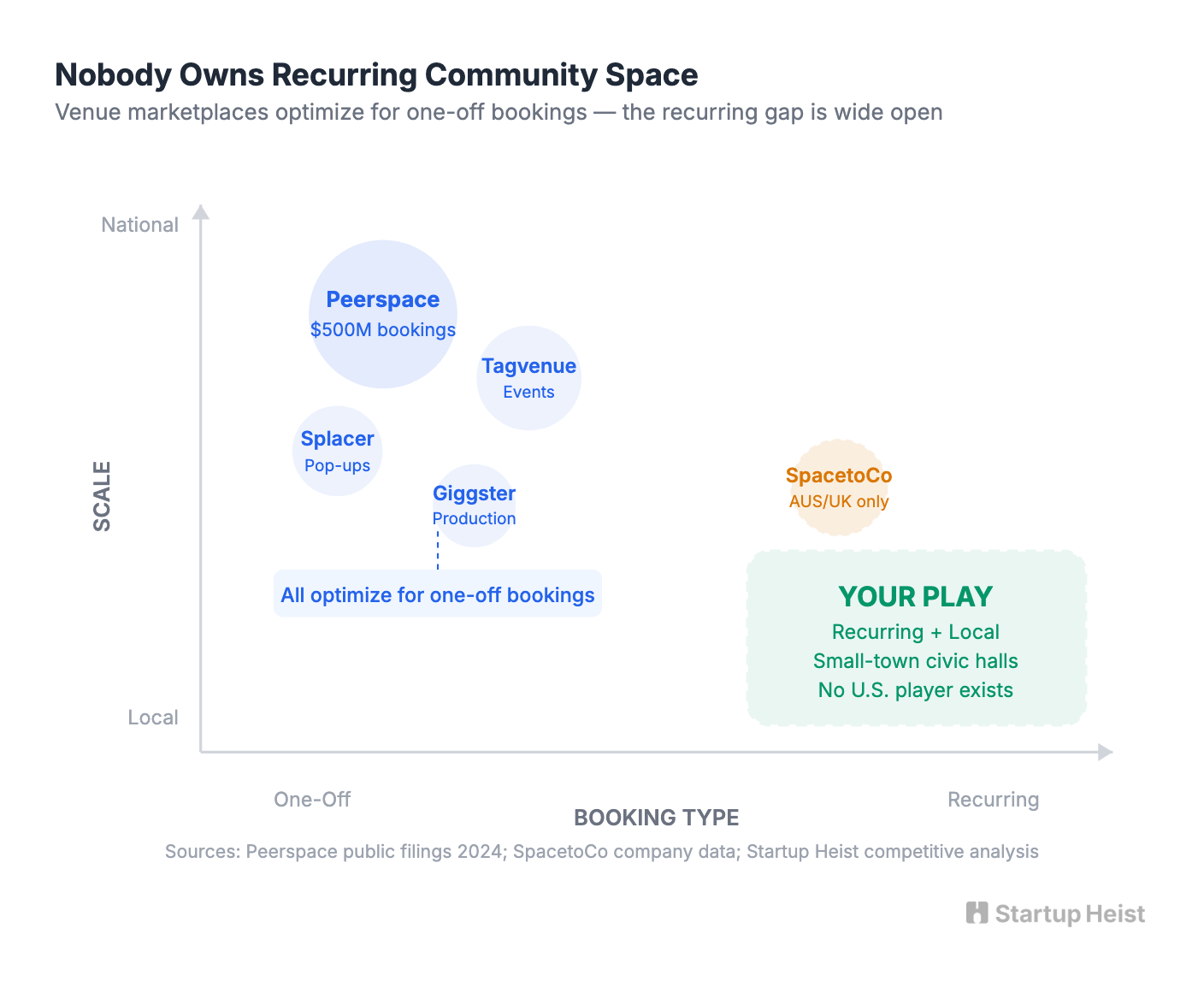
Recurring community use is a different animal. A book club organizer wants the same room every Tuesday at 7 p.m. without re-booking through a marketplace each week. A run club needs a consistent post-run social spot. A chess group wants a home. The hall wants someone who filters weird events, enforces house rules, collects deposits, and keeps the building from getting trashed — not random internet demand. SpacetoCo, a venue-hire platform built in Perth, Australia in 2017 specifically for community halls, has raised $2 million and expanded to the UK. They've validated the model in two English-speaking markets. No equivalent exists in the United States. The defensibility of the broker role comes from trusted local curation plus recurring utilization. It's an operations business disguised as a real estate play.
What the Organizer Actually Buys
The organizer is paying for four things. Consistency — a recurring home base, not a one-off booking. Legibility — "We meet every Wednesday at the Elks hall off Main" does more marketing than any Instagram post. Low-friction logistics — tables, parking, bathrooms, AV, maybe a kitchen, maybe a bar, all already there. Social permission — people are more willing to show up to a recognized civic building than a stranger's living room.
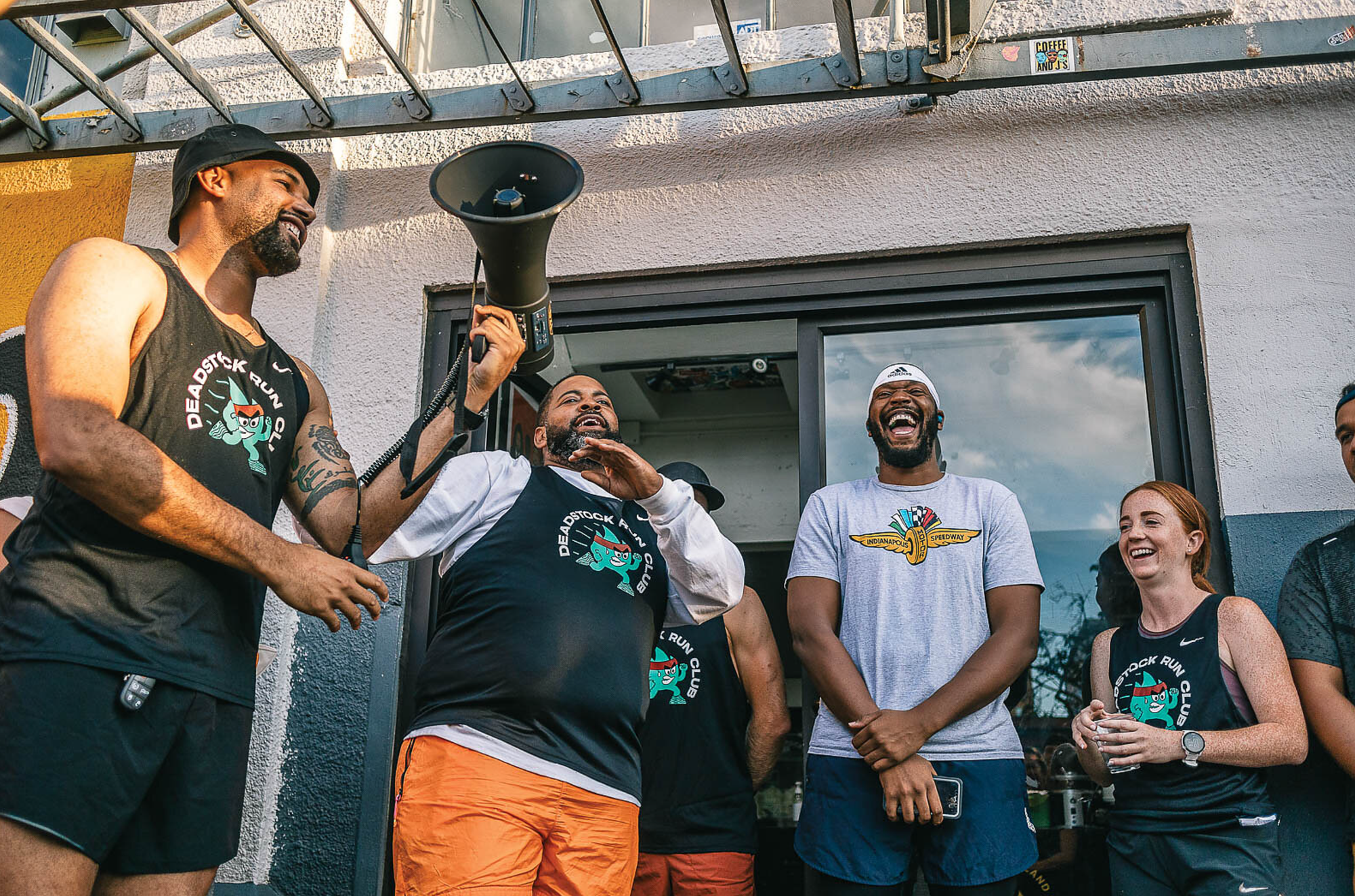
Your pitch to organizers isn't "rent this hall." It's "I can give your community a permanent home."
Small towns and outer suburbs are the right market for a community hall rental broker. Urban areas already have venue inventory, coworking spillover, and enough density for marketplace platforms to function. In small towns, there's a vacuum. People want community, and the venue layer never modernized. Legacy fraternal halls are overbuilt for exactly these groups. A Tuesday chess night of 20 people in a room built for 150 is comfortable, not awkward. The infrastructure is already there.
The Business Model
Three models work, and the smart progression uses all three:
Unlock the Vault.
Join founders who spot opportunities ahead of the crowd. Actionable insights. Zero fluff.
“Intelligent, bold, minus the pretense.”
“Like discovering the cheat codes of the startup world.”
“SH is off-Broadway for founders — weird, sharp, and ahead of the curve.”


