


The Nature Amenity Heist
A boutique hotel next to a marsh owns an asset it never paid for. The birds arrive every spring and fall on their own schedule, free of charge, whether or not anyone at the property notices.
Almost nobody has turned that into a product.
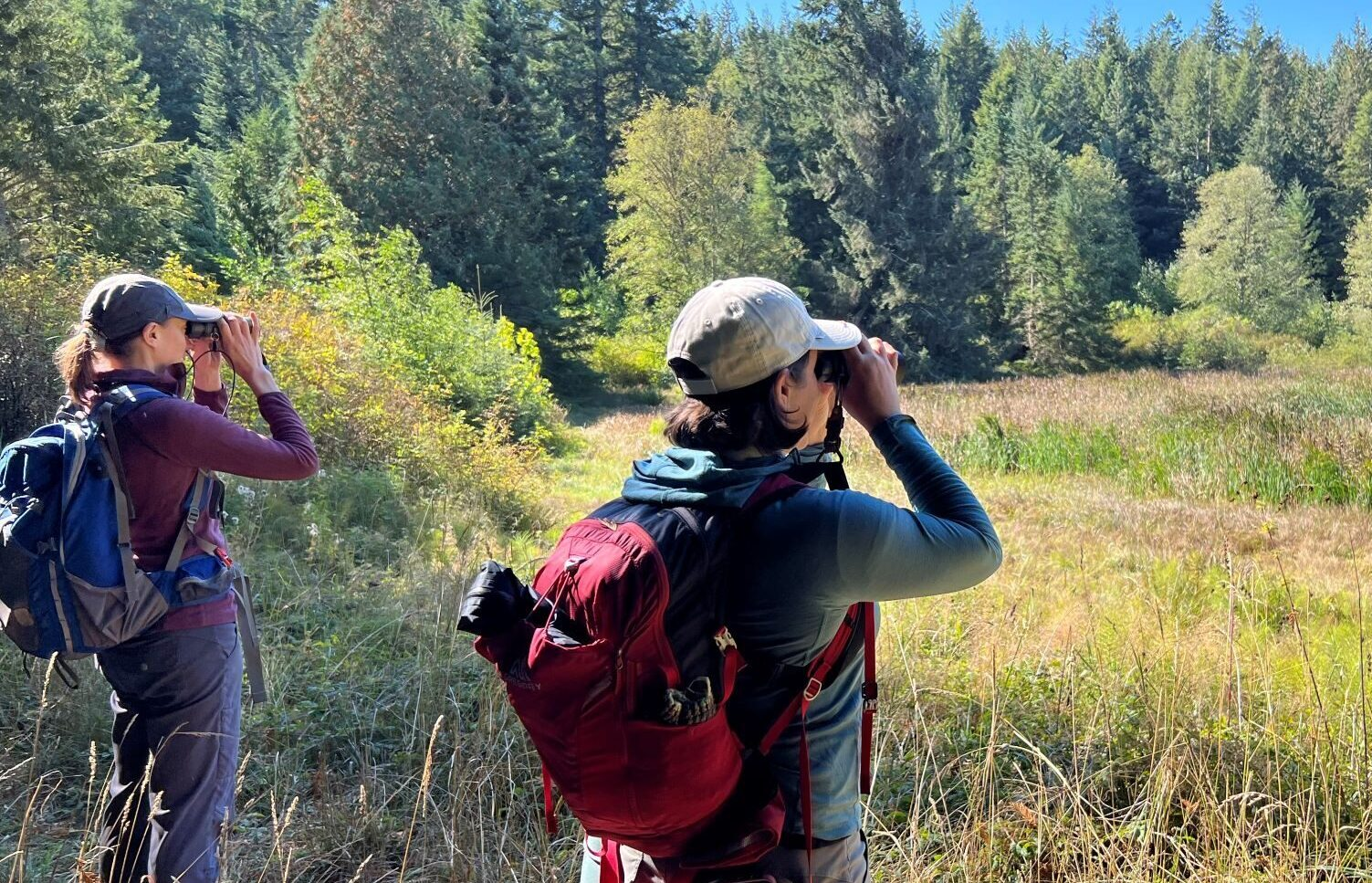
The website says "surrounded by nature." The front desk recommends a trail when a guest asks. Someone walks outside at 7 a.m., hears something interesting, pulls out a phone, maybe opens Merlin Bird ID, and moves on. Nothing about that was designed. There's no card in the room listing ten birds to look for this weekend, no sunrise route, no binoculars behind the desk, no local naturalist bookable for tomorrow morning.
There's a business sitting in that gap: a productized nature-amenity service for independent hotels. Start with birding, then expand into seasonal, property-specific outdoor programming and bookable local guides.
Here's the opportunity:
The money: Twenty properties at $5,000 a year is $100,000. A hundred is $500,000, with software-like margins and no engineering payroll.
Inside:
• Full $2,500 Seasonal Kit scope and pricing
• The eBird licensing trap and the way around it
• 90-day corridor plan with the cold email
• Three compounding layers above the service
This isn't a billion-dollar SaaS company hiding in plain sight, and it doesn't need to be. It's a high-margin service business one person can launch and compound into reusable content, local expert relationships, booking infrastructure, and performance data nobody else has. Birding is the wedge because the demand already exists and nobody is serving it well.
The demand is already booked
The U.S. Fish and Wildlife Service ran the numbers in its 2022 National Survey and found 96 million American birders, or 37% of the population aged 16 and older. Those birders spent $107.6 billion that year. About $93 billion went to equipment. The other $14 billion went to trips: lodging, food, transportation.
Fourteen billion dollars a year already moves through hotels, restaurants, and gas stations because of birds. Almost none of it is merchandised on purpose.
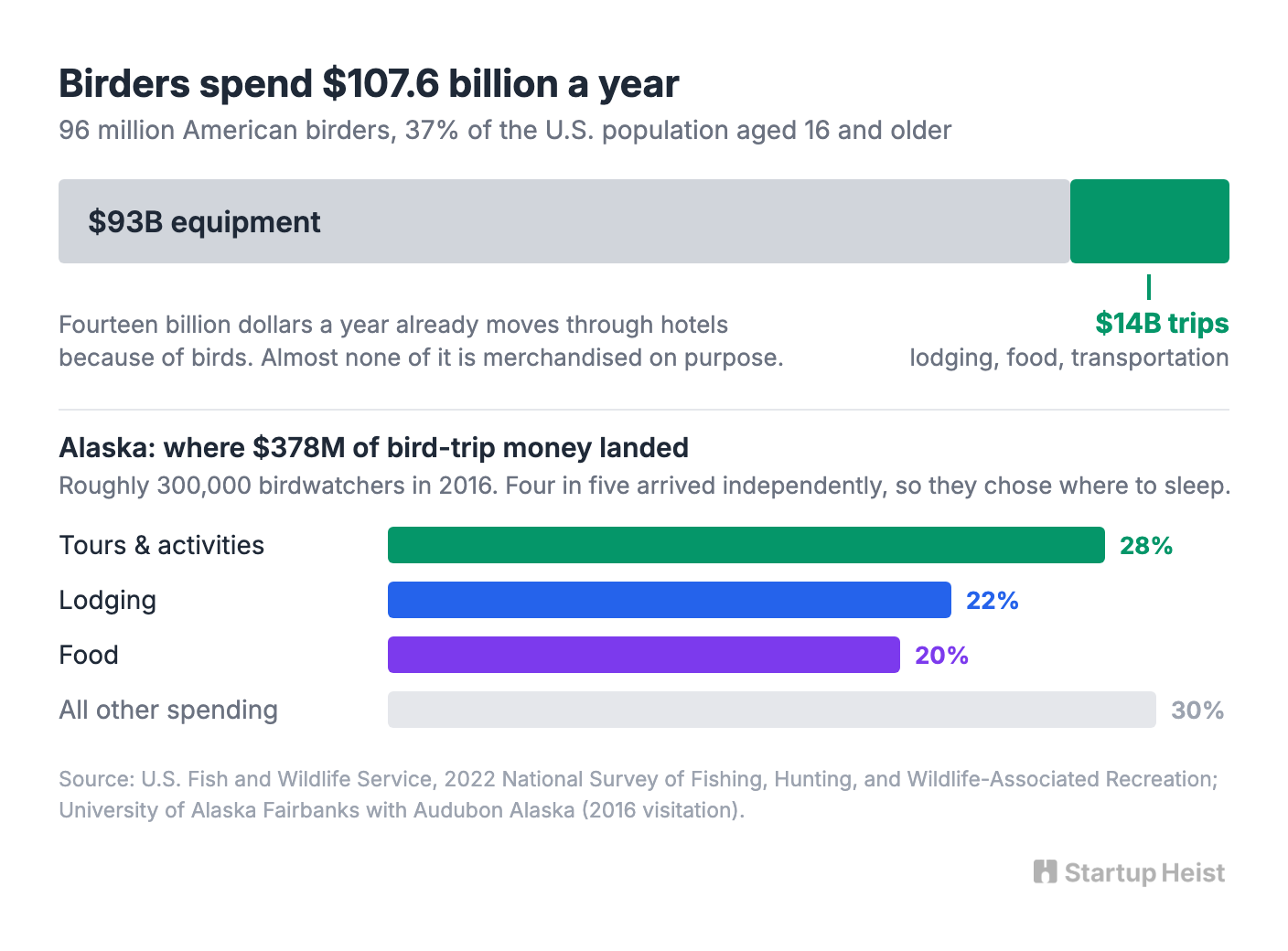
Alaska shows what happens when it is. Researchers at the University of Alaska Fairbanks, working with Audubon Alaska, estimated that roughly 300,000 birdwatchers visited the state in 2016 and spent $378 million, supporting roughly 4,400 jobs. The spending breakdown matters more than the headline: 28% went to tours and activities, 22% to lodging, 20% to food. Four out of five arrived independently rather than on a cruise ship, meaning they chose where to sleep. Nearly half of all bird-tourism spending landed in Southeast Alaska alone, which is worth remembering when you decide where to start.
Closer to home, a 1998 New Jersey survey of Delaware Bayshore visitors valued the spring shorebird migration at $9.5 million to $15.9 million in annual economic benefit, with the typical visitor staying nearly four days and three nights and spending around $522 per trip. The dollar figures have aged. The timing is the durable finding: horseshoe crab season and the shorebird migration land in spring, outside the regular shore tourist season, and they pull multi-night stays into Cape May County during weeks the hotels would otherwise be discounting. Ecotourism tied to that single event still moves something like $7 million to $10 million a year in Cape May alone and supports 120 to 180 jobs. Bird travel books long stays in the months a hotel is cheapest to fill.
The cultural signal is moving too. In August 2026, TikTok told The Guardian that UK posts tagged #birdwatching and #birdtok had risen by roughly a third in three months, with #birding up 40%, against about a million posts globally across the three tags. UK research commissioned by the RSPB found regular birdwatching up 47% across all ages since 2018, with growth of 1,088% among Gen Z, 216% among Millennials, and 66% among Gen X. Those are British numbers and they measure momentum, not market size. The business case still rests on the 96 million American birders. BirdTok just makes them easier to reach.
What the hotel is actually buying
No general manager wakes up wanting better ornithology. They wake up wanting to know why a traveler should book their property instead of the one three miles down the road, and why that traveler should book it on the hotel's own website instead of through an OTA that takes a cut. Every sale you make runs through that question.
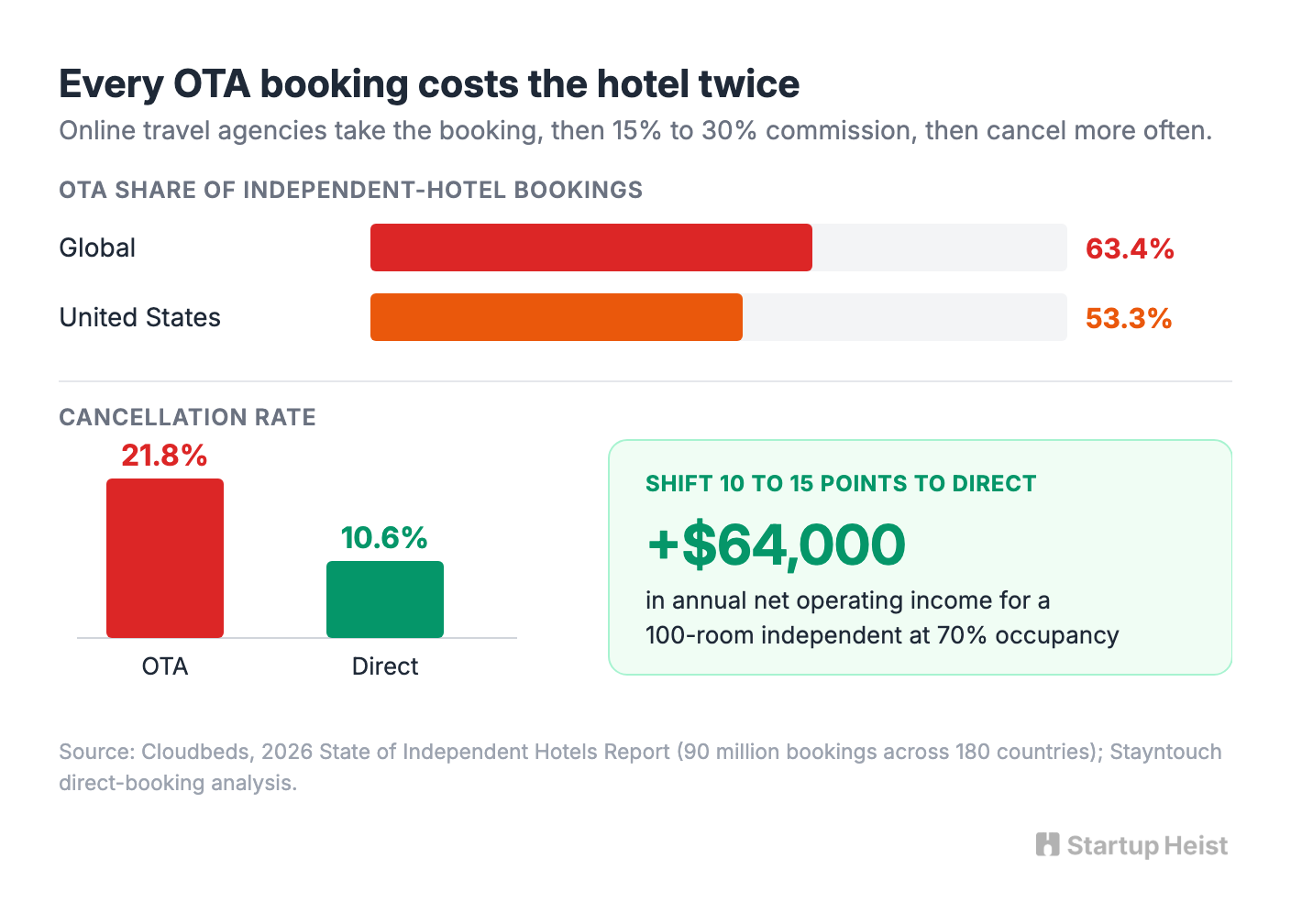
Independent hotels are losing the fight. Cloudbeds analyzed 90 million bookings across 180 countries for its 2026 State of Independent Hotels Report and found that online travel agencies captured 63.4% of independent-hotel bookings globally, with the U.S. at 53.3% and some markets pushing 80%. Independents typically pay 15% to 30% commission on those bookings, and OTA reservations cancel at 21.8% against 10.6% for direct. Stayntouch estimates that shifting just 10 to 15 percentage points of volume from OTA to direct is worth more than $64,000 in annual net operating income for a 100-room independent running at 70% occupancy.
So the pitch fits in a sentence, and it has nothing to do with bird cards: give travelers a reason to book you directly, and a reason to come in April instead of July.
Then show them the booking-page copy you'd write.
Wake Up With the Spring Migration. Borrow binoculars from reception and walk our 35-minute dawn route through the meadow and waterfront. This month's visitors may include ospreys, yellow warblers, great blue herons, and migrating orioles. Add a private guided walk to any two-night stay.
A hotel can sell that. Everything else in the kit exists to make the paragraph true.
The chains already tested it
Properties with real budgets and marketing departments have already run the experiment.
As of August 2026, JB Duke Hotel in Durham sells "Birds of a Feather Relax Together," a two-night minimum package built around the Al Buehler Trail. Guests get a birding packet with binoculars, a self-guided trail map, and an observation notebook, bundled with $75 in daily dining credit and Duke Faculty Club passes. IHG's voco brand ran "Find Your Flock" in 2023 across the U.S. and Singapore: branded binoculars, a sachet of bird seed, breakfast, and early check-in, deliberately bookable only through mid-October to line up with fall migration.
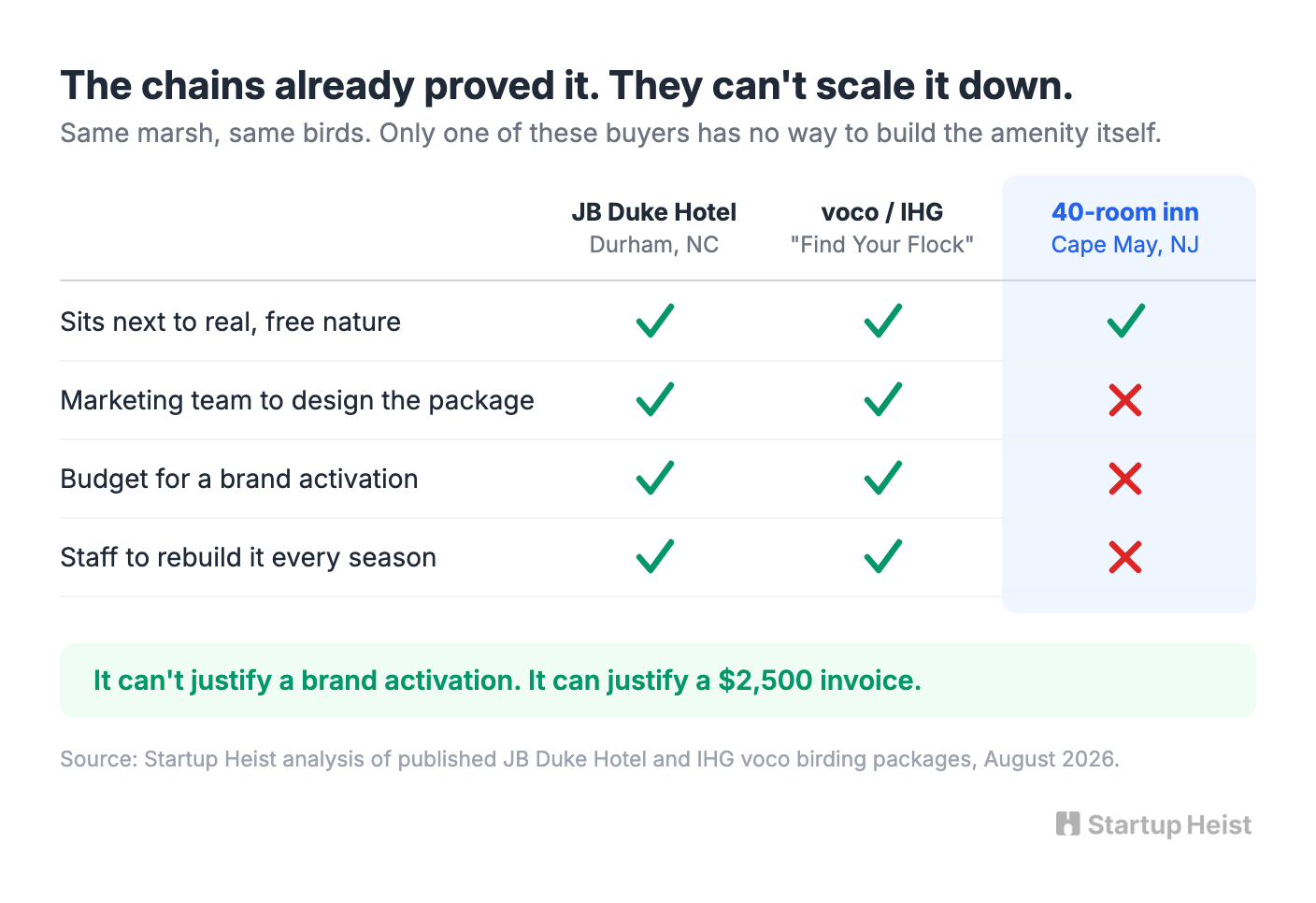
Both did the same thing. They wrapped a free natural asset in a two-night minimum and a dining credit, then timed it to a migration window. Neither built an app or hired a full-time ornithologist. What neither can do is scale down. A 40-room inn in Cape May has the same marsh, better birds, and nobody on staff to invent any of this. It can't justify a brand activation. It can justify a $2,500 invoice.
Whether hotels should offer birding is settled, since some already do. The opening is letting them buy the amenity finished, from one specialist. A sweep of the category turns up no incumbent selling productized nature amenities to hotels. The nearest adjacent operator is an accessibility consultancy advising trails and nature centers, which is a different buyer and a different deliverable.
What you actually sell
Call the first version something boring on purpose: the Seasonal Nature Kit. One property, one season, $2,500 to $3,500, delivered in about three weeks.
Unlock the Vault.
Join founders who spot opportunities ahead of the crowd. Actionable insights. Zero fluff.
“Intelligent, bold, minus the pretense.”
“Like discovering the cheat codes of the startup world.”
“SH is off-Broadway for founders — weird, sharp, and ahead of the curve.”


