


The Anti-4K SaaS: Sell the Camera Era, Not the VHS Filter
Modern cameras have a strange problem: they got too good.
A $700 phone shoots stabilized 4K HDR with clean audio, correct exposure, and autofocus that never misses. Nothing in the frame suggests a physical object was ever involved. It's a technical triumph that flattened an entire visual vocabulary.
So creators are putting the defects back in on purpose.
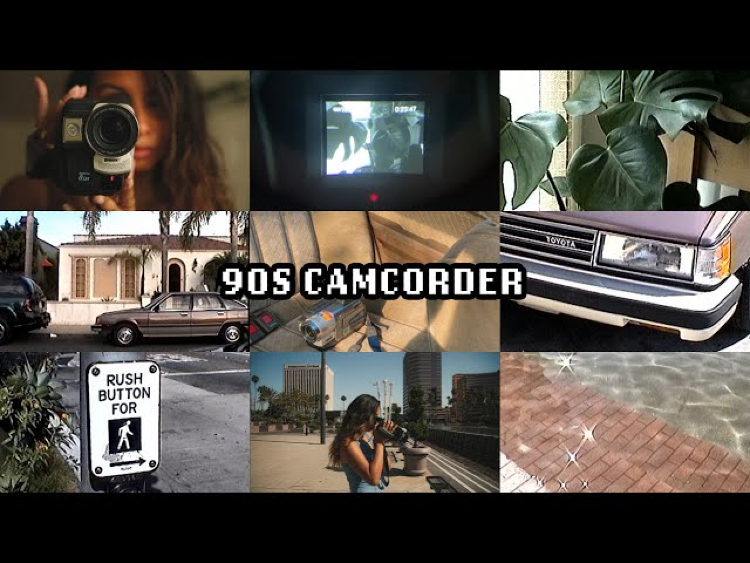
Grain, chroma bleed, autofocus hunting, tape noise, interlacing, burned-in date stamps, crushed audio, warped tracking, MiniDV compression, 4:3 framing. The visual language of cheap consumer camcorders from 1987 to 2004 became desirable precisely because the industry spent two decades engineering it out.
What nobody has built is a browser-based period-camera finishing system. Upload clean footage, pick "1997 family camcorder" or "2001 MiniDV skate tape," and get back finished assets where picture, motion cadence, audio, overlays, aspect ratio, and compression all behave like they came from the same year. Then package those assets for TikTok, Reels, Shorts, or a client approval link.
The distinction matters commercially. A filter changes pixels. A finishing system delivers a campaign.
Here's the opportunity:
The money: 1,000 Creator and Pro subscribers at a blended $25 a month is $25,000 MRR. Add 150 Studio accounts at $99 and you're near $40,000.
Inside:
• Three-profile MVP scope and what to skip
• Deterministic rendering at $0.015 per minute
• The $99 campaign pack presale script
• Four moats, ranked weakest to strongest
Built right, it runs without generative AI or a GPU bill, which is another way of saying it runs without venture capital. Prove demand with a productized service before you write much software, then grow it into the camera-profile layer for a much larger category of intentionally imperfect media.
The trend has hardware receipts
Retro video left the vaporwave YouTube ghetto years ago. What makes it investable now is that nostalgia shows up in hardware sales figures, not just aesthetics blogs.
Canon told NPR in July 2026 that PowerShot sales jumped nearly sevenfold between 2022 and 2025. Camp Snap, which makes screen-free cameras, reported sales more than doubling year over year, and its retro camcorder has turned up in the hands of Selena Gomez, Joe Jonas, and a guest at Taylor Swift's wedding.
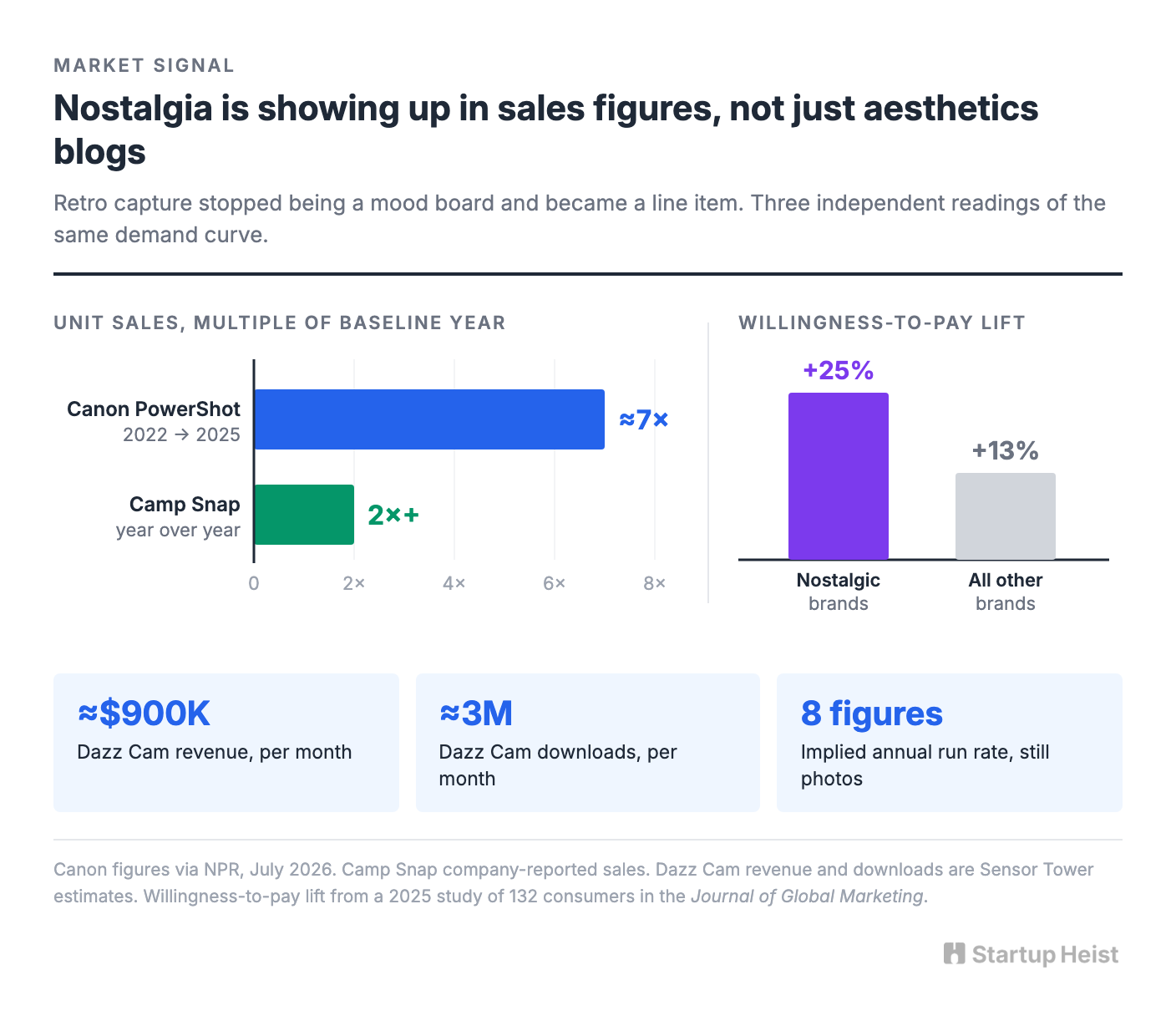
The software side already prints money. Dazz Cam, a mobile app that samples real film stock to fake vintage capture, is estimated by Sensor Tower to pull roughly three million downloads and around $900,000 in revenue per month. That's an eight-figure annual run rate built on nostalgia texture, mostly for still photos. A 2025 study in the Journal of Global Marketing put 132 consumers through induced nostalgia and found Gen Z willingness to pay rose roughly 25% for nostalgic brands, against 13% for everything else.
A countertrend runs alongside all of this and matters more than the nostalgia cycle. AI made pristine production nearly free, and when anyone can generate cinematic lighting and flawless product shots, imperfection starts carrying information. A slightly ugly frame signals DIY, archival, local, intimate, and above all, this actually happened.
VHS won't stay fashionable forever. What lasts is the shift underneath it: media imperfections became a creative vocabulary. Right now that vocabulary is VHS and MiniDV. Next it will be early Android, the 2008 webcam, cheap CCTV, disposable digital, local-access television, the first-generation iPhone. The bet isn't on a single decade. It's on infrastructure for intentional technological nostalgia, with VHS as the current entry point.
The effect is already free, and legally free
If you build VHSify.ai, you're dead on arrival.
CapCut ships free VHS templates with static, tracking lines, color bleed, glitches, and adjustable timestamps. Kapwing, Media.io, and VINXLE run free VHS effect generators in the browser that do the same thing for nothing.
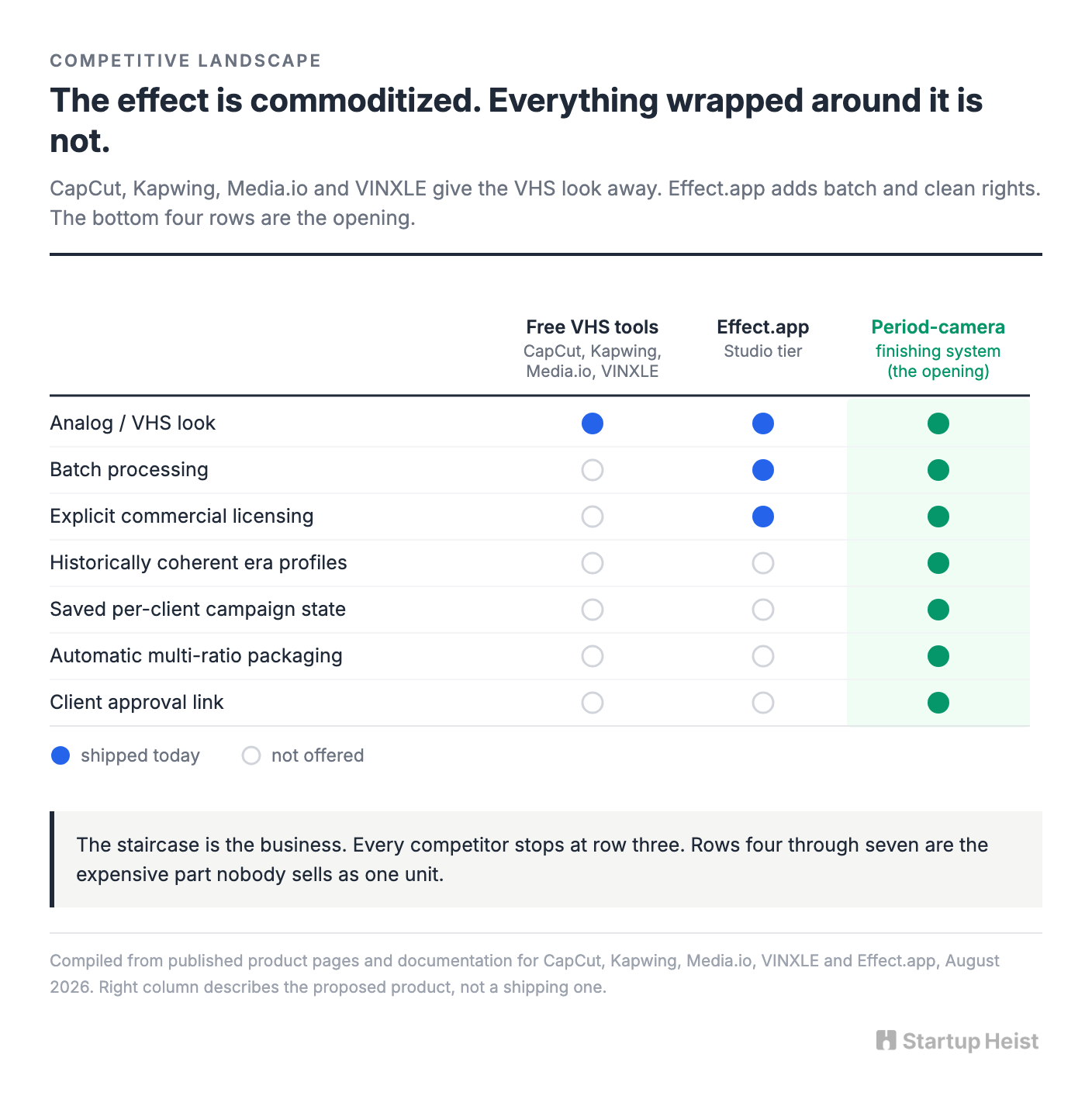
Effect.app goes further and deserves its name in your business plan. Its Studio tier bundles batch processing with explicit commercial licensing, which kills any pitch built on nobody offering batch VHS with clean rights. What it doesn't sell is the expensive part: historically coherent multi-parameter profiles applied as one unit, saved per-client campaign state, automatic multi-ratio packaging, and an approval link you hand a client. That's where you draw the line, and you draw it honestly.
Then there's ntsc-rs, which should reorganize your entire plan. It's a free, open-source analog TV and VHS emulator that models the actual NTSC and VHS signal path rather than layering overlays on footage. Written in Rust and SIMD-accelerated, it runs in real time above NTSC resolution, in the browser, as a standalone app, and as a plugin for Premiere, After Effects, DaVinci Resolve, and any OpenFX host.
Its license has a seam you need to find before you write code. The root MIT license covers every source file except those in the GUI crate, which holds the standalone desktop application and carries GPLv3. The core signal-processing engine, the part that models the analog chain, is MIT: commercial use, modification, distribution, no royalties. The desktop app is copyleft, and vendoring it into a proprietary product can obligate you to release your own source when you distribute.
The instruction that follows is narrow. Link the MIT-licensed core engine as a library, never copy the GUI code, and verify the crate composition yourself before a paying customer touches it. Inside that boundary, the best analog-emulation engine available is free to your competitors and equally free to you, which reads like a death sentence and is closer to a gift. The hardest and most fun-to-build part of this business is already solved, which removes your excuse for spending six months writing shaders.
So don't sell the effect. Sell everything wrapped around it that working creators refuse to manage by hand.
Coherence is the product
The homepage does one thing. You drag in fourteen clean phone clips from a streetwear shoot, and instead of a timeline you get a shelf of camera profiles.
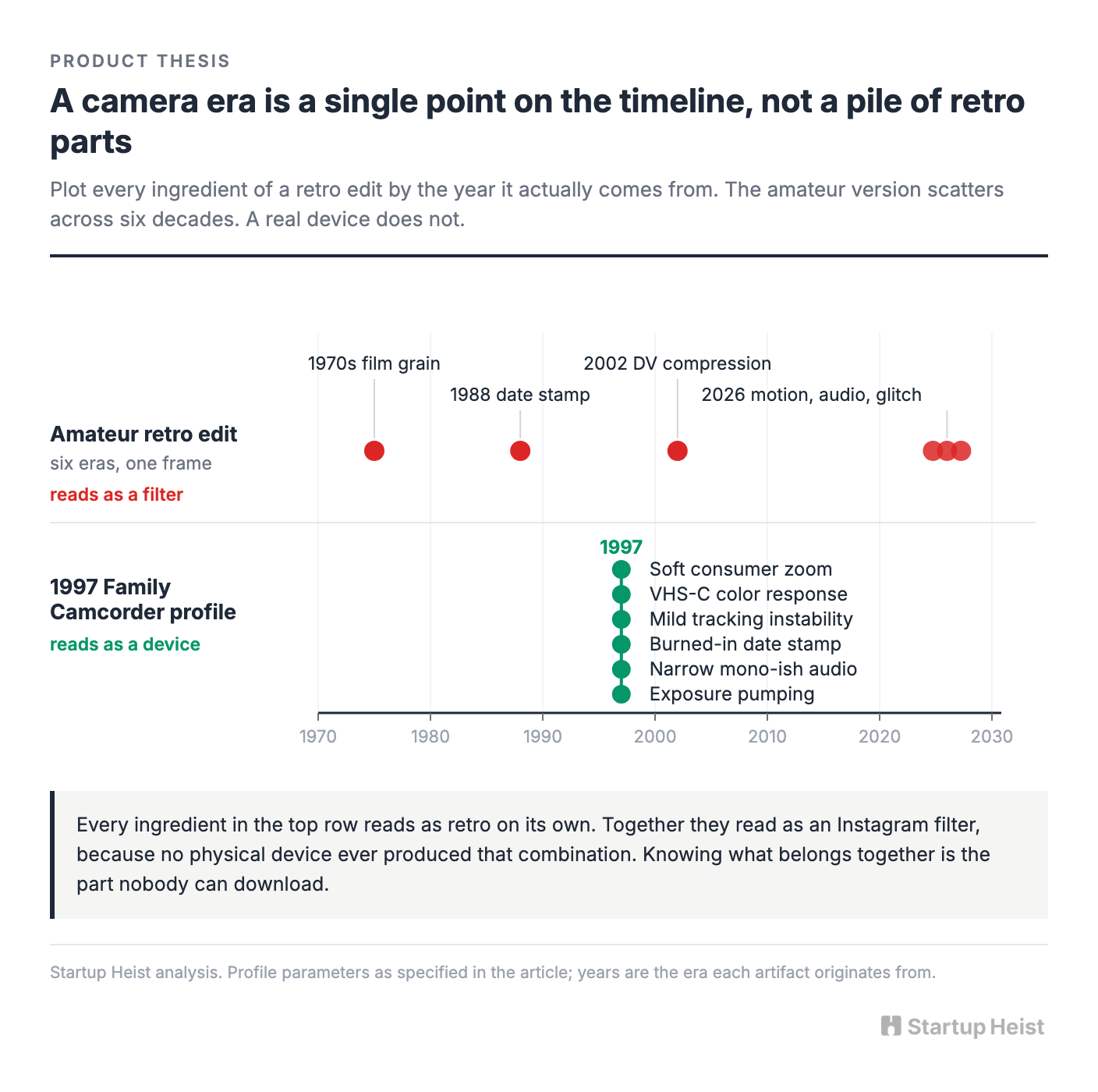
1997 Family Camcorder. Soft consumer zoom. VHS-C color response. Mild tracking instability. Date stamp. Narrow mono-ish audio. Exposure pumping.
2001 MiniDV Skate Tape. Sharper than VHS. Interlaced motion. DV compression blocks. Cold highlights. Hard clipping. Built-in mic character. Autofocus hunting.
1992 Bootleg Concert. Generation loss. Elevated chroma noise. Crushed blacks. Severe tape wear. Blown stage lighting. Distorted mic audio.
Mall Security 1996. Locked framing. Low temporal resolution. Burned-in timestamp. Clipped highlights. Green monochrome variant.
You pick one, and instead of 47 technical sliders you get controls a normal person understands: tape age, signal quality, camera quality, damage frequency, audio damage, date stamp, handheld intensity, generation loss.
Underneath, the software drives a single coherent signal chain, and that coherence is what you're actually selling.
The tell in amateur retro edits is incoherence. Someone stacks a 1988 timestamp on 2002 digital compression with 1970s film grain, modern 60fps motion, clean studio audio, and a generic RGB glitch. Every ingredient reads as retro. Together they read as an Instagram filter, because no physical device ever produced that combination.
Your product knows what belongs together, and that knowledge is the part nobody can download.
The reference library is the asset
The strongest early asset in this company is a shelf of old hardware and a spreadsheet.
Unlock the Vault.
Join founders who spot opportunities ahead of the crowd. Actionable insights. Zero fluff.
“Intelligent, bold, minus the pretense.”
“Like discovering the cheat codes of the startup world.”
“SH is off-Broadway for founders — weird, sharp, and ahead of the curve.”


