


Texas Made Gold Legal Tender. The Business Is the Rulebook, Not the Rail.
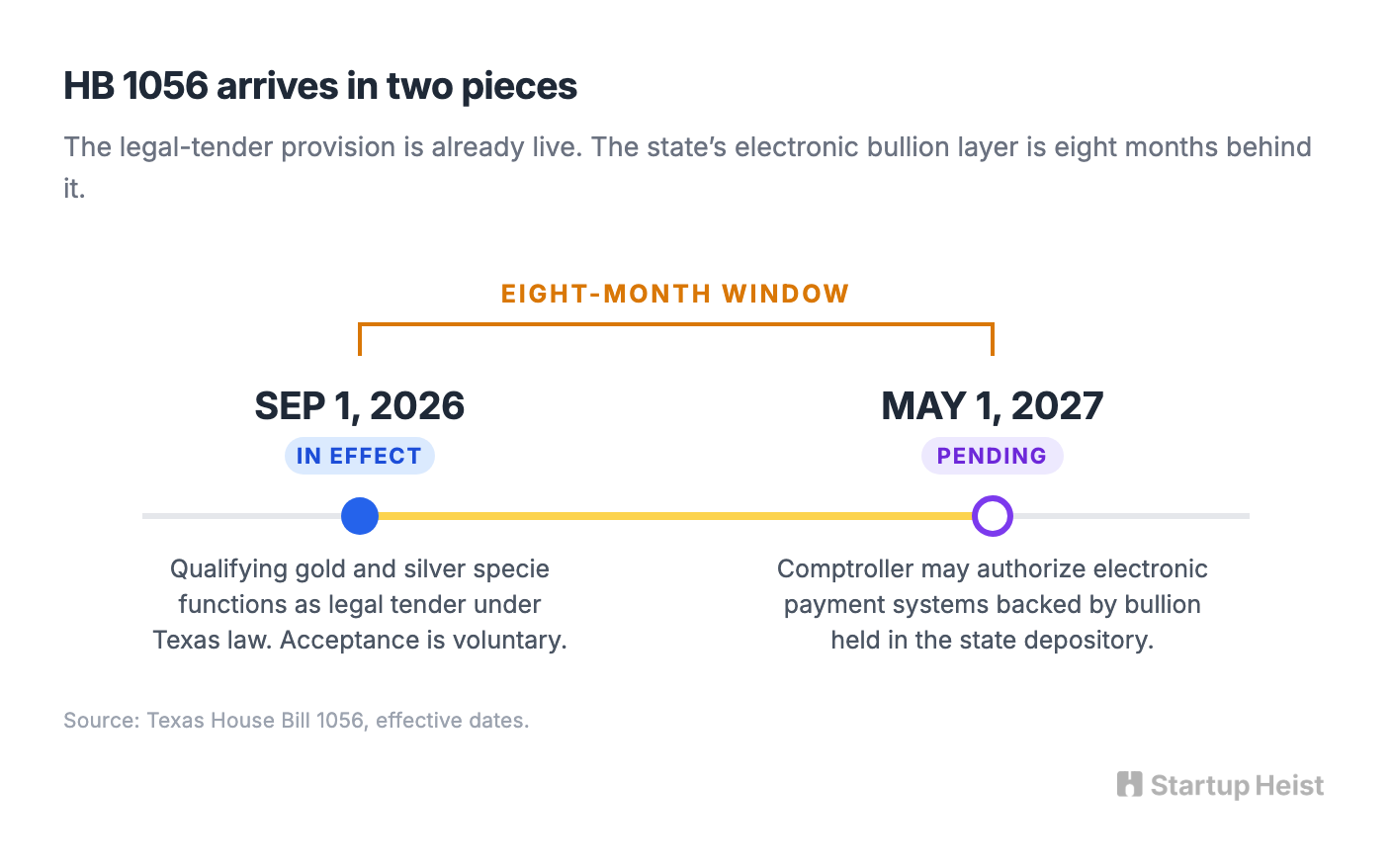
On September 1, 2026, a provision of Texas House Bill 1056 took effect that lets qualifying physical gold and silver specie function as legal tender under state law.
Nobody is buying tacos with bullion.
The law doesn't require any merchant to accept metal, doesn't create a payment network, and gives a cashier no way to tell whether the shiny round on the counter is gold or a tungsten slug in a gold jacket. What it does is narrower, and for a small builder more useful. It creates a legally coherent category of Texas business that can voluntarily hang a sign saying we accept qualifying gold and silver and mean something specific by it.
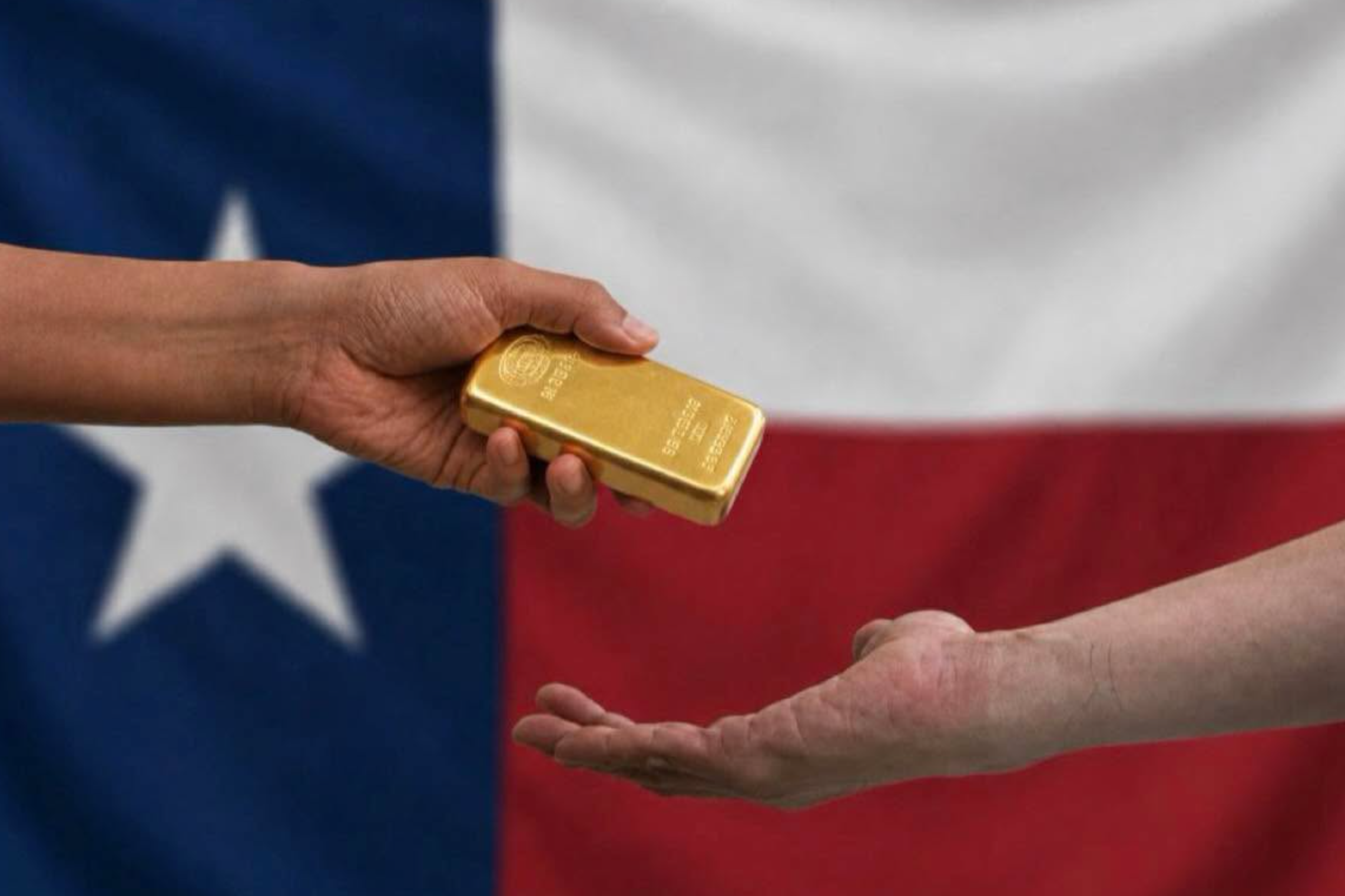
The statute defines that specificity. Qualifying specie must be marked with its weight and purity, may carry a refiner or mint identification, and may not bear markings suggesting it was minted or issued by a government. And a person may not be required to offer or accept it, for a debt, a deposit, or any other purpose. That voluntary clause is where the business hides. If acceptance is optional, every participating merchant has to decide, in writing, what it will take and what it will refuse, and nobody sells them that decision today.
So the opportunity is a Texas-first merchant operating layer, call it Specie Ready, that turns "we accept gold" into an acceptance policy, a quoted price, a documented transaction, a trained employee, a window decal, and a listing on a map. Closer to an onboarding kit for a payment method your cashier has never seen than to a payment processor. The founder never touches the metal.
The money: 250 merchants at $79/month is about $19,750 MRR, plus $299 to $999 certification fees collected up front.
Inside:
• The 15-line merchant acceptance policy
• Why the physical kit outsells the software
• Pricing: free directory, $79, $199, $299+
• The 60-day, one-metro launch plan
The Law Creates Permission, Not Demand
The first trap is reading the words legal tender and imagining a payment network.
Merchant demand and consumer payment demand are separate things, and there's no forced adoption curve here. Nobody at Walmart is rolling this out, and no restaurant chain is rewiring its POS for it. The first participants will be ideological and promotional: bullion dealers, coin shops, preparedness and outdoor retailers, a scattering of contractors who invoice in four figures. They'll do it because accepting precious metal fits their identity, earns local press, and circulates in sound-money communities that reward the gesture.
That's enough to work with. This business doesn't need 100,000 merchants. It needs a few hundred for whom being the place in town that takes gold is worth money. Texas has an estimated 400-plus coin and bullion dealers, and the ecosystem runs deeper than the dealer count. The Texas Bullion Depository in Leander holds deposits that surpassed $400 million as of June 2025, up 183% from 2021, across more than 1,700 account holders. Texas also exempts qualifying gold, silver, and platinum bullion purchases from state sales and use tax under Tax Code §151.336, which is why the metal accumulates here in the first place. The buyers exist. Whether they spend is the open question.
Utah Already Ran This Experiment
Fifteen years of evidence sit one state away, and it's the single most important thing to understand before writing a line of code.
Utah passed the Legal Tender Act in 2011, recognizing federally minted gold and silver coin as legal tender. Merchant acceptance never materialized. Utah's own county and state treasurers rejected attempts to pay in specie. A handful of companies and religious organizations took coin. The law is still on the books, still cited in every article about sound money, and still hasn't produced a functioning circulation of gold at the register.
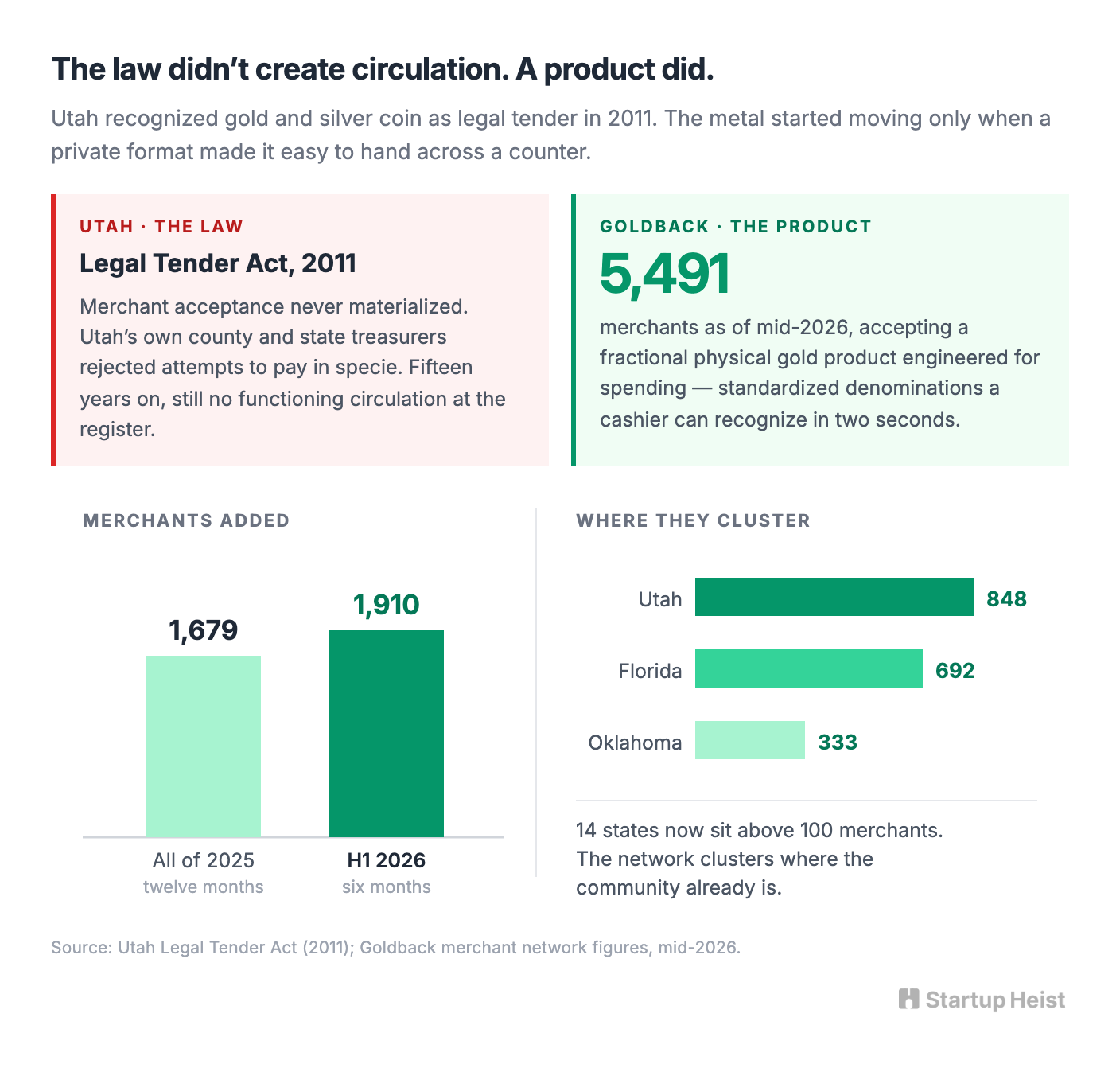
What did work in Utah came later and from the private side. Goldback manufactures a fractional physical gold product engineered for spending, with standardized denominations, security features, and a format a cashier can recognize in two seconds. As of mid-2026 its merchant network reached 5,491 businesses, having added 1,910 in the first half of 2026 alone after adding 1,679 across all of 2025. That's more accepting locations than Walmart operates stores in the United States. The network also clusters where the community already lives: Utah alone accounts for 848 of those merchants, Florida 692, Oklahoma 333, with 14 states now above 100.
The law didn't create circulation in Utah. A product that made metal easy to hand across a counter did. Texas HB 1056 supplies a news hook and a legal frame. Somebody still has to supply the operating procedure, or Texas gets Utah's 2011 with better headlines.
The Ten Questions at the Counter
A spot-price calculator is the obvious build and the least interesting one. Typing one ounce gold value into a search bar is free and instant.
The friction shows up five minutes later, when a customer sets a ten-ounce silver bar on the counter and the employee has to answer, in real time, in front of a line: Is this specific piece accepted? What purity do we require? Which price source, and bid, ask, midpoint, or spot? Do we apply a spread, and is it disclosed? When does the quote lock? What if the customer's phone shows a different number than our screen? Do we give change, and in what? What happens when someone wants to hand over $72 of silver for a $58 purchase? How does this land in the books at close?
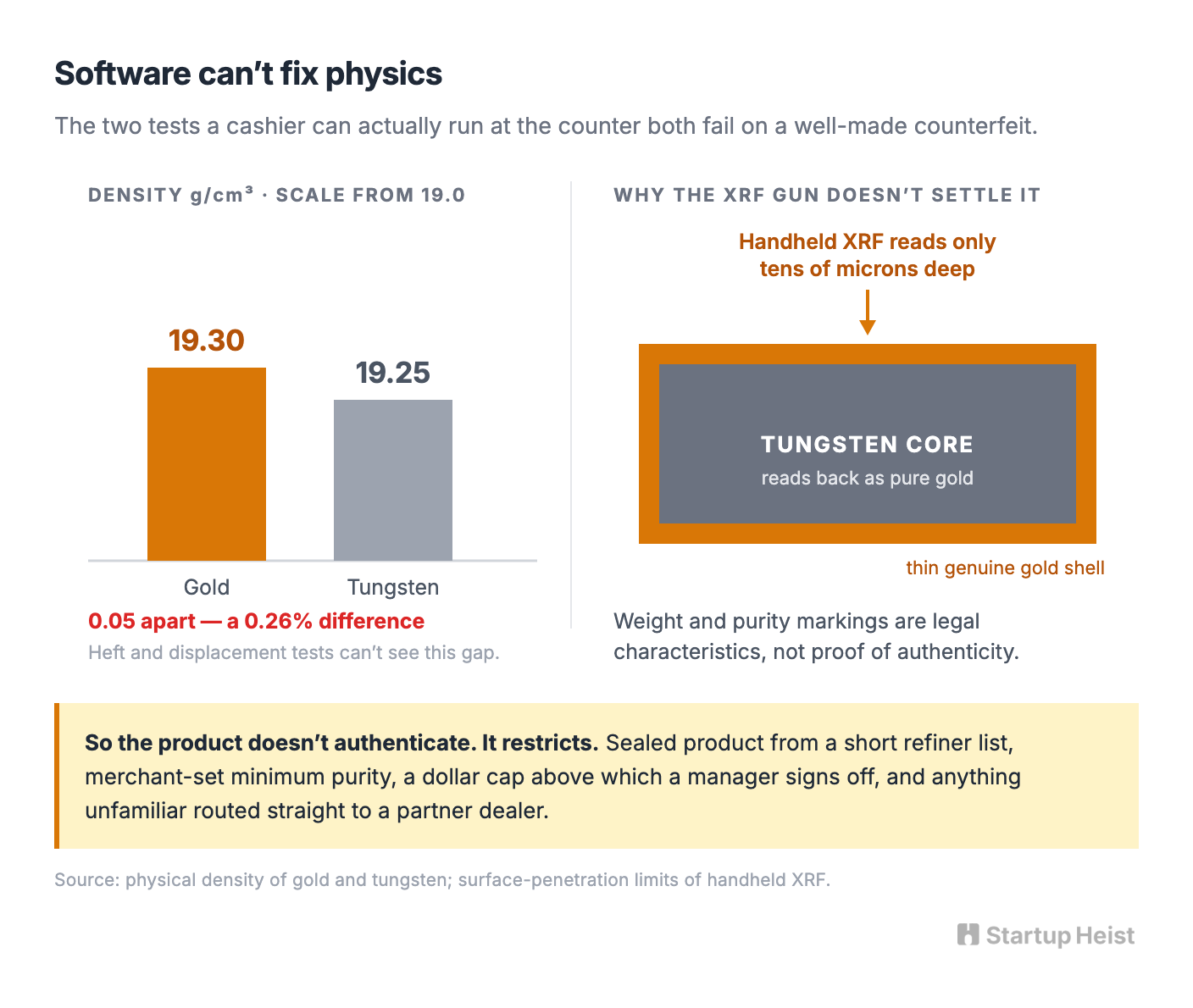
And underneath all of it: how do we know the metal is real?
Weight and purity markings are legal characteristics under HB 1056, not proof of authenticity. Tungsten has a density of 19.25 grams per cubic centimeter against gold's 19.30, which is why heft and displacement tests fail on a well-made counterfeit. A handheld XRF gun reads only tens of microns into a bar's surface, so a tungsten core under a thin genuine gold shell reads back as pure gold. No phone app fixes this, and no software does either.
Which points directly at the product. Universal acceptance was never the goal. The goal is to make acceptance restrictive, boring, and repeatable, narrow enough that the risk lives inside a rule the owner wrote on a calm Tuesday rather than inside a judgment call a nineteen-year-old makes on a busy Saturday.
The Product Is a Policy, Not a Calculator
The core artifact is a merchant acceptance policy generated by an onboarding wizard. A real one reads like this:
Unlock the Vault.
Join founders who spot opportunities ahead of the crowd. Actionable insights. Zero fluff.
“Intelligent, bold, minus the pretense.”
“Like discovering the cheat codes of the startup world.”
“SH is off-Broadway for founders — weird, sharp, and ahead of the curve.”


