


The Retrofit Paperwork Business Hiding Inside America's Small Buildings
America doesn't have a clean-energy technology shortage. It has a project-readiness shortage.
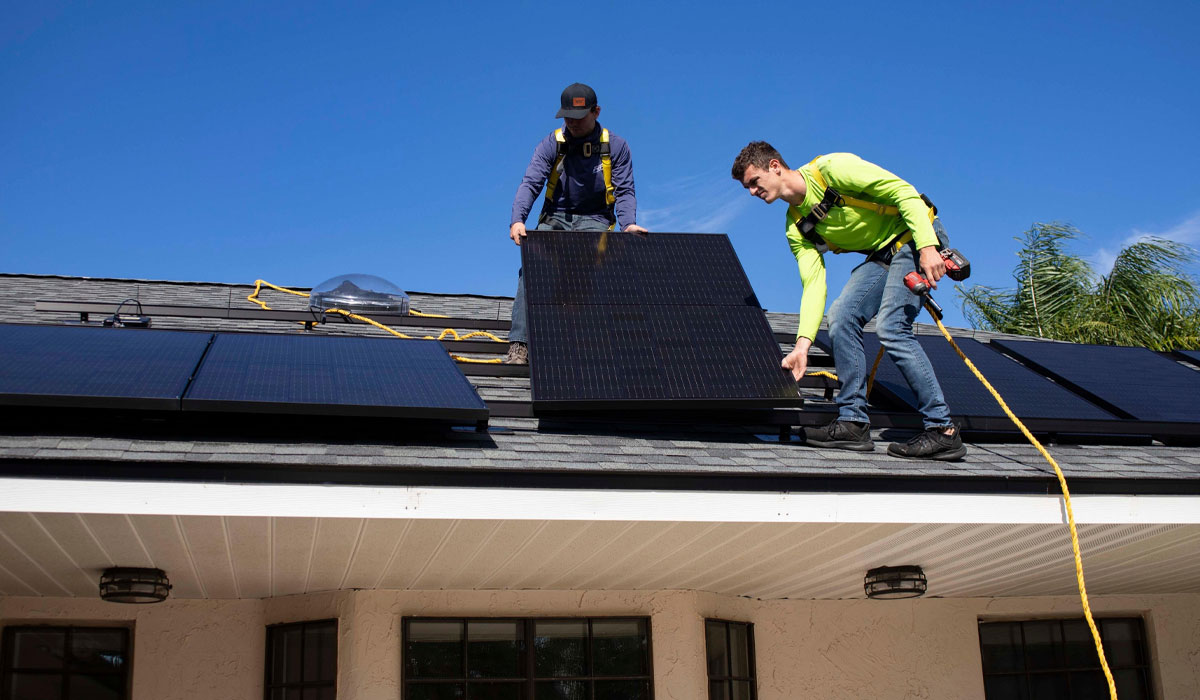
Walk into the average church, nonprofit office, community center, small private school, or neighborhood association building and the scene is consistent. Old boilers from the Reagan administration. T12 fluorescent lighting that flickers in the choir loft. A roof patched twice and two winters from being replaced. Insulation no one has touched since the building opened. Utility bills creeping up faster than the donation plate. And a board that vaguely knows there's "money available" for clean-energy upgrades but can't tell you what kind, how much, or how to get it.
What they don't have is a clear answer to the questions that actually unlock a project. What should we do first? What do we qualify for? Which incentives stack? Which contractor should we call? Can we finance this without draining reserves? Who's going to explain this to the board?
Those questions are the business.
Here's the opportunity:
The money: Solo operator path to ~$33K MRR ($400K annualized) in year one across $299, $1,000, and $10,000 tiers, plus implementation upsells.
Inside:
• Three-tier pricing from $299 to $25,000
• Six warm-distribution channels with templates
• 90-day plan to first $40K month
• Four-stream revenue stack post-report
The product is a paid pre-project packet that turns federal tax credits, state programs, utility rebates, financing options, contractor scoping, and board-level decision materials into one clean document a treasurer can read on a Sunday afternoon and a board can vote on the following Tuesday. This isn't a full retrofit company, and it isn't a climate-tech platform pretending every building wants software. It's a practical, local, high-trust readiness layer focused on one metro at a time.
The wedge is small nonprofit-owned commercial buildings in one metro area. The product is a $299 to $1,500 report. The work isn't installing the heat pump. The work is owning the paperwork before anyone else gets the job.
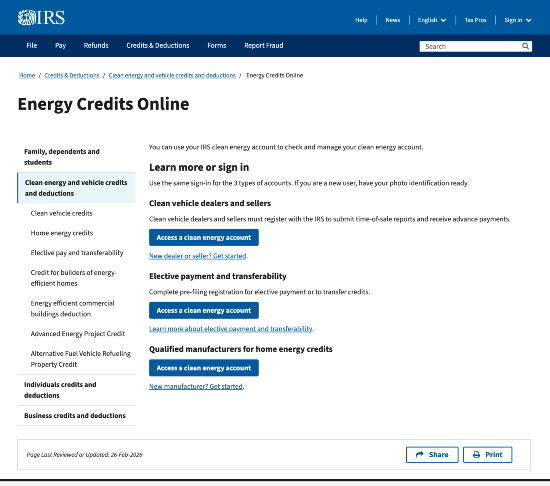
The $50 billion stack with no concierge
Since 2022, the federal government has done something unusual for the nonprofit sector. It made tax credits payable in cash.
Section 6417 of the tax code, created by the Inflation Reduction Act and known as elective pay or direct pay, lets tax-exempt entities receive certain clean-energy tax credits as refundable payments from Treasury. A church, a 501(c)(3), a private school, or a community foundation that installs solar panels, a geothermal system, or EV charging can receive a check for 30% of the project cost. Bonus adders for domestic content, energy communities, and low-income service push that toward 50% to 70% on the right project. For a century, nonprofits were locked out of these credits because they didn't owe federal income tax. Direct pay rewrote that.
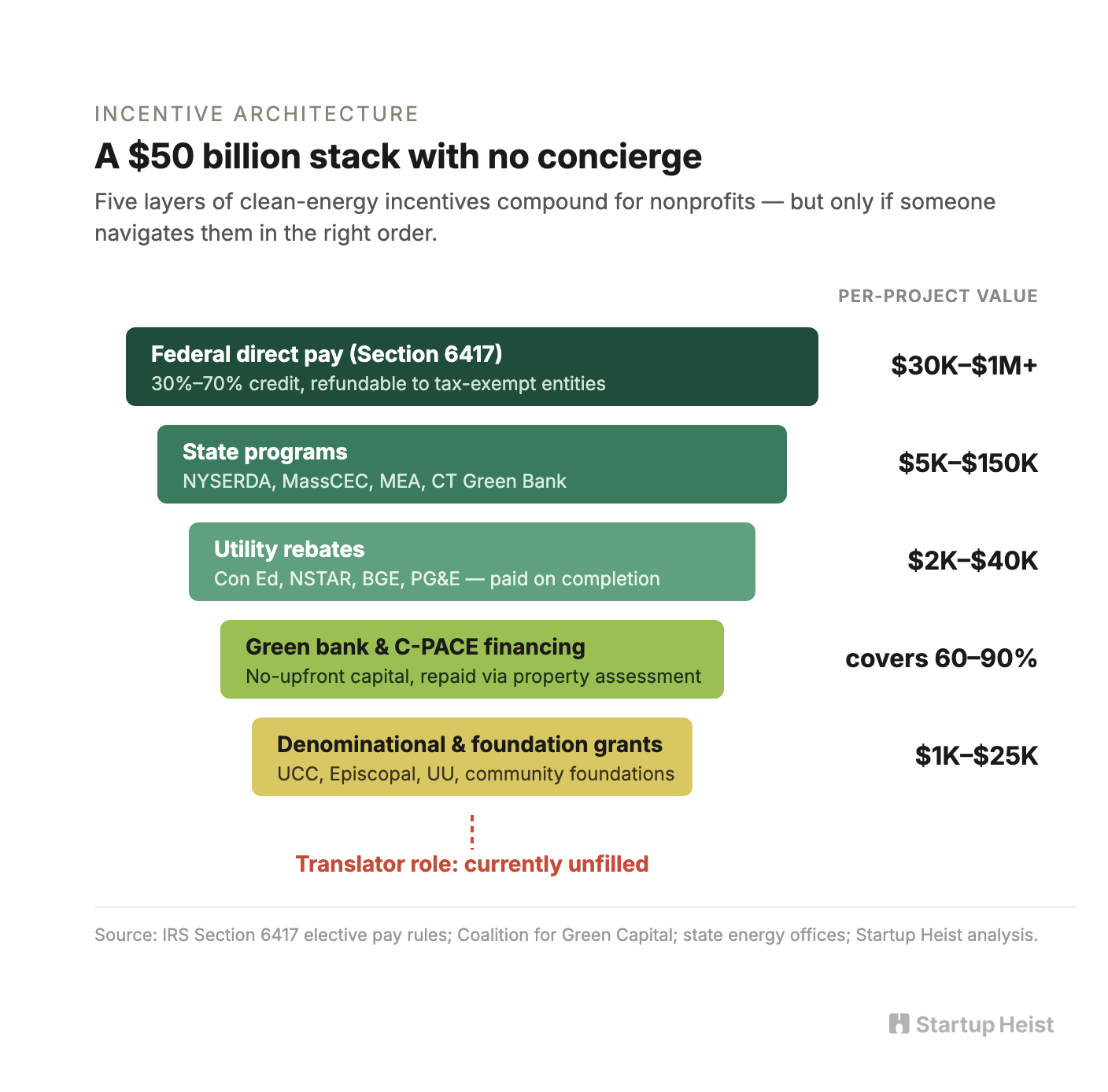
The catch is operational, not legal. To claim direct pay, the entity must complete pre-filing registration through the IRS Energy Credits Online portal and obtain a registration number for each credit property before filing. The agency recommends starting at least 120 days before the deadline, which for tax-exempt entities is May 15 for calendar-year filers, using Form 990-T even if the entity doesn't normally file one. Miss the registration and the credit evaporates. Misclassify the property and the credit evaporates. Run afoul of the domestic content tiers and the credit shrinks.
Politics has tightened the timeline rather than killed it. The One Big Beautiful Bill Act, signed July 4, 2025, did not repeal Section 6417, but it accelerated phase-outs for several underlying credits. For solar and wind facilities under Sections 48E and 45Y, projects beginning construction by July 4, 2026 keep the existing rules; projects starting after that date must be placed in service by December 31, 2027. Domestic content thresholds step up roughly five percentage points each year through 2027. Several adjunct rebates have been narrowed or terminated.
The window is roughly twelve to eighteen months. Inside that window, every congregation board and every executive director needs someone to translate the rules into a yes-or-no decision. That someone is currently nobody. Tax counsel charges $400 an hour and won't call utility companies. Contractors install equipment but don't write board memos. Denominational climate offices are stretched thin. State energy offices field hundreds of generic phone calls a week. Nobody owns the translator role yet.
370,000 buildings whose treasurer is also a volunteer
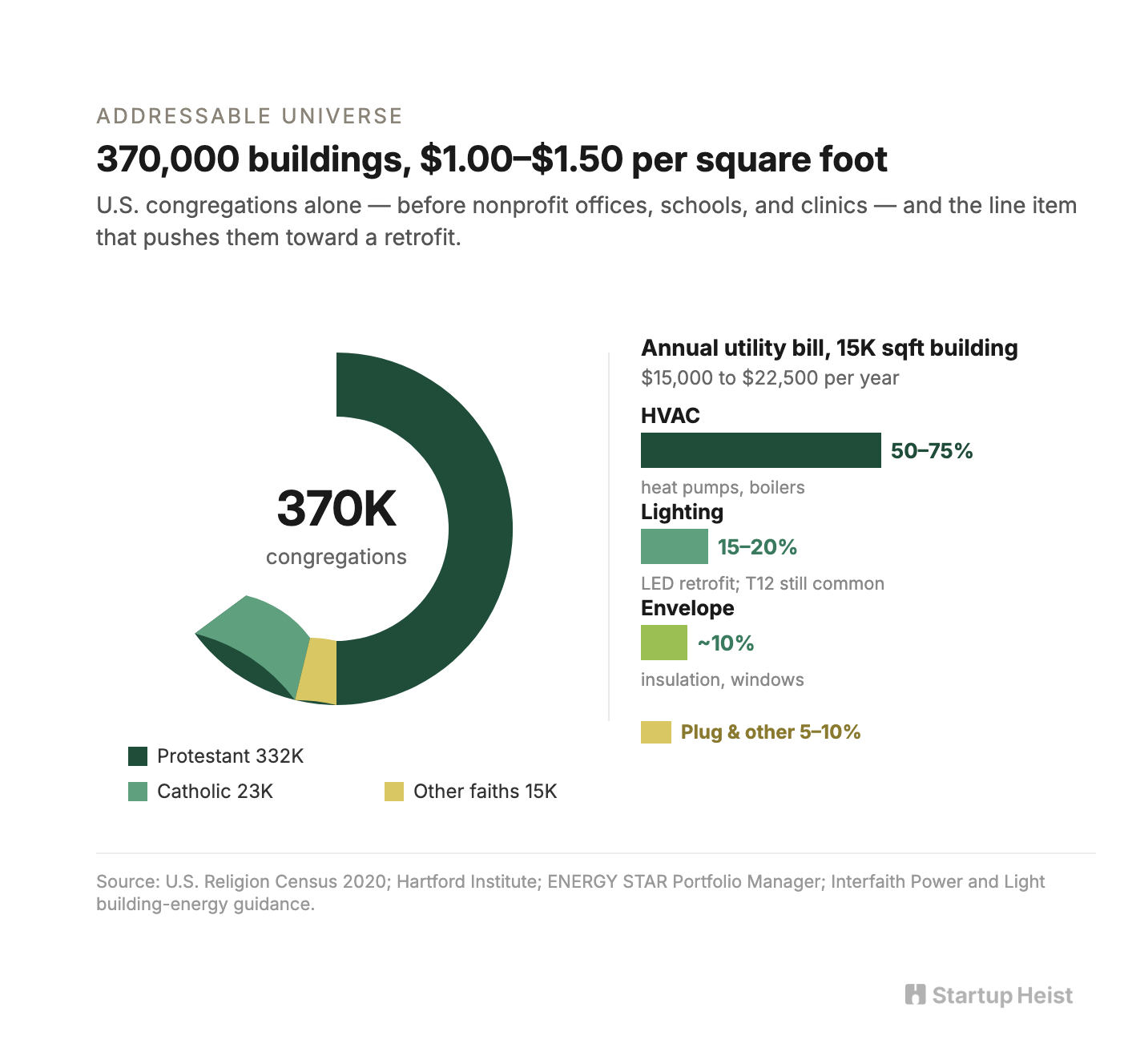
Start with the addressable universe. The U.S. Religion Census counted 356,739 congregations in its 2020 sweep, and the Hartford Institute estimates the number closer to 370,000. Roughly 332,000 are Protestant or other Christian, 23,000 are Catholic and Orthodox, 15,000 represent other faiths. Almost all of them own or operate at least one building.
Around them sits a much larger universe of small commercial-scale nonprofits that look essentially the same from a building-energy standpoint: independent private schools, free clinics, neighborhood centers, food banks, settlement houses, youth organizations, historical societies. EPA's ENERGY STAR Portfolio Manager covers more than 330,000 commercial buildings and nearly 35 billion square feet of floorspace. Nonprofits are a meaningful slice within it, and faith-owned buildings are the largest distinct subcategory.
The economics are remarkably consistent. Industry guidance pegs annual utility spend for places of worship at $1.00 to $1.50 per square foot. A 15,000 square foot church spends $15,000 to $22,500 a year on electricity, gas, and water. HVAC drives 50% to 75% of that bill. Building envelope and lighting fill in the rest. The cash benefit of a properly scoped retrofit isn't theoretical. The Unitarian Universalist Church of Silver Spring, working with the Montgomery County Green Bank in Maryland, completed a $2.1 million package (rooftop solar, LED lighting, HVAC heat pumps, insulation, and high-efficiency windows) financed in part with $965,000 of C-PACE bridge debt, with projected twenty-year savings north of $400,000.
The constraint isn't technology, and it isn't capital. It's the readiness layer. The treasurer is a volunteer with a day job. The buildings-and-grounds chair is an engineer who reads three white papers, gets overwhelmed, and tables the discussion. The pastor cares deeply but can't evaluate whether a $9,000 audit fee from a regional consultancy is reasonable or absurd. The board approves a project only when someone hands them a one-page memo with three clear options and a recommendation. Until that memo exists, the project doesn't exist.
Why no one currently owns this gap
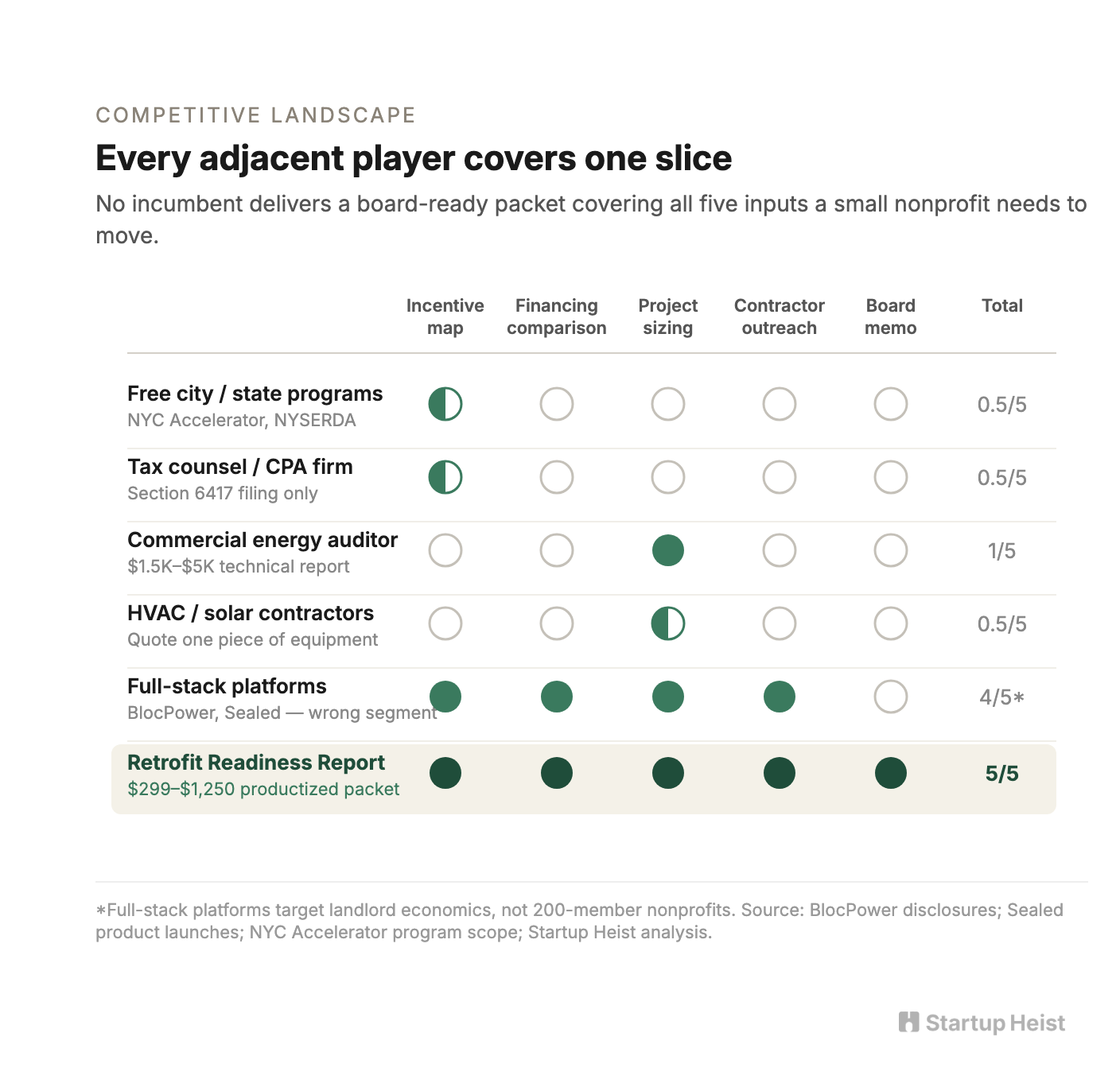
Every existing player owns one slice and none of them own the whole picture. Free city programs like NYC Accelerator and state offices like NYSERDA give generic guidance, not building-specific recommendations. Tax counsel will file the 990-T and the Section 6417 election for several thousand dollars but won't size the project, call utilities, or write a board memo. Commercial energy auditors produce dense investment-grade analyses for $1,500 to $5,000. Useful, but technical, light on financing strategy, and silent on which contractor to call. Heating contractors quote heat pumps. Solar installers quote panels. Neither will tell a treasurer to do envelope work first or assemble a financing comparison that includes C-PACE, on-bill recovery, and a denominational revolving loan fund.
Full-stack platforms have skipped this segment entirely. BlocPower has raised over $250 million and worked across hundreds of buildings, but its no-money-down lease model is built around a 10-to-15-year ownership transfer that fits a landlord, not a 200-member congregation. Sealed launched a contractor-software arm in 2024, expanding toward a B2B model. Neither company is selling a $750 readiness packet to a Methodist church in a Maryland suburb. The Retrofit Readiness Report sits in the gap between all of them: small enough to clear a board vote, narrow enough to deliver in two to three weeks, specific enough to drive a real project.
The product: a paid packet that drives a board vote
Treat the report as a productized consulting deliverable, not a custom engagement. Standardization is the moat. Three tiers cover the realistic range of customer needs.
Unlock the Vault.
Join founders who spot opportunities ahead of the crowd. Actionable insights. Zero fluff.
“Intelligent, bold, minus the pretense.”
“Like discovering the cheat codes of the startup world.”
“SH is off-Broadway for founders — weird, sharp, and ahead of the curve.”


