


Steal the 50-Seat Wedding
Build the luxury production studio for couples who cut the guest list, not the budget
The average American wedding is a big production: about 117 guests and a $34,200 bill, which works out to roughly $292 per person. That number has held remarkably steady even as couples complain about the cost. They keep paying it because the format is fixed. Book the ballroom, feed 150 people, hire the DJ, run the photo booth, repeat the same evening everyone has already attended a dozen times.
A different kind of couple is walking away from that math. They don't want to feed 150 acquaintances in a hotel banquet hall. They'd rather invite 40 or 50 people they actually love and spend four times as much on each one. The banquet becomes a tasting menu. The DJ becomes a vinyl curator. The generic photo booth becomes a live portrait artist. The reception becomes a tightly produced dinner party where every guest has a front-row seat.
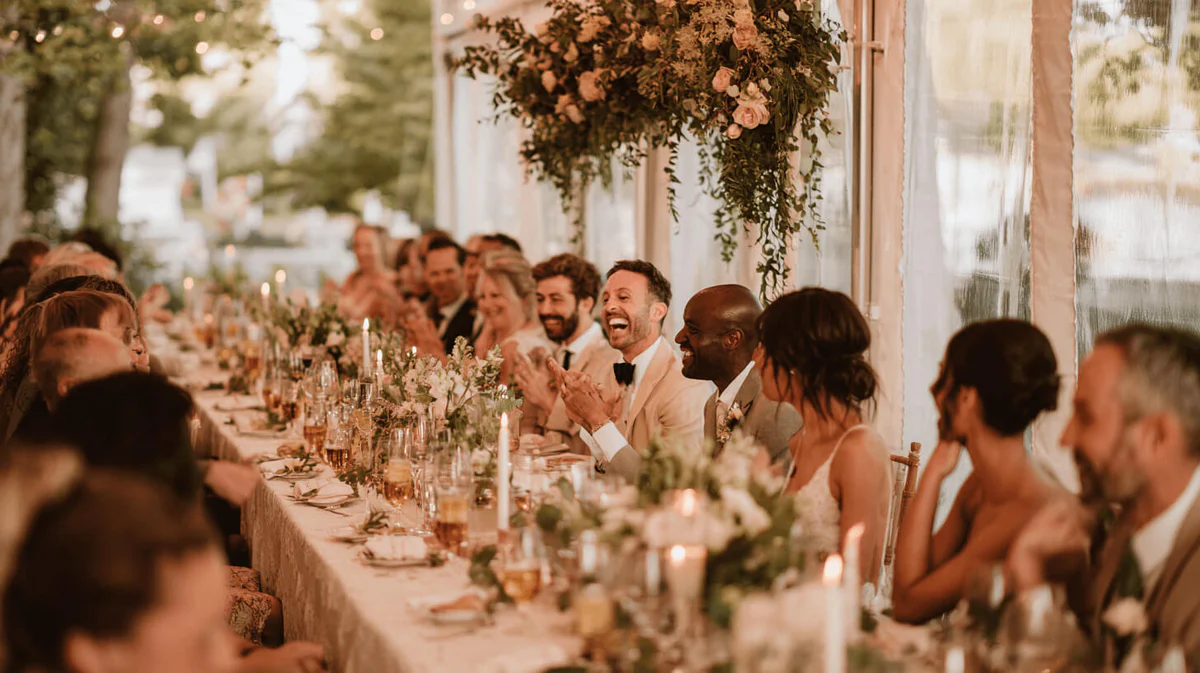
Read that as a full-intensity luxury wedding staged in a smaller room, not a stripped-down micro-wedding.
Here's the opportunity:
The money: Ten events a year at about $62,000 each is $620,000 in volume and roughly $140,000 in studio contribution for a two-person business.
Inside:
• The Signature Fifty flagship, priced to screen
• Full $60K event cost breakdown and margins
• Five moats from preferred venue access
• 120-day launch plan and franchise rules
The move is to build a metro-specific production studio that sells this format as a turnkey product: 30 to 60 guests, one distinctive creative concept, one controlled vendor stack, a starting budget above $50,000. Get the format working repeatedly in one city and the operating system can travel through managed locations, joint ventures, or a properly structured operator network.
This won't become the next billion-dollar wedding marketplace, and it doesn't need to. What it can become is an excellent boutique business: $500,000 to $1 million in annual event volume, meaningful owner income, almost no fixed inventory, and a brand that may eventually leave its home market. That's a solid heist.
The real gap isn't "smaller weddings"
Micro-weddings are old news. Zola defines them as 50 guests or fewer, and planners, venues, and photographers across the country already sell "micro," "intimate," and "all-inclusive" packages. The category is also cleanly split at both ends.
At the bottom, a couple pays a few thousand dollars for a ceremony, some photos, and light refreshments. Packages from ranches, farms, and elopement studios routinely run $2,500 to $12,000 for up to 50 guests. At the top, there's already proof that couples will spend traditional-wedding money on a short guest list. Jen Harrison Weddings sells a flat-fee, all-inclusive "Curated Wedding" for 20 to 50 guests in Napa and Sonoma, venue and wedding-day vendors included, at a price point around $50,000. The floor and the ceiling both exist. The middle is empty.
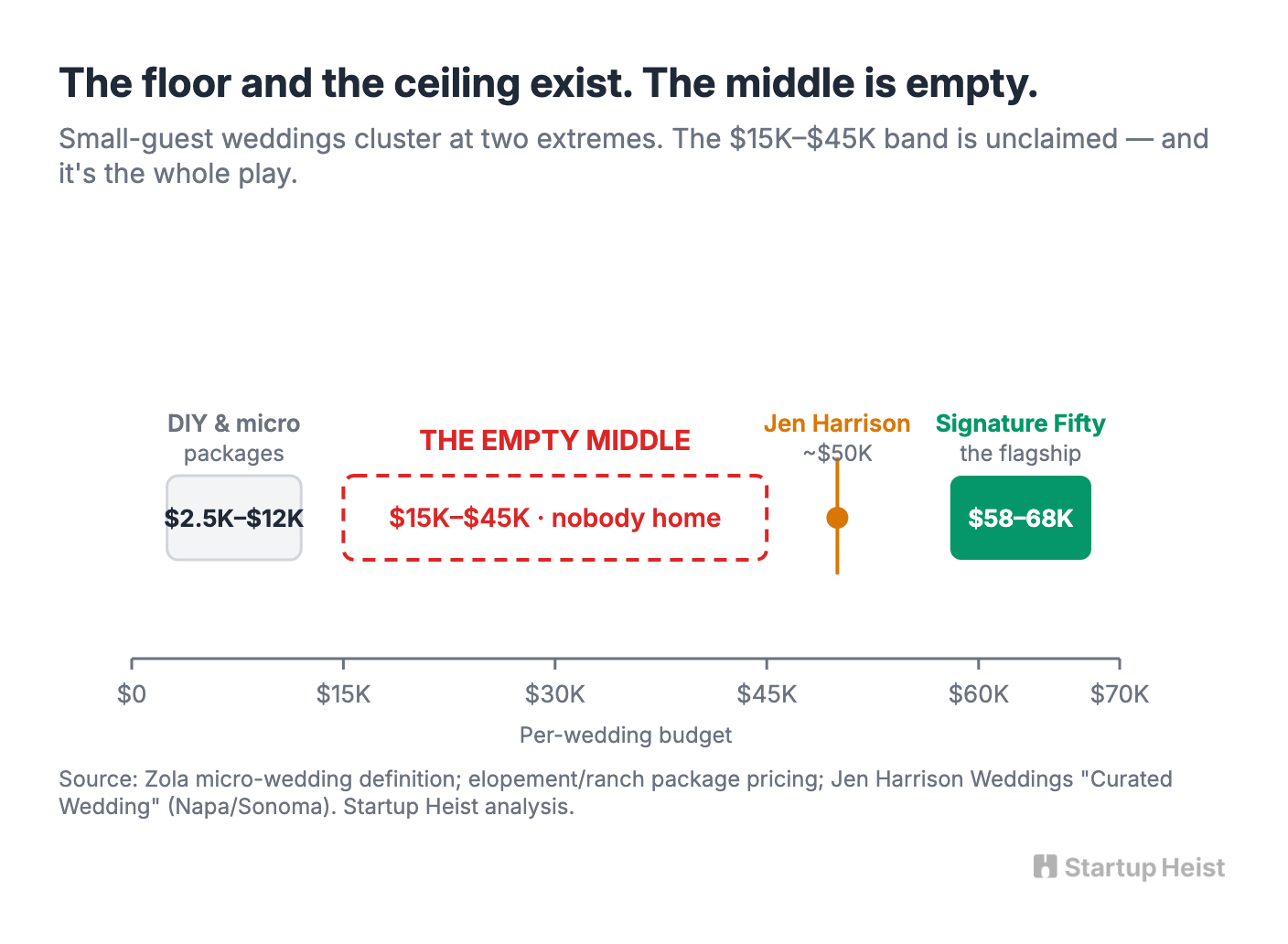
That gap is the whole play. Name a format that couldn't work with 150 people, then sell it as its own thing rather than a shrunken version of the usual wedding. Call it the 50-Seat Wedding, the Tasting-Room Wedding, the Supper Club Wedding, whatever earns the domain. The name matters less than what it signals. "Micro-wedding" communicates compromise. A proprietary format communicates intent. A couple shouldn't book you because they can't afford the big version. They should book you because they find it impersonal, wasteful, and boring.
Why the timing works
Three forces line up.
Wedding budgets stayed high. The Knot puts the 2025 average at $34,200, with the reception venue alone near $12,900, and Zola's own 2026 survey lands close to $36,000. Once a couple has accepted that a wedding will cost $35,000 or more, their question quietly changes from "how do we make this cheap" to "what are we actually getting for the money." The 50-seat format has a clean answer: keep the people who matter, delete the banquet machinery, pour the savings into the experience.
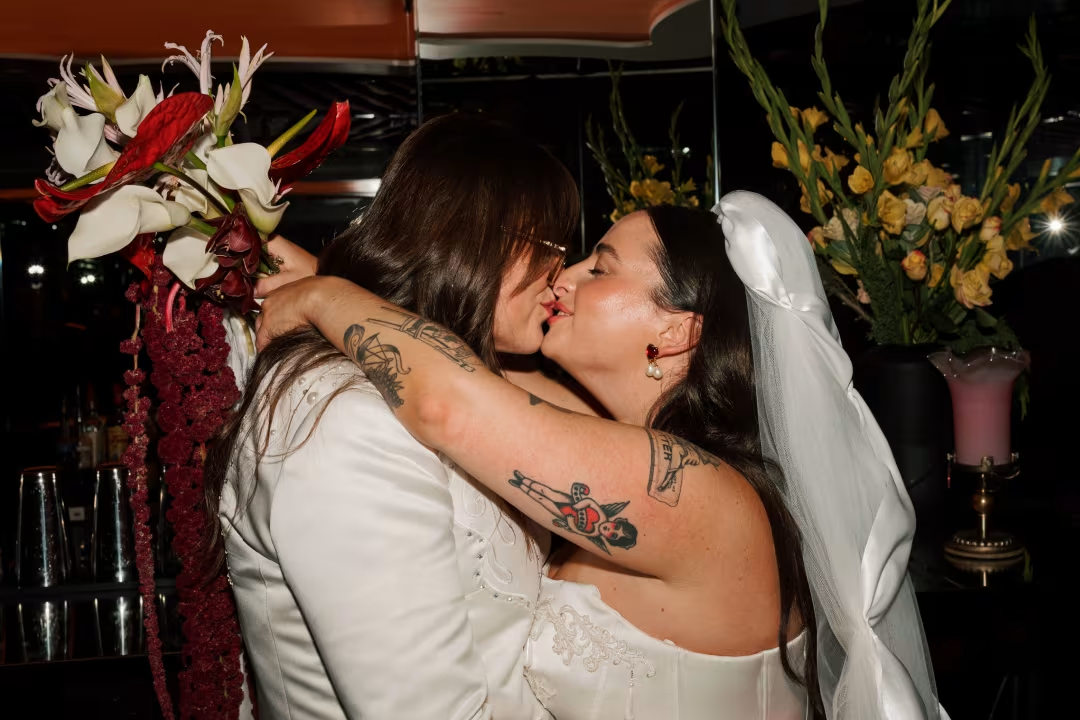
Personalization stopped being decoration and became programming. Zola's 2026 First Look Report flags hyper-personalized catering, global menus, and live guest experiences like on-site painters and tarot readers as defining trends. The old personalization swapped flowers, linens, and invitation fonts inside the same template. The new version rewrites the event itself. The menu tells the couple's story. Courses are paced around speeches. Music is chosen as narrative. Artists make something during the night. A 150-person wedding physically can't deliver that intimacy. A 50-person wedding can make it the entire product.
The supply already exists, unassembled. A founder doesn't build a venue or hire a permanent kitchen. Any affluent metro is full of the raw material. Philadelphia is a clean example: Wm. Mulherin's Sons hosts 30 to 50 in its rooms and gardens, Spice Finch seats up to 70 across its private rooms and chef's table, Jean-Georges has a private room for 50, and the city's private-dining market runs to serious chef-led tasting menus well above $200 a head before wine. None of these are wedding businesses, which is exactly why they're available. Beautiful rooms, real food, and capacity bands that map almost perfectly onto a 30-to-60-person format are sitting in every good food city, waiting for someone to package them. The studio's job is to organize fragmented supply into one thing a couple can understand and buy, not to create the supply in the first place.
What you're actually selling
Don't market yourself as another wedding planner. A planner helps couples make hundreds of decisions. The 50-seat studio removes most of them. What you sell is a controlled creative system with just enough flexibility to feel bespoke.
A signature event runs on a fixed architecture: a private ceremony for 40 to 50 guests, a cocktail hour built around two or three small performances or installations, a six- or seven-course chef-led dinner, vinyl programming instead of a wedding playlist, a live artist working the room, documentary photography and a short editorial film, a late-night final course, and one visual language carried through the room, menu, florals, and print.
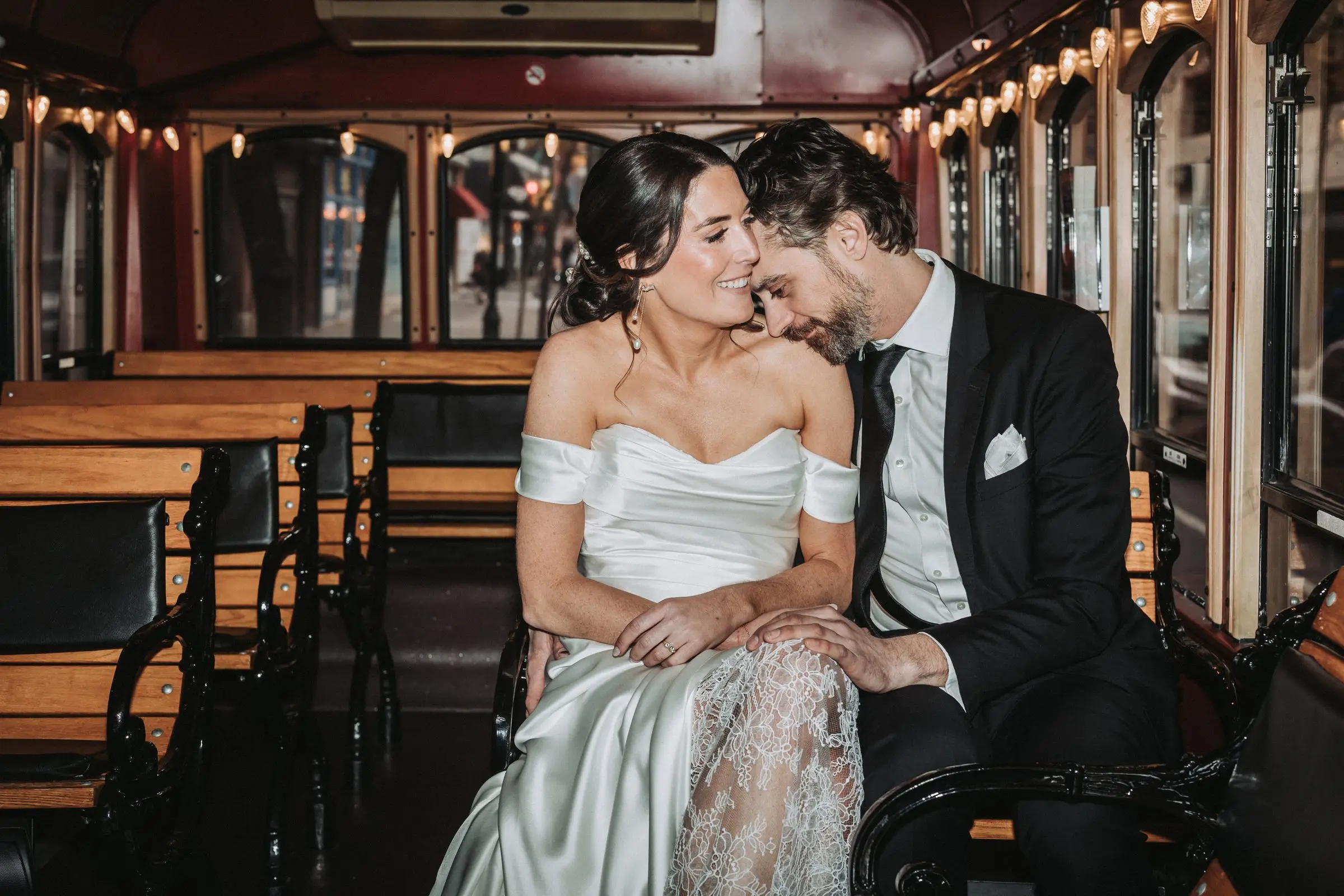
The magic is in the pacing. A traditional planner assembles vendors around a couple's wishes. This studio starts with an event that has already been engineered to work, then lets the couple personalize the content inside it: family recipes, the cities they've lived in, their wine preferences, cultural traditions, favorite records, the objects and photographs that mean something. Every wedding feels personal. No wedding is rebuilt from zero. That's the operational leverage, and it's the reason this is a business instead of a hobby with a website.
The minimum viable studio
Don't launch with three cities, twelve packages, and a vendor marketplace. Launch narrow enough to master.
Unlock the Vault.
Join founders who spot opportunities ahead of the crowd. Actionable insights. Zero fluff.
“Intelligent, bold, minus the pretense.”
“Like discovering the cheat codes of the startup world.”
“SH is off-Broadway for founders — weird, sharp, and ahead of the curve.”


