


Steal the Line: Build the Control Layer for Viral Food Drops
A woman on Manhattan's Upper East Side wanted every flavor of the dot cake. Butterfield Market limits each customer to two. The line forms before the batch reaches the case, and the cakes sell out within minutes.
So she hired five people to stand in it.
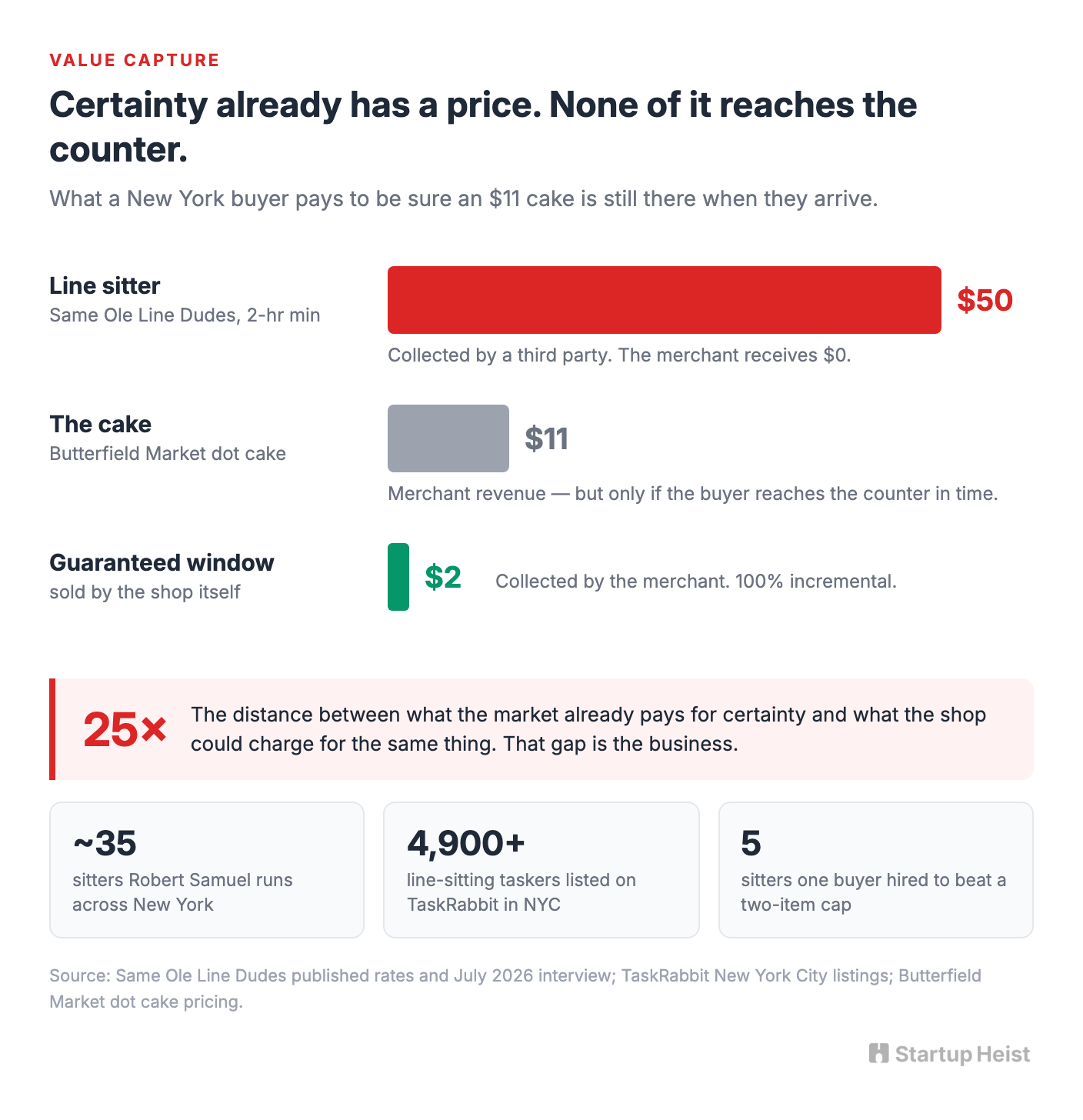
Robert Samuel's company, Same Ole Line Dudes, charges a $50 minimum for the first two hours, $25 for each additional hour, and a 20% premium on high-resale items. He runs roughly 35 sitters across New York, and he said in July 2026 that TikTok has made the business bigger than it has ever been. Another customer hired six sitters to work around per-person limits on cronuts. TaskRabbit lists more than 4,900 line-sitting taskers in New York City alone.
What that $50 buys is the removal of four unknowns: whether the product will still exist when the buyer arrives, how long the wait actually runs, how many units they can take home, and whether they can get any of it without rearranging their day. That certainty carries a public, repeatable price, and a third party collects every dollar of it. The merchant sees none.
Here's the opportunity.
The money: $149 to $299 per location per month. 100 shops is $20,000 MRR. Buyers already pay line sitters $50 for certainty a merchant could sell for $2.
Inside:
• Four-pool inventory model for one drop
• Weekend pilot that tests before you build
• The cold email that lands the first pilot
• Pricing tiers and the anti-scalping stack
The merchants are already building this by hand
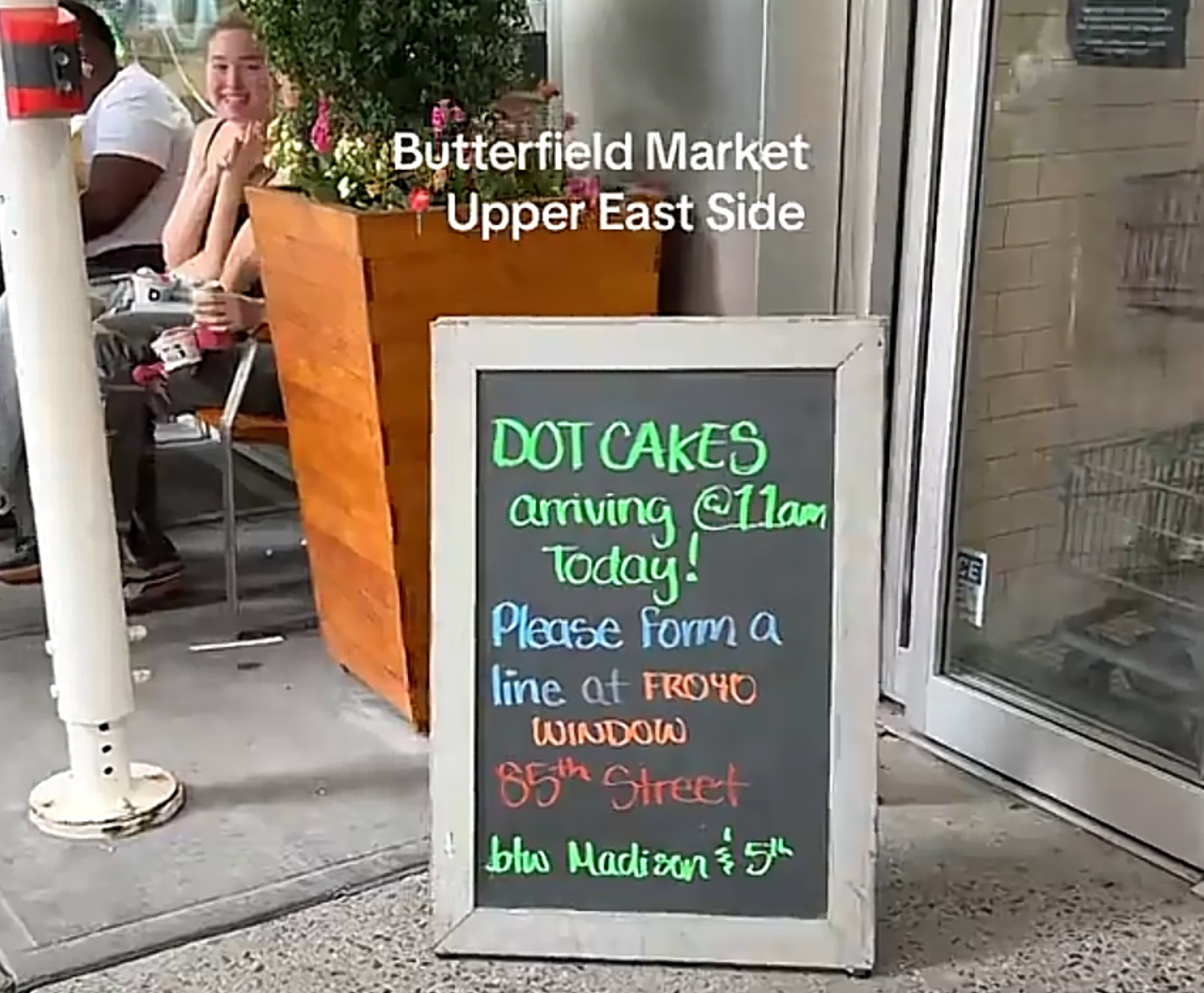
Butterfield Market moves about 1,280 dot cakes across two Upper East Side stores on restock days, at $11 each, released in two batches at 11 a.m. and 1 p.m. That's roughly $14,000 of inventory clearing in minutes, twice a week, at a grocery that has been open since 1915. To keep the sidewalk from turning into a brawl, the store hands out paper tickets. Each ticket is good for two cakes.
The ticket is a claim on inventory: issued before the transaction, capped per person, redeemed at a counter. That's the product, implemented in paper by a grocer who never wanted to be in the allocation business.
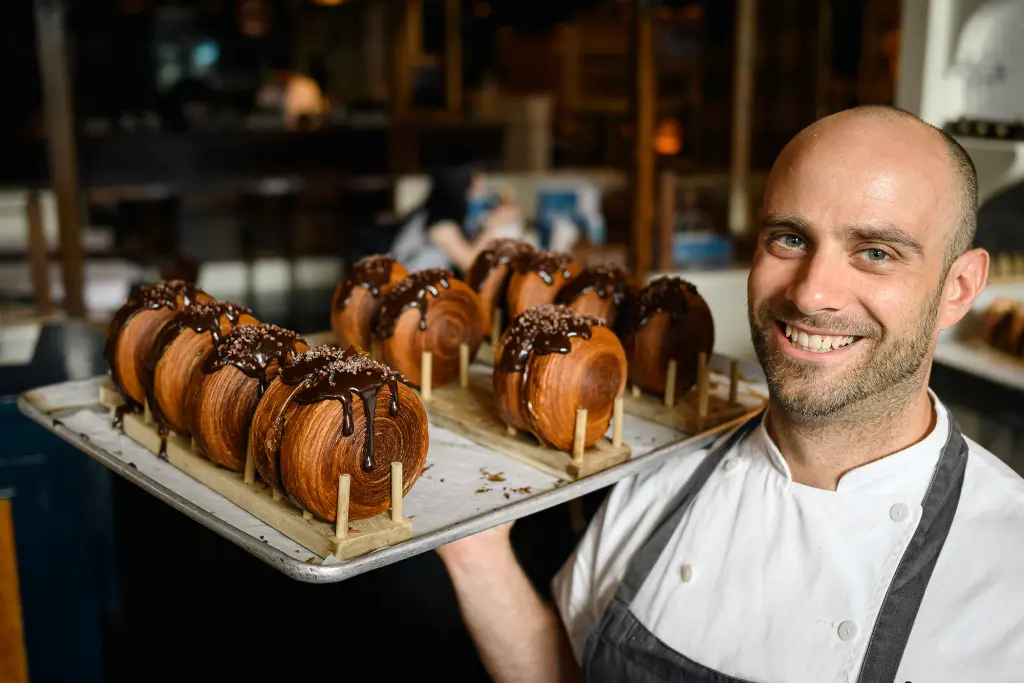
The pattern repeats everywhere demand concentrates. Lafayette Grand Café & Bakery scheduled its Suprême croissant into fixed batch drops at 8 a.m., noon, and 4 p.m. because a single morning release couldn't absorb the crowd. Laura Molinar opened PanPan Bakery outside Arlington, Texas in 2024. She's 21, and after a TikTok cleared 19 million views she went from mixing one batch of dough every two weeks to six or seven a day, with a line that wraps the building before sunrise. Staff hand out umbrellas and water to people waiting in 90-degree heat.
Handing out umbrellas is what a shop does when no software exists for the problem it has.
The line is a bad allocation system
A queue distributes scarce inventory by arrival time, physical endurance, schedule flexibility, and tolerance for uncertainty. That works well enough under normal demand. Under viral demand it fails in specific and expensive ways.
Customers can't see remaining stock, reserve a pickup window, or organize a legitimate group buy, so the ones with money and no time route around all of it by hiring proxies. Purchase limits stop functioning as limits, because a two-item cap enforced by counting bodies is defeated by renting more bodies. The merchant still absorbs the crowd, the staff time, and the angry regulars, while inventory flows to whoever can coordinate the most labor.
A market has formed on the merchant's product, off the merchant's platform, without the merchant's consent, and with none of the revenue reaching the counter.
Replace that informal market with rules the shop controls: how much stock stays open to walk-ins, how much can be claimed online, whether claims are free or deposit-backed, how many units one person can hold, and how pickup demand spreads across the day. Underneath the friendly surface, that's yield management and access control for perishable, finite inventory.
The obvious version is taken
Food-drop software already exists. Several categories of it, and every one stops short of the actual problem.
Hotplate, a Y Combinator company, is built explicitly for drops: sellers open ordering for a window, cap inventory, assign pickup slots, text customers, hold carts, and run sold-out waitlists. It claims more than 5,000 chefs and over $100 million processed, with no subscription, since the customer pays 5% plus 55 cents and the seller covers Stripe's 2.9% plus 30 cents. Around it sits the incumbent restaurant stack. Square handles online preorders up to a year out, per-item cart limits, and order caps per 15-minute pickup window. Toast Tables charges deposits at booking and auto-cancels unpaid holds. Tock runs prepaid pickup. SpotOn Reserve sells waitlists and reservations for roughly $100 a month on top of its POS plus a $250 setup fee, and Waitwhile will run a virtual queue from about $31.
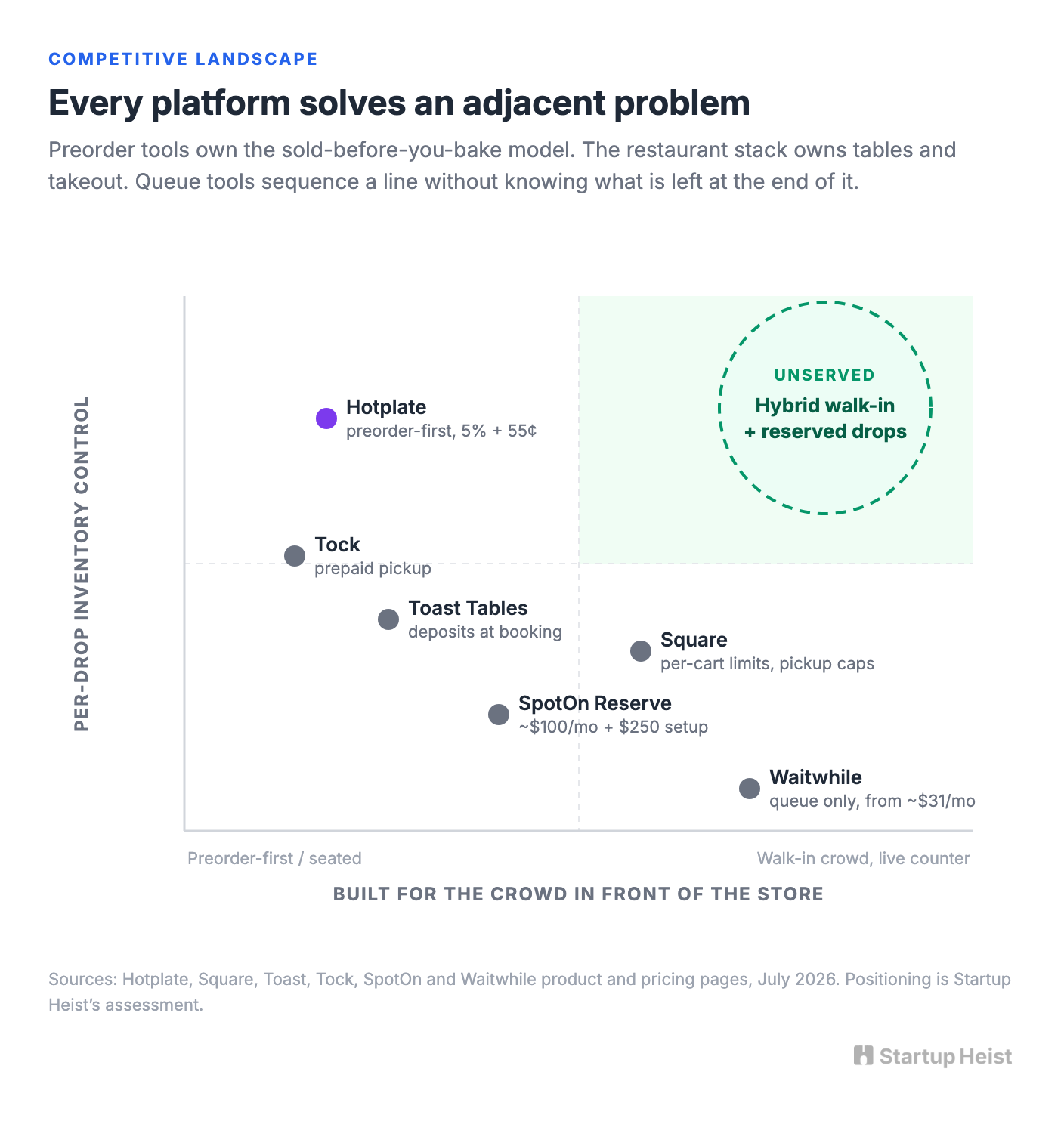
Every one of them solves an adjacent problem. Hotplate optimizes for preorder-first sellers: announce, collect orders, produce what was sold, hand it out. The restaurant stack optimizes for tables, covers, and ordinary takeout. Queue tools sequence a line without knowing anything about the inventory at the end of it. None of them run the workflow Butterfield is running with paper:
We baked 600 units. Doors open at 9. Most of it stays available to whoever shows up, but we want guaranteed pickup windows for part of it, live availability, enforceable per-customer caps, and a way to keep Saturday from swallowing the store.
Square's item limits are per cart, and hiring five people beats a per-cart limit exactly as easily as it beats a paper ticket. Enforcing a limit is an identity problem rather than an arithmetic one, and nobody in the stack owns identity for a walk-in food business. The wedge is a drop control layer for established physical shops that want to keep the crowd and stop losing money to it.
The product is a hybrid inventory allocator
The core design decision is that inventory can't live in one global counter. Every drop carries several pools. A bakery releasing 500 units of a viral pastry might set it up like this.
Unlock the Vault.
Join founders who spot opportunities ahead of the crowd. Actionable insights. Zero fluff.
“Intelligent, bold, minus the pretense.”
“Like discovering the cheat codes of the startup world.”
“SH is off-Broadway for founders — weird, sharp, and ahead of the curve.”


