


The Housefishing Ledger
An apartment listing used to be a collection of photographs. Now it's a collection of claims. The fireplace exists. The floors have been refinished. The living room actually fits that sectional. The window faces a courtyard instead of an air shaft. Generative AI can alter any of those claims in seconds, and the result is often attractive enough to generate a lead, convincing enough to pull someone across town for a viewing, and wrong enough to create a legal problem.
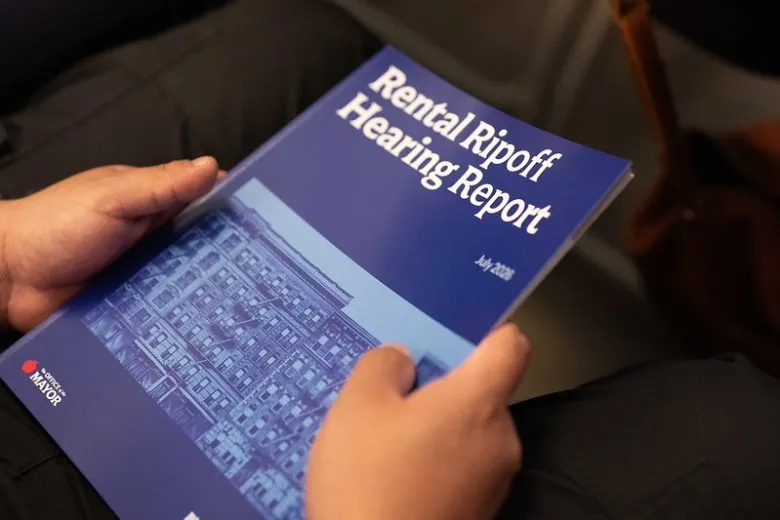
On July 16, 2026, New York City decided this is no longer just bad marketing. Mayor Mamdani's "Rental Ripoff Report," a 23-part tenant-protection agenda built from testimony by more than 2,400 New Yorkers, includes a commitment to require landlords and agents to disclose when rental listings use AI-altered or digitally altered images and video. Final standards and enforcement mechanics are still being written, but the direction is clear: altered rental media is moving into the consumer-compliance stack.
The opening this creates is narrow and timely: a system of record for real estate listing images, software that stores the original photo, tracks what changed, applies the right disclosure, routes approval, and produces evidence that the brokerage followed its own policy. A free "is this listing real?" checker is how you get noticed. The compliance ledger behind it is what customers pay for.
Here's the opportunity:
The money: 100 brokerages averaging $400 a month is $40K MRR; New York alone lists 33,000-plus rentals monthly, and disclosure law is already live in California.
Inside:
• Six-stage workflow from intake to audit packet
• Five-tier pricing: free checker to enterprise
• 90-day plan: sell the workflow before building
• Cold email and audit-first sales playbook
The Regulatory Wave
New York is the loudest signal, and it lands in the most intense rental market in the country. StreetEasy counted 33,064 homes for rent across New York City in May 2026, down 10.7% from a year earlier, while the citywide median asking rent rose 7.3% in a year to a record $4,199. The average listing received 63.6% more inquiries than in May 2019, and Queens listings ran 133% above pre-pandemic inquiry levels. A misleading photograph in this market doesn't sit unnoticed on a forgotten Craigslist page. It shapes dozens of high-stakes, time-pressured decisions at once.
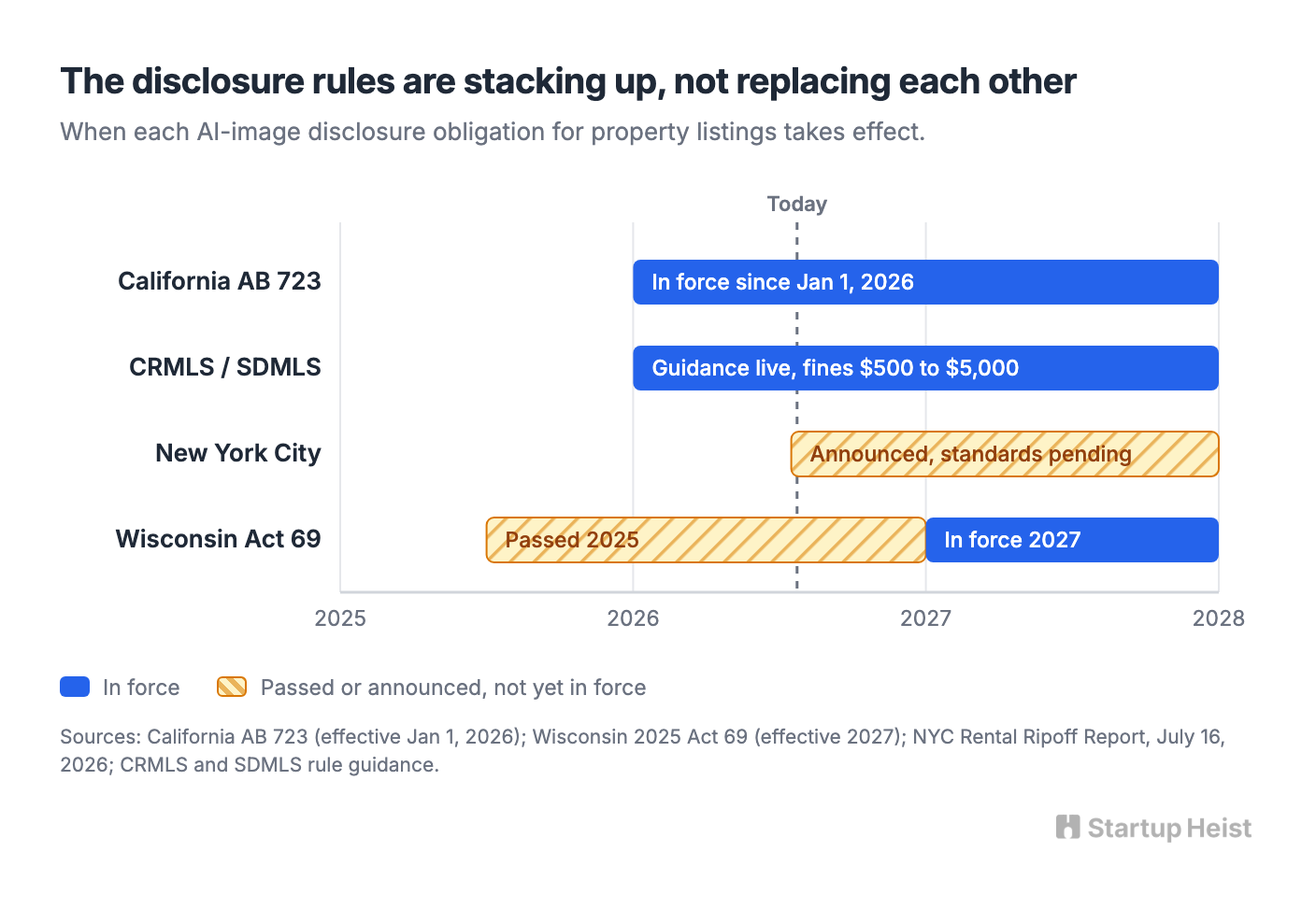
New York is also late to its own party. California's AB 723 took effect January 1, 2026: brokers and salespeople marketing property must conspicuously disclose digitally altered images and provide access to the originals via link, URL, or QR code. The statute defines alteration broadly, covering added or changed fixtures, furniture, appliances, flooring, walls, paint, landscaping, facades, floor plans, and even views visible from the property, while exempting routine adjustments like exposure and cropping. Wisconsin passed its own disclosure law, 2025 Act 69, which takes effect in 2027 and reaches further into video, reels, and animated walkthroughs. Large MLSs including CRMLS and SDMLS have already published guidance, image-label requirements, and original-photo rules; MLS rule violations generally carry fines of $500 to $5,000, and CRMLS's rules committee is expected to attach AB 723-specific penalties in 2026. The National Association of Realtors' ethics code has required accurate photos all along; the states are now attaching statutes to it.
This is how small compliance categories are born. One jurisdiction writes a rule, platforms adopt a conservative version of it, and brokerages standardize on the strictest practical requirement rather than juggling a different process per market. The operational standard spreads faster than the legislation. The startup doesn't need fifty states to pass identical laws. It needs enough fragmented rules that brokerages stop trusting individual agents to handle disclosure by hand. That threshold is arriving now.
The Wrong Heist: Building a Detector
The tempting product is a consumer tool. Paste a StreetEasy URL, upload a photo, get back a score: "87% likely AI-generated." Easy to understand, fun to share, dangerous to rely on.
A February 2026 benchmark tested 23 variants of 16 open-source AI-image detectors across 2.6 million images from 291 generators. The best detector averaged 75% accuracy, the worst 37.5%, and images from modern commercial generators like Flux and Midjourney defeated most systems, with average detection accuracy falling to 18-30%. Production conditions are worse than benchmark conditions: listing photos get resized, compressed, cropped, screenshotted, and syndicated through MLS feeds. In July 2026, Reuters found that Meta's own detection tool failed to verify 55% of images generated by Meta's own model once they were cropped.
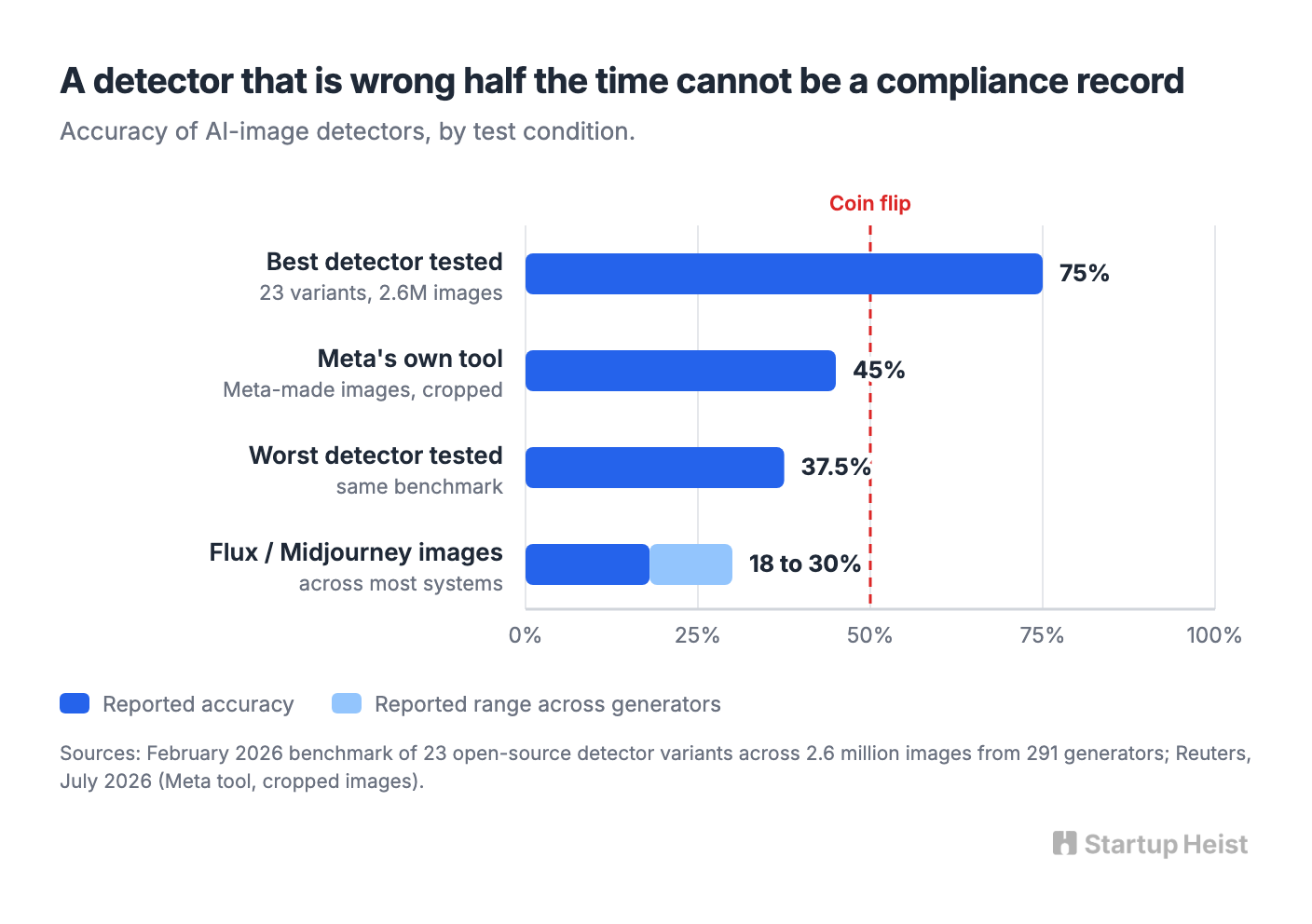
Even a perfect detector answers the wrong question. A listing image can start as a real photograph, then pass through exposure correction, object removal, virtual staging, and manual retouching. The legally relevant questions are operational: Was a material element changed? Was the original retained? Was the disclosure placed where the rule requires? Who approved publication, and can the brokerage prove all of it six months later? A detector can flag risk, but it can't reconstruct a business process after the fact.
Detection is also crowded territory. Zillow already runs the model consumer experience inside Showcase, its premium listing tier: the user initiates the staging, the altered image is labeled, and the original stays available side by side. A cluster of virtual-staging tools, Roomstage among them, now auto-applies MLS-compliant disclosure watermarks with per-board rules for language and placement. The watermark is becoming a feature, which means it was never the business. The same thing happened in e-signatures: putting a signature on a PDF became free, and the money moved to controlling templates, approvals, versions, and retention. The durable opening is one layer up, and it starts with what happens to a photo before anyone edits it. Nobody occupies that layer yet. The staging tools stop at the watermark, the platforms police their own inventory, and the system of record for listing-image provenance sits empty.
The Actual Product
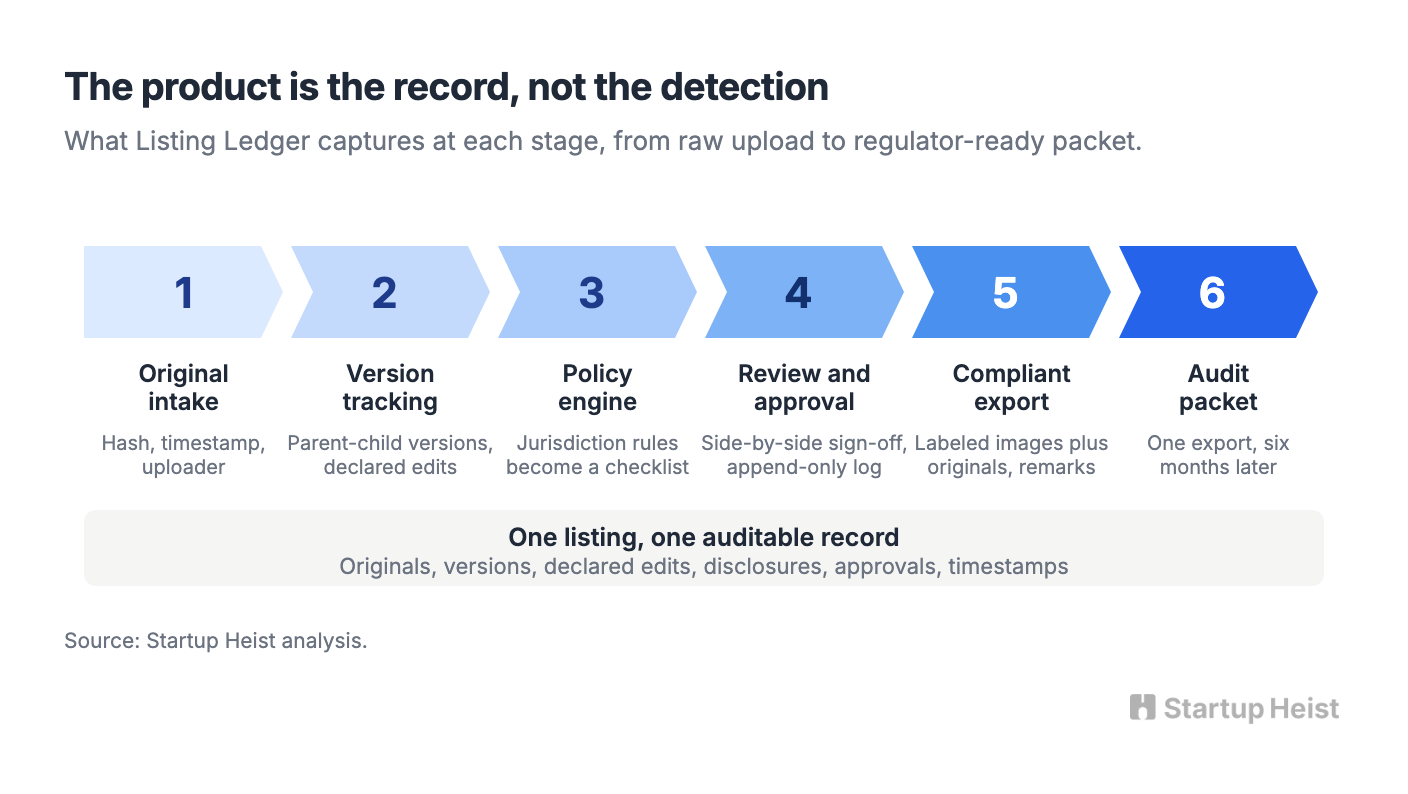
Call it Listing Ledger. It sits between the people who create property media and the systems that publish it, and for every listing image it answers five questions: What was the original? What changed? Who made and approved the change? What disclosure was required? What evidence can we produce later?
The workflow has six stages.
Unlock the Vault.
Join founders who spot opportunities ahead of the crowd. Actionable insights. Zero fluff.
“Intelligent, bold, minus the pretense.”
“Like discovering the cheat codes of the startup world.”
“SH is off-Broadway for founders — weird, sharp, and ahead of the curve.”


