


The RFP Decoder: AI Bid Prep for the Smallest Local Contractors
Everyone knows where the boring money lives.
A janitorial company, a landscaping crew, a small security firm, a regional HVAC shop, a three-person managed-services provider: each one can look at a city, county, or school district solicitation and see real revenue sitting on the table. Then the PDF opens. Forty-seven pages. Insurance exhibits. Addenda. Mandatory pre-bid conference. Attachment C. Attachment F. The price sheet is an Excel template with merged cells. Minority-business forms. References. Bonding language. Submission portal registration. Questions due next Tuesday at noon. Final bid due by 2:00 p.m., not 5:00 p.m., and late submissions are rejected without review.
The problem is not that small vendors don't want government work. It's that most of them can't afford the cognitive load to chase it. That gap is the opening.
The opportunity is an AI-powered RFP decoder and bid-prep service for the smallest local contractors selling into the state, local, and education market, otherwise known as the SLED economy. Skip the generic "AI proposal writer" framing. Skip the federal capture platform stuffed with FAR-clause logic. Build a narrow, semi-manual service that takes a messy local solicitation and turns it into a usable bid package: eligibility check, compliance matrix, required attachments, risk flags, pricing worksheet, calendar, clarification questions, and a first-draft response.
The play here is becoming the missing bid desk for contractors too small to hire one.
Here's the opportunity:
The money: A single operator can reach $13K–$40K MRR within twelve months by stacking $99 scans, $349–$799 packages, and $299–$1,200 monthly plans.
Inside:
• Full MVP scope built on $0 stack
• 8 artifacts every bid package must contain
• Three-tier pricing and concierge upsell path
• Five distribution channels that already work
The Buyer-Side Tell
The timing signal showed up on April 29, 2026, when Euna Solutions launched Solicitation Advisor, an AI tool that helps public agencies review draft RFPs before publication, flag ambiguity, and reduce supplier confusion. Buried in the launch material was the number that matters: 62% of public agencies receive only two to five bid responses per project on average. The agencies themselves know their paperwork is suppressing competition.
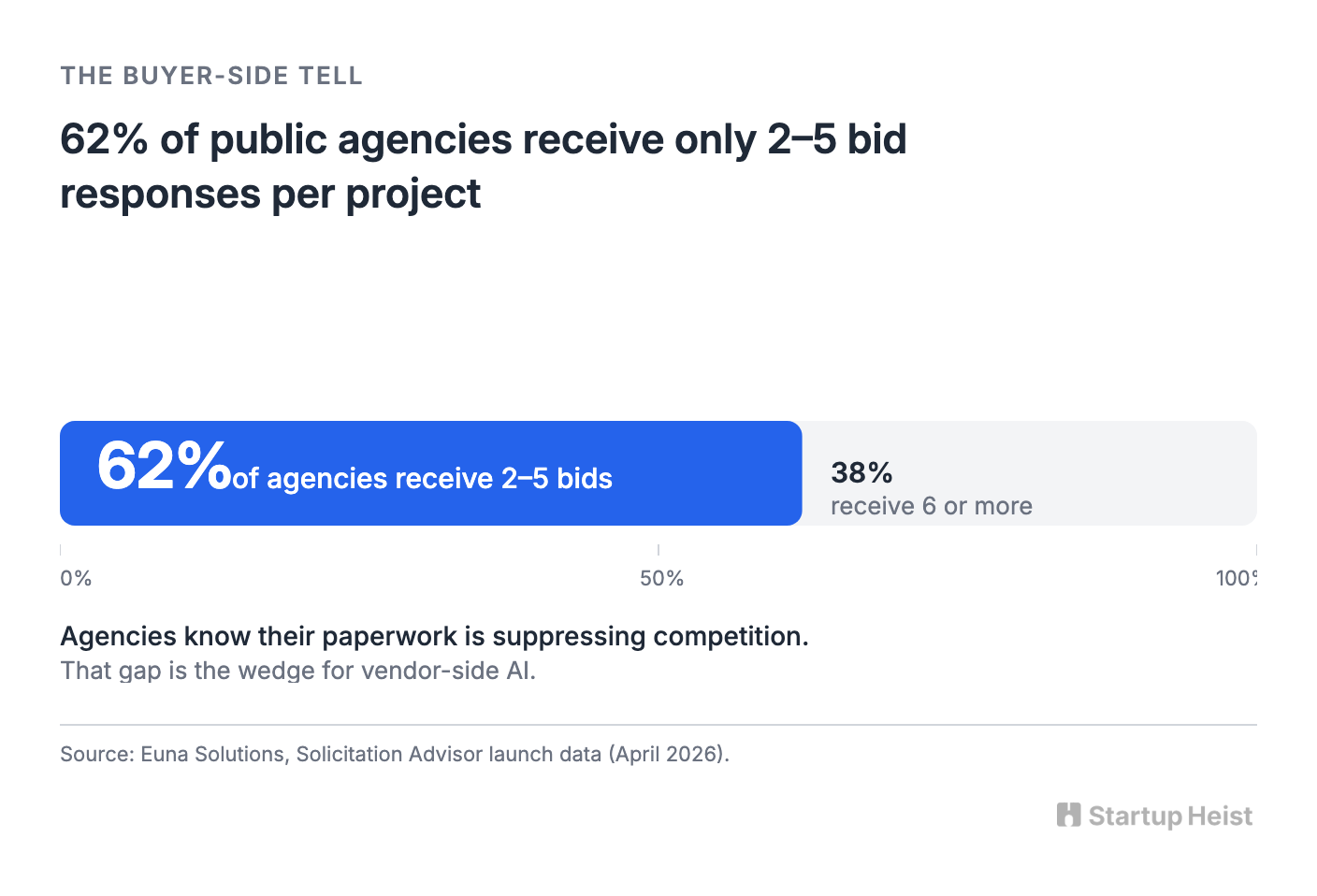
Solicitation Advisor only runs inside Euna Procurement, so just a sliver of agencies will ever produce cleaner solicitations. The rest will keep shipping the same forty-seven-page PDFs. When government buyers start using AI to write cleaner solicitations, vendors will need AI to read the messy ones. That asymmetry is the wedge.
The Market Is Huge. Stay Tiny Anyway.
The SLED market is the unglamorous cousin of federal contracting. State agencies, counties, municipalities, public universities, K–12 districts, transit authorities, water districts, housing authorities. Roughly $1.5 trillion in annual procurement spend across more than 90,000 purchasing entities, generating hundreds of thousands of RFPs a year. Some analysts now peg total SLED contract spend closer to $2 trillion, roughly two to three times the size of federal contracting.
Scale alone does not make this a venture-scale SaaS company. The market is huge because it's fragmented. Every state has its own procurement customs. Every city has its own forms. A school district behaves nothing like a county public works office. A municipal mowing contract hinges on equipment lists, prevailing wage language, insurance limits, seasonal schedules, and pesticide certifications. A school district janitorial RFP hinges on background checks, square footage, cleaning frequencies, product specs, staffing plans, and references.
The product that wins early is one sentence wide:
"We help Pennsylvania janitorial companies bid on school district cleaning contracts without hiring a proposal manager."
Specific enough to sell. Specific enough to template. Specific enough to learn the disqualifiers. That specificity is what makes AI RFP analysis useful here instead of vague.
The Pain Is Not Writing. It Is Not Knowing What Matters.
Most AI proposal tools over-index on drafting. Drafting is visible. Everyone wants the document written faster.
For a small contractor, the deeper pain happens before writing. Can I even bid on this? Am I too small? Do I need bonding? A site visit? What forms are mandatory? What's just boilerplate? What insurance limits apply? Do I have to register on some portal first? Is this worth three nights of work?
This is why "RFP decoder" beats "proposal generator." A generic AI writer that produces polished nonsense is dangerous. A decoder that says, "You must attend the pre-bid meeting on June 4 or you cannot submit," is worth paying for. Small contractors don't just fear blank pages. They fear disqualification.
The Buyer Is an Owner Wearing Six Hats
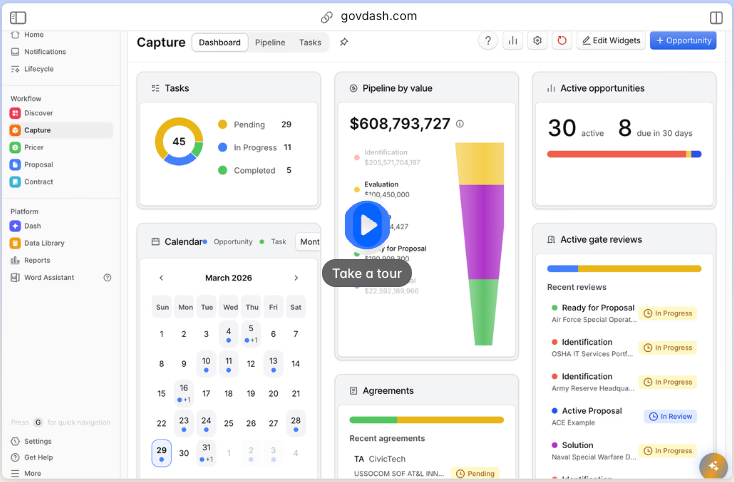
The right customer is not a sophisticated federal contractor. That market already has GovDash, DeepRFP, capture consultants, and proposal managers. GovDash raised $30 million in January 2026 and reports customers winning more than $5 billion in government contracts in 2025. Those tools serve teams. None of them are aimed at a $1.8 million cleaning company owner who personally responds to bids on Sundays.
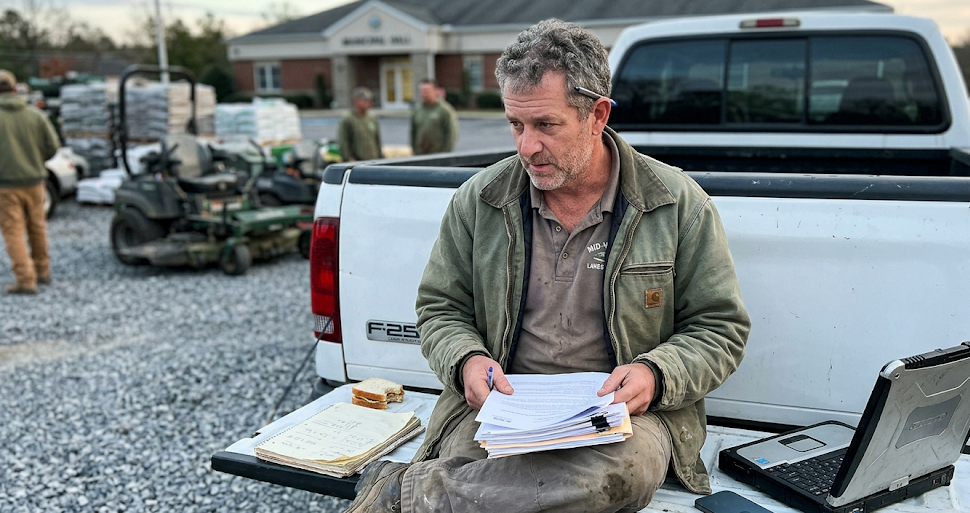
The customer here is a local operator doing $500,000 to $5 million in revenue with real operational capacity and no bid infrastructure. A janitorial company with thirty-five cleaners and a handful of commercial accounts. A landscaper with municipal mowing experience and no proposal writer. A small security firm chasing school contracts. A regional managed-services provider eyeing city and school IT work. A maintenance contractor that sees public work as the path to more stable revenue.
These firms can perform the work. They can't consistently chase it. They've probably tried to bid once, lost on a technicality, and quietly stopped trying while larger competitors picked up the predictable money.
The pitch is not "AI." The pitch is: send us the bid, we'll tell you whether it's worth pursuing, what could get you disqualified, what documents you need, and we'll hand you a first-draft package you can edit. That language sells.
The Competitive Gap
The market already has proposal software. The question is whether any of it serves the tiny operator who says, "I found a school district janitorial RFP. Can someone just tell me what to do?"
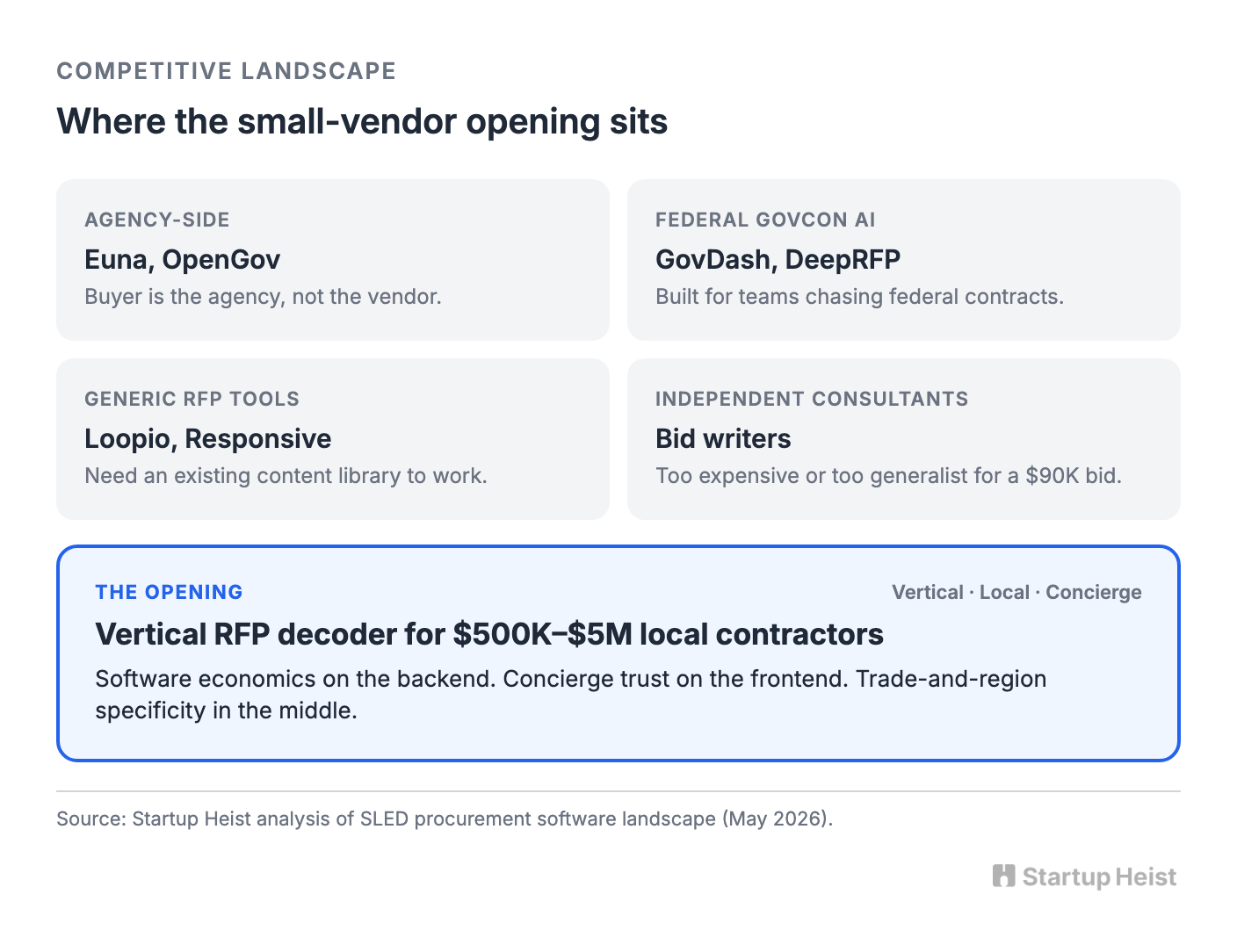
Current tools cluster into four buckets. Agency-side procurement platforms like Euna help governments write and manage solicitations; the buyer is the agency, not the vendor. Federal GovCon AI platforms like GovDash and DeepRFP serve established contractors with capture, proposal development, and compliance matrices built around federal logic. Generic RFP tools help corporate sales teams respond when they already have a content library. Independent consultants and bid writers will do the work manually, but they're often too expensive or too generalist for a contractor bidding on a $90,000 school cleaning contract.
The opening sits underneath all of them: software economics on the backend, concierge trust on the frontend, vertical specificity in the middle. Don't compete with GovDash on "AI for government contractors." Compete on government bid software for small business at the trade-and-region level. The category sounds smaller, which is exactly why it's better, and why the playbook below works.
Building the MVP
The MVP shouldn't be a polished web app. Treat it as an internal operating system wrapped in a simple customer experience.

Call it BidDesk Local, RFP Helper, ContractReady, BidKit; the name doesn't matter yet. The workflow does: a vendor emails or uploads an RFP, you return a same-day go/no-go summary, the vendor decides whether to proceed, you deliver a full bid-prep package within 48 to 72 hours, the vendor reviews and submits, and you optionally do a final compliance pass before submission.
Version one runs on Airtable, Google Drive, Claude or GPT, a PDF parser, Excel templates, and a basic intake form. The customer doesn't care what's behind the curtain.
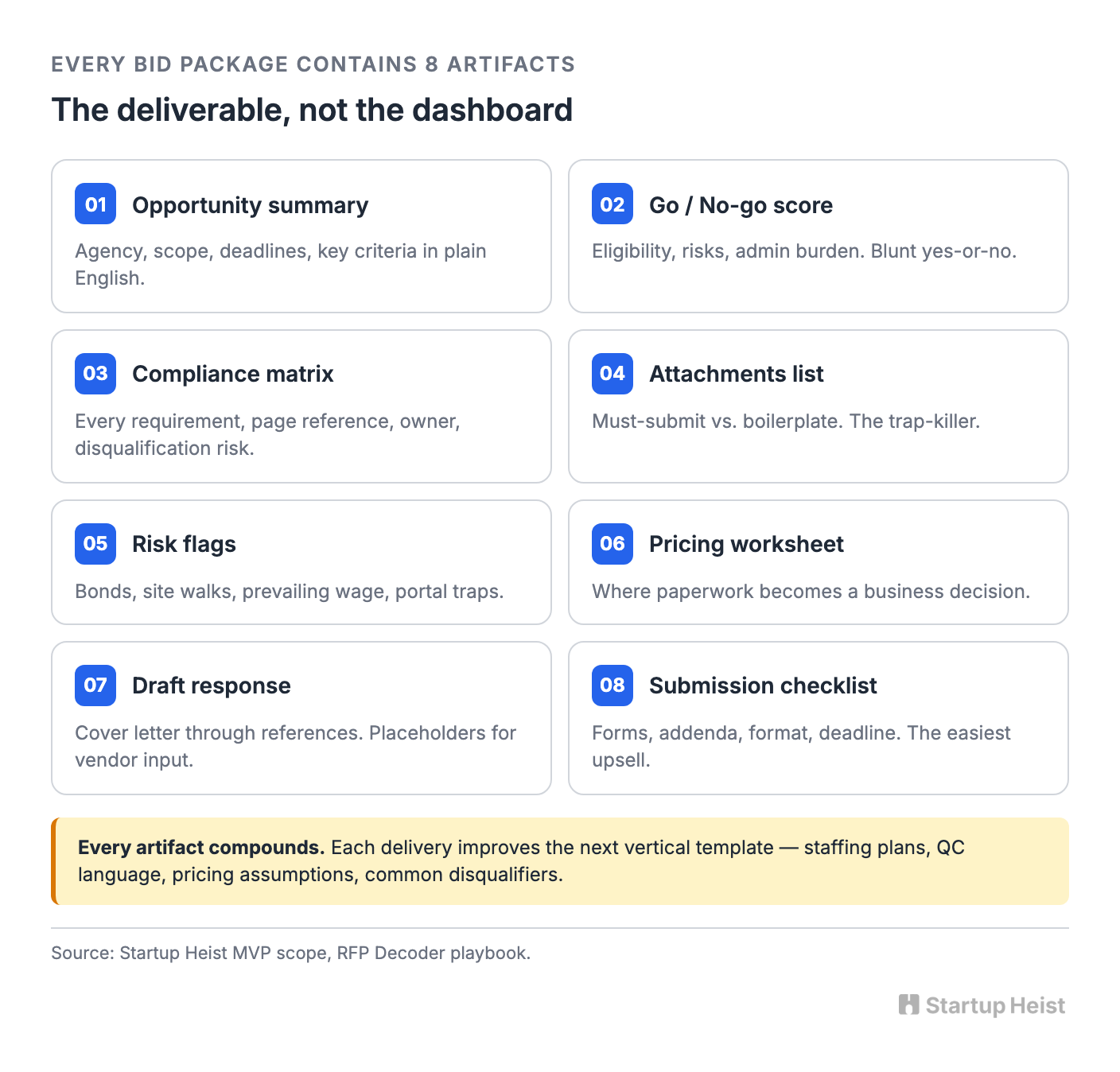
What Every Bid Package Contains
Each RFP produces eight artifacts.
Unlock the Vault.
Join founders who spot opportunities ahead of the crowd. Actionable insights. Zero fluff.
“Intelligent, bold, minus the pretense.”
“Like discovering the cheat codes of the startup world.”
“SH is off-Broadway for founders — weird, sharp, and ahead of the curve.”


