


The best consumer-product opportunities are not always new inventions. Sometimes the product already exists, the supply chain already works, and millions of people are already being educated about the ingredient. In those cases, the opportunity is hiding in the packaging.
Hypochlorous acid spray has quietly become one of skincare's breakout products. It is a gentle, water-based mist made from electrolyzed saltwater. The human immune system produces hypochlorous acid, or HOCl, naturally, as part of its defense against microbes. In properly formulated skincare, it soothes visible irritation, reduces redness, and supports acne-prone or stressed skin. The Cleveland Clinic describes it as mild enough for skin while helping fight bacteria, calm inflammation, and support wound healing.
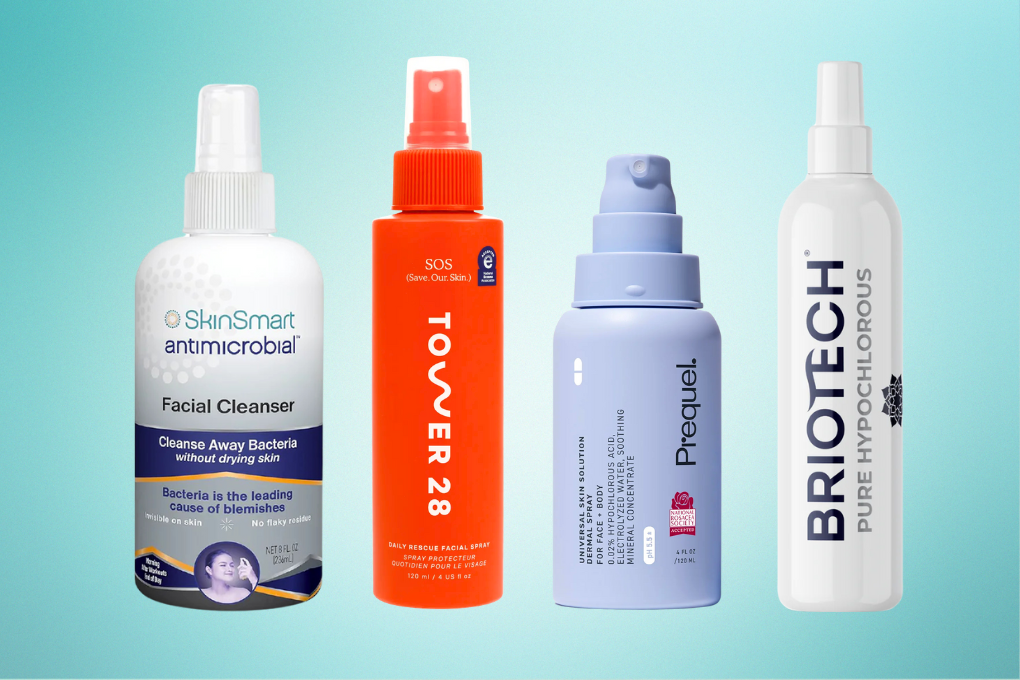
The beauty industry has already found the product-market fit. Tower 28 sells its SOS Daily Rescue Facial Spray for $28 at Sephora, where it became a cult favorite on TikTok. Prequel sells a similar HOCl spray for face and body at Target for around $17. The ingredient lists are strikingly simple: water, hypochlorous acid, salt, and, in some formulas, stabilizing minerals or buffers.
Here is the opportunity.
The money: 1,000 orders a month at a $30 average order value is $30K revenue and roughly $12-16K contribution. Private label means no lab and modest startup capital.
Inside:
• First-SKU spec and conservative claims lane
• Bundle pricing that survives paid acquisition
• 8-week MVP with TikTok Shop and creator GTM
• Five compounding moats for "gamer hygiene"
Beauty editors, dermatologists, and TikTok creators have spent the past few years explaining the product to consumers. By 2025, major beauty publications including Allure were listing HOCl sprays from Prequel, Tower 28, Medicube, Magic Molecule, and SkinSmart. In early 2026, Good Housekeeping ran a roundup that included products from Neutrogena and Mario Badescu, among others. Search interest in "hypochlorous acid spray" hit its peak in January 2026.
Yet nearly every product looks like skincare. Pastel bottle. Clean-beauty typography. Bathroom-shelf photography. Female-coded influencer marketing.
The heist is to take the same underlying ingredient and build the first credible gamer hygiene brand around it: a black-labeled skin mist designed for people who spend eight hours wearing headphones, touching controllers, typing on keyboards, drinking canned energy drinks, and sitting under hot desk lights.
This is not a venture-scale breakthrough on day one. It is a brand-first, low-capex consumer play with a realistic path to a profitable niche. A solo founder or two-person team could launch it fast, learn from creator-driven demand, and decide whether it deserves to grow into a category.
The weak version sells a gimmicky bottle of "keyboard cleaner you can spray on your face." The strong version is more disciplined:
A skin-first hypochlorous mist for post-session resets, packaged for gamers and developers, with a secondary desk-care ritual built around safe application.
The chemistry is commoditized. The positioning is wide open.
The Arbitrage
Consumers rarely buy ingredients in a vacuum. They buy a product that fits a story about who they are and what problem they have.
Beauty brands sell HOCl as a calming facial mist for sensitive skin, flare-ups, gym bags, and post-workout breakouts. Tower 28 describes its spray as a way to calm visible irritation and reduce redness. Sephora positions the same product around breakouts and stressed skin.
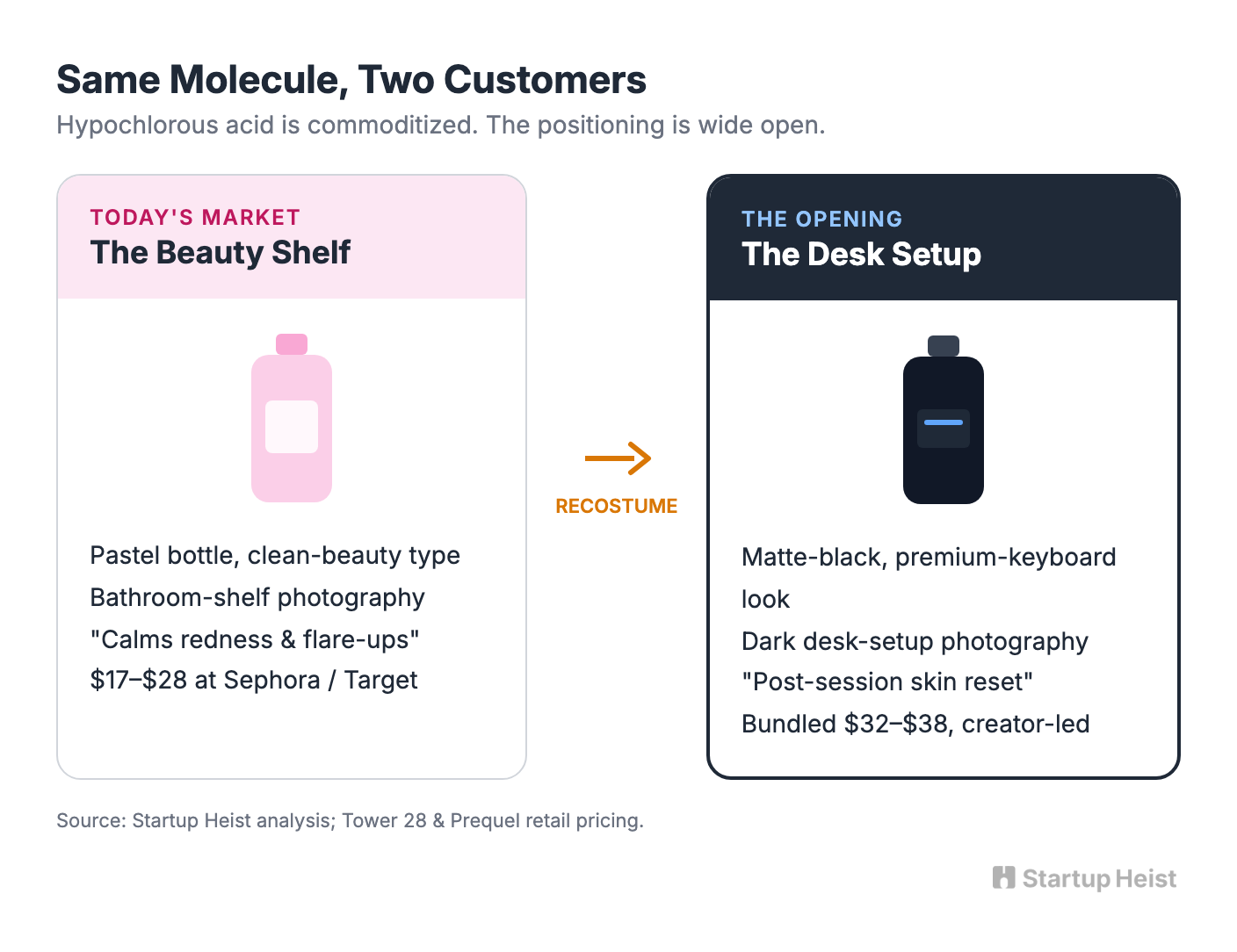
The gamer version starts with a different set of triggers:
- Headset pressure, heat, sweat, and oily skin after a long session.
- A controller or keyboard that feels grimy after repeated use.
- A laptop camera revealing a shiny face before a call.
- A two-minute ritual that feels like equipment maintenance, not skincare.
That first trigger is not imaginary. Dermatologists call it acne mechanica: friction, pressure, and trapped heat forcing follicles closed. Extended headphone use is a well-established trigger, which puts gamers, streamers, and remote workers at the exact center of the risk.
The core audience is not stereotypical teenagers. It includes adult gamers, streamers, remote developers, desk-heavy knowledge workers, esports-adjacent creators, and anyone who has spent too much on a mechanical keyboard but has no personal-care routine.
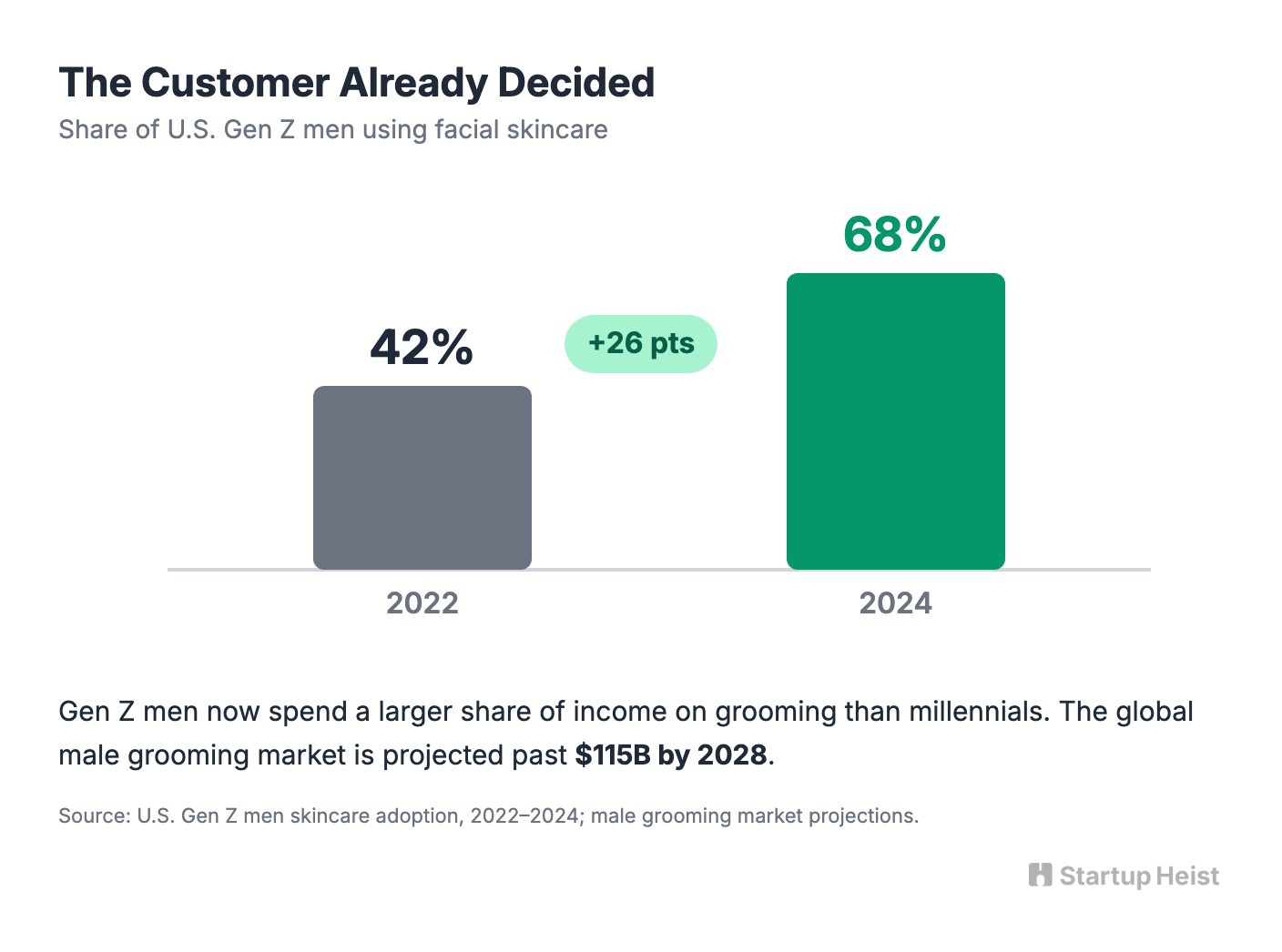
The demographic shift makes this timing unusually good. In 2024, 68% of Gen Z men in the U.S. used facial skincare, up from 42% just two years earlier. Gen Z men now devote a larger share of income to grooming than millennials do, and the global male grooming market is projected to push past $115 billion by 2028. The customer exists, has money, and has already decided that buying men's skincare is normal.
Traditional skincare language still creates friction for this audience. A gamer may not search for "barrier support" or "soothing facial toner." He may still buy a post-session reset mist that sits next to his mousepad, especially if the bottle looks like it belongs there. That is the arbitrage: take a familiar ingredient and move it into a new identity system.
Why the Timing Is Better Than It Looks
Unlock the Vault.
Join founders who spot opportunities ahead of the crowd. Actionable insights. Zero fluff.
“Intelligent, bold, minus the pretense.”
“Like discovering the cheat codes of the startup world.”
“SH is off-Broadway for founders — weird, sharp, and ahead of the curve.”


