


Sell the Sparkle Shovel
A spool of metallic thread costs almost nothing. Tie a few strands into someone's hair before a party, and that person will happily pay $15, $20, even $40 for the result. The math is almost insulting. A 100-strand pack runs about $7 wholesale. A single customer can be worth more than the entire spool.

That gap is the opportunity, and the obvious move is the wrong one. The obvious move is to apply tinsel yourself, one head at a time, one event at a time. The smarter move is to sell the side hustle to everyone who wants to do that. Build a sharply branded hair-tinsel kit that gives college students, festival regulars, and weekend operators the supplies, scripts, training, and confidence to run their own pop-up sparkle bar at a sorority mixer, a brewery, a children's party, a boutique, or a music festival.
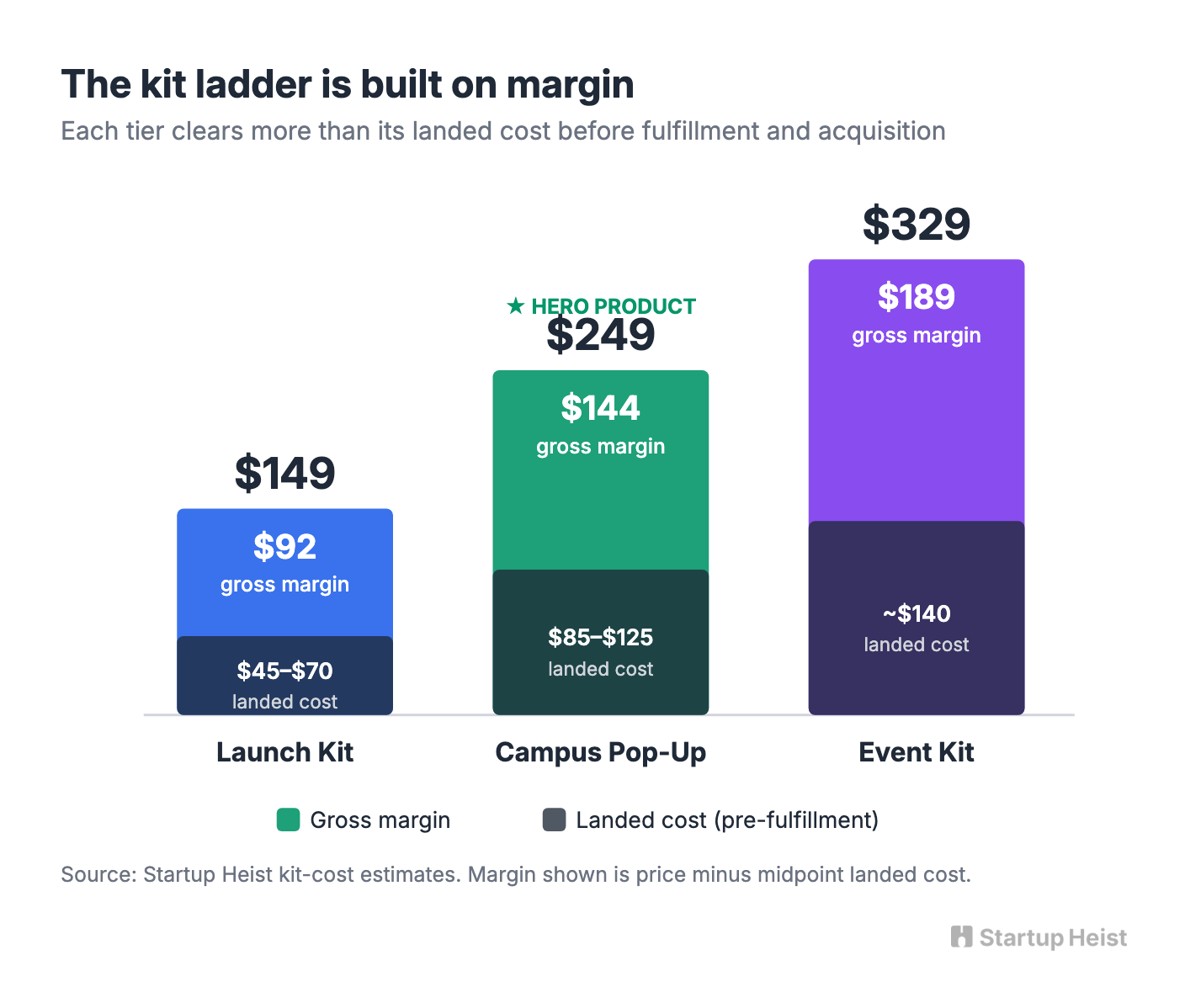
Don't call it a franchise. Don't fabricate an expensive rolling kiosk. Don't promise passive income. Sell a compact business in a box for $149 to $299, then keep the best operators supplied with refills and adjacent products.
Here's the opportunity:
The money: A $249 kit pays for itself in two pop-ups. Sell 150 kits a month plus refills and you're at $30K to $40K MRR.
Inside:
• Three-tier kit ladder, $149 to $329
• Refill engine that beats forced subscriptions
• FTC franchise-rule and licensing guardrails
• First-30-operators field test and 90-day plan
This won't be a venture-scale empire on day one. It's a lean physical-product brand with a realistic path to $10,000 to $40,000 a month, and a longer arc toward becoming the supply house for portable "micro-glam bars." The first heist is simple: sell the sparkle shovel, not the gold.
A five-minute service hiding in plain sight
Hair tinsel isn't new. It has drifted through beauty culture for decades, from disco shimmer to Y2K extensions to festival glitter to Beyoncé at the 2010 Grammys. Novelty isn't the question. The question is whether it has settled into the category of recurring micro-trends, the visual ideas that keep resurfacing because they're easy to try, easy to share, and almost impossible to kill.
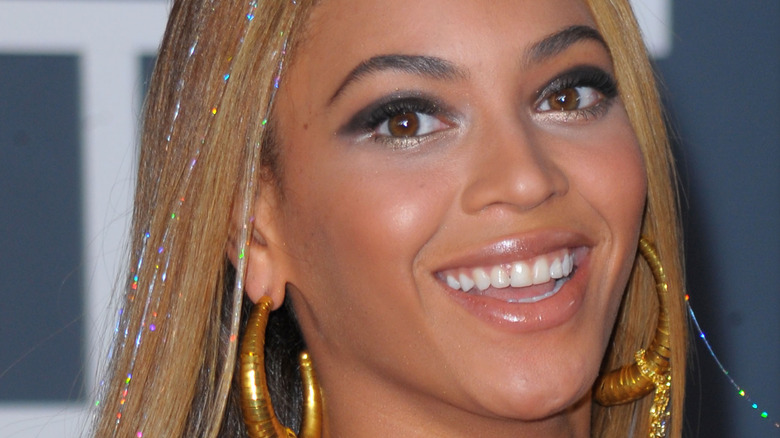
The evidence says it has. Dazed called hair tinsel one of the first big beauty trends of 2025, crediting the film Anora and the wider Y2K revival for its return. Heading into the 2026 festival season, Who What Wear flagged tinsel, charms, and metallic accessories as core to the maximalist mood. Broader 2026 beauty coverage has called a shimmer revival after years of stripped-down "clean girl" looks. On TikTok, searches for hair tinsel have spiked into the hundreds of thousands during peak moments.
So this isn't shampoo. It's trend-sensitive and it will cool. But it has three qualities that make it unusually good raw material for a side-hustle kit. The payoff is immediate, visible in seconds. The commitment is low, since the look is temporary and playful. And the demand is event-native, which is the part that matters most. The service gets more valuable exactly when customers are already primed to spend, before a party or inside a crowd.
Most service businesses force the seller to manufacture demand one appointment at a time. Tinsel piggybacks on a crowd that already exists. One operator, one folding table, one event, and a line forms on its own.
The signal: people are already paying
You don't have to invent this behavior. Operators have already proven customers will pay real money for a service with almost no material cost. The Sparkle Bar advertises 12 strands for $20, 30 for $45, 60 for $80, and runs private events where guests pay individually. Lucky Locks lists premium packages at $30 to $40 for 10 strands and $120 for 30, with host-paid events starting at $200 per hour per stylist. Independent providers are turning up at breweries, Pilates studios, boutiques, and pottery shops, and the careful ones advertise that they're licensed and insured. Even Ulta sells tinsel application as a 15-strand, 15-minute salon add-on.
The market is fragmented and the pricing is all over the map. Some operators chase kids' parties; others court salons, festivals, or luxury strands. That fragmentation is the opening. Almost every existing brand sells exactly one of three things: strands, professional training, or local appointments.
Almost no one sells a compact, aspirational launch system for the person who wants to run Thursday-night pop-ups near campus. That person is your customer, and nobody is serving her.
The customer isn't the girl buying tinsel
The customer is the girl selling it. That's the entire thesis.
A consumer looks at a $7 pack of strands and asks whether it would look cute in her hair. An aspiring operator looks at the same pack and asks whether she can turn it into $300 on Saturday. Your job is to sell the second answer. The white space sits between two poles: Perfect Locks moves 100-strand packs for about $7, while Fairy Hair sells a $777 certification program with training, inventory, and marketing materials. One end is a cheap commodity. The other is professionalized education priced like a real course.
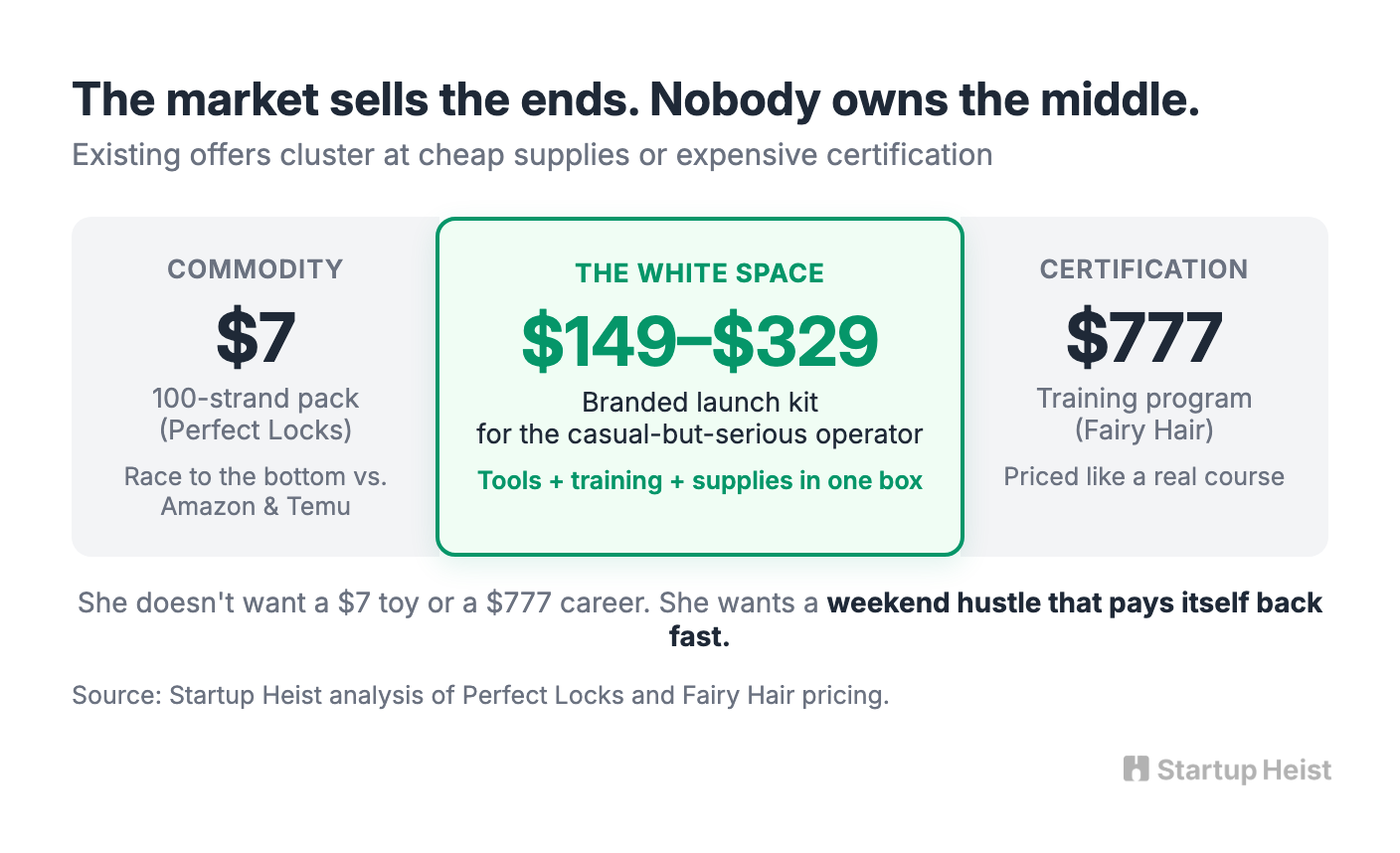
The opening is the middle: a $149-to-$299 launch kit for a casual but serious operator. She doesn't want to become a salon stylist. She wants a weekend hustle with good aesthetics, low risk, and a believable path to earning the kit cost back fast.
Gen Z is primed for exactly this pitch. Axios, citing Harris Poll data, reported in January 2026 that 57% of Gen Z had a side gig, against 21% of boomers and older. Bankrate's 2025 survey is the more important number: the median side hustle earns just $200 a month, even though the average is far higher. You're not competing with venture capital. You're competing with babysitting, delivery apps, pet sitting, and a few coffee-shop shifts. A hustle that can plausibly clear $150 to $300 at a single lively event doesn't need to make anyone rich. It only needs to feel tangible, social, and achievable.
The operator economics
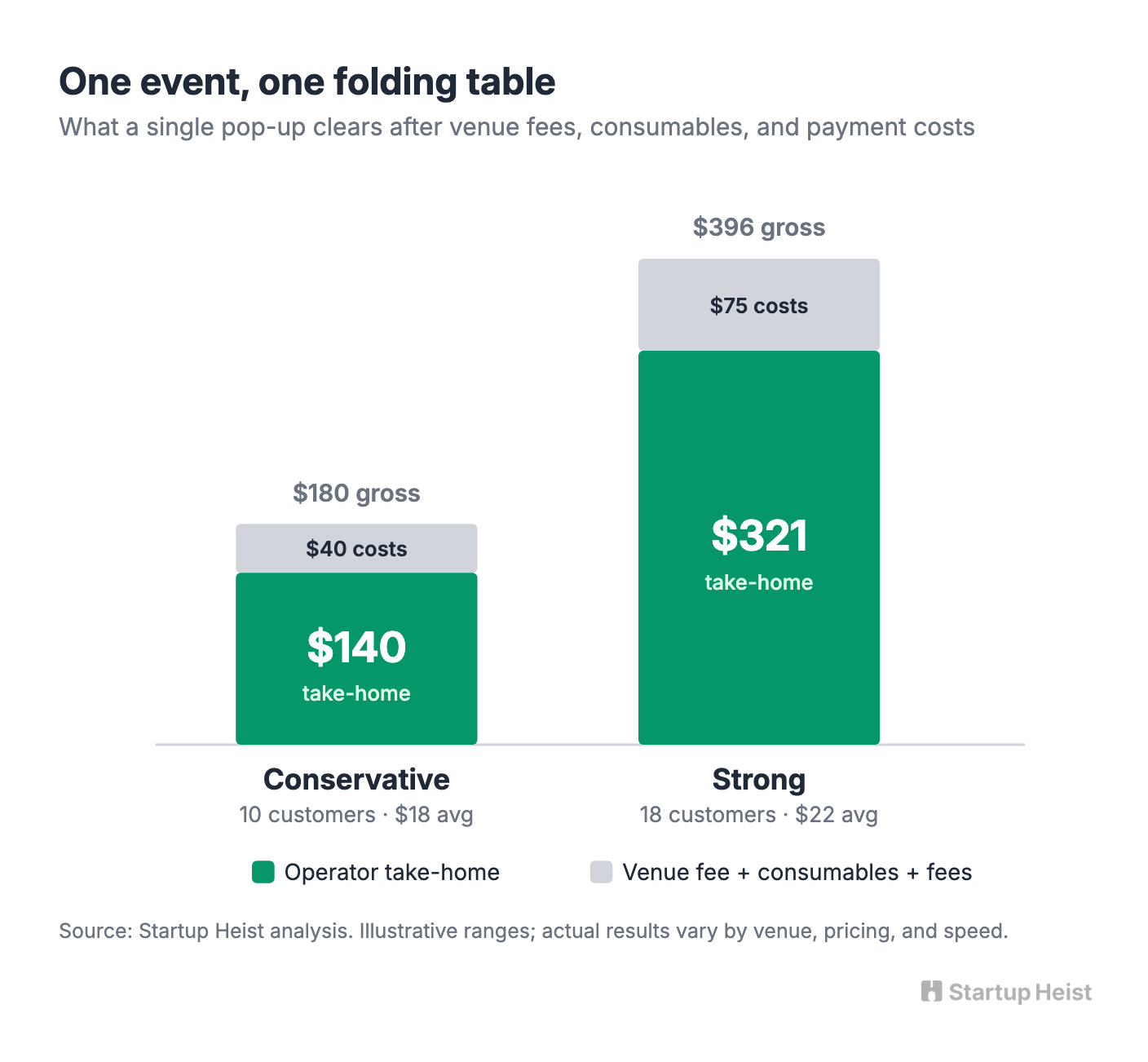
The numbers work because they don't require heroic assumptions. Picture one ordinary event.
| Metric | Conservative case | Strong case |
|---|---|---|
| Customers served | 10 | 18 |
| Average ticket | $18 | $22 |
| Gross service revenue | $180 | $396 |
| Venue share or event fee | $0–$40 | $0–$80 |
| Consumables and payment fees | $15–$25 | $25–$45 |
| Approximate operator take | $115–$165 | $271–$371 |
These are illustrations, not guarantees. The real result depends on venue access, local pricing, event format, speed, and regulation. But the logic holds. The consumable is never the expensive part. The operator's real constraints are demand, queue flow, time, and access to events.
A $249 kit can pay for itself after two solid pop-ups. A strong operator might recover it in one. A weak operator may never recover it at all. Put that last sentence in your marketing, in plain sight. You aren't selling an income promise. You're selling an operating kit, and that difference is what keeps you out of trouble.
The product: a business in a tote bag
Unlock the Vault.
Join founders who spot opportunities ahead of the crowd. Actionable insights. Zero fluff.
“Intelligent, bold, minus the pretense.”
“Like discovering the cheat codes of the startup world.”
“SH is off-Broadway for founders — weird, sharp, and ahead of the curve.”


