


Two economists are walking down a Chicago sidewalk. One stops, points at the pavement. "Hey! Twenty bucks on the ground." The other barely looks. "Can't be. If it were, somebody would've already picked it up."
That joke has been kicking around econ departments since at least 1984, when The Economist put it in print. Forty years of PhD orthodoxy compressed into a sidewalk gag. The premise is fundamentalist: prices reflect all available information, no free lunches, no arbitrage hiding in plain sight, because if the bill were really there, somebody smarter and faster would've grabbed it already.
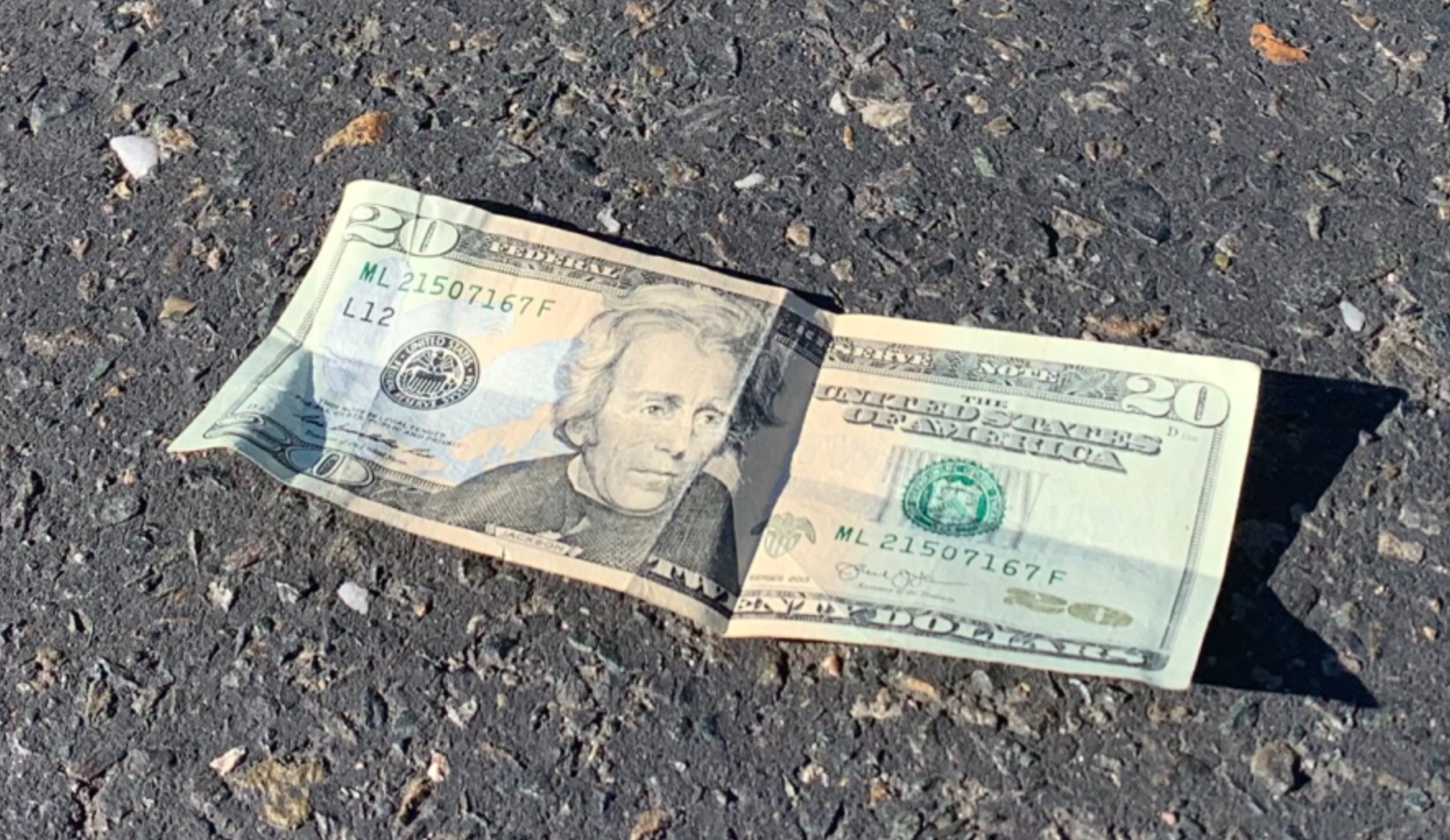
Funny how often the bill is actually there.
States are sitting on roughly $70 billion in unclaimed property right now. In fiscal 2024 alone, NAUPA reports $4.49 billion was returned to rightful owners — the highest figure they've ever published. The pile keeps growing faster than the payouts. The bill is on the sidewalk. Most of us walk past.
Today's idea is a play on this exact gap: the SMB band of unclaimed property. The big consultancies like KPMG and MarketSphere work the Fortune 1000. Consumer finders chase individual claimants for $50 here, $200 there. In between sits a wide, ignored middle — real operating small businesses with five and six-figure exposures. Old vendor refunds, stale payroll, customer credits never reissued, dormant deposits from a bank that got acquired three times since. Too small for the consultancies, too entity-complex for the consumer finders.
The play is a contingency-fee recovery service for those SMBs. No upfront fee, 10-15% of recovered claims, paid only when the state cuts the check. A solo operator running 25 closed claims a month at a $420 average fee clears $10,500 MRR. Fifty claims clears $21,000. Costs stay low, the data is public, and the second act is software for compliance and escheatment prevention. The whole heist is in the article.
Read the full playbook here:
States returned $4.49 billion in unclaimed SMB funds in 2024 -- and still hold $70 billion. There's a contingency-fee service business hiding inside that paperwork.
From the Vault:

TikTok Shop hit $23B in U.S. sales. Category buyers at Target, Kroger, and Walmart are still scouting with spreadsheets. The software gap is real.

For 40 years, Wolfgang Beltracchi sold invented Picassos through Christie's. One chemical test ended it. In 2026, luxury resale is running the same scam — and the specialist eye is still missing.


