


Thousands of creators are publishing polished, branded content — product reviews, tutorials, unboxings, outfit reels — without a single dollar from the brands they feature. The industry calls it "specfluencing." Creators tag Nike, Glossier, or CeraVe, shoot what looks like a paid partnership, and post it cold. No contract. No affiliate code. No formal relationship of any kind.
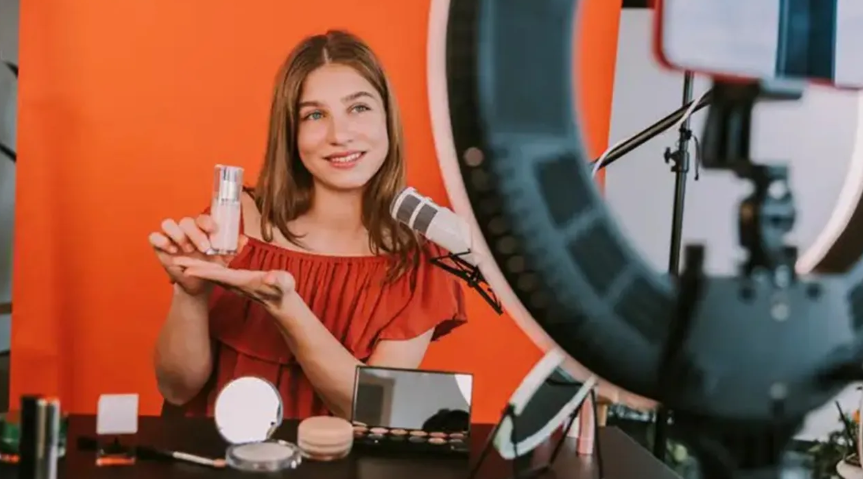
This isn't fringe behavior. KlugKlug, an influencer intelligence platform, tracked one stretch from June through September where roughly 14,000 influencers produced nearly 77,000 brand-tagged posts generating over 1.2 billion views. Most of that content had no paid deal behind it. Of those creators, 11,000 were nano influencers cranking out over 52,000 posts, often without getting so much as a reply from the brand.
“Some nano- and micro-influencers fake collaborations to appear established, using staged posts to attract real deals. While this can generate visibility and even ROI, it can also blur authenticity and weaken trust—what seems like earned media may just be influencers faking it until they make it.”
- Kalyan Kumar, CEO, KlugKlug
You're looking at a shadow audition market — and one of the more compelling B2B SaaS ideas in the creator economy right now. Creators manufacture social proof to look "pay-worthy." Brands sit on a mountain of free creative testing they have no system to discover, score, or convert. The obvious instinct — build a marketplace to connect specfluencers with brands — is the wrong move. That space is already crowded and easy to replicate.
The real opportunity is the trust and verification infrastructure for creator-brand relationships. A system that tells brands, platforms, agencies, and eventually consumers what a piece of content actually is. Audition. Paid. Gifted. Affiliate. Organic fan content.
The market doesn't need another place to make the transaction. It needs a system that tells the truth about what already happened.
Why Now
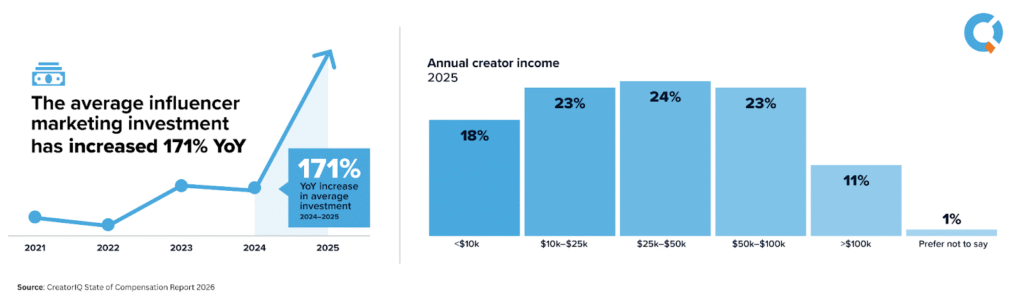
U.S. creator ad spend hit a projected $37 billion in 2025, up 26% year-over-year and nearly four times the growth rate of the broader media industry. That number has almost tripled since $13.9 billion in 2021. Nearly half of all creator ad buyers now consider influencer partnerships a "must buy" channel, and CreatorIQ's 2025–26 report shows average influencer marketing budgets grew 171% year-over-year, with enterprise brands investing between $5.6 million and $8.1 million annually. Nearly two-thirds of that new spending was pulled directly from traditional paid and digital advertising.
Meanwhile, the FTC's enforcement posture is tightening. The updated Endorsement Guides require clear disclosure of material connections, and the Consumer Reviews and Testimonials Rule — finalized August 2024, effective October 2024 — gives the agency civil penalty authority of roughly $53,000 per violation for deceptive testimonial practices, including undisclosed relationships and fabricated credibility signals. Enforcement kicked off in December 2025 with warning letters to companies. Those penalties are indexed and climbing.
Specfluencing sits in exactly the gray zone these rules target. A post that looks commercial but has no contract behind it creates the kind of ambiguity regulators are now pursuing with real teeth. Bigger budgets plus sharper enforcement creates a market willing to pay for clarity.
The Three Problems
Specfluencing creates three distinct pain points, each mapping to a monetizable feature.
Signal pollution. Brand teams can't tell whether a creator's polished portfolio reflects genuine demand or manufactured social proof. When social listening flags 2,000 creators who tagged your brand last quarter, there's no reliable way to sort opportunistic taggers from genuinely aligned advocates. That ambiguity degrades every downstream decision — who to partner with, how much to pay, what performance to expect.
Compliance ambiguity. A spec post can look identical to paid content. Over time, that erodes audience trust and creates regulatory exposure. Brands carrying unresolved ambiguity in their creator ecosystems are accumulating risk they can't easily quantify — and with per-violation penalties now north of $53,000, the math on ignoring it gets ugly fast.
Wasted intelligence. Brands are sitting on a massive volume of unsolicited creative testing — real people making real ads for free — with no system to surface the best of it. The IAB found that a third of advertisers say finding the right creator is their biggest challenge, and the ecosystem remains highly fragmented with siloed budgets and limited standardization.
All three problems compound as the market scales. None of them are solved by another marketplace.
What the Product Should Actually Be
The wrong version of this company is an "Influencer Audition Marketplace." The right version is a Sponsorship Status Protocol — a system of record that classifies, verifies, and tracks the true commercial relationship behind every piece of creator-brand content:
Unlock the Vault.
Join founders who spot opportunities ahead of the crowd. Actionable insights. Zero fluff.
“Intelligent, bold, minus the pretense.”
“Like discovering the cheat codes of the startup world.”
“SH is off-Broadway for founders — weird, sharp, and ahead of the curve.”


