


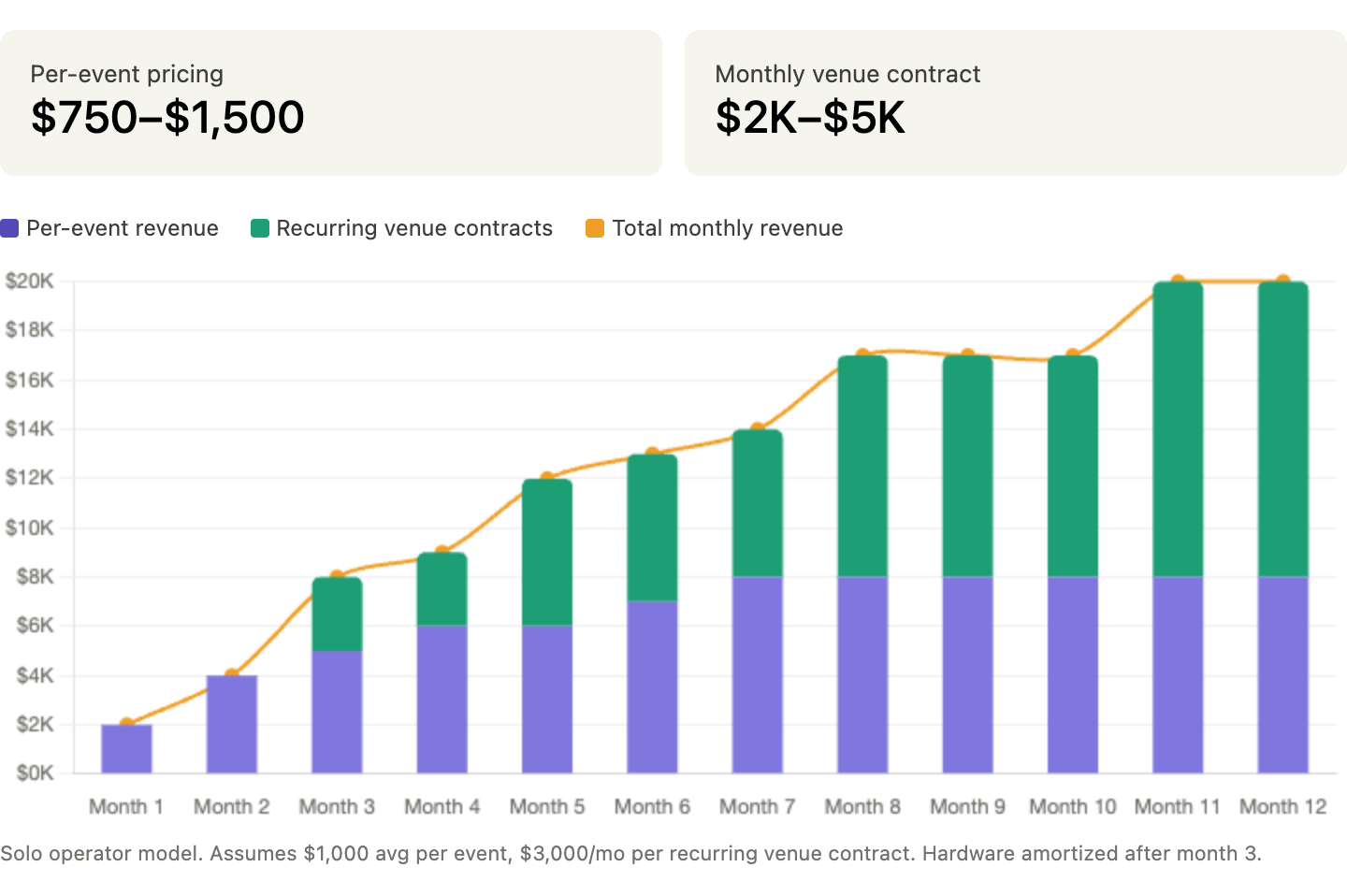
Think event automation meets nostalgia photography, purpose-built for the Yondr era. A solo operator can clear $8K–$14K/month serving a handful of recurring venues, with a path to a scalable software platform underneath.
Yondr has locked more than 20 million devices across 10,000+ events in 27 countries. Dave Chappelle, Paul McCartney, Karol G, Bob Dylan, Kevin Hart, Jon Stewart, multiple Broadway productions. Over 2.5 million students use the pouches daily. Phone-free policies now span comedy, concerts, Broadway, film screenings, weddings, corporate offsites, and courtrooms.
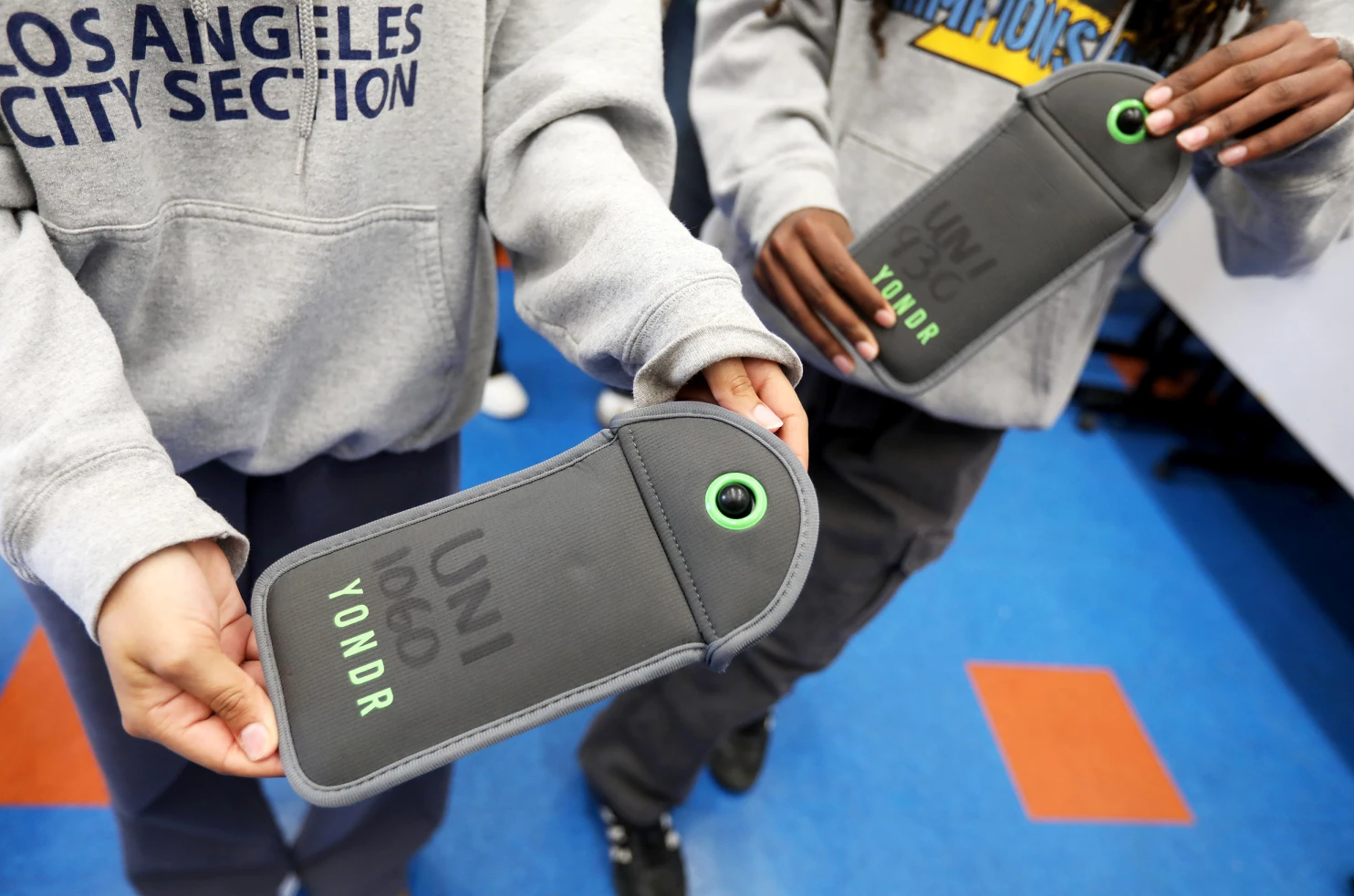
This is no longer a quirky artist preference. It's standard operating procedure for a fast-expanding slice of the live event economy. And it creates a vacuum. When venues lock up phones, they solve one problem while creating another: guests leave with zero personal documentation of the night. No photos. No stories to post. Nothing shareable to prove they were there.
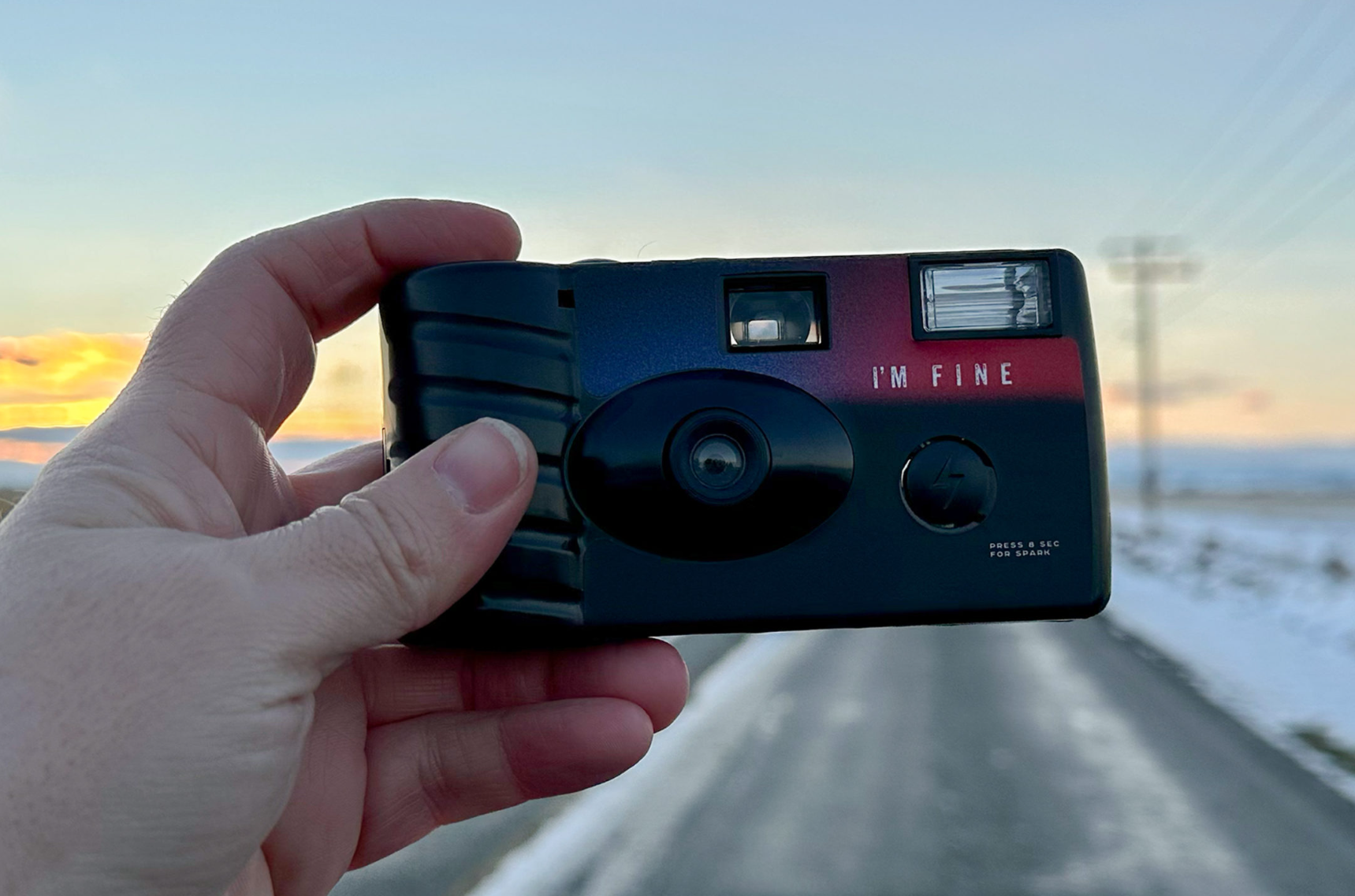
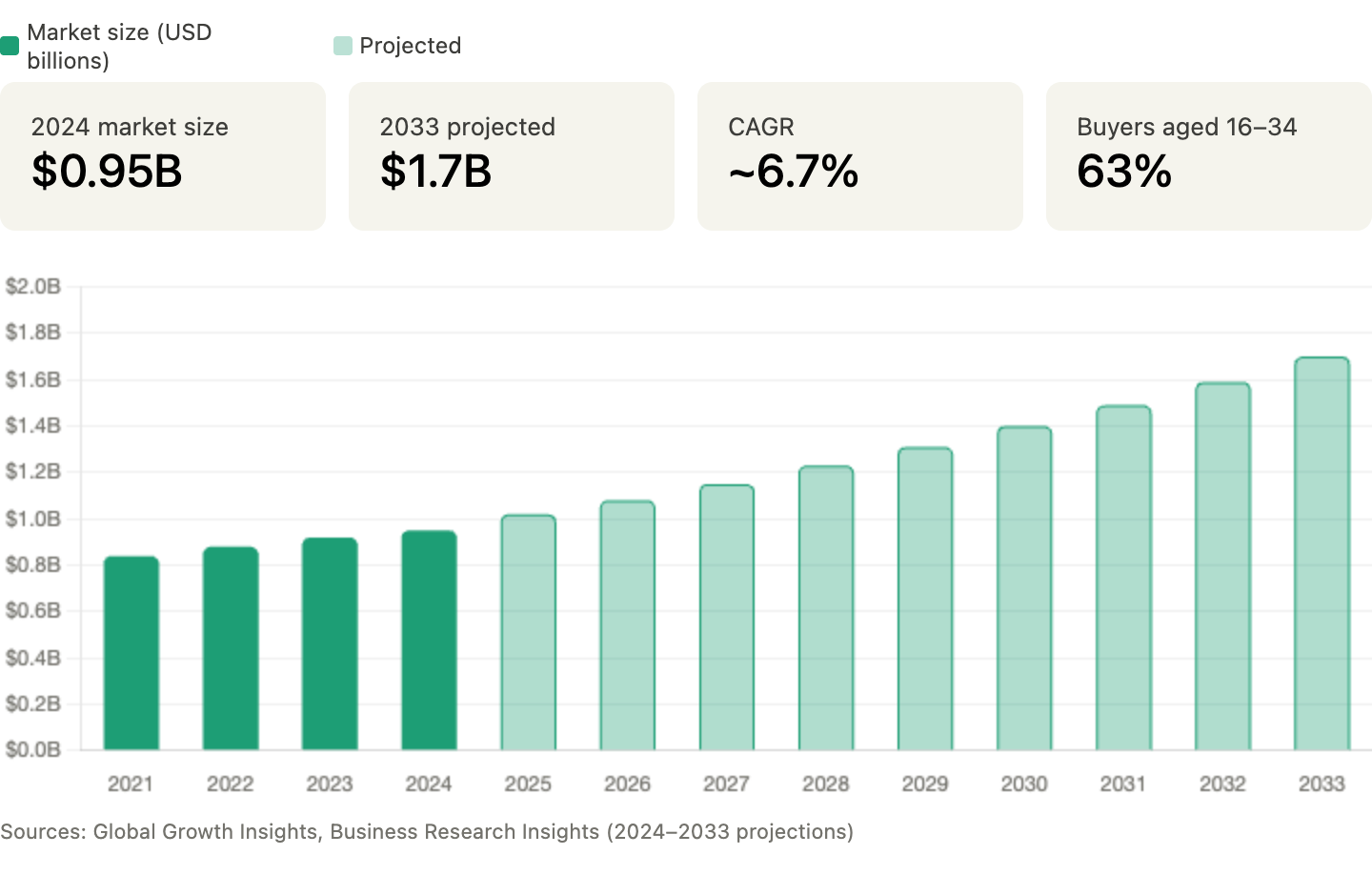
The desire for memory capture hasn't gone anywhere. Disposable camera sales have surged over the past five years, driven overwhelmingly by consumers aged 16–34. The global disposable camera market sits around $1 billion in 2024, projected to roughly double over the next decade. Table cameras, candid guest photography, and "delayed reveal" photo experiences are already standard at weddings and events. The emotional behavior — limited photos now, reveal later — is trained into consumer expectations.
Meanwhile, the event photo-sharing software market is crowded. POV, GuestPix, GuestLense, Kululu, GuestCam, and others all solve the "collect guest photos into a private gallery" problem. POV explicitly markets itself as a digital disposable camera. GuestPix claims over 100,000 events served. Pricing typically sits between $15 and $99 per event.

Here's what none of them account for: every one of those products assumes guests still have their phones. Their entire architecture depends on QR code scanning, browser-based uploads, and smartphone cameras. Lock the phone in a Yondr pouch, and the model collapses.
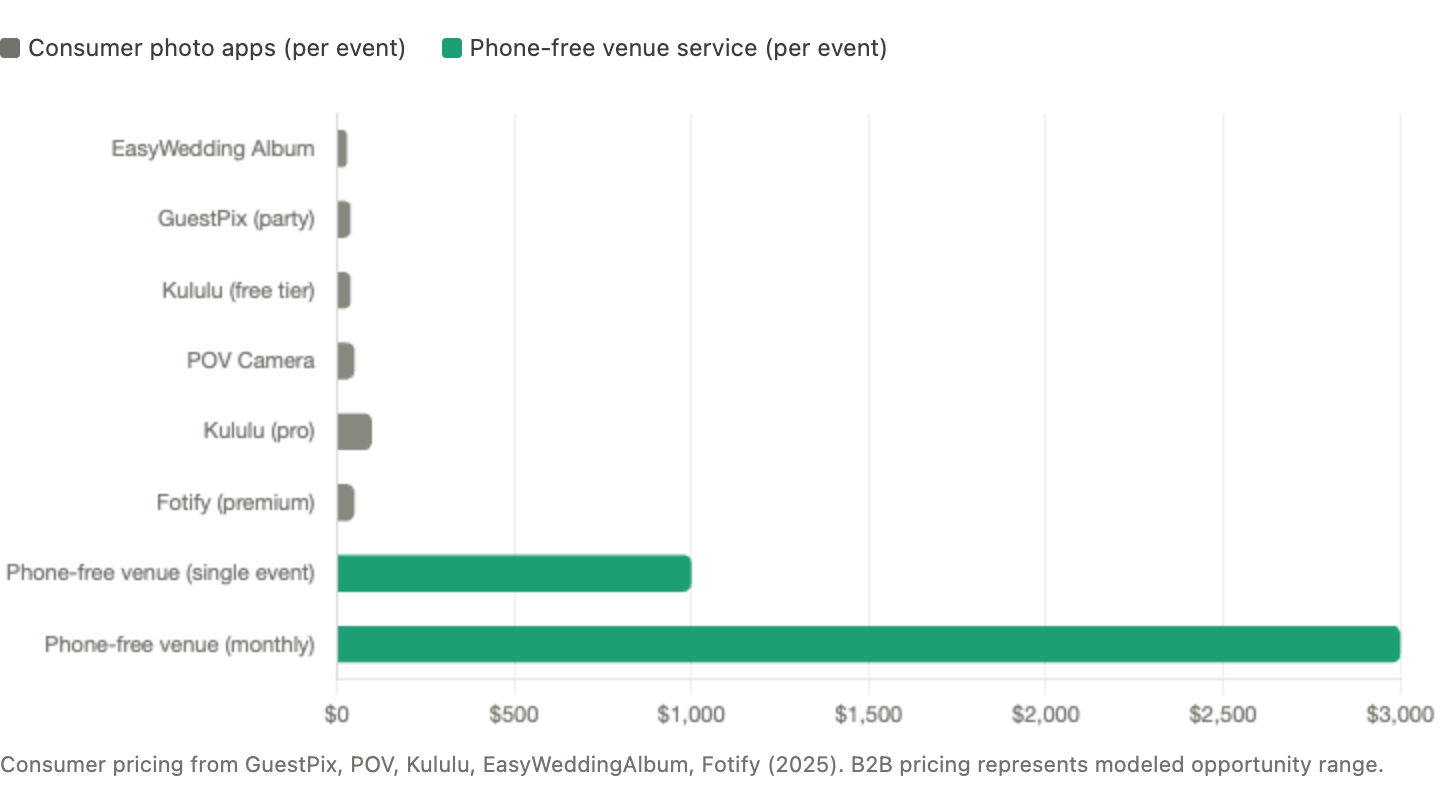
That's the opening. You're building the memory layer for phone-free events. Different buyer. Different economics. A small business idea hiding inside a cultural shift that most founders haven't noticed yet.
The unit economics work because you're solving a content-control problem for venue operators — and charging accordingly.
Who Actually Pays
The buyer isn't the guest. It's the venue, the promoter, the planner, or the artist's team. Their problem isn't "how do we collect photos?" It's: how do we preserve presence without killing post-event buzz and guest satisfaction?
Comedy clubs want to protect material from leaks. Artists want a room full of faces instead of screens. Venues still want guests leaving happy, posting the next morning, remembering the night as premium rather than restrictive. Yondr already sells the negative promise — fewer phones. The real opportunity is selling the positive promise: better memories, under control.
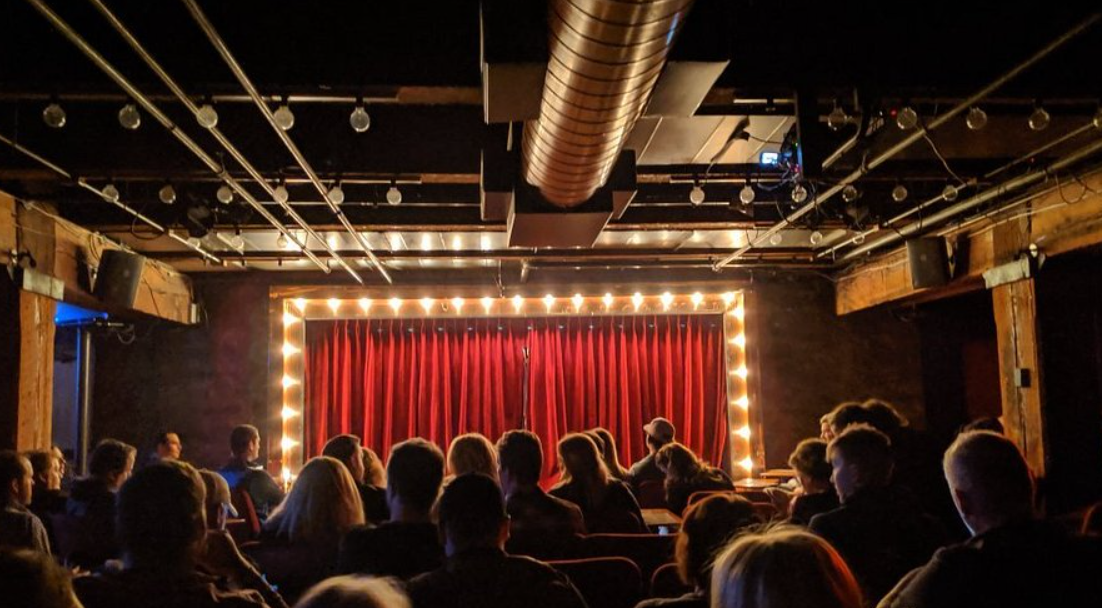
Comedy clubs are the sharpest entry point. Phone-free behavior is already institutionalized at clubs like The Comedy Store, Comedy Works Denver, and Comedy on State in Madison. These clubs operate on tight margins — typically 5–15% profit — with revenue from tickets, F&B, and merch. Post-show engagement is a known pain point: most rely on basic email lists or SMS blasts, with limited ability to drive repeat visits or upsell effectively.
A controlled photo service fills the memory gap and becomes the first legitimate CRM touchpoint between a phone-free venue and its guests. Almost nobody is building that right now.
The Product: Three Layers Deep
The tempting version of this business is "rent dumb cameras, collect SD cards, upload photos." Charming. Also fragile. Hardware gets lost. Batteries die. SD card ingestion is painful. Margins get eaten by logistics. Worse, you'd be building a service business wearing a tech company's clothes.
The smart version has three layers: controlled capture, controlled distribution, and post-event CRM.
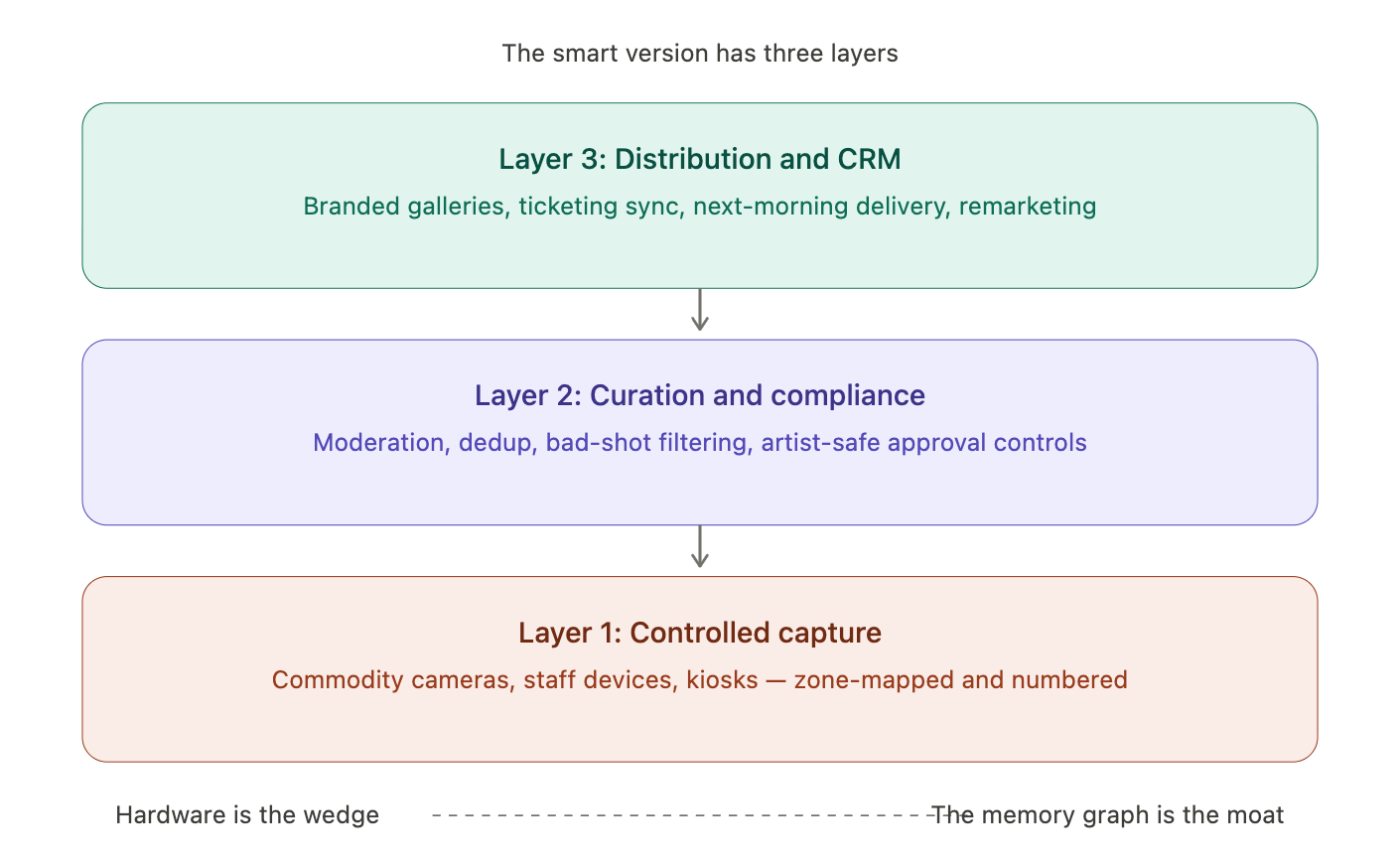
Layer 1: Controlled Capture. Start with rugged low-cost digital cameras or disposable-style devices placed at tables, handed to staff, or stationed at kiosks. Pre-number them and assign to zones — table, section, VIP area. The long-term product shouldn't be hardware-dependent. It should accept any controlled capture source: venue-owned cameras, roaming staff devices, photographer uploads, kiosk stations. Hardware is the wedge, not the moat.
Layer 2: Curation and Compliance. This is where the business stops being cute. The host — especially in comedy, where content sensitivity is the entire reason phones are locked — needs moderation, de-duplication, bad-shot filtering, section-based grouping, and approval controls before anything goes live. Existing competitors already offer host review and moderation on their higher-tier plans. Those are clues: moderation is a core feature in event photo software. In your category, where the buyer is specifically paranoid about leaks and content control, it becomes the central trust mechanism.
Layer 3: Distribution and CRM. This is the real monetization unlock. Guests don't get a dump of photos. They get a branded next-morning memory drop: "Your night at the 8 PM show." Tie the gallery to ticketing or guest-list data and you can personalize delivery by table, seat block, VIP tier, or show segment. Eventbrite's API supports attendee retrieval and check-in webhooks, making event-to-attendee mapping operationally feasible for organizers already on mainstream ticketing platforms.
Once you make that connection, every photo becomes a CRM primitive. A guest who attended the sold-out Friday show receives a gallery, a merch offer, a presale link for next month's headliner, and a referral code — all by 10 a.m. the next morning. A wedding planner turns it into an upsell. A corporate offsite organizer turns it into an employee culture asset. A premium venue makes phone-free feel luxurious rather than restrictive.
The camera gets you in the door. The event memory graph is what keeps you there.
Two Businesses — Pick One
There are two businesses here, and you should decide early which one you're building.
Unlock the Vault.
Join founders who spot opportunities ahead of the crowd. Actionable insights. Zero fluff.
“Intelligent, bold, minus the pretense.”
“Like discovering the cheat codes of the startup world.”
“SH is off-Broadway for founders — weird, sharp, and ahead of the curve.”


